element14 Community
element14 Community
    Register Log In
  • Site
  • Search
  • Log In Register
  • Community Hub
    Community Hub
    • What's New on element14
    • Feedback and Support
    • Benefits of Membership
    • Personal Blogs
    • Members Area
    • Achievement Levels
  • Learn
    Learn
    • Ask an Expert
    • eBooks
    • element14 presents
    • Learning Center
    • Tech Spotlight
    • STEM Academy
    • Webinars, Training and Events
    • Learning Groups
  • Technologies
    Technologies
    • 3D Printing
    • FPGA
    • Industrial Automation
    • Internet of Things
    • Power & Energy
    • Sensors
    • Technology Groups
  • Challenges & Projects
    Challenges & Projects
    • Design Challenges
    • element14 presents Projects
    • Project14
    • Arduino Projects
    • Raspberry Pi Projects
    • Project Groups
  • Products
    Products
    • Arduino
    • Avnet & Tria Boards Community
    • Dev Tools
    • Manufacturers
    • Multicomp Pro
    • Product Groups
    • Raspberry Pi
    • RoadTests & Reviews
  • About Us
    About the element14 Community
  • Store
    Store
    • Visit Your Store
    • Choose another store...
      • Europe
      •  Austria (German)
      •  Belgium (Dutch, French)
      •  Bulgaria (Bulgarian)
      •  Czech Republic (Czech)
      •  Denmark (Danish)
      •  Estonia (Estonian)
      •  Finland (Finnish)
      •  France (French)
      •  Germany (German)
      •  Hungary (Hungarian)
      •  Ireland
      •  Israel
      •  Italy (Italian)
      •  Latvia (Latvian)
      •  
      •  Lithuania (Lithuanian)
      •  Netherlands (Dutch)
      •  Norway (Norwegian)
      •  Poland (Polish)
      •  Portugal (Portuguese)
      •  Romania (Romanian)
      •  Russia (Russian)
      •  Slovakia (Slovak)
      •  Slovenia (Slovenian)
      •  Spain (Spanish)
      •  Sweden (Swedish)
      •  Switzerland(German, French)
      •  Turkey (Turkish)
      •  United Kingdom
      • Asia Pacific
      •  Australia
      •  China
      •  Hong Kong
      •  India
      •  Japan
      •  Korea (Korean)
      •  Malaysia
      •  New Zealand
      •  Philippines
      •  Singapore
      •  Taiwan
      •  Thailand (Thai)
      •  Vietnam
      • Americas
      •  Brazil (Portuguese)
      •  Canada
      •  Mexico (Spanish)
      •  United States
      Can't find the country/region you're looking for? Visit our export site or find a local distributor.
  • Translate
  • Profile
  • Settings
Community Hub
Community Hub
Member's Forum Top Tech Voices Podcast S2 E6: Smart Cities & Urban Tech
  • Blog
  • Forum
  • Documents
  • Quiz
  • Events
  • Leaderboard
  • Polls
  • Files
  • Members
  • Mentions
  • Sub-Groups
  • Tags
  • More
  • Cancel
  • New
Join Community Hub to participate - click to join for free!
Actions
  • Share
  • More
  • Cancel
Forum Thread Details
  • Replies 23 replies
  • Subscribers 616 subscribers
  • Views 635 views
  • Users 0 members are here
  • top-tech-voices
  • top tech voices podcast
  • podcast
  • smart cities
  • ttv2
  • TOP TECH VOICES 2
Related

Top Tech Voices Podcast S2 E6: Smart Cities & Urban Tech

JoRatcliffe
JoRatcliffe 22 days ago

It is time for the final episode of Top Tech Voices Season 2 and we are ending on a high with engineer and architect Carlo Ratti as the guest.

Tune in for an episode covering:

  • Why Carlo finds waste management fascinating
  • How technology is making Venice more resilient to climate change
  • Creating cyber-physical systems where real-time data triggers physical responses across a city

 Click the banner below to watch the podcast video or listen on your favorite platform.
image
Or you can watch straight away here:

You don't have permission to edit metadata of this video.
Edit media
x
image
Upload Preview
image

Leave a comment and be in the running to win a prize!

All you have to do is the following:

  1. You have to either Register or Login
2. Leave a comment or reply below!

Comments should include constructive discussion on the episode's topics (for example, making cities more adaptable with technology, designing cities with multiple generations of people in mind, future-proofing against climate change), or useful feedback that helps improve future podcasts.

Separate to the contest, I am also interested to know how you like to watch Top Tech Voices. Do you listen while you work or do you watch it on your TV? Let me know!

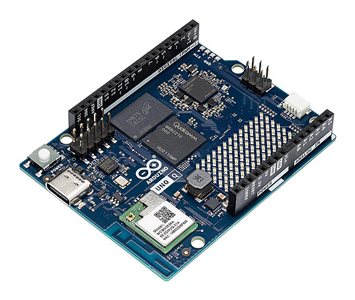
The Community team will select the best 5 comments to each win an Arduino Uno Q 4GB!
image

Learn More

 Terms and Conditions

The Winners

  • Akansha 
  • beacon_dave 
  • gordonmx 
  • jelektro 
  • kmikemoo 
  • Sign in to reply
  • Cancel
  • beacon_dave
    beacon_dave 5 days ago in reply to JoRatcliffe
    JoRatcliffe said:
    This is the final episode of this year's Top Tech Voices season

    Another interesting podcast series comes to a close.

    JoRatcliffe said:
    stay tuned because there might be something more coming...

    Are you to be taking a turn in the 'hot seat' opposite Georgia for a special 'Smart e14 On-Line Communities' episode ? Slight smile

    • Cancel
    • Vote Up 0 Vote Down
    • Sign in to reply
    • Cancel
  • kmikemoo
    kmikemoo 5 days ago in reply to JoRatcliffe

    Thank you so much!  I really enjoyed this year's Top Tech Voices.  I have referenced these episodes in numerous conversations with others.  This series has been wonderfully engaging.  It's been great to read the perspective of others.  Some of the comments have really made me think.  Great stuff!!

    • Cancel
    • Vote Up +1 Vote Down
    • Sign in to reply
    • Cancel
  • gordonmx
    gordonmx 5 days ago in reply to JoRatcliffe

    Thank you

    • Cancel
    • Vote Up +1 Vote Down
    • Sign in to reply
    • Cancel
  • JoRatcliffe
    JoRatcliffe 5 days ago

    Well done to this episode's winners!

    • Akansha 
    • beacon_dave 
    • gordonmx  
    • jelektro  
    • kmikemoo  

    This is the final episode of this year's Top Tech Voices season but stay tuned because there might be something more coming...

    • Cancel
    • Vote Up +4 Vote Down
    • Sign in to reply
    • Cancel
  • jelektro
    jelektro 9 days ago

    This is one of those episodes that stays with you long after you've finished listening. What interested me most was the discussion about how technology influences our behaviour in public spaces and our relationships with other people. To be honest, I hadn't thought about it in such depth before, but when Carlo Ratti talked about the research comparing footage of cities from the 1970s and 1980s with present-day recordings, I immediately started relating it to my own experiences.

    I often feel that today we're connected to the entire world while, at the same time, becoming disconnected from the people standing right next to us. Just step onto a train, a bus, or into a waiting room and you'll see that most people are looking at their phone screens. I do exactly the same thing myself. Whenever I have a few spare minutes, I instinctively reach for my phone without even thinking about it. This episode made me realise that perhaps we're losing something important because of that. I'm not talking about having deep conversations with strangers, but simply about being part of the city, observing people, paying attention to our surroundings, and experiencing the spontaneous interactions that once felt completely natural.

    I also appreciated that this wasn't another conversation about technology being either the source of all our problems or the solution to everything. Carlo Ratti presented a much more nuanced perspective. On one hand, he spoke about the incredible opportunities created by data, artificial intelligence, and smart urban systems. On the other hand, he highlighted important concerns around privacy, transparency, and the impact technology has on our everyday lives. That balanced approach felt far more valuable to me than the extreme viewpoints that often dominate public discussions.

    I was particularly fascinated by the example of Venice and its flood protection system. It's a great demonstration of how technology can serve people in a very practical way. Often when we hear about AI, smart cities, or data analytics, the concepts feel abstract and distant. In this case, however, we're talking about solutions that genuinely help protect entire communities and allow people to continue living and working in places threatened by climate change. Those are the kinds of technological applications that I find most inspiring.

    After listening to this episode, I also found myself thinking about what cities might look like in 20 or 30 years. Until now, I imagined the future of cities mainly in terms of greater automation, more sensors, sophisticated algorithms, autonomous vehicles, and increasingly advanced management systems. This conversation made me realise that something much simpler may be just as important: creating spaces where people actually want to spend time together. If technology is going to play a major role in shaping our cities, I hope it will help strengthen communities and encourage human connection, rather than simply making systems more efficient.

    I also really liked Carlo Ratti's attitude throughout the interview. Despite his impressive academic achievements, he came across as someone who remains genuinely curious about the world and open to different perspectives. One quote that stayed with me was his idea that "optimism is a duty" because the future isn't something predetermined; it's something we create together. At a time when so many conversations about technology and climate change focus primarily on risks and problems, that perspective felt both refreshing and encouraging.

    As for Top Tech Voices itself, I usually listen while walking or commuting to work. The interview format works particularly well as an audio experience. I enjoy longer conversations because they allow you to understand how a guest thinks rather than just hearing a few short answers. This episode stood out to me because it wasn't only about technology itself, but about its impact on people, communities, and the way we live our daily routines.

    • Cancel
    • Vote Up 0 Vote Down
    • Sign in to reply
    • Cancel
  • gordonmx
    gordonmx 9 days ago

    Once again, I must apologize for my lateness in writing my summary.  I actually enjoyed the chat between Dr Anne-Laure Le Cunff and professor Carlo Ratti, but still have some concerns.  During the introduction he was asked about his past as a “hippie” and as the conversation progressed, I found myself viewing his answers in the broader, flowery contents of a 1970s hippie. 

    Many of his comments were very interesting and valid that gave me moments to “meditate” on, but in the end seemed vague and inconclusive.  Like a pilot flying over a complex scene and seeing what he wants to see.  Then telling us how to fix it while living another life.

     Some observations:

    NOTE: For what it’s worth, my observations are based on my conscience and unconscious experiences therefore probably all messed up.

    -  With all the comments about cities, I found professor Ratti a little vague in how to deal with social differences between groups within the cities.  It doesn’t take much of the nightly news (or social media) to see the unrest and violence among groups.  He mentioned that we just need to sit down and talk about those differences until we agree.  Men and women, who are way smarter than me, have been working on this approach since the dawn of time with only limited success.  I get the feeling he might agree only if it doesn’t stop him from doing what he would like to do.

    -  Of course, these segments have a common thread of A.I., so to see the mention of a way to study and understand humanity again only brings up again the fact the A.I. is a program, designed and written by programmers WITH their own biases.  What one sees an action as kind; another sees as hateful.  Just because we can use A.I. to speed up our conclusion, doesn’t make it better or even so.  However, it can make us lazy.

    -  During the conversation, both Dr Le Cunff and professor Carlo Ratti mentioned climate issues, but little or no comments were aimed at addressing the concerns of the climate cost of A.I.  Massive data center requiring massive power and cooling resources.

    -  Another thing that seems to be missing from the discussion is the issue of affordability.  Much of the unrest and violence among groups seems to come from those who believe they can not long afford the standard of living they believe they deserve.  Making smarter cities come with a cost.  And continue to widen the gap between those who can afford the “fancy bells and whistles” and those who cannot.  

    Enough comments for now.  Let me know what you think and click like. 8^)

    Gordon

    • Cancel
    • Vote Up +2 Vote Down
    • Sign in to reply
    • Cancel
  • Dipeshkachhi
    Dipeshkachhi 16 days ago in reply to beacon_dave

    You’ve highlighted the exact engineering trade-offs that keep sensor network designers up at night. The tension between data relevance (breathing height) and data integrity (controlled municipal calibration) is a classic cyber-physical systems dilemma.

    ​To your point about the "pram scenario"—where a jacket accidentally smothers a citizen's mobile node—you lose control over the physical operating environment. One way to mitigate this at the hardware/firmware level is implementing local multi-sensor cross-verification. For example, pairing the particulate matter (PM) sensor with a localized temperature, humidity, or ambient light sensor on the same node. A sudden drop in ambient light combined with an isolated micro-climate humidity spike inside a bag could flag that specific data window as "obstructed/unreliable" before it ever gets uploaded.

    ​Your critique of threshold-based logging is also incredibly sharp. A static "significant spike" threshold is a major blind spot for historical baseline analysis, especially if atmospheric baselines shift over time. A more robust alternative for the Uno R4 firmware would be a delta-based logging algorithm (Delta-Sigma modulation or slope-detection). Instead of waiting to cross an arbitrary hard ceiling, the node logs data whenever the relative rate of change (\frac{\Delta PM}{\Delta t}) exceeds a specific gradient, or when the value deviates from a moving local average. This preserves the subtle shifts needed for long-term historical modeling while still compressing data packets significantly.

    ​The tire-wear particulate matter (TWPM) issue from EVs is a fascinating and urgent variable. Because tire particles are typically larger and heavier (PM_{10} and microplastics) than highly airborne diesel soot (PM_{2.5}), their settling behavior is completely different. This makes mapping them at human breathing zones vs. street-lamp height even more critical, as heavy tire dust stays closer to the asphalt before being kicked up by passing vehicles.

    ​I really like Doug’s approach with the solar and supercapacitor combination for his weather station. For high-drain Edge AI or frequent RF transmission cycles, supercapacitors are unmatched in handling rapid charge/discharge cycles without the degradation issues of LiPo batteries in extreme outdoor temperatures. I’ll definitely dig deeper into Doug's "Just Encase Solar Super Capacitor" design—it sounds like the ideal power topology for a truly maintenance-free, localized urban node array.

    • Cancel
    • Vote Up 0 Vote Down
    • Sign in to reply
    • Cancel
  • beacon_dave
    beacon_dave 16 days ago in reply to Dipeshkachhi
    Dipeshkachhi said:
    Mobile citizen-sensing completely changes the game because it maps air quality at the exact breathing height of a human, rather than using a static municipal sensor mounted 10 meters up on a street lamp.

    However, need to be mindful of the reliability and accuracy of the data.

    A municipal sensor 10m up can be sited, installed, calibrated and maintained under a controlled set of conditions. However most people are probably not actually breathing the air at a height of 10m so the recorded data may be very accurate and consistent but not be all that meaningful.

    Whereas with a citizen deployed sensor, you may potentially end up with more meaningful data being sampled at human height, but then lose control over accuracy. For example, the sensor was placed on the pram as instructed but then a garment or bag was placed directly on top of it affecting its reading throughout the capture period. 

    Dipeshkachhi said:
    the node only needs to log or transmit compressed, cryptographically signed data packets when a significant pollution spike occurs.

    Perhaps need to be mindful that the 'significant spike' may have an unknown threshold or a value that reduces over time. If you want to be able to work with historical data in the future, then you may need to transmit data when values change, rather than when they cross a threshold.

    I was listening to a podcast recently about rubber pollution from tyres which is now becoming an increasing concern. While filters have been cleaning up particulate matter from diesel emissions, apparently this is now being offset by increased particulate matter produced from tyre wear due to the increased weight and acceleration from EVs. It sounds like it is still relatively unknown whether rubber particulate matter is any more or less harmful than diesel combustion particulate matter.

    Dipeshkachhi said:
    Have you ever experimented with localized data filtering on the Uno R4 to optimize battery life in remote sensor applications?

    I've not done much with the R4 as yet. Too busy watching/listening to podcasts... Slight smile

    Not R4 but Doug's weather station project used solar combined with supercapacitors for energy harvesting for sensor applications:

    Just Encase Solar Super Capacitor

    • Cancel
    • Vote Up +1 Vote Down
    • Sign in to reply
    • Cancel
  • Dipeshkachhi
    Dipeshkachhi 16 days ago in reply to beacon_dave

     Those pram-mounted sensor studies from Surrey and Bristol are the absolute perfect real-world example of what Carlo Ratti means by a 'living, breathing data canvas.' Mobile citizen-sensing completely changes the game because it maps air quality at the exact breathing height of a human, rather than using a static municipal sensor mounted 10 meters up on a street lamp.

    ​The major engineering bottleneck with those early citizen-science deployments was data ingestion and power—they often relied on heavy, power-hungry logging shields or continuous cellular uploads that drained batteries rapidly.

    ​That’s exactly why I’m looking at the Arduino Uno R4 for prototyping this open-source node array. With its 32-bit RA4M1 Renesas processor, we have enough computational headroom to run localized data-filtering algorithms (like running average filters or threshold analytics) right on the edge. Instead of broadcasting massive streams of raw, noisy sensor data continuously, the node only needs to log or transmit compressed, cryptographically signed data packets when a significant pollution spike occurs.

    ​If we can keep the hardware low-cost and power-efficient enough to run off a small battery or energy-harvesting setup, deploying these onto public transit or citizen vehicles becomes completely viable. Have you ever experimented with localized data filtering on the Uno R4 to optimize battery life in remote sensor applications?

    • Cancel
    • Vote Up +1 Vote Down
    • Sign in to reply
    • Cancel
  • beacon_dave
    beacon_dave 16 days ago in reply to beacon_dave

    Also interesting are the views on decreasing birth rates resulting in a decrease in population. However this perhaps is not always the case as sometimes the death rates are decreasing at a faster rate resulting in an increase in population for the time being. This could result in an aging population which could have an impact on urban design and technological infrastructure.

    There is also the impact of migration to consider. If climate change starts to make places inhabitable, then some people may start to migrate to more habitable zones rather than trying to adapt.

    • Cancel
    • Vote Up 0 Vote Down
    • Sign in to reply
    • Cancel
>
element14 Community

element14 is the first online community specifically for engineers. Connect with your peers and get expert answers to your questions.

  • Members
  • Learn
  • Technologies
  • Challenges & Projects
  • Products
  • Store
  • About Us
  • Feedback & Support
  • FAQs
  • Terms of Use
  • Privacy Policy
  • Legal and Copyright Notices
  • Sitemap
  • Cookies

An Avnet Company © 2026 Premier Farnell Limited. All Rights Reserved.

Premier Farnell Ltd, registered in England and Wales (no 00876412), registered office: Farnell House, Forge Lane, Leeds LS12 2NE.

ICP 备案号 10220084.

Follow element14

  • X
  • Facebook
  • linkedin
  • YouTube