element14 Community
element14 Community
    Register Log In
  • Site
  • Search
  • Log In Register
  • Community Hub
    Community Hub
    • What's New on element14
    • Feedback and Support
    • Benefits of Membership
    • Personal Blogs
    • Members Area
    • Achievement Levels
  • Learn
    Learn
    • Ask an Expert
    • eBooks
    • element14 presents
    • Learning Center
    • Tech Spotlight
    • STEM Academy
    • Webinars, Training and Events
    • Learning Groups
  • Technologies
    Technologies
    • 3D Printing
    • FPGA
    • Industrial Automation
    • Internet of Things
    • Power & Energy
    • Sensors
    • Technology Groups
  • Challenges & Projects
    Challenges & Projects
    • Design Challenges
    • element14 presents Projects
    • Project14
    • Arduino Projects
    • Raspberry Pi Projects
    • Project Groups
  • Products & Partners
    Products & Partners
    • Arduino
    • Avnet & Tria Boards Community
    • Dev Tools
    • Manufacturers
    • Multicomp Pro
    • Product Groups
    • Raspberry Pi
    • RoadTests & Reviews
  • About Us
    About the element14 Community
  • Store
    Store
    • Visit Your Store
    • Choose another store...
      • Europe
      •  Austria (German)
      •  Belgium (Dutch, French)
      •  Bulgaria (Bulgarian)
      •  Czech Republic (Czech)
      •  Denmark (Danish)
      •  Estonia (Estonian)
      •  Finland (Finnish)
      •  France (French)
      •  Germany (German)
      •  Hungary (Hungarian)
      •  Ireland
      •  Israel
      •  Italy (Italian)
      •  Latvia (Latvian)
      •  
      •  Lithuania (Lithuanian)
      •  Netherlands (Dutch)
      •  Norway (Norwegian)
      •  Poland (Polish)
      •  Portugal (Portuguese)
      •  Romania (Romanian)
      •  Russia (Russian)
      •  Slovakia (Slovak)
      •  Slovenia (Slovenian)
      •  Spain (Spanish)
      •  Sweden (Swedish)
      •  Switzerland(German, French)
      •  Turkey (Turkish)
      •  United Kingdom
      • Asia Pacific
      •  Australia
      •  China
      •  Hong Kong
      •  India
      •  Japan
      •  Korea (Korean)
      •  Malaysia
      •  New Zealand
      •  Philippines
      •  Singapore
      •  Taiwan
      •  Thailand (Thai)
      •  Vietnam
      • Americas
      •  Brazil (Portuguese)
      •  Canada
      •  Mexico (Spanish)
      •  United States
      Can't find the country/region you're looking for? Visit our export site or find a local distributor.
  • Translate
  • Profile
  • Settings
Community Hub
Community Hub
Member's Forum HiFi in the late 70s
  • Blog
  • Forum
  • Documents
  • Quiz
  • Events
  • Leaderboard
  • Polls
  • Files
  • Members
  • Mentions
  • Sub-Groups
  • Tags
  • More
  • Cancel
  • New
Join Community Hub to participate - click to join for free!
Actions
  • Share
  • More
  • Cancel
Forum Thread Details
  • Replies 29 replies
  • Subscribers 626 subscribers
  • Views 308 views
  • Users 0 members are here
Related

HiFi in the late 70s

Jan Cumps
Jan Cumps 1 day ago

The late 70s are often mentioned as the golden age of HiFi. And I'm a music and music gear lover since forever.
To remind me of what music sounded like in the days, I've made a setup of analog gear of the era. Using decent gear, well maintained.
We've come a long way Slight smile.

image

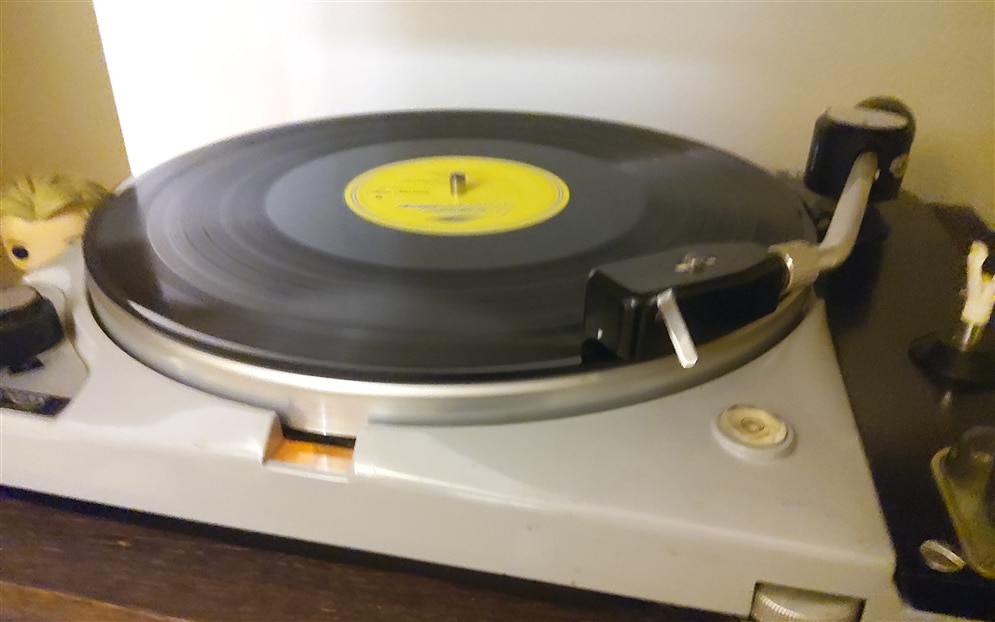
Currently listening to a 1977 recording of the 5th Beethoven Symphony, on a really good turntable (mid-60s Thorens), a good stereo (later 70s Kenwood), and - then - high end Koss headphones.
The industry evolved. Obviously by going digital. But also in the headphones department.
The turntable and amplifier, paired with a decent set of speakers, still sound very good. Pleasing to the modern ear. But I guess that no one would appreciate the headset - one that got very good reviews in the later 70s - these days.
image

When listening to the same chain, with decent speakers of the late 70s, all sounds good. Although I 'd like to argue it sounds better with contemporary affordable  speakers.

This exercise helps me to value how music love, and the feel for quality, is partly perception.
Is it the sound quality that changed, or how we like to hear sound?

My personal (warning) opinion: 
Source: Sound quality improved with digital sound sources. Excellent reproduction, without the mechanical quirks. Fidelity somewhat. Reliability, affordability and ease of using it: a lot.
Amplifier: Not that much improvement in sound quality. A lot of improvement in the same quality per Watt burned (see class-D).
Speakers: normal good speakers these days, I think, are better than the best speakers of the golden era.
Headphones: that technology improved a lot too. The headsets I used were (and still are) lusted after. But a decent (not expensive) pair of headphones you get now, will be way better. I doubt if anyone would appreciate the sound of my Koss headphones today.
image

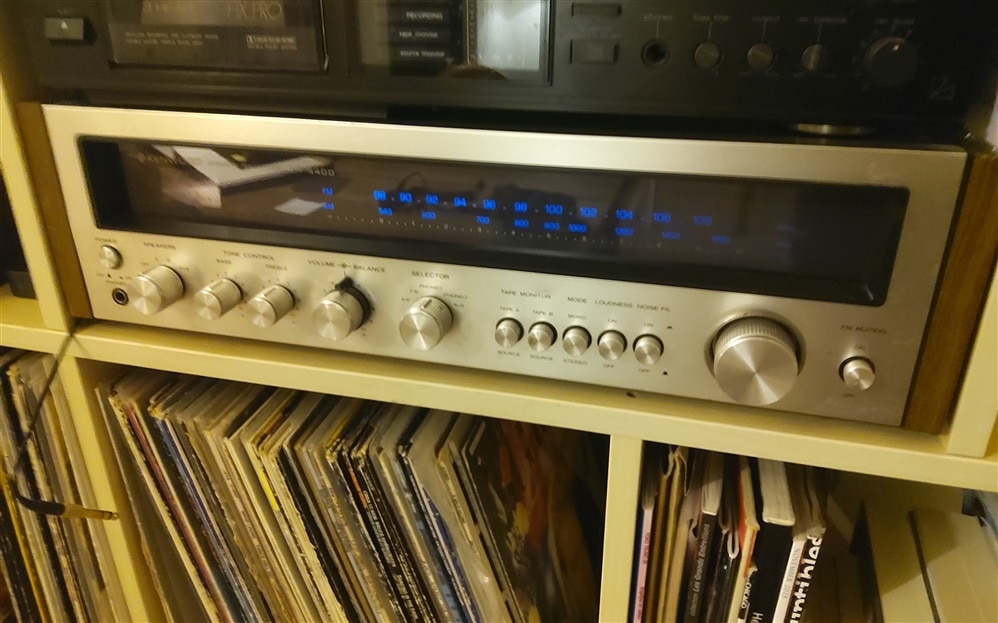
Gear used.:

Record: Beethoven's 5th, Berliner Philharmoniker; Karajan, 1977
Turntable: Thorens TD-124 MKII
Amplifier: Kenwood KR-4400
Headphones: Koss KO-727s
Speakers to compare with: Celestion Ditton 15XR
All pre-1980, all in excellent condition

  • Sign in to reply
  • Cancel
Parents
  • shabaz
    shabaz 1 day ago

    I'm guessing one of the biggest improvements now is likely signal processing, getting more out of smaller enclosures and so on, i.e. it would have cost more, and more materials, to have good quality sound in the past perhaps, and now the lower end of the bar in _theory_ can be been raised substantially. A lot of MP3 libraries for microcontrollers sound awful, I can't describe it but can't be tolerated for more than a minute or two; maybe they are using inaccurate math in the algorithms, or other short-cuts to save on processor or memory resources, but perhaps affects the audio. Whereas a good cassette recording to me used to sound as good as a CD, I would find it hard to tell the difference, but I've not heard a cassette in years any more. I think I would be very happy with an old Walkman if I still had music on tape! But probably nostalgia is clouding how much I might miss immediate seeking as with audio files : )

    I was learning a little about DACs the other day, it's not something I know super-well, and the theory behind how one-bit DACs and multi-bit MASH worked, and how some of the older ICs are still highly regarded. I tried to simulate a one-bit DAC (for reasons) and was unhappy to see I couldn't get excellent results (using Matlab to do some analysis). Turned out, it can be quite sophisticated, how the one-bit output algorithm can be modified to push noise out to less audible higher frequencies, and hence get better noise performance for instance, or less distortion at higher amplitudes (for instance, I got better results at say -6 dBFS than higher amplitudes). After more experimentation, I did indeed get better results, but still not as good as an off-the-shelf DAC datasheet, and of course they don't publish the detail regarding their algorithms, that's their secret sauce. I have no idea if the older DACs had those techniques.

    • Cancel
    • Vote Up +1 Vote Down
    • Sign in to reply
    • Cancel
Reply
  • shabaz
    shabaz 1 day ago

    I'm guessing one of the biggest improvements now is likely signal processing, getting more out of smaller enclosures and so on, i.e. it would have cost more, and more materials, to have good quality sound in the past perhaps, and now the lower end of the bar in _theory_ can be been raised substantially. A lot of MP3 libraries for microcontrollers sound awful, I can't describe it but can't be tolerated for more than a minute or two; maybe they are using inaccurate math in the algorithms, or other short-cuts to save on processor or memory resources, but perhaps affects the audio. Whereas a good cassette recording to me used to sound as good as a CD, I would find it hard to tell the difference, but I've not heard a cassette in years any more. I think I would be very happy with an old Walkman if I still had music on tape! But probably nostalgia is clouding how much I might miss immediate seeking as with audio files : )

    I was learning a little about DACs the other day, it's not something I know super-well, and the theory behind how one-bit DACs and multi-bit MASH worked, and how some of the older ICs are still highly regarded. I tried to simulate a one-bit DAC (for reasons) and was unhappy to see I couldn't get excellent results (using Matlab to do some analysis). Turned out, it can be quite sophisticated, how the one-bit output algorithm can be modified to push noise out to less audible higher frequencies, and hence get better noise performance for instance, or less distortion at higher amplitudes (for instance, I got better results at say -6 dBFS than higher amplitudes). After more experimentation, I did indeed get better results, but still not as good as an off-the-shelf DAC datasheet, and of course they don't publish the detail regarding their algorithms, that's their secret sauce. I have no idea if the older DACs had those techniques.

    • Cancel
    • Vote Up +1 Vote Down
    • Sign in to reply
    • Cancel
Children
  • Jan Cumps
    Jan Cumps 1 day ago in reply to shabaz

    Digital signal processing definitely changed how good headphones sound. And bigger speakers. and cinema and cars!

    On the passive side of the spectrum, there were a lot of improvements on speaker cone materials, and (maybe most of all) magnets.

    • Cancel
    • Vote Up +1 Vote Down
    • Sign in to reply
    • Cancel
element14 Community

element14 is the first online community specifically for engineers. Connect with your peers and get expert answers to your questions.

  • Members
  • Learn
  • Technologies
  • Challenges & Projects
  • Products
  • Store
  • About Us
  • Feedback & Support
  • FAQs
  • Terms of Use
  • Privacy Policy
  • Legal and Copyright Notices
  • Sitemap
  • Cookies

An Avnet Company © 2026 Premier Farnell Limited. All Rights Reserved.

Premier Farnell Ltd, registered in England and Wales (no 00876412), registered office: Farnell House, Forge Lane, Leeds LS12 2NE.

Follow element14

  • X
  • Facebook
  • linkedin
  • YouTube