element14 Community
element14 Community
    Register Log In
  • Site
  • Search
  • Log In Register
  • Community Hub
    Community Hub
    • What's New on element14
    • Feedback and Support
    • Benefits of Membership
    • Personal Blogs
    • Members Area
    • Achievement Levels
  • Learn
    Learn
    • Ask an Expert
    • eBooks
    • element14 presents
    • Learning Center
    • Tech Spotlight
    • STEM Academy
    • Webinars, Training and Events
    • Learning Groups
  • Technologies
    Technologies
    • 3D Printing
    • FPGA
    • Industrial Automation
    • Internet of Things
    • Power & Energy
    • Sensors
    • Technology Groups
  • Challenges & Projects
    Challenges & Projects
    • Design Challenges
    • element14 presents Projects
    • Project14
    • Arduino Projects
    • Raspberry Pi Projects
    • Project Groups
  • Products
    Products
    • Arduino
    • Avnet & Tria Boards Community
    • Dev Tools
    • Manufacturers
    • Multicomp Pro
    • Product Groups
    • Raspberry Pi
    • RoadTests & Reviews
  • About Us
    About the element14 Community
  • Store
    Store
    • Visit Your Store
    • Choose another store...
      • Europe
      •  Austria (German)
      •  Belgium (Dutch, French)
      •  Bulgaria (Bulgarian)
      •  Czech Republic (Czech)
      •  Denmark (Danish)
      •  Estonia (Estonian)
      •  Finland (Finnish)
      •  France (French)
      •  Germany (German)
      •  Hungary (Hungarian)
      •  Ireland
      •  Israel
      •  Italy (Italian)
      •  Latvia (Latvian)
      •  
      •  Lithuania (Lithuanian)
      •  Netherlands (Dutch)
      •  Norway (Norwegian)
      •  Poland (Polish)
      •  Portugal (Portuguese)
      •  Romania (Romanian)
      •  Russia (Russian)
      •  Slovakia (Slovak)
      •  Slovenia (Slovenian)
      •  Spain (Spanish)
      •  Sweden (Swedish)
      •  Switzerland(German, French)
      •  Turkey (Turkish)
      •  United Kingdom
      • Asia Pacific
      •  Australia
      •  China
      •  Hong Kong
      •  India
      •  Japan
      •  Korea (Korean)
      •  Malaysia
      •  New Zealand
      •  Philippines
      •  Singapore
      •  Taiwan
      •  Thailand (Thai)
      •  Vietnam
      • Americas
      •  Brazil (Portuguese)
      •  Canada
      •  Mexico (Spanish)
      •  United States
      Can't find the country/region you're looking for? Visit our export site or find a local distributor.
  • Translate
  • Profile
  • Settings
Personal Blogs
  • Community Hub
  • More
Personal Blogs
John Wiltrout's Blog Experimenting with Weak Batteries
  • Blog
  • Documents
  • Mentions
  • Sub-Groups
  • Tags
  • More
  • Cancel
  • New
  • Share
  • More
  • Cancel
Group Actions
  • Group RSS
  • More
  • Cancel
Engagement
  • Author Author: jw0752
  • Date Created: 29 Apr 2016 5:22 AM Date Created
  • Views 866 views
  • Likes 6 likes
  • Comments 12 comments
  • energy harvesting
Related
Recommended

Experimenting with Weak Batteries

jw0752
jw0752
29 Apr 2016

Many of the small electronic gadgets that I use daily, cameras, labeler, and test equipment, do not tolerate battery voltages below 1.4 volts. As a result I have always quickly accumulated a lot of AA batteries with voltages around this level. When I counted the other day I had over 40 such batteries. Traditionally they have gone out with the recycling. This time however I decided to do a little experimenting to see if I could capture and use some of the remaining energy. A wealth of small DC to DC converters are available today with very impressive efficiency. My first step in doing some of my experiments will be to construct a couple of battery holders so I can put 10 of the AA batteries in series. This way I will have sufficient voltage available so that even a cheap 12 VDC to 5VDC converter will have enough room before we approach its drop out voltage. This should occur when the used batteries reach 0.8 volts and are truly ready for the recycling bin.


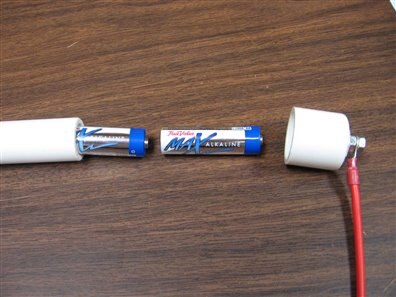
A search of the local hardware store revealed that 1/2 CPVC pipe had just about the correct inside diameter to serve as a battery tube. I also brought home 4 cap ends. Here is the results of a half hour of cutting and drilling.
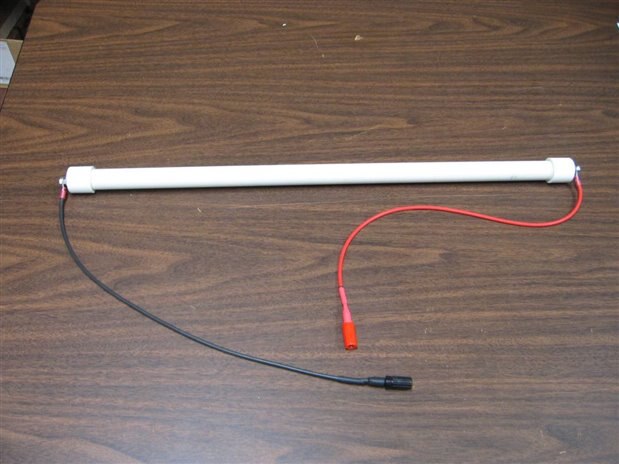
 

image

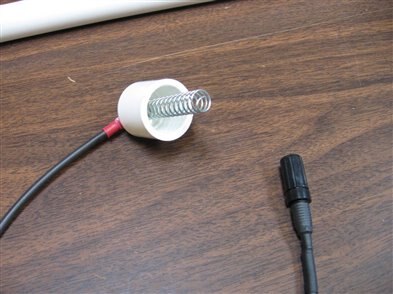
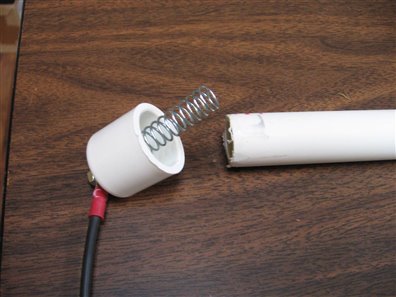
One pipe cap is fitted with a spring to keep contact on the batteries and the other cap has a terminal that is made of a brass screw that has been flattened. The pipe caps friction fit onto the pipe tightly enough so that they do not have to be secured in any other way. Here are some detail pictures of the internal construction.
 

         imageimage

This is the negative end of the battery tube.
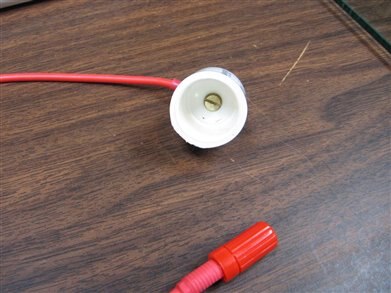
 

      imageimage

Here is the Positive end cap of the tube. The finished tubes (I made two) were 54 cm long. I attached appropriately colored test lead wire onto each cap and terminated the wire with a female banana binding post. I have a lot of adapters using banana plugs and jacks so this termination will allow me to easily attach to any test rig that I might set up.


The first simple experiment that I had in mind was to use the batteries to charge my cell phone. To do this I took apart a cheap Dollar Store 12 volt USB adapter and wired it so I could plug it into a bread board. I ran some bench tests on the small converter and determined that it was probably designed to deliver 500 mA. Here is a picture of the set up charging my cell phone. I have used one of the small voltmeters to monitor the output of the 5 volt converter. The second picture is a closeup of the small converter circuit.
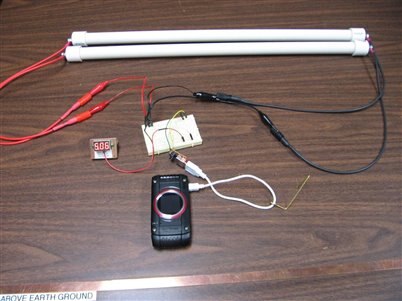
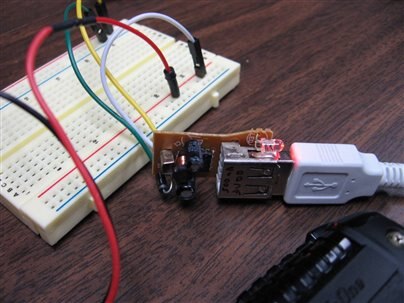
 

      imageimage


After my phone charged I hooked up a small rechargeable battery pack. It was noted that the battery pack loaded the converter down more than recharging my phone had. Within 20 minutes the load lighten up and the voltage level came back up to the 5 volt area. Here is a picture of the set up. You will also note that in this photo I have been at work with the label machine as is customary for me.
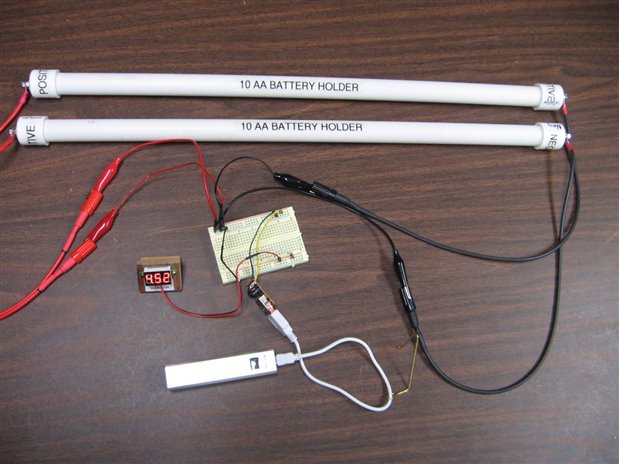
 

image


I am not sure where I will go with this project from here but the continued interest in salvaging energy on the forum made me want to be prepared for a few experiments. I believe that I will use the battery packs to charge my phone for a few days but the size of the battery tubes and the mess of wires makes it unlikely that they will be allowed to stay on my bedside stand for too many days.


John

  • Sign in to reply

Top Comments

  • jw0752
    jw0752 over 9 years ago +3
    In an Experiment suggested by friend Jan Cumps I have installed 10 AA batteries into one of my battery holders and I am going to analyze the energy output as the batteries go from their current approximate…
  • Jan Cumps
    Jan Cumps over 9 years ago +2
    A cool experiment, jw0752 . I don't think you'll be overly excited about the results though. Once a battery's voltage has dropped to say 1V, there's nada* energy left in there. You'll spend more personal…
  • jw0752
    jw0752 over 9 years ago in reply to Jan Cumps +1
    Hi Jan, You are correct. Trying to get the last drop of energy from batteries that have already dropped below a basic usable level is for the most part inconvenient, pointless, and a waste of time. However…
Parents
  • DAB
    DAB over 9 years ago

    Hi John, interesting project.


    I just recently saw a video on the EEV Blog where Dave compressed spent batteries to get more power life out of them.


    DAB

    • Cancel
    • Vote Up +1 Vote Down
    • Sign in to reply
    • More
    • Cancel
Comment
  • DAB
    DAB over 9 years ago

    Hi John, interesting project.


    I just recently saw a video on the EEV Blog where Dave compressed spent batteries to get more power life out of them.


    DAB

    • Cancel
    • Vote Up +1 Vote Down
    • Sign in to reply
    • More
    • Cancel
Children
  • Jan Cumps
    Jan Cumps over 9 years ago in reply to DAB

    I also like some of the 'Joule thief' projects, where you collect that unmentionable little bit of energy left in the battery (almost like scraping the last chocopasta out of a jar), and power something with it.

    I've seen some really neat ways of doing that. They may be just for fun, but these designs can often also be used to make a circuit run on other ultra-low-power sources.

    • Cancel
    • Vote Up 0 Vote Down
    • Sign in to reply
    • More
    • Cancel
element14 Community

element14 is the first online community specifically for engineers. Connect with your peers and get expert answers to your questions.

  • Members
  • Learn
  • Technologies
  • Challenges & Projects
  • Products
  • Store
  • About Us
  • Feedback & Support
  • FAQs
  • Terms of Use
  • Privacy Policy
  • Legal and Copyright Notices
  • Sitemap
  • Cookies

An Avnet Company © 2026 Premier Farnell Limited. All Rights Reserved.

Premier Farnell Ltd, registered in England and Wales (no 00876412), registered office: Farnell House, Forge Lane, Leeds LS12 2NE.

ICP 备案号 10220084.

Follow element14

  • X
  • Facebook
  • linkedin
  • YouTube