


Here is a Project created using new KDS version 3.0 and Kinetis software development kit 1.2 on processor expert platform. This is a project for Toggle a Green LED using PIT module of PE implemented using freedom board FRDM-KL43Z.
Requirements
To run successfully this exercise, you need first to download following packages (link enclosed):
- IDE toolchain Kinetis Design Studio (KDS) min v3.0
- microcontroller Library Kinetis Software Development Kit (KSDK) min 1.2
- FRDM-KL43Z materials (schematics, Quick Start Package and Sample Code Package)
- latest P&E Micro windows drivers and SDA Applications
Before connecting your FRDM-KL43Z for the first time to the USB port of your computer, install the P&E Micro windows driver to ensure a correct detection of the board.
Install first the IDE toolchain KDS and when the installation ended successfully, install the MCU Library KSDK keeping the proposed installation path c:\freescale\kds or ksdk unchanged.
Launch KDS and define your workspace path, then select Help, Install New Software, Add, Archive, C:\Freescale\KSDK_1.2.0\tools\eclipse_update, select KSDK_1.2.0_Eclipse_Update.zip and press Open, OK, select KSDK Eclipse Update, press Next, Accept the Licence Agreement and press Finish. The KSDK libraries are now directly available in the IDE toolchain.
The automated code generator Processor Expert is already included in the IDE Toolchain (available separately as Processor Expert Driver Suite for other IDE toolchains).
Tutorial instructions
The tutorial shows how to toggle LED with KSDK 1.2.0 in KDS 3.0 and Processor Expert using a PIT (Periodic Interrupt Timer) module Output for FRDM-KL43Z.
Guide is prepared to toggle Green LED which is connected to PTD5 (according to FRDM-KL43Z schematics shown below).
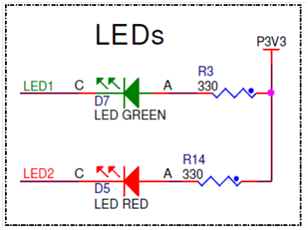
Green led connected to : PTD5 - D13/SCK/LED/int
RED LED connected to : PTE31/TPM0_CH4
Create new project
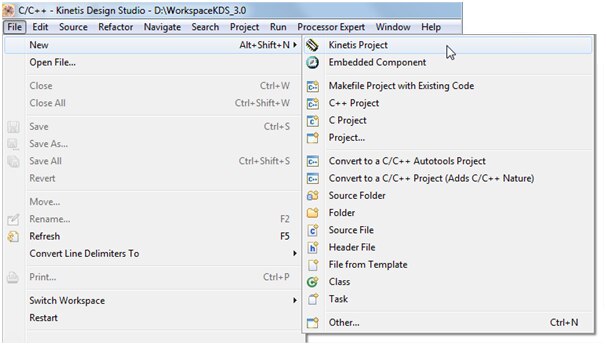
Create new project in KDS 3.0 with KSDK 1.2.0
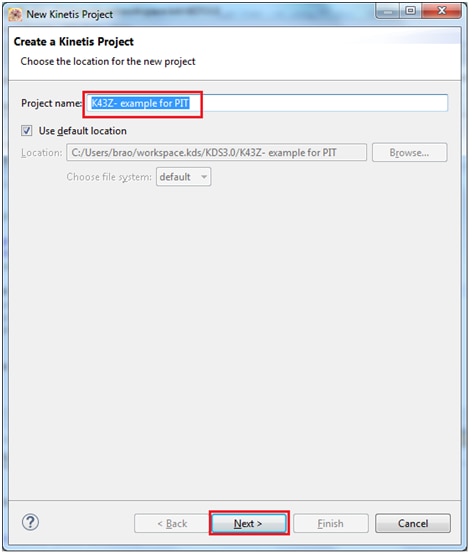
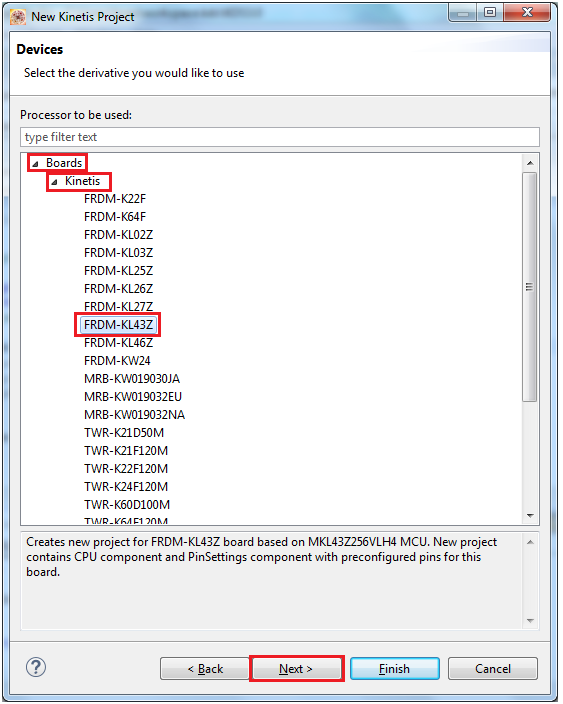
Type the project name” K43Z- example for PIT”, choose the board FRDM-KL43Z, mark off options Kinetis SDK and Processor Expert
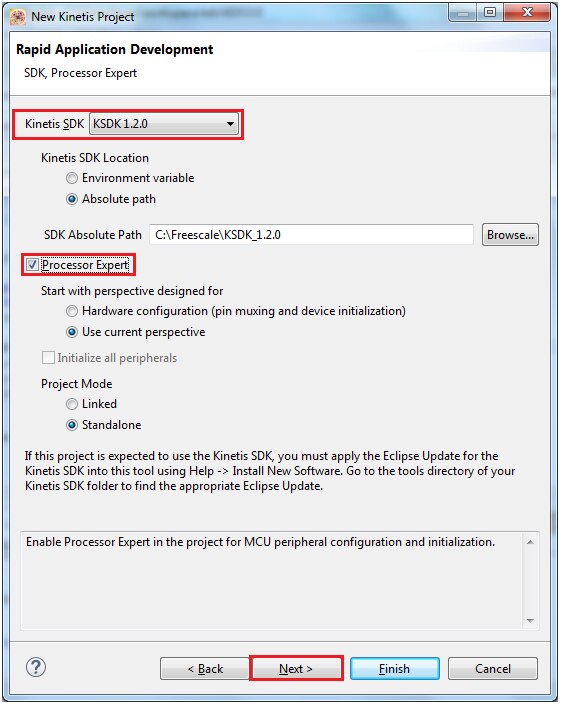
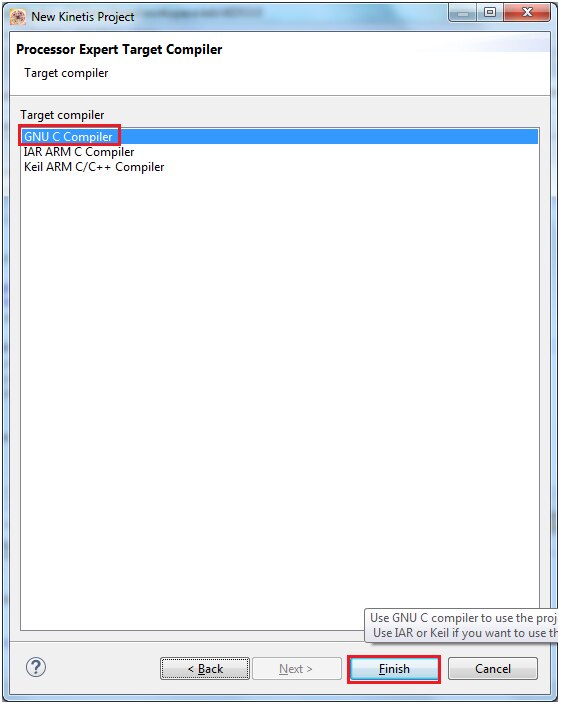
Now, your project structure looks like this in the project explorer and Processor Expert windows:
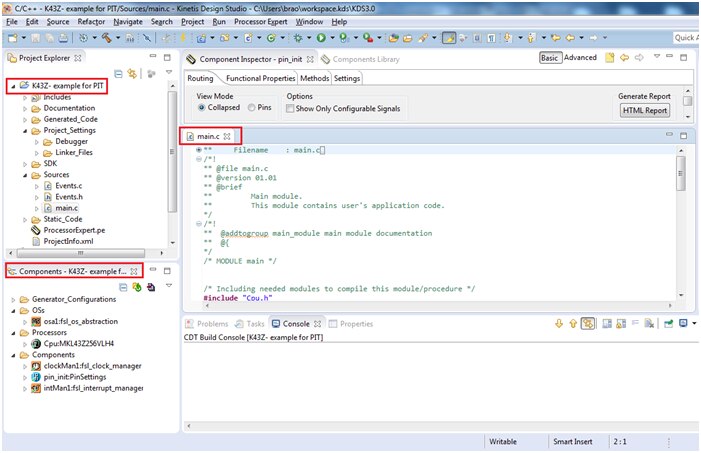
Set Processor Expert Settings
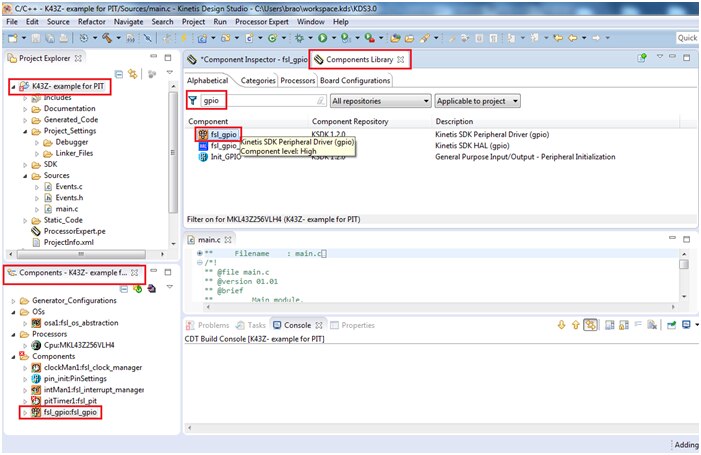
Now, go to Components Library, find fsl_pit component using filters KSDK 1.2.0 and Applicable to Project and by double click add the component to the Processor Expert Component View of your project.
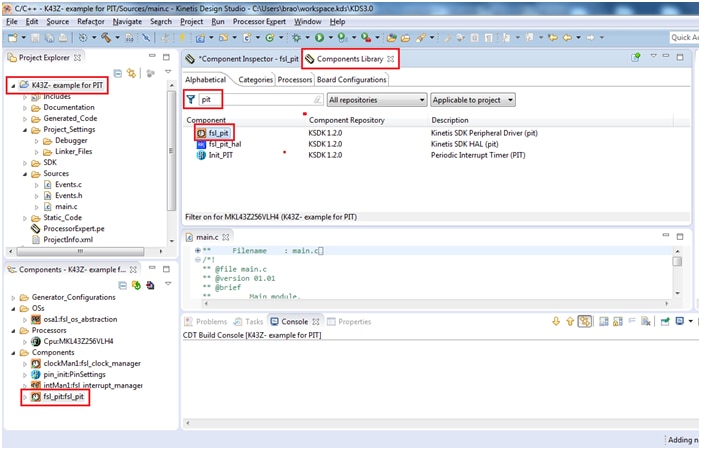
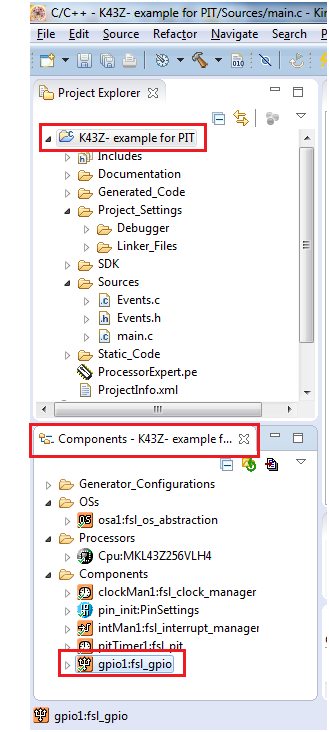
Similarly search for gpio and double click on fsl_gpio component which is required for toggling LED as shown below:
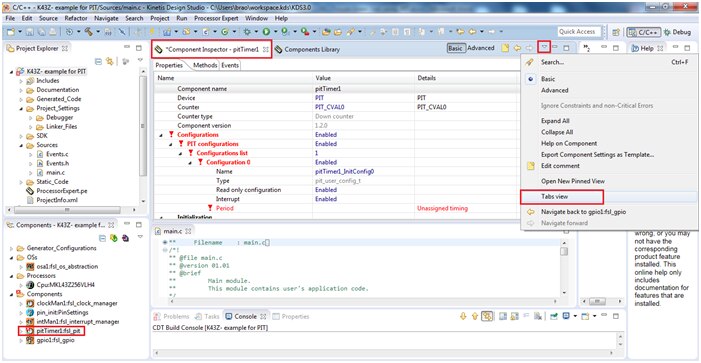
Double click on fsl_pit module from components windows and Component Inspector view should open automatically and uncheck the option for Tabs view which switches to classical view.
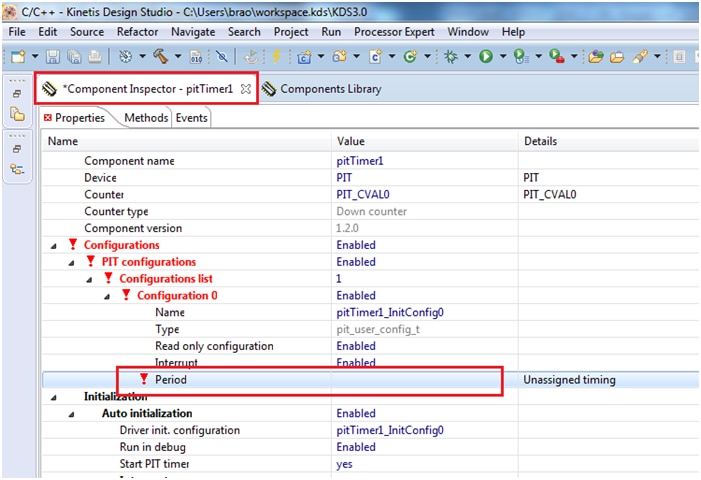
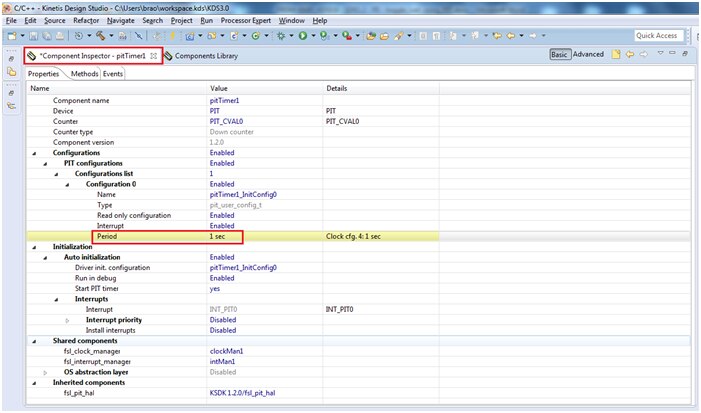
Configure the PIT module and click on “Period” option under configuration section as shown below:
Change the value to 1 sec by clicking on  button ...
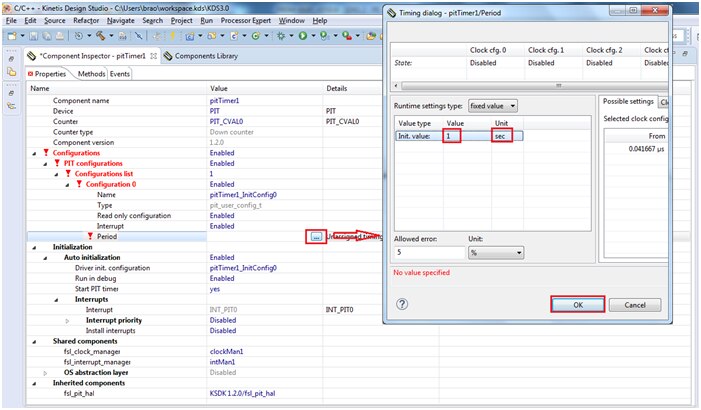
Now all the red markings will vanish which indicates it is error free
Now double click on the fsl_gpio module it looks like below:
Make the settings as shown below:
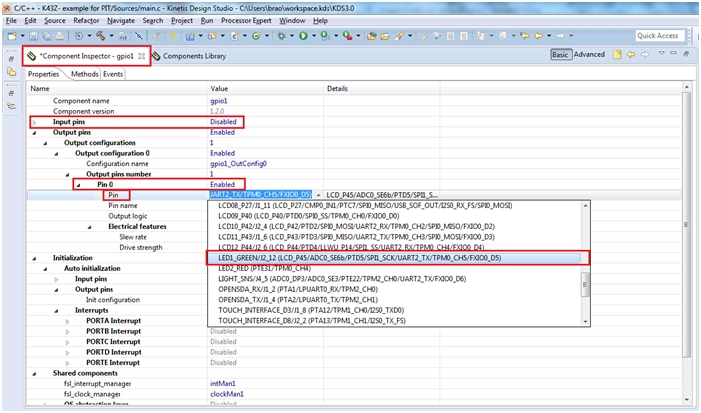
output pin 0 is configured to LED1_GREEN port pin PTD-5 which is connected to Green LED
and i.e disable the input pins as shown in below picture
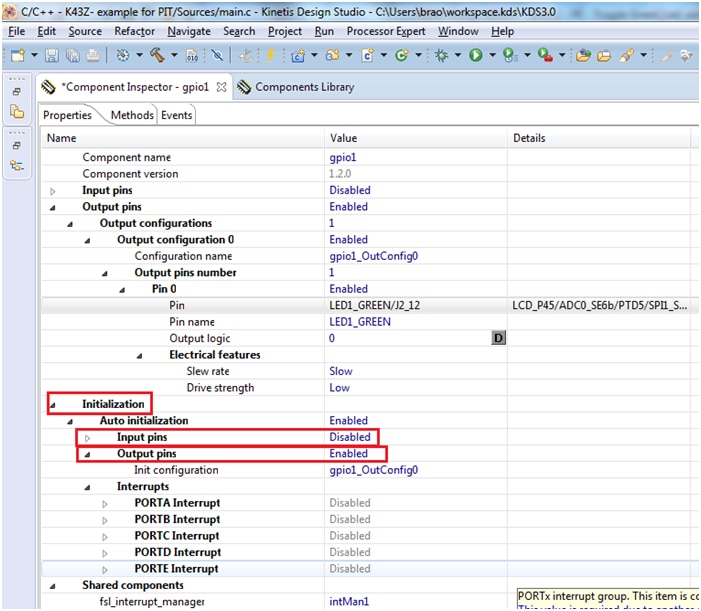
Now all our modules are ready assigned, we need to generate code by pressing the generate icon as shown below:
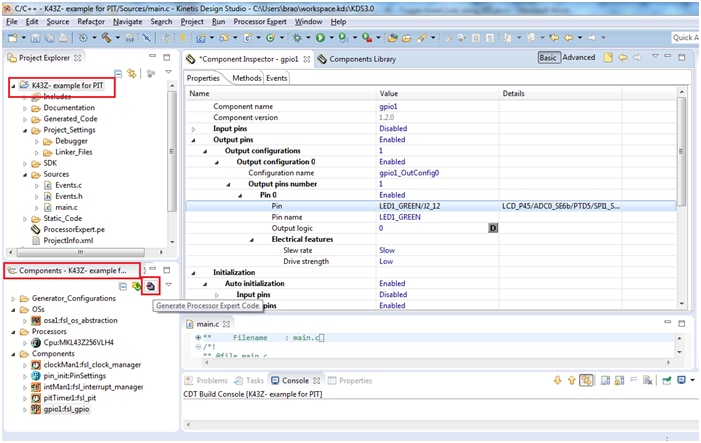
You can see all the required files will get generated under Generated_Code folder inside project folder.
Now it’s time to include our task inside the PIT IRQ. The ISR can be found in Events.c file as shown below:
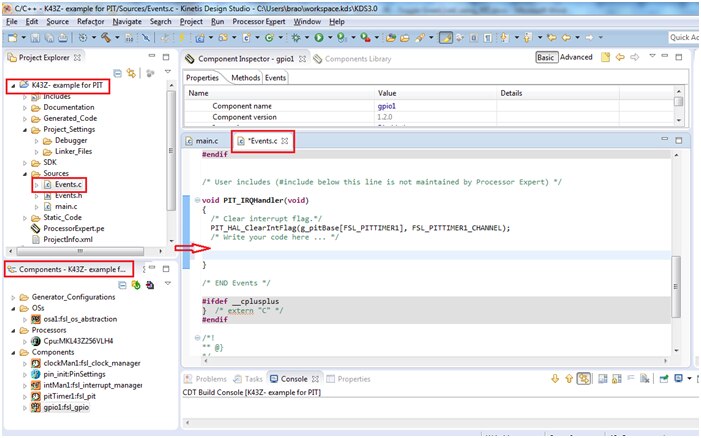
Now we are inserting the toggling function inside PIT0_IRQHandler()
The toggling function can be found from components window inside fsl_gpio module as shown below:
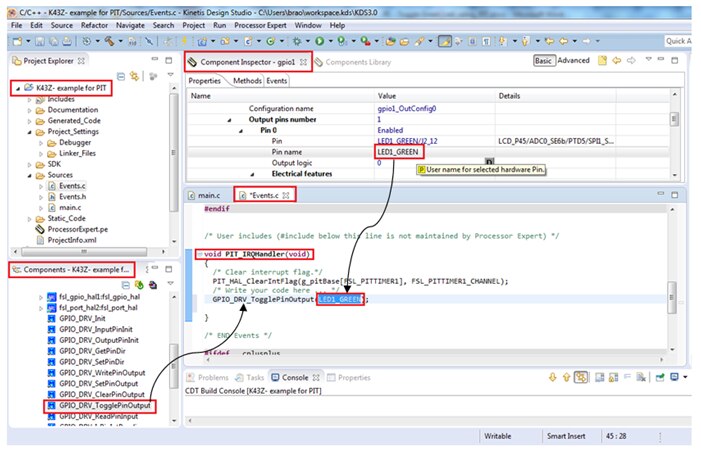
The function GPIO_DRV_TogglePinOutput(uint32_t pinName); accepts the parameter uint32_t pinName this can be found from the assigned name for blue led gpio we assigned in component inspector of fsl_gpio:
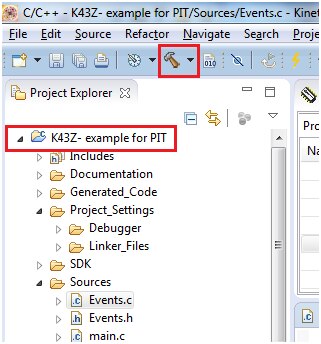
Now Build your project by choosing the right toolbar shortcut
You have two options to execute the project
One is by Debugging the code using the SDA Debug MSD application driver and another is by generating the binaries in SREC format and drag-n-drop to the MSD folder of the KL43Z detected after plugging the board to your computer.
I will proceed with the second option (as i have done the first option for almost of my other blogs)
Note: you can download the PE micro driver from below link:
http://www.pemicro.com/downloads/main_downloads_temp/201507291203137773819/Pemicro_OpenSDA_Debug_MSD_Update_Apps_2015_03_12.zip
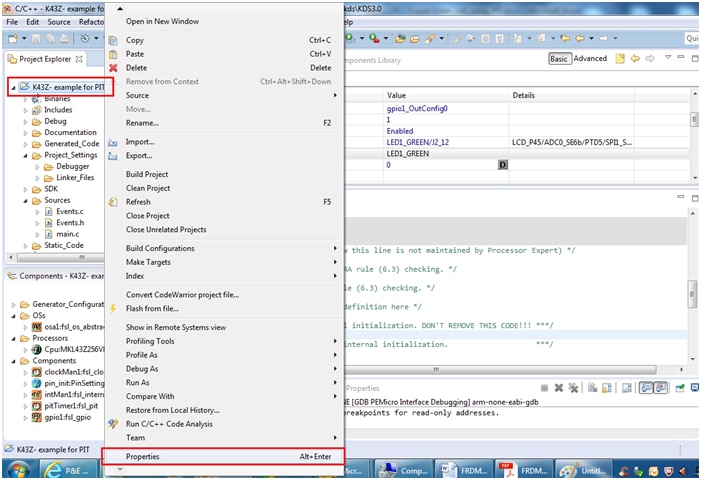
Right click on project folder and select the properties as shown below:
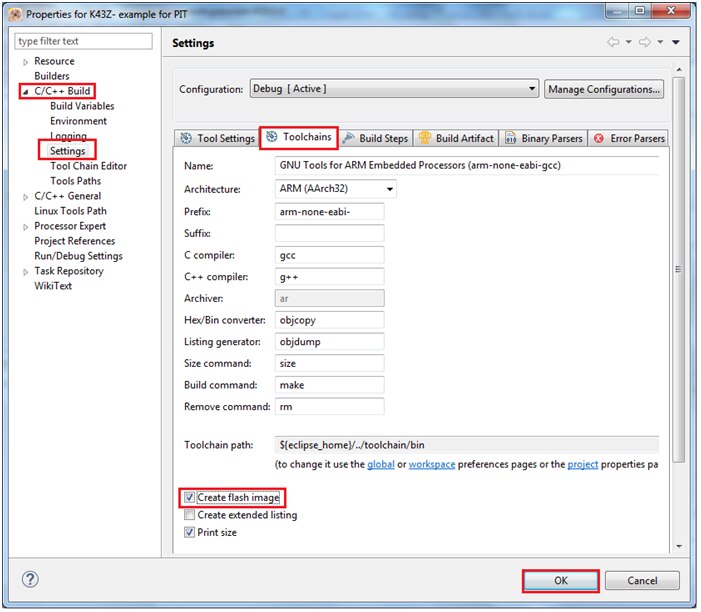
Select “Toolchains” and select the check box “Create flash Image” and “Apply” and click “ok” as shown below:
Then go to “Tool Settings” and select “general” and select “Motorola S-record” from the pop down menu of output file format option as shown below:
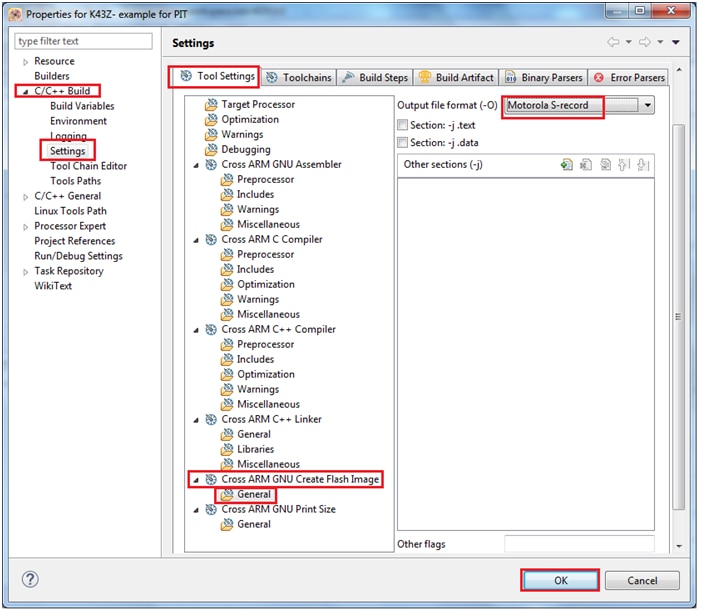
Click on “Apply” and select “ok”
Now proceed further for building the project as did earlier (i.e clicking the hammer button)
Now you can see the exe file “K43Z- example for PIT.srec” inside the “Debug” folder of your project folder as shown below:
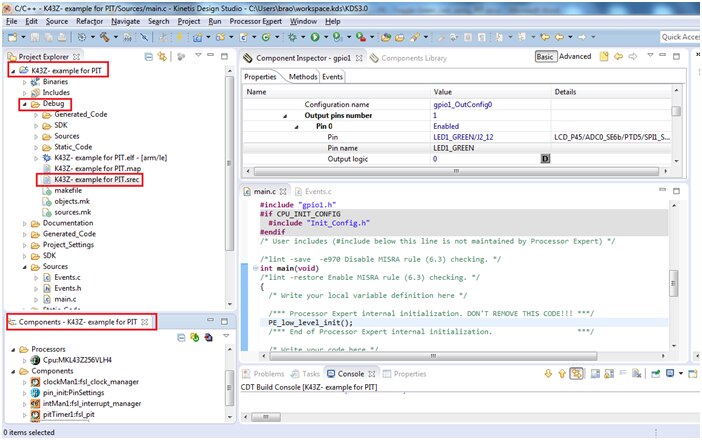
Now copy this file
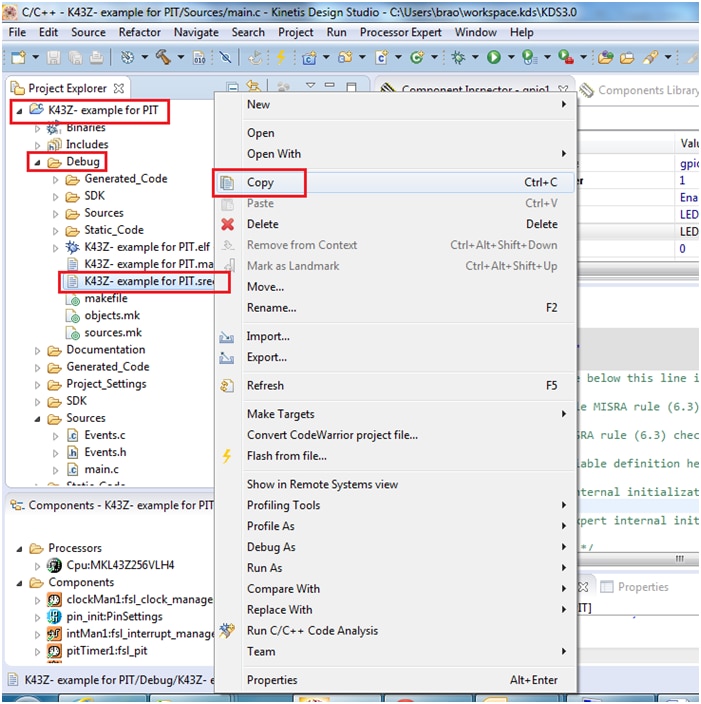
And paste this into the KL43Z MSD folder detected as shown below:

Your board now will get reset and the program will start to run
You should now able to see the Green LED blink with a 1Hz frequency i.e for every 1 sec of interrupt the LED toggles.
I have enclosed the project folder and binaries for quick reference and evaluation.

