element14 Community
element14 Community
    Register Log In
  • Site
  • Search
  • Log In Register
  • Community Hub
    Community Hub
    • What's New on element14
    • Feedback and Support
    • Benefits of Membership
    • Personal Blogs
    • Members Area
    • Achievement Levels
  • Learn
    Learn
    • Ask an Expert
    • eBooks
    • element14 presents
    • Learning Center
    • Tech Spotlight
    • STEM Academy
    • Webinars, Training and Events
    • Learning Groups
  • Technologies
    Technologies
    • 3D Printing
    • FPGA
    • Industrial Automation
    • Internet of Things
    • Power & Energy
    • Sensors
    • Technology Groups
  • Challenges & Projects
    Challenges & Projects
    • Design Challenges
    • element14 presents Projects
    • Project14
    • Arduino Projects
    • Raspberry Pi Projects
    • Project Groups
  • Products
    Products
    • Arduino
    • Avnet & Tria Boards Community
    • Dev Tools
    • Manufacturers
    • Multicomp Pro
    • Product Groups
    • Raspberry Pi
    • RoadTests & Reviews
  • About Us
    About the element14 Community
  • Store
    Store
    • Visit Your Store
    • Choose another store...
      • Europe
      •  Austria (German)
      •  Belgium (Dutch, French)
      •  Bulgaria (Bulgarian)
      •  Czech Republic (Czech)
      •  Denmark (Danish)
      •  Estonia (Estonian)
      •  Finland (Finnish)
      •  France (French)
      •  Germany (German)
      •  Hungary (Hungarian)
      •  Ireland
      •  Israel
      •  Italy (Italian)
      •  Latvia (Latvian)
      •  
      •  Lithuania (Lithuanian)
      •  Netherlands (Dutch)
      •  Norway (Norwegian)
      •  Poland (Polish)
      •  Portugal (Portuguese)
      •  Romania (Romanian)
      •  Russia (Russian)
      •  Slovakia (Slovak)
      •  Slovenia (Slovenian)
      •  Spain (Spanish)
      •  Sweden (Swedish)
      •  Switzerland(German, French)
      •  Turkey (Turkish)
      •  United Kingdom
      • Asia Pacific
      •  Australia
      •  China
      •  Hong Kong
      •  India
      •  Japan
      •  Korea (Korean)
      •  Malaysia
      •  New Zealand
      •  Philippines
      •  Singapore
      •  Taiwan
      •  Thailand (Thai)
      •  Vietnam
      • Americas
      •  Brazil (Portuguese)
      •  Canada
      •  Mexico (Spanish)
      •  United States
      Can't find the country/region you're looking for? Visit our export site or find a local distributor.
  • Translate
  • Profile
  • Settings
Raspberry Pi
  • Products
  • More
Raspberry Pi
Raspberry Pi Forum Interesting "Competitors" for the Raspberry Pi
  • Blog
  • Forum
  • Documents
  • Quiz
  • Events
  • Polls
  • Files
  • Members
  • Mentions
  • Sub-Groups
  • Tags
  • More
  • Cancel
  • New
Join Raspberry Pi to participate - click to join for free!
Featured Articles
Announcing Pi
Technical Specifications
Raspberry Pi FAQs
Win a Pi
Raspberry Pi Wishlist
Actions
  • Share
  • More
  • Cancel
Forum Thread Details
  • Replies 196 replies
  • Subscribers 705 subscribers
  • Views 23610 views
  • Users 0 members are here
  • single_board_computer
  • single_board_computers
  • raspberry_pi
Related

Interesting "Competitors" for the Raspberry Pi

wallarug
wallarug over 13 years ago

It is interesting to see what people are comparing to the "An ARM GNU/Linux box for $25. Take a byte!" to these days.


http://arstechnica.com/information-technology/2012/09/99-raspberry-pi-sized-supercomputer-touted-in-kickstarter-project/

This article is talking about a $99 dollar supercomputer that has 16 cores @ 700MHz each.


http://www.electronicsweekly.com/Articles/28/09/2012/54676/raspberry-pi-gets-a-competitor.htm

This article is about an ARM board, not that different to the Raspberry Pi but with more power and RAM.

  • Sign in to reply
  • Cancel
Parents
  • jamodio
    jamodio over 13 years ago

    The parallela sounds and looks cool but we are talking about a major project that includes sillicon rebake and that probably is 6-12months away from mass production.


    Meanwhile while there are other developments that are not exactly comparable to the R-Pi, they are slowly but steady making progress, like the OLinuXino boards from Olimex. I'm testing both the micro and maxi using the Freescale iMX233 application processor SoC (fully documented by the way,) waiting for the A13 one and they also have under development one using the A10. The iMX233 Maxi uses also the LAN9512 and I didn't find any issues with it yet (and BTW the connectors are properly aligned and it has a nice swtiching power supply, the board is slightly bigger than the R-pi, no HDMI/VGA tough.)


    I also recently got a TI AM335x Starter Kit, you will start to see more stuff based on the AM335x and TI will get more agressive to dettach the OMAP from some applications and put it on boards similar to the R-Pi.


    Still the R-pi continues to be a good idea, unfortunatelly with an associated plan badly executed and with more focus on hype and promotion than really make it a strong and solid "product" with the participation of a community that is eager and able to contribute.


    No schematics, no Gerbers, major concern is "cloning" .... I'd not clone something that is not working properly ...


    -J

    • Cancel
    • Vote Up 0 Vote Down
    • Sign in to reply
    • Cancel
  • Former Member
    Former Member over 13 years ago in reply to jamodio

    At least it looks like Olimex is taking the problems from people using their boards seriously.

    Their Forum is an example of what a forum should be like.


    The supply dip when you connect an usb device is a known fact. It might be hard to notice it on a scope, unless you have a good memory scope and are able to trigger it properly. The issue happens more frequently on the newer boards with the usb polyfuses removed. If you look at the Pi schematics, there aren't much buffer capacitors on the 5V supply rail. (just 1 small capacitor). I guess we get what we payed for.

    It looks like a lot of the Pi usb issues are caused by timing.

    As linux isn't a real time OS, and as stated before that the cpu can become heavy loaded, I doubt they will ever be able to fully fix the issue.

    Besides the usb, there are other dissapointing things. One mentionned already is the fact that X11 isn't hardware accelerated.

    Another one is the poor quality of the analog audio output. A third one is the fact that you need to properly shutdown the system to avoid sd card corruption. This makes it difficult to use the Pi as an embedded solution. A fourth one is the critical power requirement of the board.

    Some of those can be resolved, but all solutions make your cheap solution (not so cheap) anymore.

    I know it's a little off topic, but these points are worth checking when seeking for "Competitors" and might rectify a higher price.

    • Cancel
    • Vote Up 0 Vote Down
    • Sign in to reply
    • Cancel
  • johnbeetem
    johnbeetem over 13 years ago in reply to morgaine

    Morgaine Dinova wrote:


    Me too.  What's more, it's very appealing for making clusters, since such a large number of vertically-oriented EOMA-68 modules can be placed side by aside in a horizontal rack.


    This is the age of multicore, allegedly.  We should not be building general purpose computers of any ilk with single CPUs anymore, it will count against our karma at the pearly gates. image

    Yes, a EOMA-68 cluster sounds great!  It would look something like the inside of the HAL-9000 in 2001: A Space Odyssey image


    The lesson of multicore: if RasPi had a multicore SoC, one core could handle USB properly and one could run X server full time, eliminating two serious performance issues.

    • Cancel
    • Vote Up 0 Vote Down
    • Sign in to reply
    • Cancel
  • GeorgeIoak
    GeorgeIoak over 13 years ago in reply to johnbeetem

    I totally agree with a multicore processor but I fail to see how you think 68 pins is near enough. If we're considering the embedded space then you can't ignore direct connection to an LCD which means 24 pins just for RGB, then there's Ethernet, USB, SPI, PWM, and on and on. You guys were complaining about wanting an easy method to solder devices but it's specialized equipment to weld those PCMCIA clam shells together.

    • Cancel
    • Vote Up 0 Vote Down
    • Sign in to reply
    • Cancel
  • morgaine
    morgaine over 13 years ago in reply to GeorgeIoak

    George Ioakimedes wrote:


    I totally agree with a multicore processor but I fail to see how you think 68 pins is near enough. If we're considering the embedded space then you can't ignore direct connection to an LCD which means 24 pins just for RGB, then there's Ethernet, USB, SPI, PWM, and on and on. You guys were complaining about wanting an easy method to solder devices but it's specialized equipment to weld those PCMCIA clam shells together.


    The pincount on a processor module within a multiprocessing cluster isn't really related to all those things you mention, for a variety of interrelated reasons:


    • Memory should be local to each processor module because global memory doesn't scale beyond very small processor numbers.
    • I/O isn't done on processor modules because all processors need to access it symmetrically without bothering other processors.
    • Realtime I/O should be handled by dedicated microcontrollers, not by a  *nix kernel which is very bad at it.
    • Microcontrollers provide large numbers of GPIOs and are dirt cheap, so microcontroller-based I/O modules should do all the I/O.
    • Communication between processor modules and I/O modules is best done as high-speed serial messaging.
    • Serial message communication doesn't need a lot of pins and is topologically very flexible.  Remember the transputer.


    I suspect we have completely different designs in mind and hence we are talking about different things. image


    Morgaine.

    • Cancel
    • Vote Up 0 Vote Down
    • Sign in to reply
    • Cancel
  • Former Member
    Former Member over 13 years ago in reply to johnbeetem

    I really like the EOMA-68 form factor, which uses a PCMCIA 68-pin connector.

    As someone who used to have to solder pcmcia connectors on some early Thinkpads - 386 vintage, I know I never want to have to do it again.  Besides, if you look in a modern laptop that still has pcmcia the pitch has reduced down to the sub 1mm problem you entioned in another post.


    It's certainly one thing I don't like - fine pitch connectors. From the experimenters perspective you either need easily available, cheap, and can be hand soldered without requiring solder paste hot air and/or liquid flux.  While those requirements won't put some of us off, they significantly reduce the accessibility for most people.

    Or else you need a cheaply available adapter board to go from the fine pitch connector to something more useable - and a bigger case image

    • Cancel
    • Vote Up 0 Vote Down
    • Sign in to reply
    • Cancel
  • morgaine
    morgaine over 13 years ago in reply to Former Member

    selsinork wrote:


    Or else you need a cheaply available adapter board to go from the fine pitch connector to something more useable - and a bigger case image


    Well I have no shortage of DIN41612 connectors. image


    More seriously, what are the major options in high pinout connectors these days without dropping below 0.1" pitch?  While DIN41612 is still available and viable, I assume that there are more modern alternatives, not to mention cheaper as well.  "Industrial strength" is probably not needed here.

    • Cancel
    • Vote Up 0 Vote Down
    • Sign in to reply
    • Cancel
  • Former Member
    Former Member over 13 years ago in reply to morgaine

    More seriously, what are the major options in high pinout connectors these days without dropping below 0.1" pitch? 

    I really don't know a good answer to that. Number of needed connections vs size of the connector is always going to be an issue. Need 200 connections and your DIN41612 connectors make for a huge board.  OTOH, I recently mistakenly ordered some 1.27mm pin headers instead of 2.54mm recently, but they're tiny, fragile and most likely need a professionally produced TPH multi-layer PCB to be able to route a lot of signals away from the connector.

    • Cancel
    • Vote Up 0 Vote Down
    • Sign in to reply
    • Cancel
  • jamodio
    jamodio over 13 years ago in reply to morgaine

    I agree that memory should be local but not just to be able to scale, but for timing and pcb layout considerations at high speed data rates. PoP is a good solution because you get rid of all the pcb layout issues but it limits the options for SoC and memory.


    Not exactly this (much less their price) but I like this concept:

    http://www.teamfdi.com/development-tools-kits/products/6/SOMDIMM-LPC2478


    -J

    • Cancel
    • Vote Up 0 Vote Down
    • Sign in to reply
    • Cancel
  • shabaz
    shabaz over 13 years ago in reply to jamodio

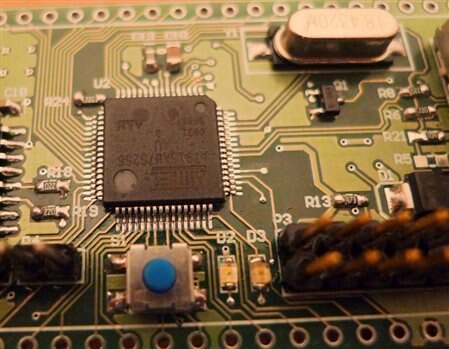
    I don't like hand-soldering below 1mm on a regular basis, but it is possible to do 0.5mm and possibly smaller just with a conventional iron, so maybe higher-density connectors are possible if needed. But there are some high-speed serial interfaces for comms, even gigEth ; )  I (like many people I guess) use the solder-wick method (i.e. just solder conventionally with a normal iron and solder, but just have lots of flux on the board first. Then, suck up the bridges with the solder-wick wire. However, most processors are BGA of course : ( This was 0.5mm pitch with a normal antex iron (with a larger bit than I should have really used).

    image

    • Cancel
    • Vote Up +1 Vote Down
    • Sign in to reply
    • Cancel
  • johnbeetem
    johnbeetem over 13 years ago in reply to morgaine

    Morgaine Dinova wrote:


    More seriously, what are the major options in high pinout connectors these days without dropping below 0.1" pitch?  While DIN41612 is still available and viable, I assume that there are more modern alternatives, not to mention cheaper as well.  "Industrial strength" is probably not needed here.

    I think Cubieboard does a good job with their connectors.  They have two 48-pin 2mm pitch connectors, so it's easy to make a base board with low-profile Samtec 2mm sockets (e.g., CLT and SMM series).  Not as low profile as EOMA-68 but you do get 96 pins.


    http://linux-sunxi.org/Cubieboard

    • Cancel
    • Vote Up 0 Vote Down
    • Sign in to reply
    • Cancel
  • jamodio
    jamodio over 13 years ago in reply to shabaz

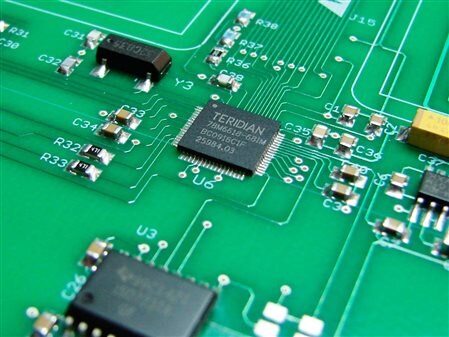
    QFN-68 0.4mm pitch, hand soldered

    image

    -J

    • Cancel
    • Vote Up +1 Vote Down
    • Sign in to reply
    • Cancel
Reply
  • jamodio
    jamodio over 13 years ago in reply to shabaz

    QFN-68 0.4mm pitch, hand soldered

    image

    -J

    • Cancel
    • Vote Up +1 Vote Down
    • Sign in to reply
    • Cancel
Children
  • shabaz
    shabaz over 13 years ago in reply to jamodio

    Hehe yes QFN is certainly a skill!

    • Cancel
    • Vote Up 0 Vote Down
    • Sign in to reply
    • Cancel
  • GeorgeIoak
    GeorgeIoak over 13 years ago in reply to shabaz

    Hey Everyone, I just saw this, http://wandboard.org, at first glance it's looking pretty good but I haven't read the details...

    • Cancel
    • Vote Up 0 Vote Down
    • Sign in to reply
    • Cancel
  • Former Member
    Former Member over 13 years ago in reply to GeorgeIoak

    Looks interesting, the iMX6 series of SoC holds promise. I continually wonder about the compromises though - why do I have to buy useless (to me) wifi and bluetooth in order to get dual core and 1Gb ram ?


    I see from their google group that someone has already asked the 'accelerated X ?' question, I wonder if he has an RPi image


    So $69, but what isn't really clear is whether that includes the 'interface board' or if the interface board is a seperate $150 item.


    Also at 314 pins I expect the unspecified 'EDM' connector is going to be fairly fine pitch.

    • Cancel
    • Vote Up 0 Vote Down
    • Sign in to reply
    • Cancel
  • jamodio
    jamodio over 13 years ago in reply to Former Member

    The iMX6 will be quite an interesting series of SoC, among other things integrated 1Gbps Ethernet and 3Gbps SATA, etc.

    Expect other boards starting to pop up here and there.


    -J

    • Cancel
    • Vote Up 0 Vote Down
    • Sign in to reply
    • Cancel
  • johnbeetem
    johnbeetem over 13 years ago in reply to GeorgeIoak

    George Ioakimedes wrote:


    Hey Everyone, I just saw this, http://wandboard.org, at first glance it's looking pretty good but I haven't read the details...

    Shipping at end of November 2012 and they don't have photos of prototype boards?  Not a good sign IMO.

    • Cancel
    • Vote Up 0 Vote Down
    • Sign in to reply
    • Cancel
  • jamodio
    jamodio over 13 years ago in reply to johnbeetem

    Well we had plenty of photos of the Raspberry Pi, even X-Rays, and it took them some time to start shipping.


    -J

    • Cancel
    • Vote Up 0 Vote Down
    • Sign in to reply
    • Cancel
  • jamodio
    jamodio over 13 years ago in reply to johnbeetem

    FYI, one of the producers of EDM modules ... Most probably the wanboard will be just another "mainboard" for the compact modules.


    http://www.technexion.com/index.php/products/edm/compact/edm-cf-imx6


    -J

    • Cancel
    • Vote Up 0 Vote Down
    • Sign in to reply
    • Cancel
element14 Community

element14 is the first online community specifically for engineers. Connect with your peers and get expert answers to your questions.

  • Members
  • Learn
  • Technologies
  • Challenges & Projects
  • Products
  • Store
  • About Us
  • Feedback & Support
  • FAQs
  • Terms of Use
  • Privacy Policy
  • Legal and Copyright Notices
  • Sitemap
  • Cookies

An Avnet Company © 2026 Premier Farnell Limited. All Rights Reserved.

Premier Farnell Ltd, registered in England and Wales (no 00876412), registered office: Farnell House, Forge Lane, Leeds LS12 2NE.

ICP 备案号 10220084.

Follow element14

  • X
  • Facebook
  • linkedin
  • YouTube