element14 Community
element14 Community
    Register Log In
  • Site
  • Search
  • Log In Register
  • Community Hub
    Community Hub
    • What's New on element14
    • Feedback and Support
    • Benefits of Membership
    • Personal Blogs
    • Members Area
    • Achievement Levels
  • Learn
    Learn
    • Ask an Expert
    • eBooks
    • element14 presents
    • Learning Center
    • Tech Spotlight
    • STEM Academy
    • Webinars, Training and Events
    • Learning Groups
  • Technologies
    Technologies
    • 3D Printing
    • FPGA
    • Industrial Automation
    • Internet of Things
    • Power & Energy
    • Sensors
    • Technology Groups
  • Challenges & Projects
    Challenges & Projects
    • Design Challenges
    • element14 presents Projects
    • Project14
    • Arduino Projects
    • Raspberry Pi Projects
    • Project Groups
  • Products
    Products
    • Arduino
    • Avnet & Tria Boards Community
    • Dev Tools
    • Manufacturers
    • Multicomp Pro
    • Product Groups
    • Raspberry Pi
    • RoadTests & Reviews
  • About Us
  • Store
    Store
    • Visit Your Store
    • Choose another store...
      • Europe
      •  Austria (German)
      •  Belgium (Dutch, French)
      •  Bulgaria (Bulgarian)
      •  Czech Republic (Czech)
      •  Denmark (Danish)
      •  Estonia (Estonian)
      •  Finland (Finnish)
      •  France (French)
      •  Germany (German)
      •  Hungary (Hungarian)
      •  Ireland
      •  Israel
      •  Italy (Italian)
      •  Latvia (Latvian)
      •  
      •  Lithuania (Lithuanian)
      •  Netherlands (Dutch)
      •  Norway (Norwegian)
      •  Poland (Polish)
      •  Portugal (Portuguese)
      •  Romania (Romanian)
      •  Russia (Russian)
      •  Slovakia (Slovak)
      •  Slovenia (Slovenian)
      •  Spain (Spanish)
      •  Sweden (Swedish)
      •  Switzerland(German, French)
      •  Turkey (Turkish)
      •  United Kingdom
      • Asia Pacific
      •  Australia
      •  China
      •  Hong Kong
      •  India
      • Japan
      •  Korea (Korean)
      •  Malaysia
      •  New Zealand
      •  Philippines
      •  Singapore
      •  Taiwan
      •  Thailand (Thai)
      • Vietnam
      • Americas
      •  Brazil (Portuguese)
      •  Canada
      •  Mexico (Spanish)
      •  United States
      Can't find the country/region you're looking for? Visit our export site or find a local distributor.
  • Translate
  • Profile
  • Settings
Raspberry Pi
  • Products
  • More
Raspberry Pi
Raspberry Pi Forum After School club projects
  • Blog
  • Forum
  • Documents
  • Quiz
  • Events
  • Polls
  • Files
  • Members
  • Mentions
  • Sub-Groups
  • Tags
  • More
  • Cancel
  • New
Join Raspberry Pi to participate - click to join for free!
Featured Articles
Announcing Pi
Technical Specifications
Raspberry Pi FAQs
Win a Pi
Raspberry Pi Wishlist
Actions
  • Share
  • More
  • Cancel
Forum Thread Details
  • Replies 16 replies
  • Subscribers 678 subscribers
  • Views 2657 views
  • Users 0 members are here
  • raspberry_pi
  • school
  • eduction
Related

After School club projects

GreenYamo
GreenYamo over 12 years ago

Hello, Hopefully within the next couple of weeks I'll be helping out in a local school's Pi club.

The format is pretty much free form, about an hour or so after school.


I'd love some ideas from this group as to what would be a good project for an hour or so - it can be anything, a Python Project, some GPIO interfacing, Scratch.


The Teaching and Learning Resources topic on the foundation's forum only has just over 300 posts, I was hoping for a bit more than that !


Thank you.


Steve

  • Sign in to reply
  • Cancel
Parents
  • johnbeetem
    johnbeetem over 12 years ago

    I second coder27's concerns about a meaningful experience in 45 minutes.  So let me look back over 50 years to see what might be useful...


    With electronics, probably the best example is a crystal radio.  Just five components: L, C, D, antenna, and earphone.  The lesson is tremendous: all the energy for driving that earphone comes from the radio waves, all you're doing is filtering out the noise.  Magic!


    With computing, I remember my daughters getting a lot of pleasure out of playing with Logo and its screen turtle.  With a few SLOC you can draw amazingly pretty pictures, and then make little changes and make other pretty pictures.  If you have a physical turtle, you get to draw them which is even better and you have something to take home for Mom and/or Dad to put on the 'fridge.


    I had a lot of fun in high school with relay kits.  You got to make fun logic circuits the Shannon way with lots of clacking noise and light bulbs switching on and off.  Start with something simple like AND and OR gates, and then expand to full adders and then tally circuits.  Clickity clickity clack clack.  You get to see and hear something really happening.


    I bet I would have had a lot of fun with Lego Mindstorm back when I was 11.  Lego was pretty much for art back then -- if you wanted to engineer something, you used your Erector set (Meccano for mes amis across the Pond).  In the USA, there was a time when 99% of engineers had Erector sets when they were kids -- I'm from the last generation of those.


    These are all examples of things that take the spark and let it grow.  Be careful of projects that smother the spark with arbitrary complexity.

    • Cancel
    • Vote Up 0 Vote Down
    • Sign in to reply
    • Cancel
Reply
  • johnbeetem
    johnbeetem over 12 years ago

    I second coder27's concerns about a meaningful experience in 45 minutes.  So let me look back over 50 years to see what might be useful...


    With electronics, probably the best example is a crystal radio.  Just five components: L, C, D, antenna, and earphone.  The lesson is tremendous: all the energy for driving that earphone comes from the radio waves, all you're doing is filtering out the noise.  Magic!


    With computing, I remember my daughters getting a lot of pleasure out of playing with Logo and its screen turtle.  With a few SLOC you can draw amazingly pretty pictures, and then make little changes and make other pretty pictures.  If you have a physical turtle, you get to draw them which is even better and you have something to take home for Mom and/or Dad to put on the 'fridge.


    I had a lot of fun in high school with relay kits.  You got to make fun logic circuits the Shannon way with lots of clacking noise and light bulbs switching on and off.  Start with something simple like AND and OR gates, and then expand to full adders and then tally circuits.  Clickity clickity clack clack.  You get to see and hear something really happening.


    I bet I would have had a lot of fun with Lego Mindstorm back when I was 11.  Lego was pretty much for art back then -- if you wanted to engineer something, you used your Erector set (Meccano for mes amis across the Pond).  In the USA, there was a time when 99% of engineers had Erector sets when they were kids -- I'm from the last generation of those.


    These are all examples of things that take the spark and let it grow.  Be careful of projects that smother the spark with arbitrary complexity.

    • Cancel
    • Vote Up 0 Vote Down
    • Sign in to reply
    • Cancel
Children
  • mcb1
    mcb1 over 12 years ago in reply to johnbeetem

    coder27 wrote:


    I suppose any exposure to electronics is a good thing, but it frightens me to see

    such limited exposure hyped as a meaningful learning experience.

    I think your statement is correct, but as with a lot of the educational forum nowdays, its about exposing them to new things, so they can go on to experience it.

    Unless their teacher/older sibling/parent/mates introduce it, they might never know.


    I get involved at our local school only because I see opportunities for these kids to experience something they otherwise wouldn't know about.

    Most of the teachers have little or no experience of IT, and struggle to manage the basics, that most of these kids are familiar with.


    For the Arduino intro course I did, it was interesting/pleasing that of the 8 in the first course 7 of them/parents spent $60 on their own kits.


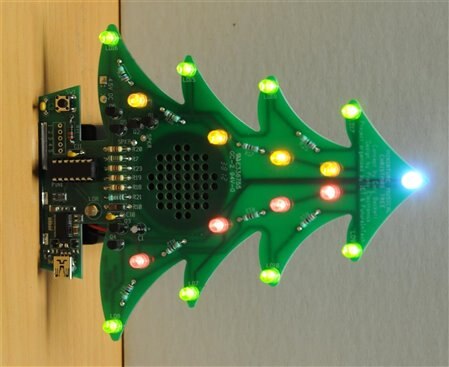
    I have also been involved with a funded project that introduced year7 (11/12yr olds) to making a Xmas Tree, which involved soldering LED's, resistors, etc (not the smd) and then programming them.


    image

    FutureInTech provided the tools and mentors to assist for the whole day,  and they got to take them home, and program them themselves.

    For some pupils they had never touched a soldering iron, let alone program something.


    We also found that making noise seem to be highest on the list of accomplishments (having 20 playing the same tune gets to be painful)


    Like John, I wonder what we would be doing if we had the same 'toys' back in our youth.

    More mechanical and less distractions, but it got the brain cells rattling around, and I think that helps to encourage creativity.


    So my suggestion is make it simple, easy to change, has good documentation, and something affordable that they can purchase for home (along with the necessary information about how and where to get it).


    Good luck.


    mark

    • Cancel
    • Vote Up +1 Vote Down
    • Sign in to reply
    • Cancel
  • jamodio
    jamodio over 12 years ago in reply to johnbeetem

    From an electronics professional and for some time instructor/teacher/professor I'd agree with you that 45mins is not good enough to learn anything, and that is why setup time and simplicity is paramount.


    It is not about hype but motivation and enticing them to get into other activities that will let them learn more in detail, we don't just show up and make some LEDs blink, there are summer camps, workshops, and soon, after school activities at different places.


    I guess is not the right forum but in brief what we are doing is not empirical, there is a lot of research related to STEM (now becoming STEAM adding Art) education that backs and guide what we are doing, we won't waste our time and the kids time on something that does not produce positive results.


    Many of these kids end joining for example a robotics clubs at their school or come to workshops we do at hackerspaces, makerspaces, etc., a very high percentage of these kids finish high school and go to colege.


    In Texas we are VERY serious about this topic, part of our group of volunteers are specialists in this subject and there are non-profit organizations, and commercial organizations now focusing on this particular issue. On June we'll have in Austin the national conference about STEM Solutions presented by US News (http://usnewsstemsolutions.com/)


    As Mark said a key element of this is to expose them to things they don't get to see at their schools, particularly in areas where there is no budget, and also get the parents interested, and we don't target just a selected group of kids that are wizes in science and technology, we cover all the spectrum with particular focus in those that are struggling with their grades and could be potential school dropouts.


    Here is a picture of the Geekbus visiting a middle school ...

    image

    The guy with the "crown" T-shirt is Geekdom's director for education (he is being paid but the program is non-profit,) he has no clue about electronics, but he has a lot of experience in education since he is a former teacher and principal from a school in New York, and worked in many programs to let kids have higher level education. He is supported by a group of electronics and computer science geeks (including me) and STEM education experts, and we are doing all this with very limited budget, so sponsors are very welcomed (element14 hello .... image)


    About Robotics, when it is time to work on it we setup a dedicated office at Geekdom as the "Robotics Lab" where kids can come and have a place to build their robots and get advice and mentorship from us. Last month I had a lot of fun doing software inspection and as field operator for the FTC competence of the FIRST Alamo Regional Robotics competence (http://www.alamo-first.org/) I had a blast and it is amazing to see the results you can generate (that go well beyond the technology aspects) with just those first 45 minutes you invest on the kids ....


    Cheers

    Jorge

    • Cancel
    • Vote Up +1 Vote Down
    • Sign in to reply
    • Cancel
  • Former Member
    Former Member over 12 years ago in reply to johnbeetem

    John Beetem wrote:


    With electronics, probably the best example is a crystal radio.  Just five components: L, C, D, antenna, and earphone.  The lesson is tremendous: all the energy for driving that earphone comes from the radio waves, all you're doing is filtering out the noise.  Magic!


    I remember building a crystal set as a kid, nothing much can beat it for simplicity and instant gratification (should help for the kids of today who are more used to that than me), something you can literally build in a couple of minutes...  Sadly these days with the rise of digital radio it seems that it's soon to become impossible for a lot of us.  Here in the UK it seems that analogue radio could be turned off as soon as a couple of years from now.

    • Cancel
    • Vote Up 0 Vote Down
    • Sign in to reply
    • Cancel
  • jamodio
    jamodio over 12 years ago in reply to Former Member

    I remember having the same experience and what motivated me to become a ham radio operator, but nowadays in the age of the iPod, Xbox and SDR, the crystal radio is not very exciting for the new generation of "digital natives."


    -J

    • Cancel
    • Vote Up 0 Vote Down
    • Sign in to reply
    • Cancel
element14 Community

element14 is the first online community specifically for engineers. Connect with your peers and get expert answers to your questions.

  • Members
  • Learn
  • Technologies
  • Challenges & Projects
  • Products
  • Store
  • About Us
  • Feedback & Support
  • FAQs
  • Terms of Use
  • Privacy Policy
  • Legal and Copyright Notices
  • Sitemap
  • Cookies

An Avnet Company © 2026 Premier Farnell Limited. All Rights Reserved.

Premier Farnell Ltd, registered in England and Wales (no 00876412), registered office: Farnell House, Forge Lane, Leeds LS12 2NE.

ICP 备案号 10220084.

Follow element14

  • X
  • Facebook
  • linkedin
  • YouTube