
element14 Community
element14 Community
    Register Log In
  • Site
  • Search
  • Log In Register
  • Community Hub
    Community Hub
    • What's New on element14
    • Feedback and Support
    • Benefits of Membership
    • Personal Blogs
    • Members Area
    • Achievement Levels
  • Learn
    Learn
    • Ask an Expert
    • eBooks
    • element14 presents
    • Learning Center
    • Tech Spotlight
    • STEM Academy
    • Webinars, Training and Events
    • Learning Groups
  • Technologies
    Technologies
    • 3D Printing
    • FPGA
    • Industrial Automation
    • Internet of Things
    • Power & Energy
    • Sensors
    • Technology Groups
  • Challenges & Projects
    Challenges & Projects
    • Design Challenges
    • element14 presents Projects
    • Project14
    • Arduino Projects
    • Raspberry Pi Projects
    • Project Groups
  • Products
    Products
    • Arduino
    • Avnet & Tria Boards Community
    • Dev Tools
    • Manufacturers
    • Multicomp Pro
    • Product Groups
    • Raspberry Pi
    • RoadTests & Reviews
  • About Us
  • Store
    Store
    • Visit Your Store
    • Choose another store...
      • Europe
      •  Austria (German)
      •  Belgium (Dutch, French)
      •  Bulgaria (Bulgarian)
      •  Czech Republic (Czech)
      •  Denmark (Danish)
      •  Estonia (Estonian)
      •  Finland (Finnish)
      •  France (French)
      •  Germany (German)
      •  Hungary (Hungarian)
      •  Ireland
      •  Israel
      •  Italy (Italian)
      •  Latvia (Latvian)
      •  
      •  Lithuania (Lithuanian)
      •  Netherlands (Dutch)
      •  Norway (Norwegian)
      •  Poland (Polish)
      •  Portugal (Portuguese)
      •  Romania (Romanian)
      •  Russia (Russian)
      •  Slovakia (Slovak)
      •  Slovenia (Slovenian)
      •  Spain (Spanish)
      •  Sweden (Swedish)
      •  Switzerland(German, French)
      •  Turkey (Turkish)
      •  United Kingdom
      • Asia Pacific
      •  Australia
      •  China
      •  Hong Kong
      •  India
      • Japan
      •  Korea (Korean)
      •  Malaysia
      •  New Zealand
      •  Philippines
      •  Singapore
      •  Taiwan
      •  Thailand (Thai)
      • Vietnam
      • Americas
      •  Brazil (Portuguese)
      •  Canada
      •  Mexico (Spanish)
      •  United States
      Can't find the country/region you're looking for? Visit our export site or find a local distributor.
  • Translate
  • Profile
  • Settings
Raspberry Pi
  • Products
  • More
Raspberry Pi
Raspberry Pi Forum RPi use cases explained
  • Blog
  • Forum
  • Documents
  • Quiz
  • Events
  • Polls
  • Files
  • Members
  • Mentions
  • Sub-Groups
  • Tags
  • More
  • Cancel
  • New
Join Raspberry Pi to participate - click to join for free!
Featured Articles
Announcing Pi
Technical Specifications
Raspberry Pi FAQs
Win a Pi
Raspberry Pi Wishlist
Actions
  • Share
  • More
  • Cancel
Forum Thread Details
  • Replies 83 replies
  • Subscribers 680 subscribers
  • Views 10043 views
  • Users 0 members are here
Related

RPi use cases explained

Former Member
Former Member over 12 years ago

The RPi FAQ says:

Can you test it to make sure that it is suitable for <X>?

If you want to use it for something that we haven’t tested, and that it’s not intended for (i.e. anything but the educational work we’re planning for it), then that development work is up to you.


Although they realize that inexpensive computers will be used for more than just

education, and they don't discourage that, they want to be sure that you know that

they're an educational charity and they don't want you asking them to do any work

that falls outside the scope of that mission.


But then we see a press release from Collabora that appears to indicate that

non-educational use cases such as advanced multimedia playback, complex digital signage,

and set-top boxes, are driving the RPF's recent improvements to the VideoCore firmware:


While collaborating with the Raspberry Pi foundation, improvements to the VideoCore firmware were made by the foundation to further the performance and stability of the Raspberry Pi. Despite the full-featured drivers for X11, it wasn't previously possible to meet the requirements of certain use cases such as advanced multimedia playback, complex digital signage or set-top boxes.


http://www.collabora.com/press/2013/05/collabora-brings-wayland-and-x11-graphics-performance-to-raspberry-pi.html

  • Sign in to reply
  • Cancel
Parents
  • morgaine
    morgaine over 12 years ago

    Here is my take on this odd situation.  There are several needs and types of stakeholders in the Pi ecosystem:


    • Conceptual need in EE.  Eben Upton has many times related the problems he experienced while doing student recruitment  at university, where each year's intake candidates were seemingly  less technically experienced than the last.  I can well believe that, because we saw exactly that same problem in my own engineering department, to the point where we had to provide catch-up courses to bring part of the student intake up to the level where they could  understand basic 1st-year EE lectures.  Making very cheap hardware available that encourages experimentation by inquisitive youngsters does seem to address part of the problem squarely by fostering interest and offering direct experience with hardware.  However, it doesn't address the gap in mathematics and foundational science skills.


    • Improving IT education.  The UK has a specific problem in school-level IT education, in that over time it became nothing more than vocational training in office skills.  Clearly there is much room for improvement there, but this is almost entirely unrelated to the skills shortage observed in EE recruitment.  CompSci departments might benefit a little if programming were taught in schools, but not a lot because lack of programming skills is not the bottleneck,  Stronger maths skills would be vastly more useful than programming knowledge, and would help EE as much as every other branch of engineering and the physical sciences.  Also, programming is almost always vocational training with just a smidgeon of CompSci education acquired by osmosis on the side, and very rapidly becomes dated.  To compound matters further, a high-level language with a lot of abstraction would tend to be chosen for programming education, which means that pupils would tend to learn little about computer fundamentals unless they have an awesome teacher who explains the foundations along with the programming.


    • Cheap media centre.  Don't laugh, this is a major stakeholder group for Pi.  What's more, RPF have always known this, because they have promoted the very strong media capability of the Broadcom SoC countless times in their blog.  They even went as far as to sell licensed codecs which are about as distant from educational as anything could be.  This area may well be getting the most development effort as well, which is reasonable since it plays to the Pi's biggest strength and makes a very large group of Pi users happy.


    • Platform for expansions.  It always did seem odd that the Foundation so often stressed the difficulty of reaching their $25/$35 price point, and yet created a board bearing proprietary MIPI DSI and CSI-2 connectors which raised the board cost and complicated PCB routing.  Even more odd is that these MIPI interfaces would not contribute significantly to the board's educational capabilities since USB cameras and displays with open interfaces were readily available at good prices.  The subsequent high investment by RPF in developing camera and display modules suggests that this was a planned business strategy from the start, and it explains why the extra connector cost was considered justified.  One possible view is that there is business advantage in creating a platform for which expansion modules could be produced using a proprietary interface spec that narrows the competition.  Whether or not that was the thinking, it is the current actuality since RPF has invested time and money in expansions and delivered product.


    • Enthusiasts/makers hacking platform.  Quite distinct from the needs of EE and UK IT education, a  large group of stakeholders is the worldwide and ever-growing community of makers and related enthusiasts, which may or may not be technical.  This group is heavily interested in creative projects which typically underpin some other area of interest that isn't itself computing.  The Foundation has from the start shown some interest in supporting this group, as evidenced by the board's P1 interfacing header and the near-miraculous provision of SoC peripheral interfacing information from a SoC manufacturer that has shown very little interest in supplying open documentation.  The enthusiast/maker community is strongly aligned with the open source software and open hardware communities since closed/proprietary devices impede rather than support building things.  Unfortunately RPF has been lukewarm in this area as the board is not open hardware, the SoC has very little open documentation, and not all of the software is open source either.  Undoubtedly most of the blame for this lies with Broadcom, but RPF spokespersons have defended the restriction of information themselves as well.


    • Commercial for-profit product.  This stakeholder group is small but obvious.  RPF is a registered non-profit, but Premier Farnell and RS are not, and so the Pi has to justify its place on warehouse shelves.  The typically high profits on accessories probably make this quite easy though.


    It's pretty clear from the above that the Pi ecosystem has multiple interested parties and drivers, and proceeds along many roads simultaneously with varying degrees of support from the Foundation.


    In other words, the Raspberry Pi's concept, rationale, targets and user base are not correlated.


    Getting a single view from anyone (especially RPF) is no more productive than all those blind men feeling different parts of the elephant.  To say that it was designed for IT education is completely wrong if intended literally --- Pi would not have been designed as it was nor targetted so strongly at non-educational stakeholders if that had been the primary intention.  This makes the question of "Why is there still no educational release?" a simple one to answer:  IT education was only one driving force, and clearly not a major one.


    The only certain position is from objective engineering:  it's an ARM board with specific pros and cons, and it's those pros and cons that determine its effectiveness or otherwise for any given application.  I guess that's more boring than hype-laden official positioning statements by people with vested interests, but in contrast to them, it's accurate.


    Morgaine.

    • Cancel
    • Vote Up 0 Vote Down
    • Sign in to reply
    • Cancel
  • Former Member
    Former Member over 12 years ago in reply to morgaine

    Morgaine Dinova wrote:


    • The subsequent high investment by RPF in developing camera and display modules suggests that this was a planned business strategy from the start, and it explains why the extra connector cost was considered justified.  One possible view is that there is business advantage in creating a platform for which expansion modules could be produced using a proprietary interface spec that narrows the competition. 

    Actually the proprietary nature of the interface doesn't seem to be much of a problem. The actual camera sensors with the same interface and physical plug appear to be reasonable easily available off ebay and such like as spares for phones.

    The roadblock is the bits that are buried inside the GPU.


    I'd have to say that I originally thought the camera was a daft idea, but it's cheap enough that I bought one anyway.  If JamesH manages to sort out a couple of software niggles, I can see it having a reasonable future as a very cheap megapixel security camera amongst other things.

    I see someone has already produced an aluminium case with a mount for the camera and externally a mount for additional standard lenses.


    I think that's where the maker community shines.. by taking these cheap component parts and combining them into all sorts of interesting ideas.

    • Cancel
    • Vote Up 0 Vote Down
    • Sign in to reply
    • Cancel
  • Problemchild
    Problemchild over 12 years ago in reply to Former Member

    The camera interface is in fact a standard not unlike the display the problem here is that you can talk to the device but you don't know what to say to it when you have got it. Each camera has it's own set up which is really where it becomes a true pain.


    Other than that the closed source GPU is quite the pain more so than the camera really since it controlls so many other subsystems

    • Cancel
    • Vote Up 0 Vote Down
    • Sign in to reply
    • Cancel
  • Former Member
    Former Member over 12 years ago in reply to Problemchild

    John Alexander wrote:


    Each camera has it's own set up which is really where it becomes a true pain.


    Other than that the closed source GPU is quite the pain more so than the camera really since it controlls so many other subsystems

    The problem here, of course, being that the driver for the camera is in the GPU. So even if you have all the info on the camera there's nothing you can do with it.


    I've been following the section of the RPF forums on the camera and some people seem to have obtained most, if not all, of the relevant info on the camera and who are coming up with questions detailed enough to have stumped the broadcom employees working on the camera...

    Combined with people who appear to have a lot more photographic knowledge than the software people it's made for some interesting reading.

    • Cancel
    • Vote Up 0 Vote Down
    • Sign in to reply
    • Cancel
  • morgaine
    morgaine over 12 years ago in reply to Former Member

    At best it played to the SoC's strengths by providing a camera interface with more bandwidth than the Pi's heavily shared USB can provide, but it offered nothing fundamental that can't be done in other ways, and adding those connectors didn't help keep the cost down nor contribute towards the skills level of undergraduate applicants.


    It's consistent with everything else about Pi, lots of directions and stakeholders.  I don't think that people looking for a clear statement of requirements followed by a corresponding clear effort in that direction (or even directions) will find it.  Pi didn't happen that way, and after nearly a year and a half of watching RPF's efforts, it's easy to see that their main investment hasn't been towards the much discussed and over-hyped educational goals.


    I think it was coder27 who said that their main concern seems to have been to sell a lot of boards.  Well we know that they have, but ignoring the benefit of hindsight, it's also clear that they have put a large amount of effort into media support and expansion modules, so "selling product" must indeed rank near the top of their own list of goals.

    • Cancel
    • Vote Up 0 Vote Down
    • Sign in to reply
    • Cancel
  • morgaine
    morgaine over 12 years ago in reply to morgaine

    Along a rather different tack ...


    If the main aim were charitable support of education, the price of Pi would have dropped by now anyway.  Their BOM cost now is just a fraction of what it was in the days of 10k-30k volume costing, so if they wished to lower the barrier further, I bet they could, and very easily.   (Farnell and RS are likely to be making nice profits on accessories anyway.)

    • Cancel
    • Vote Up 0 Vote Down
    • Sign in to reply
    • Cancel
  • Former Member
    Former Member over 12 years ago in reply to morgaine

    Morgaine Dinova wrote:

    the price of Pi would have dropped by now anyway.  Their BOM cost now is just a fraction of what it was in the days of 10k-30k volume costing, so if they wished to lower the barrier further, I bet they could, and very easily.

    I suspect that bringing manufacturing back to the UK hass offset that somewhat, but I agree.  If they'd somehow limited it to education and excluded the makers and xbmc folks they wouldn't have had the sort of volume pricing though...

    I suspect that nobody would argue much if they simply said that the price stays the same for everyone else and that they'd use that to give education a nice discount, it'd at least go some way to showing a bit more conviction on the educational side.

    • Cancel
    • Vote Up 0 Vote Down
    • Sign in to reply
    • Cancel
  • Former Member
    Former Member over 12 years ago in reply to morgaine

    If the main aim were charitable support of education, the price of Pi would have dropped by now anyway.


    I think the answer to that is pretty clear.  They like the price point and want to use Moore's law to increase

    the capabilities rather than further lower the price.


    Pete Lomas is quoted as saying recently in a 14 May 2013 interview:

    Maintaining Pi's progress is important. "What we don't want is for Pi to be a one trick pony," Lomas said. "The educational goal is too important. So our focus continues to be on the Pi's educational value. How can we improve that? Would the addition of more computing power increase the educational value? Would the introduction of more accessories make a difference?"

    ...

    Nevertheless, Lomas admitted the Foundation is thinking about Pi2 – what it might be and how it might fit with Pi1. "Moore's Law says there will be a better processor and there will be more memory and that will allow us to maintain the price."

    http://www.newelectronics.co.uk/electronics-technology/raspberry-pi-foundation-looks-to-the-future/50316/

    • Cancel
    • Vote Up 0 Vote Down
    • Sign in to reply
    • Cancel
  • Former Member
    Former Member over 12 years ago in reply to Former Member

    I thought that


    "The chip has a powerful gpu and we want that to be used for educational purposes – there's no point in having a gpu if you can't use it."

    Lomas' view is that vision will be a key learning experience. "People need to learn how facial recognition works, for example," he said. "The module will bring a new level of opportunity."


    was an interesting comment..

    The Arm just isn't powerful enough to make a lot of this practical and squeezing the raw images through the gpu->arm interface seems to be a bottleneck as people trying to side-step the GPU's image processing are finding out.

    The GPU not being open enough means you only get to use what the firmware provides. I'm not sure of the educational value in simply being able to tell the GPU to do the dirty work for you if you can't get inside that process and play with how it works yourself.

    • Cancel
    • Vote Up 0 Vote Down
    • Sign in to reply
    • Cancel
Reply
  • Former Member
    Former Member over 12 years ago in reply to Former Member

    I thought that


    "The chip has a powerful gpu and we want that to be used for educational purposes – there's no point in having a gpu if you can't use it."

    Lomas' view is that vision will be a key learning experience. "People need to learn how facial recognition works, for example," he said. "The module will bring a new level of opportunity."


    was an interesting comment..

    The Arm just isn't powerful enough to make a lot of this practical and squeezing the raw images through the gpu->arm interface seems to be a bottleneck as people trying to side-step the GPU's image processing are finding out.

    The GPU not being open enough means you only get to use what the firmware provides. I'm not sure of the educational value in simply being able to tell the GPU to do the dirty work for you if you can't get inside that process and play with how it works yourself.

    • Cancel
    • Vote Up 0 Vote Down
    • Sign in to reply
    • Cancel
Children
  • Former Member
    Former Member over 12 years ago in reply to Former Member
    Would the addition of more computing power increase the educational value?  -- Lomas


    Lomas' view is that vision will be a key learning experience. "People need to learn how facial recognition works, for example," he said.


    I think Pete Lomas would make a great salesperson for BBB, with its increased

    computing power and support for machine vision.  Until Pi2 (Raspberry Tau?)

    comes out, there seems to be no good reason to push RPi for education.

    • Cancel
    • Vote Up 0 Vote Down
    • Sign in to reply
    • Cancel
  • morgaine
    morgaine over 12 years ago in reply to Former Member

    It's complete sleight of hand, for the reasons I enumerated in my long multi-point post, #3.  There are many stakeholders and education is just one, raised when convenient and ignored when not.


    Education provides great PR because it's "motherhood and apple pie", but after a year and a half there is still nothing to show for it, so at most it expresses good intentions, not investment of time and money.  Education also provides a great cover while doing something entirely different, which is to focus on selling boards and modules, promote Broadcom's ability to design effective media SoCs, and create a community frenzy based on hype, as Pete so clearly underlined.


    Anyway, it doesn't matter.  As I've mentioned elsewhere several times, I think RPF did their good deed for the decade (their one and only one) when they launched a dirt-cheap ARM board and so forced this price band on every other ARM licensee in the prototyping boards sector.  That's been awesome, as people who want better boards and full documentation can now go to other suppliers.  The Pi's less than awesome design and Broadcom's disinterest in openness don't matter anymore because Pi's pricing has opened up the market.

    • Cancel
    • Vote Up 0 Vote Down
    • Sign in to reply
    • Cancel
  • Former Member
    Former Member over 12 years ago in reply to morgaine
    It's complete sleight of hand,


    I'm shocked, shocked, I tell you.


    Education provides great PR because it's "motherhood and apple pie"


    I don't know how many times I've seen an RPi complaint deflected with something like:

    "How can you possibly criticize an educational charity.  We've mortgaged our houses

    for that noble purpose, you know."

    • Cancel
    • Vote Up 0 Vote Down
    • Sign in to reply
    • Cancel
  • Former Member
    Former Member over 12 years ago in reply to morgaine
    but after a year and a half there is still nothing to show for it,


    Have you seen the first 6 videos at

      http://www.cambridgegcsecomputing.org/courses


    Eric says:


    This is a wonderful start. It is good to see such professionalism and money devoted to making educational videos. ...


    The blender lecture hides the fact that a computer program is the most interesting type of data and misses the obvious analogy between a computer program and a recipe used while cooking. An introductory cooking class will focus on reading and following a recipe. Many 14-to-16-year-old children already help in the kitchen and understand the importance of a recipe. A lecture should be both entertaining and interesting, but there are better ways to entertain than by stupidly making a smoothy using random ingredients and drinking it. Computer science does not become more interesting if it is simplified so much it is no longer useful.


    ...


    Liz reponds:


    I have my own experiment to make:

    *Points at Clive* STUPID. STUPID STUPID STUPID.

    Nope. It’s not making me feel bigger or cleverer, and I don’t think it’s enhancing any point I’m trying to make. Ho hum. Back to the drawing board.


    James Clough says:

    Having followed your blogs from inception and aware of the great things being done I have some concerns on the approach to the education piece.

    (1) If the aim is to inspire young people to enjoy programming and being creative, why define it around the achievement of a GCSE. When I mentioned this to my son, who is 13, he couldn’t be less interested.

    ...


    Liz reponds:


    It’s hard for me not to respond to that with heavy sarcasm, given how many people have been working themselves to death on our educational offering. I am trying my best.


    ...


    It looks like they're off to an interesting start.

    • Cancel
    • Vote Up 0 Vote Down
    • Sign in to reply
    • Cancel
  • morgaine
    morgaine over 12 years ago in reply to Former Member

    Just leave her to it, coder27, is my advice.  Like watching a train wreck in slow motion, it's mesmerizing for all the wrong reasons, and a total waste of your time.


    I'll be interested again when a new Pi board appears just in case it turns out to be good, although they'll undoubtedly stay with Broadcom so it's unlikely to be open hardware.  Until then, I think everyone knows what to expect from that quarter, and calm reasoned discussion that engages with questions isn't top of the list.

    • Cancel
    • Vote Up 0 Vote Down
    • Sign in to reply
    • Cancel
  • Former Member
    Former Member over 12 years ago in reply to morgaine
    and calm reasoned discussion that engages with questions isn't top of the list.


    It is interesting that they have given Gordon Hollingworth the new task of

    answering questions:

    http://www.raspberrypi.org/archives/4307


    Maybe something will come from that.

    Or maybe E-14 can be used for productive discussions regarding education.


    Clive's videos are based on the GCSE curriculum here:

    http://www.ocr.org.uk/Images/72936-specification.pdf

    which is essential to understand when discussing the videos.


    For example, section 2.1.1 "Fundamentals of Computer Systems"

    discusses input, output, processing, and storage, but makes no

    mention of software or computer instructions that are followed like

    a recipe.  And Clive's blender video followed this closely.


    One point I found interesting was the discussion on clock frequency,

    based on section 2.1.2.  It seemed to me that he confused the notion

    of clock frequency measured in Hertz, or cycles/second, with the

    fetch-decode-execute cycle.  Two confusingly similar uses of the

    word "cycle". 


    User Dio made a comment related to this, and Clive responded:

    ... I don’t see any “glaring errors” myself, just different ways of talking about a topic to a specific audience. (We call this “teaching” ;) )

    ...

    I’m aware of my use of the word “instruction” here but in this context I’m happy with it as the fetch-execute cycle, and instructions taking more than one cycle, are dealt with in a previous topic.  ...


    • Cancel
    • Vote Up 0 Vote Down
    • Sign in to reply
    • Cancel
  • mcb1
    mcb1 over 12 years ago in reply to Former Member

    This is a very interesting discussion.

    The points made seem to be very intelligent observations.


    I don't think your observations of the IT world are any different on this side of the world.

    The educational observations are also similar, but while they teach ICT here, mostly its not going to help get programmers.


    IMO Too many schools/teachers are using IT devices to teach rather than as a tool, and the basics or underlying concepts are being missed.


    So my question (ignoring what the pen pushers say)


    If you were to introduce computing/programming to 10-13yr olds, what would you teach?

    For arguments sake .... lets assume you will be using either a Pi or BBB since it has external capabilities, and is affordable.


    Would you start with a generalisation of the CPU, memory, etc and how it connects to the HMI bits.

    Do you then jump to the software and how it uses the hardware to perform its tasks.


    How much about the hardware do you need to teach, in order to achieve something on screen.?

    Do you get into detail about the OS and how it works. (using one of the recommended/supported OS's)


    What flavour of programming do you teach/introduce  ... Python/C or something else?

    (Bearing in mind this is a beginning class and not a full time study at varsity)

    Do you start with drag and drop (ie scratch) and hope they move on.?


    Do you make it longer than one period (ie 1.5hrs) spread over a number of weeks, or do you get better traction with a full day.?


    as a background

    I'm not a teacher, and not a software programmer. (more like a ... dabbler)

    I have introduced some pupils at my local school into Arduino.

    I also support a program that introduces electronics to Year 7/8 and they get to make/program and take home a Xmas Tree.

    http://www.element14.com/community/blogs/pdp7/2012/01/24/merry-birthday-to-you#comment-17591


    Hence I'm interested in the thoughts.


    Mark

    • Cancel
    • Vote Up 0 Vote Down
    • Sign in to reply
    • Cancel
  • morgaine
    morgaine over 12 years ago in reply to Former Member

    coder27 wrote:


    User Dio made a comment related to this, and Clive responded:

    ... I don’t see any “glaring errors” myself, just different ways of talking about a topic to a specific audience. (We call this “teaching” ;) )


    Ugh.  Explaining things in such a way that some people see "glaring errors"  isn't called "teaching", it's called being ambiguous, obscure or possibly incorrect.  And if it's the case that the student is mistaken, then dismissing it with a joke isn't called "teaching" either, it's called being unhelpful and leaving the student without comprehension.


    Hopefully it was just an uncommon blip.  Teachers must engage.

    • Cancel
    • Vote Up 0 Vote Down
    • Sign in to reply
    • Cancel
  • shabaz
    shabaz over 12 years ago in reply to mcb1

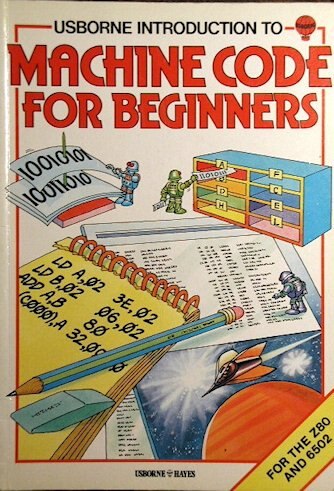
    I wouldn't know enough about teaching, but when I think about what I was taught, I think what inspired me and quite a few people I knew to begin having an interest in Engineering (even if some did not pursue a career in Engineering), a few things that stick out  all seem to have been concerned with some big picture, or an interesting goal. For example, building a model vehicle as part of a team, or learning drawing from a teacher who was a draughtsman in WW2, or a visit to see inside Concorde, etc. Not everyone would be interested in the same thing, but it gets creativity flowing, or a desire to learn. Some people went to see Concorde just to have a day outside the classroom, but I think they would still remember some interesting engineering-related things about it. Now there are some quite inspirational films and movies too - Apollo 13 and October Sky spring to mind. I don't know if such contrived examples as a blender help. But I'm no expert. This photo (source site) makes it clear that that the light-blue robot fetches data for the CPU, and that the green robot stores in registers, and the dark-blue robot reads from the program ROM.


    image

    • Cancel
    • Vote Up 0 Vote Down
    • Sign in to reply
    • Cancel
  • Former Member
    Former Member over 12 years ago in reply to mcb1

    Mark,


    If you were to introduce computing/programming to 10-13yr olds, what would you teach?


    First of all, I first learned programming in 10th grade, and never felt like I wished I had learned

    it sooner.  In that sense I think it's different from learning a musical instrument.

    I would want the students to be mature enough to be able to read a language tutorial.


    There are some concepts like variables, and operator precedence (2+3*4)=14, not 20,

    that are shared with algebra, so I'd want to build on a solid understanding of algebra.


    I think Pascal is a decent teaching language, because you can read the entire reference

    manual, the compiler doesn't do too many things behind your back, and many errors

    are detected at compile time or with run-time checks.


    I think you can start at any level of abstraction you think is interesting.  You can show

    how to make a half-adder and full-adder out of logic gates, or you can teach base-2 arithmetic,

    or you can teach assembly language programming, or you can teach python programming,

    or you can teach html and javascript web design.  And I don't think it matters much what order

    you teach such topics.


    I don't know anything about teaching electronics.


    I think calculating prime numbers by trying all possible divisors makes a good first project,

    assuming the students know what a prime number is.  I gave some other suggested topics here:

    http://www.element14.com/community/thread/23494?start=2&tstart=0


    What I _wouldn't_ do in the first few lessons is try to teach GCSE 2.1.1

    (d) explain the need for adherence to suitable professional standards in the development, use and

    maintenance of computer systems

    (e) explain the importance of ethical, environmental and legal considerations when creating

    computer systems.


    • Cancel
    • Vote Up 0 Vote Down
    • Sign in to reply
    • Cancel
element14 Community

element14 is the first online community specifically for engineers. Connect with your peers and get expert answers to your questions.

  • Members
  • Learn
  • Technologies
  • Challenges & Projects
  • Products
  • Store
  • About Us
  • Feedback & Support
  • FAQs
  • Terms of Use
  • Privacy Policy
  • Legal and Copyright Notices
  • Sitemap
  • Cookies

An Avnet Company © 2025 Premier Farnell Limited. All Rights Reserved.

Premier Farnell Ltd, registered in England and Wales (no 00876412), registered office: Farnell House, Forge Lane, Leeds LS12 2NE.

ICP 备案号 10220084.

Follow element14

  • X
  • Facebook
  • linkedin
  • YouTube