


Welcome to part I - Unboxing and first impressions
Welcome to my review of the Multicomp Pro MP730679, the 22000 count (4-1/2 digit) Digital Multimeter for electronics and electricians. This review is part of the RoadTest Open Call of August 2026.
The package
The package arrived directly from the UK and, to my surprise, contained not only the DMM but also a few extras: a nice cap, an e14 metallic pin, three funny stickers and a welcome letter. Off to a good start. (sidenote: my daughter loved the stickers and wanted to be the first to wear the cap! Also, she named the multimeter Fanny).
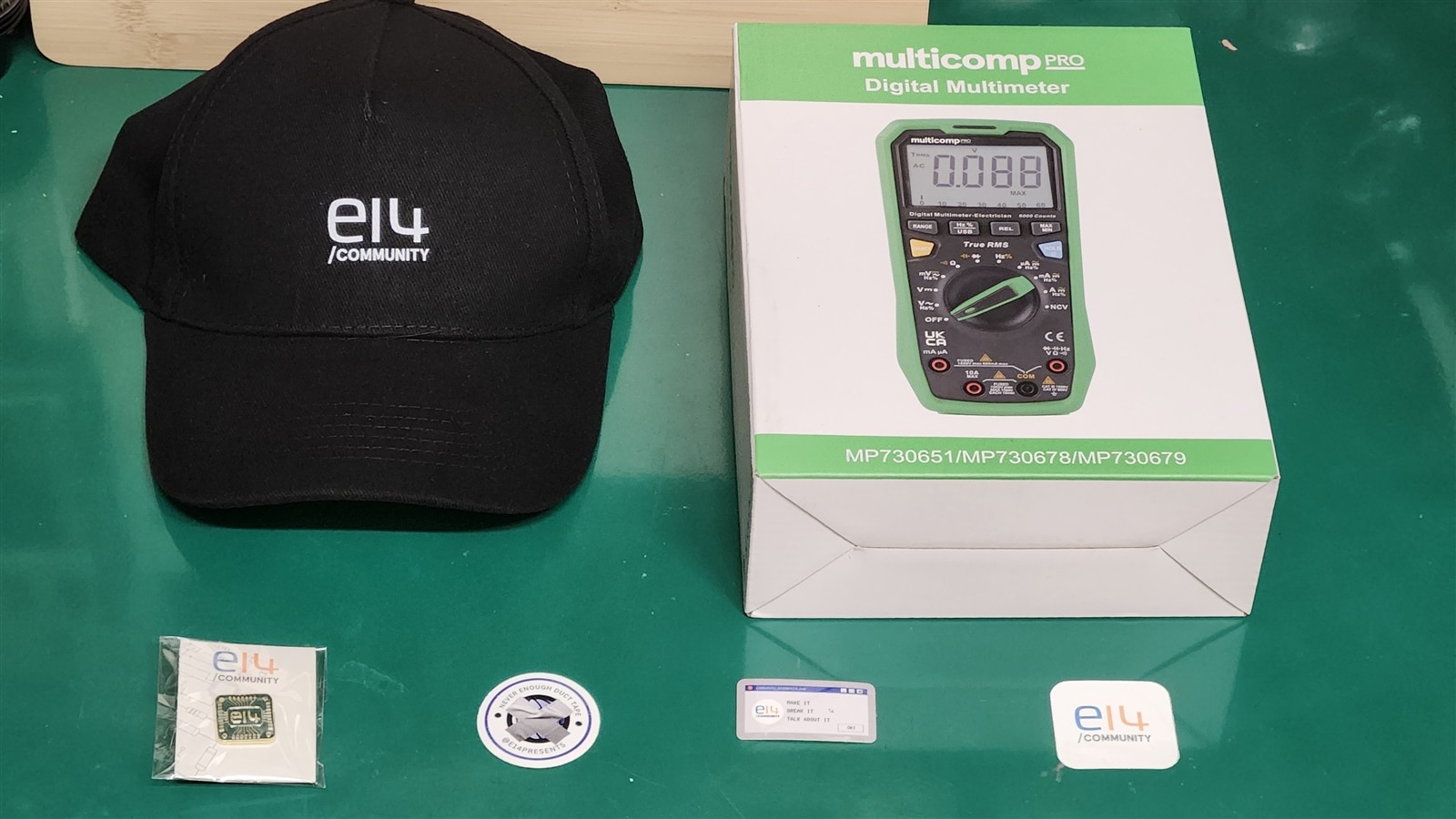
As can be seen above, the DMM comes in a box that reveals the commonality between the different models of this family: MP730651, MP730678 and MP730679 (the subject of this review). This is also evidenced in the user’s manual.
The case
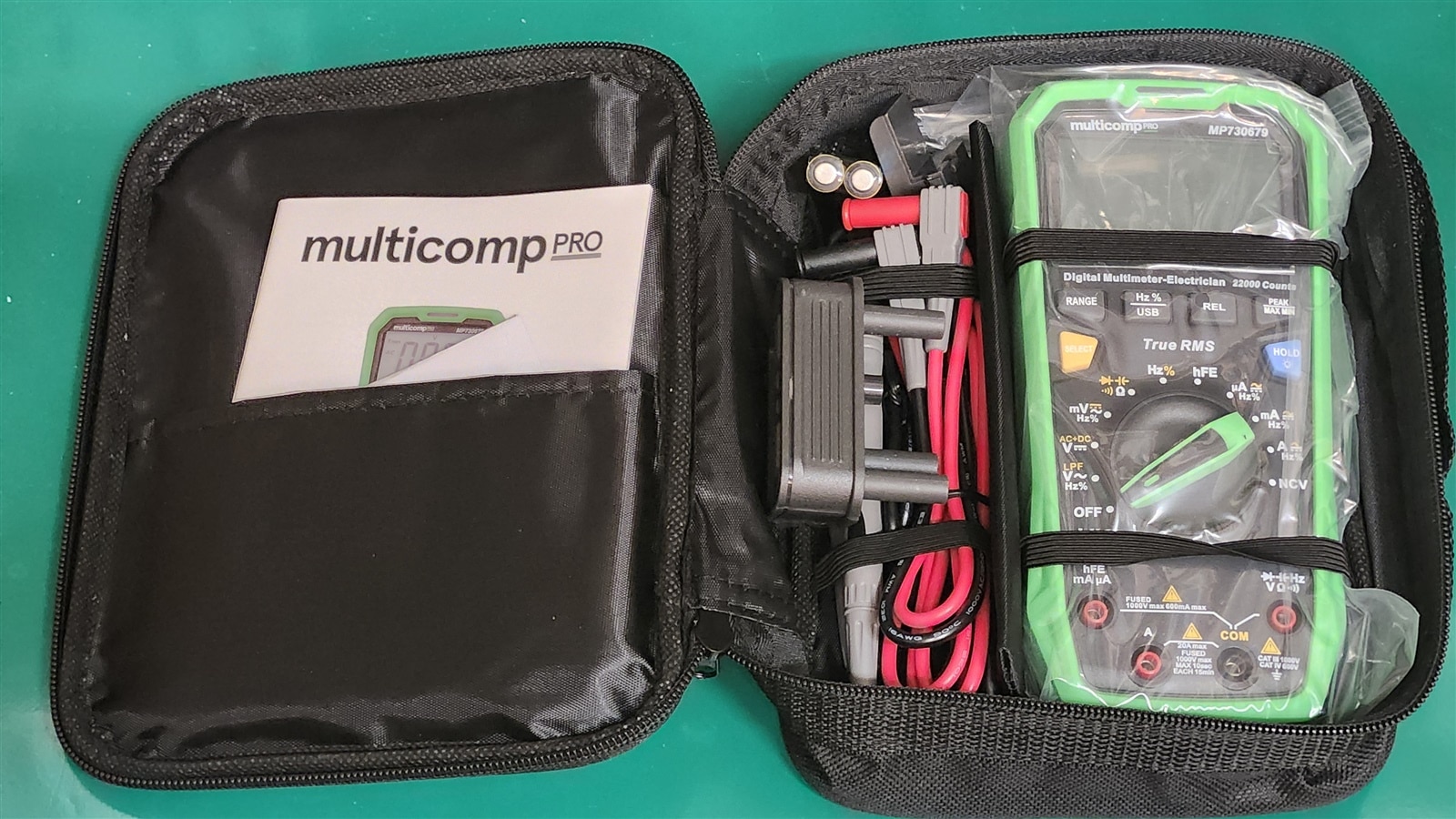
The entire set (DMM, accessories, manuals) fits in a nice nylon case with subdivisions for easier organization and elastic straps to hold the DMM and its accessories. While I can see the benefit of having the straps, I know myself and will probably not use them regularly, especially for the DMM which has a tighter fit.
Manual, software and batteries
The User's manual is nicely printed in glossy paper and covers the three units of the same family of DMMs. There is a small CD with drivers and software, but this is quite anachronic in today's world of USB pendrives - fortunately the software can be downloaded from the DMM's product page.
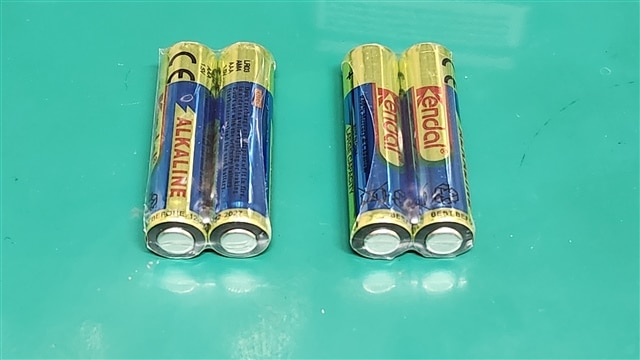
The set also comes with four alkaline batteries of the brand "Kendall" - unknown to me. I know the kit was probably assembled at their OEM (Uni-T), but it would have been nice to see it come with Multicomp Pro AAA batteries... 
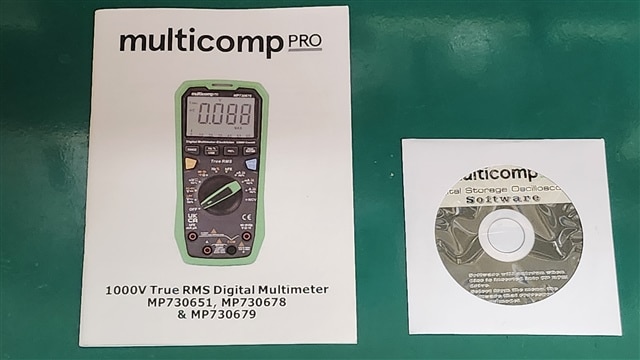
The user's manual not only contains usage instructions, but also very detailed specifications and reveals a few interesting features of the meter (and yes, I actually read instruction manuals  ):
- Fast bargraph rate (30Hz of update rate) - something that many cheaper meters get it wrong. This will be tested.
- Very high input impedance (1GΩ) for mV inputs (both AC and DC). Quite interesting indeed, since this scale is usually tailored for very sensitive circuits.
- Continuity buzzer threshold: less than 50Ω. This will be tested.
- Current measurements larger than 5A need to be done at up to 10 seconds, probably to avoid overheat of the shunt resistor. Also, it states that more than 15 minutes are required between high current measurements, probably to maintain accuracy due to overheat of the shunt resistor. In my experience, this behaviour is more common than the manufacturers want to admit, but it is more dramatic when using SMD resistors.
- NCV voltage detection threshold is 50VRMS AC. This will be tested.
- Auto Power Off is 15 minutes and can be disabled by pressing the SELECT button while powering up the multimeter.
- The low battery voltage threshold is 4.6V ± 0.2V, which gives about 1.15V per AAA cell. This will be tested. The low battery indicator is very important in a multimeter, since this usually indicates a threshold where the measurements become very innacurate.
- Both temperature and humidity are mentioned for all accuracy specifications. This increases the confidence the specifications are actually measured and not estimated/calculated.
- All AC measurements mention accuracy corrections for different crest factors (difference between the peak and the RMS value of a waveform). This indicates the manufacturer understands the type of measurements such precision equipment will be subjected to.
- All AC measurements are specified up to 10kHz - not the greatest, but higher than most. However, the frequency range (up to 220MHz) seems too good to be true. I will try to measure it in this RoadTest.
Test leads
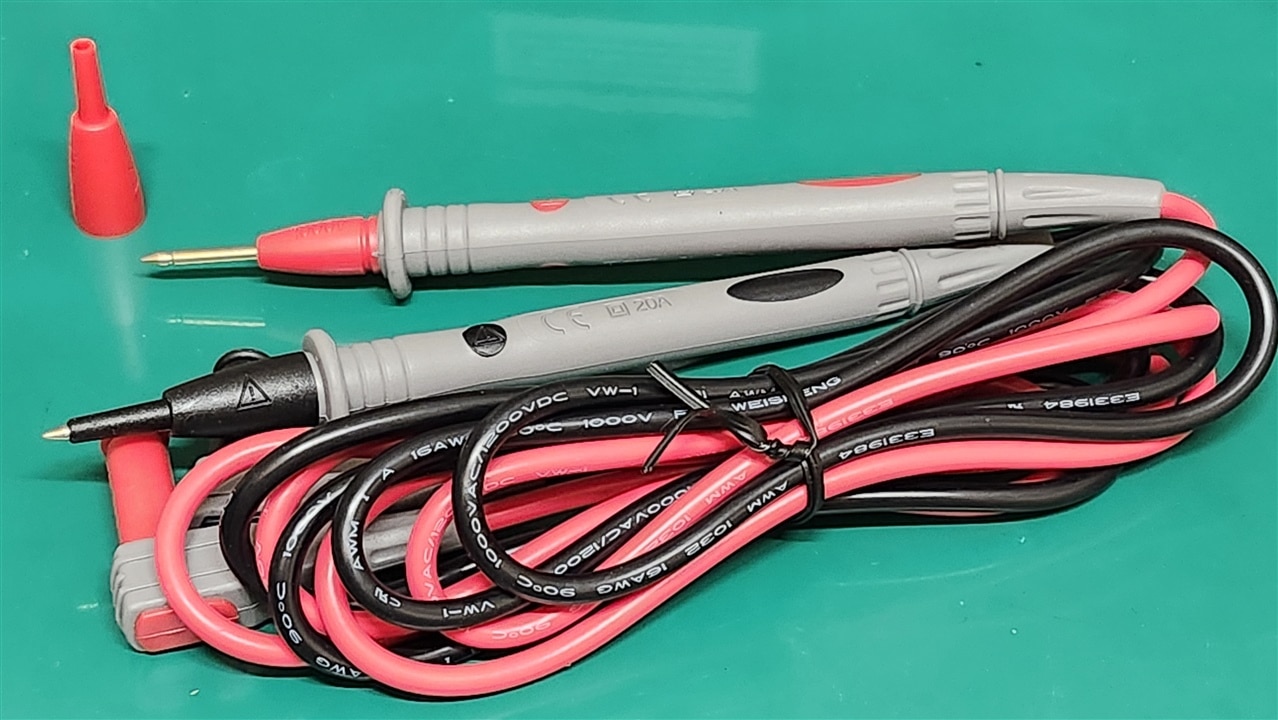
The cables of the test leads are made of flame retardant PVC rated for 90°C and are rated for 1000V and 20A. Their length is quite generous at 1.20m of extension and the sharp metallic tips are gold plated and have CAT III/IV plastic covers. The leads are quite solidly built but would be absolutely perfect if they used the more durable silicone wires.
The USB adapter cable and the hfe test adapter
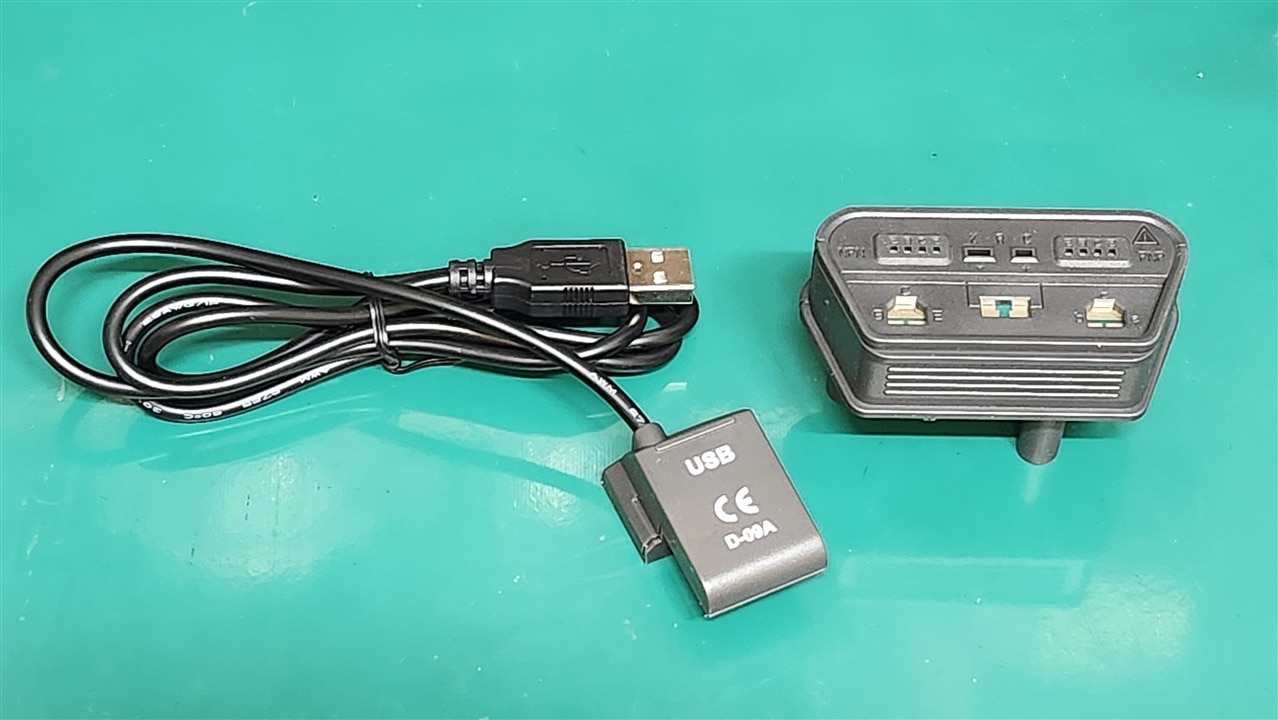
The USB adapter cable has a reasonable length and is bidirectional (one can see the phototransistor and the IR LED from outside of its shell), which hints to being able to control the meter remotely.
The hfe tester adapter has holes to fit transistor leads and some SMD parts. However, it is quite limited on its usability since the pin configuration for the different transistors is not flexible enough fixed. For example, a BF494 and its CEB configuration, for example, cannot be easily connected to the pins. Same of SMD transistors and their various pin configurations that differ from the BCE order.
The meter!
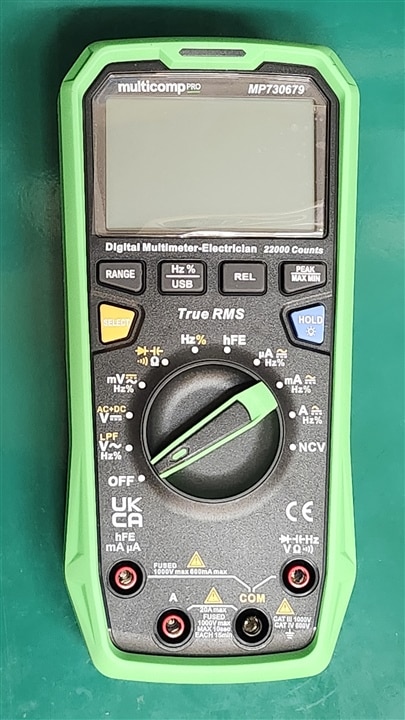
The MP730679 (a bit of a mouth full, I must admit) is shown below.
- It features a molded green flexible plastic layer all around its enclosure that extends to the back. Due to the plasticity of the green layer, it provides some protection to the meter from the back and the corners and sides. However, it does not have enough height on the front fascia to protect the rotary switch if the DMM falls flat on its face.
- The black injection plastic feels very solid and high quality, having a nice feel to it.
- The buttons are quite stiff but it feels good to the touch. Their precision will be evaluated later on this RoadTest, since stiff buttons are sometimes difficult to register the input.
- The rotary switch also has the green flexible plastic. This tends to peel off over the years, so its durability remains to be seen. The rotary switch is not very stiff and therefore tends to overshoot mechanically from their stop positions. That is something difficult to get right.
- The lettering on all the functions is printed and only time will tell how durable it is.
- The top has a protective clear lens and its distance to the LCD is quite reasonable (about 2~3mm), which helps with any accidents.
- The bottom input jacks are aligned and centered correctly inside their holes on the front panel. Believe it or not, even some top tier brands get these jacks misaligned from time to time.
- The DMM claims to meet CAT III 1000V and CAT IV 600V, and in the back an ETL Intertek independent lab mark is listed, which improves the confidence these markings are truthful. These types of claims are normal in the industry but not all seem truthful. Such claims will not be tested in this RoadTest, but an analysis of the circuit and some low energy high voltage tests will be performed in future blog entries.
- The back of the meter features a very wide and thick kickstand.
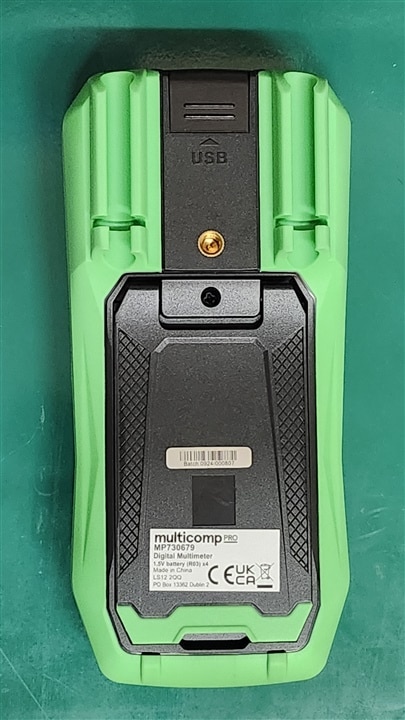
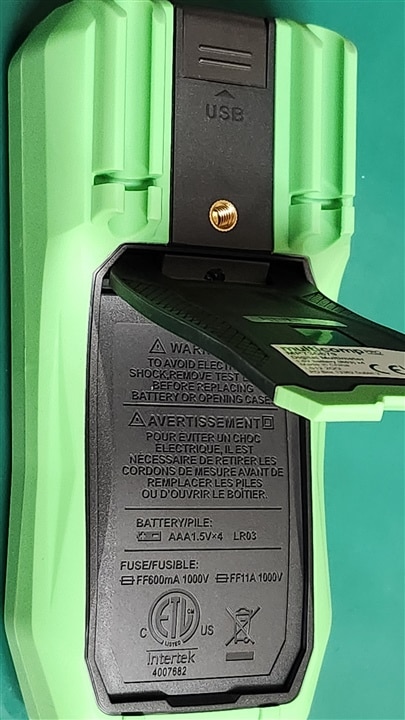
The kickstand keeps the DMM in a very nice angle, and moving the rotary switch does not push the meter back - this is credit to both the DMM's weight and the small rubber plastic at the bottom of the kickstand.
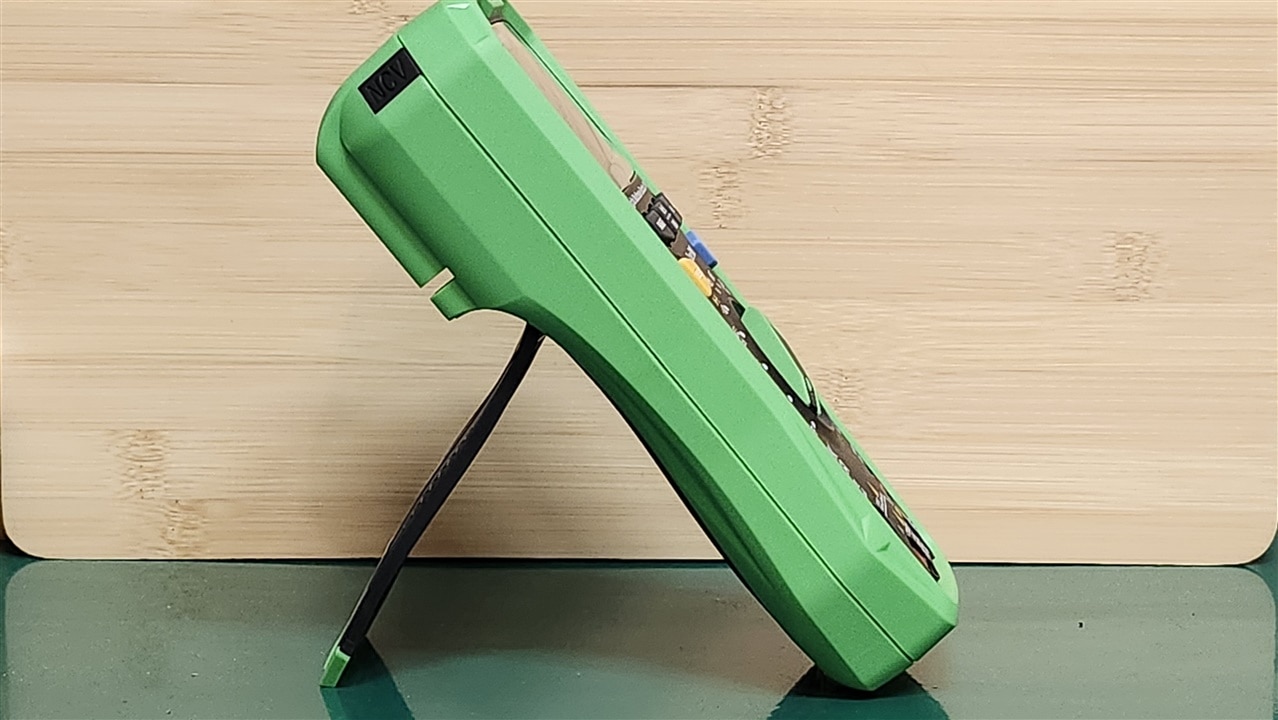
The overall feel is very solid and the housing does not bend when putting pressure on it.
This concludes the Unboxing and first impressions of this review. Next will be the power on and first tests. Stay tuned!