element14 Community
element14 Community
    Register Log In
  • Site
  • Search
  • Log In Register
  • Community Hub
    Community Hub
    • What's New on element14
    • Feedback and Support
    • Benefits of Membership
    • Personal Blogs
    • Members Area
    • Achievement Levels
  • Learn
    Learn
    • Ask an Expert
    • eBooks
    • element14 presents
    • Learning Center
    • Tech Spotlight
    • STEM Academy
    • Webinars, Training and Events
    • Learning Groups
  • Technologies
    Technologies
    • 3D Printing
    • FPGA
    • Industrial Automation
    • Internet of Things
    • Power & Energy
    • Sensors
    • Technology Groups
  • Challenges & Projects
    Challenges & Projects
    • Design Challenges
    • element14 presents Projects
    • Project14
    • Arduino Projects
    • Raspberry Pi Projects
    • Project Groups
  • Products
    Products
    • Arduino
    • Avnet & Tria Boards Community
    • Dev Tools
    • Manufacturers
    • Multicomp Pro
    • Product Groups
    • Raspberry Pi
    • RoadTests & Reviews
  • About Us
    About the element14 Community
  • Store
    Store
    • Visit Your Store
    • Choose another store...
      • Europe
      •  Austria (German)
      •  Belgium (Dutch, French)
      •  Bulgaria (Bulgarian)
      •  Czech Republic (Czech)
      •  Denmark (Danish)
      •  Estonia (Estonian)
      •  Finland (Finnish)
      •  France (French)
      •  Germany (German)
      •  Hungary (Hungarian)
      •  Ireland
      •  Israel
      •  Italy (Italian)
      •  Latvia (Latvian)
      •  
      •  Lithuania (Lithuanian)
      •  Netherlands (Dutch)
      •  Norway (Norwegian)
      •  Poland (Polish)
      •  Portugal (Portuguese)
      •  Romania (Romanian)
      •  Russia (Russian)
      •  Slovakia (Slovak)
      •  Slovenia (Slovenian)
      •  Spain (Spanish)
      •  Sweden (Swedish)
      •  Switzerland(German, French)
      •  Turkey (Turkish)
      •  United Kingdom
      • Asia Pacific
      •  Australia
      •  China
      •  Hong Kong
      •  India
      •  Japan
      •  Korea (Korean)
      •  Malaysia
      •  New Zealand
      •  Philippines
      •  Singapore
      •  Taiwan
      •  Thailand (Thai)
      •  Vietnam
      • Americas
      •  Brazil (Portuguese)
      •  Canada
      •  Mexico (Spanish)
      •  United States
      Can't find the country/region you're looking for? Visit our export site or find a local distributor.
  • Translate
  • Profile
  • Settings
RoadTests & Reviews
  • Products
  • More
RoadTests & Reviews
Review Blogs Power measurements and testing Voltmeter DVM  ---R&S RTM3K Oscilloscope Road-Test Review
  • Blogs
  • RoadTest Forum
  • Documents
  • RoadTests
  • Reviews
  • Polls
  • Files
  • Members
  • Sub-Groups
  • More
  • Cancel
  • New
Join RoadTests & Reviews to participate - click to join for free!
  • Share
  • More
  • Cancel
  • Author Author: snidhi
  • Date Created: 28 Jul 2018 1:23 PM Date Created
  • Views 2924 views
  • Likes 7 likes
  • Comments 15 comments
Related
Recommended

Power measurements and testing Voltmeter DVM  ---R&S RTM3K Oscilloscope Road-Test Review

snidhi
snidhi
28 Jul 2018

  • Power measurements and testing Voltmeter DVM
    • Power measurements in the RTM 3004
    • Setup of the TPSM84A21 Power Module
    • Measurements with the TPSM84A21 Power Module
    • Spectrum analysis of the Output voltage
    • Transient Analysis of the Output voltage
    • Measuring with Digital Voltmeter in RTM 3004


Power measurements and testing Voltmeter DVM

This blog is in continuation from the Rohde & Schwarz Oscilloscope Kit RTM3K-COM4 - Review


Here I setup an experiment to measure the ripple and do power analysis of the DC/DC TPSM84A21 Power Module. It is an integrated power solution that combines the TPS54A21, a 10-A, DC/DC, synchronous, step-down converter with power MOSFETs, shielded inductors, input and output capacitors, and passives into a package. The tests were done with 10V and 12V input voltage and outputs in the range of 0.6V, 0.8V,1V, 1.1V, 1.2V were measured.

Datasheet TPSM84A21 Power Module


A detailed description of the TI SWIFTTm Power Module EVM can be seen here. I will focus on the measurements with the R&S RTM 3004 Oscilloscope.


Power measurements in the RTM 3004


You don't have permission to edit metadata of this video.
Edit media
x
image
Upload Preview
image

Fig: How to Set up the RTM 3004 for Power Measurements


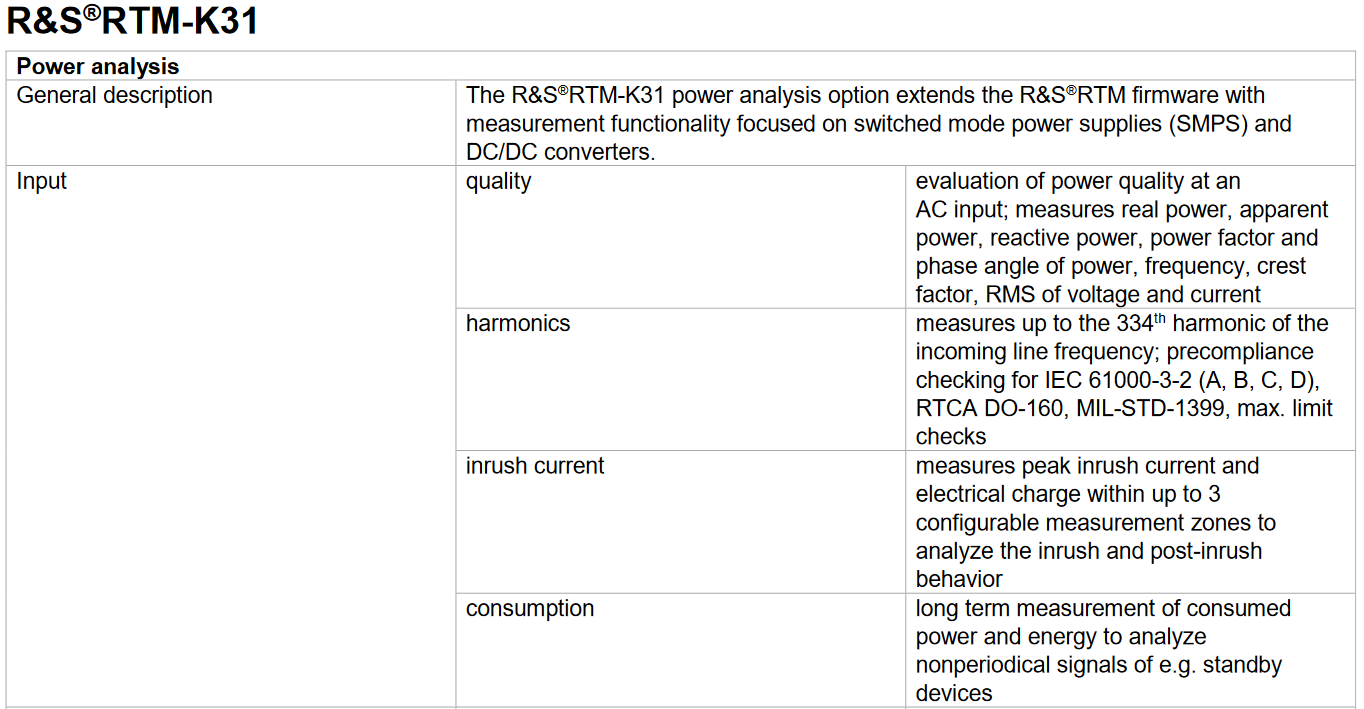
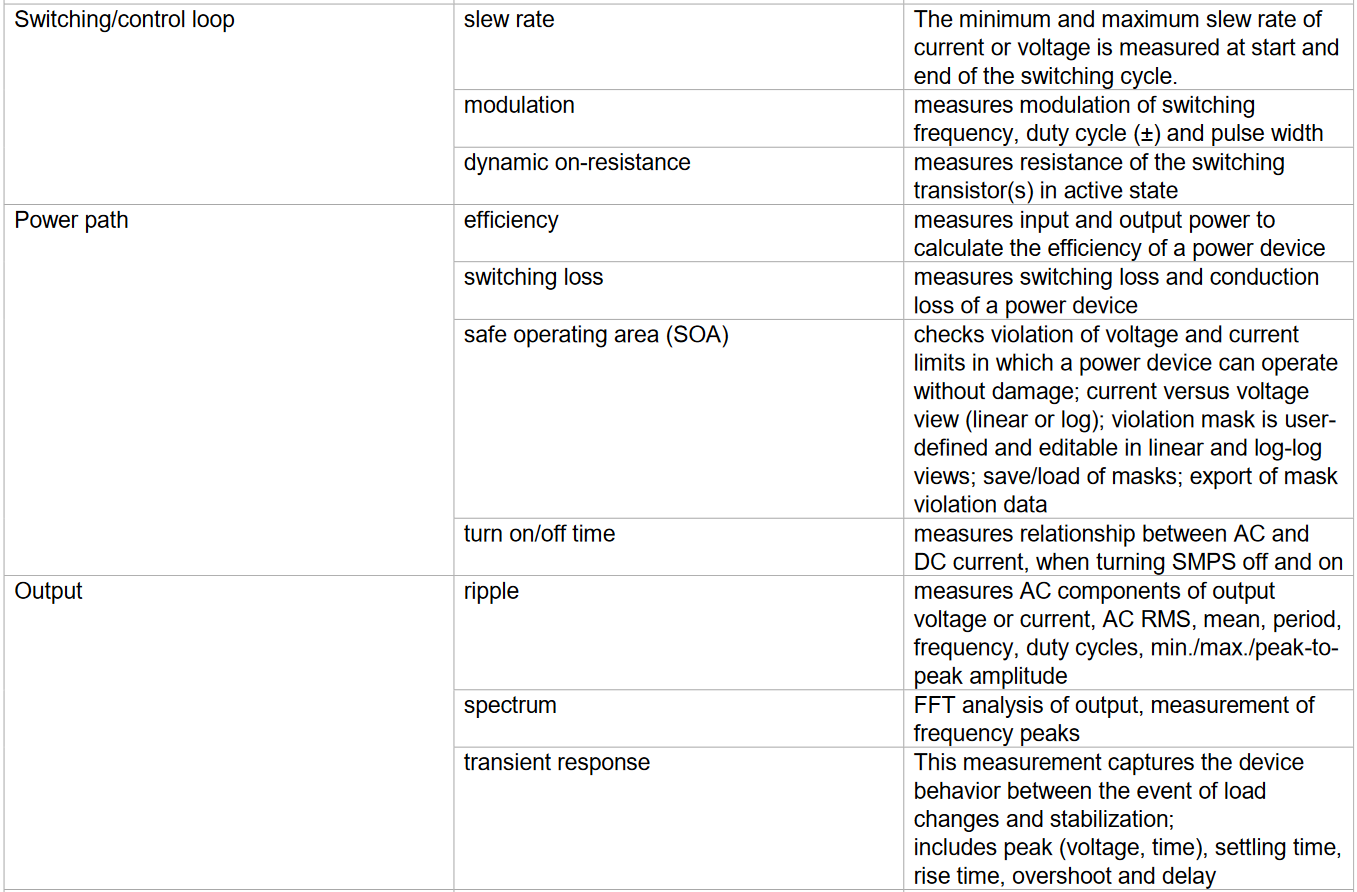
The R&S RTM K31 Power Analysis bundle offers different options to measure input and output of (Switched Mode Power Supplies) SMPS and DC/DC Converters. The TPSM84A21 Power Module is a high current DC/DC converter. The power analysis of the DC/DC converter is presented below.
 

image


image

Fig: R&S RTM K31 Power Analysis bundle offers

Setup of the TPSM84A21 Power Module
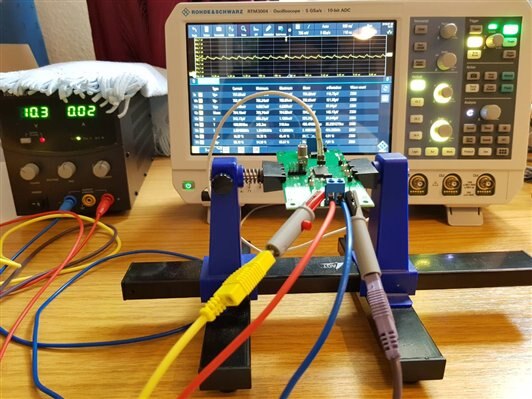
image

Fig: Test setup for the Power Measurements


Measurements with the TPSM84A21 Power Module


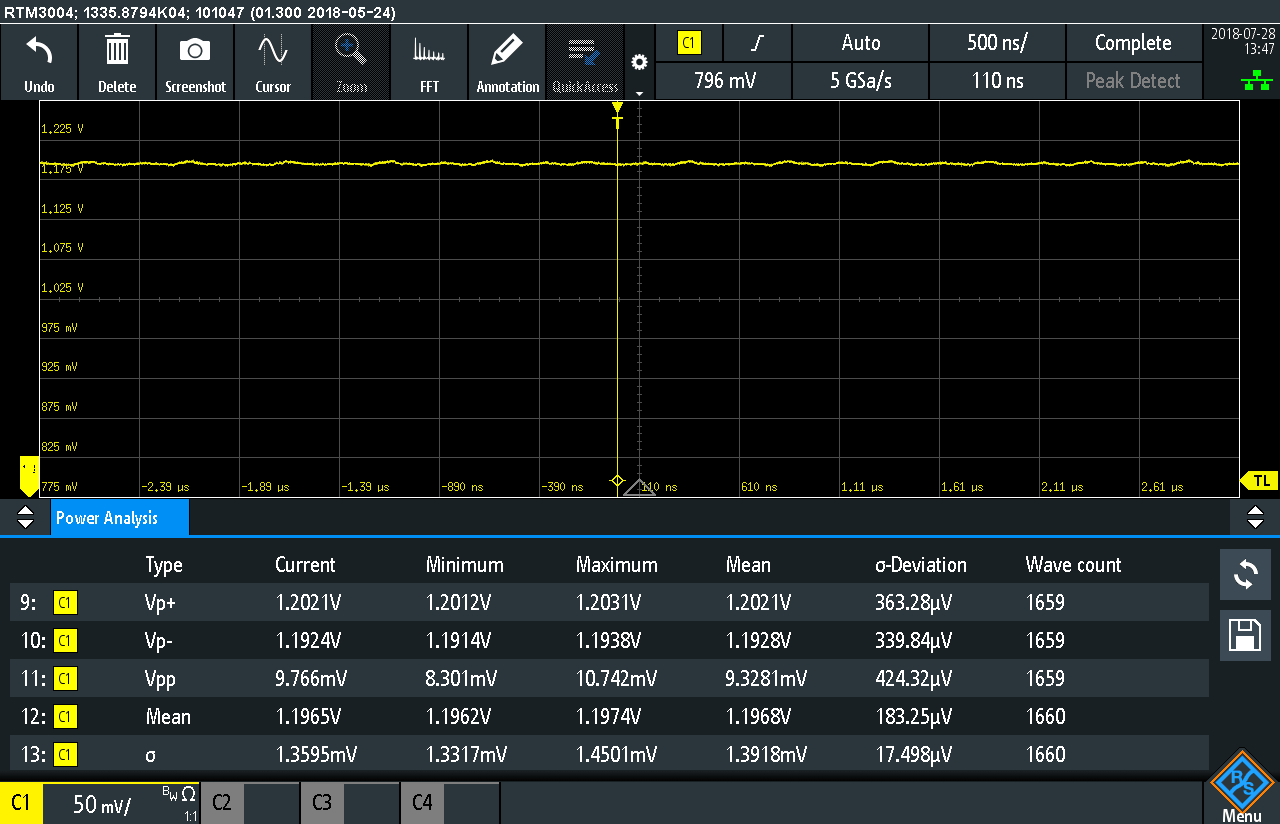
The below measurements were done using the automated power analysis tool in the RTM 3004 with the DC/DC TPSM84A21 Power Module.
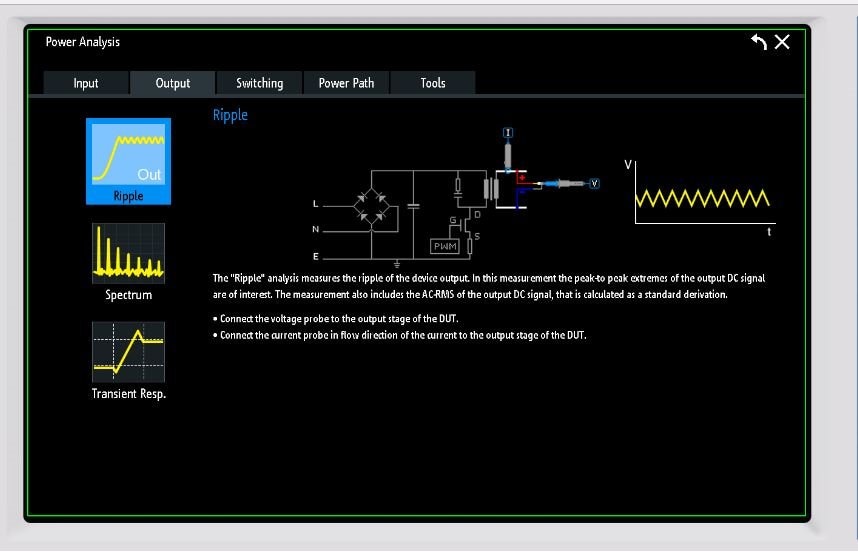
 

image


The aim is only to present how this automated button of power noise ripple works and the below mentioned tests were done with no load in the DC/DC converter output.
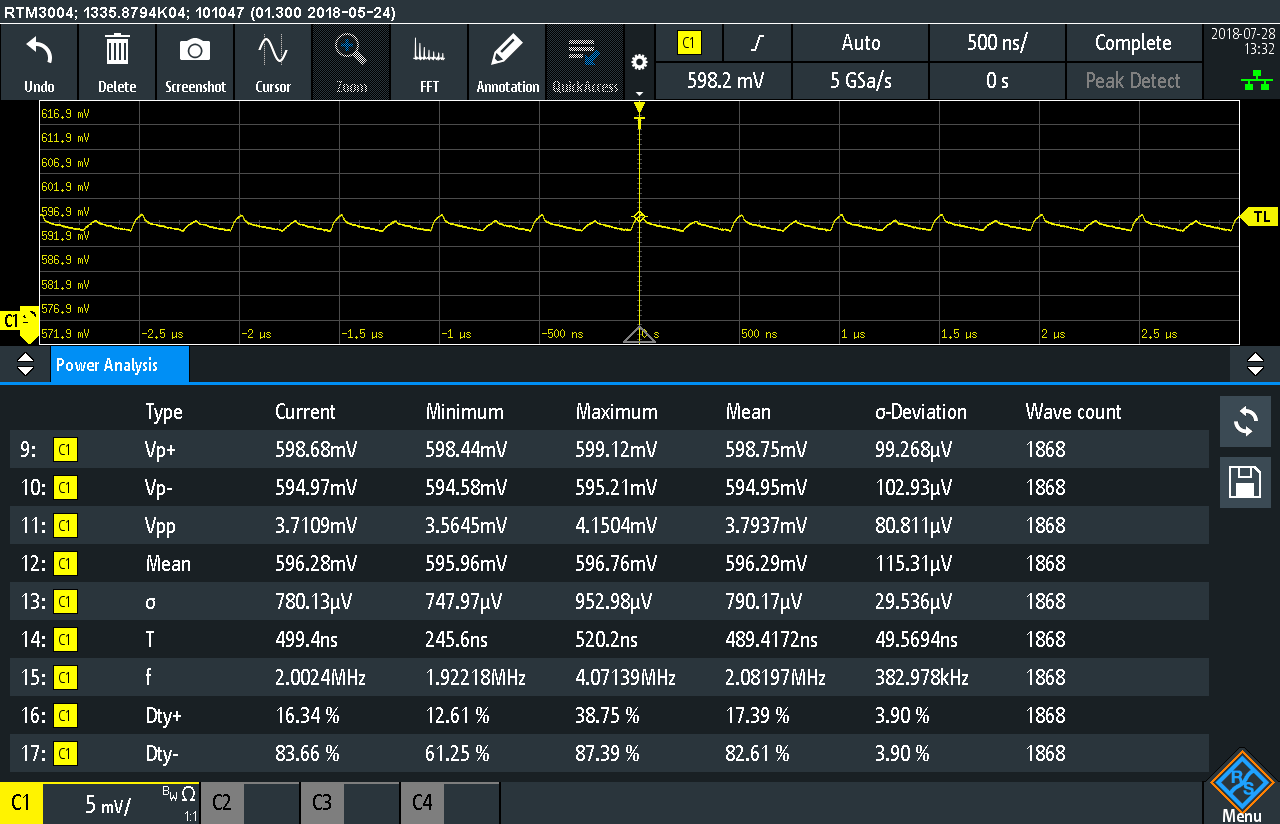
 

image

Fig: Power Analysis of the 0.6V output of the DC/DC TPSM84A21 Power Module
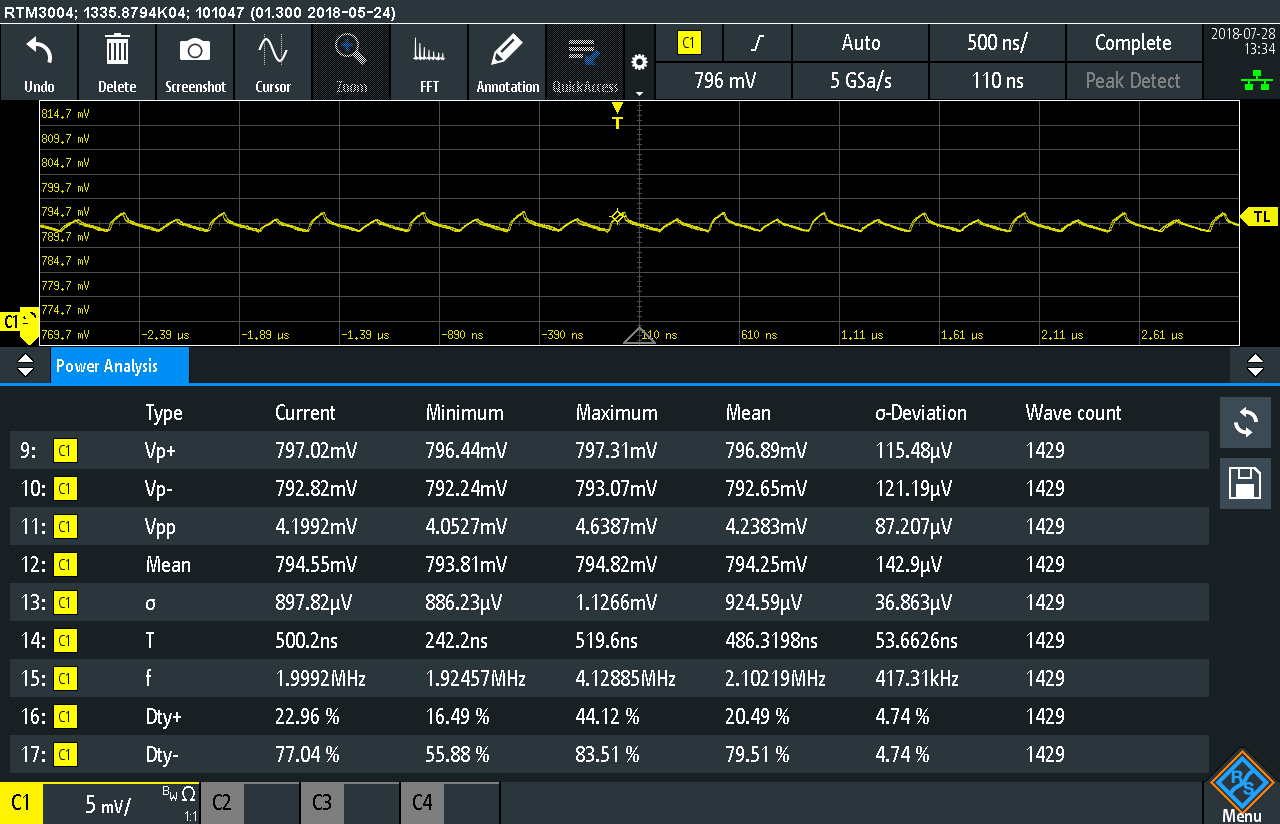
 

image

Fig: Power Analysis of the 0.8V output of the DC/DC TPSM84A21 Power Module


image

Fig: Power Analysis of the 1V output of the DC/DC TPSM84A21 Power Module
 

image

Fig: Power Analysis of the 1.2V output of the DC/DC Converter Module


You don't have permission to edit metadata of this video.
Edit media
x
image
Upload Preview
image

Fig: Power Analysis of the DC/DC Converter


The tests here will be done with fixed resistance load in the DC/DC converter output.


tbd.. new addition of test on popular demand


Spectrum analysis of the Output voltage


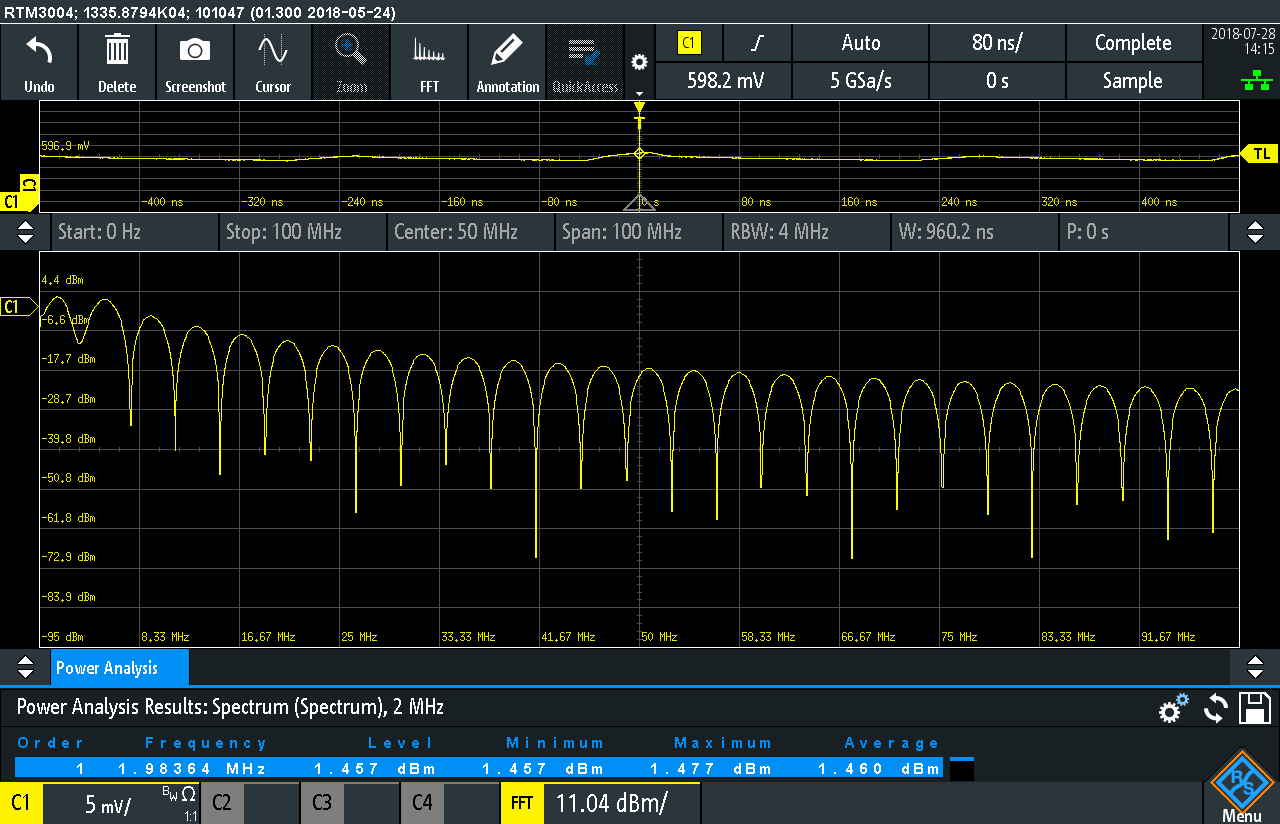
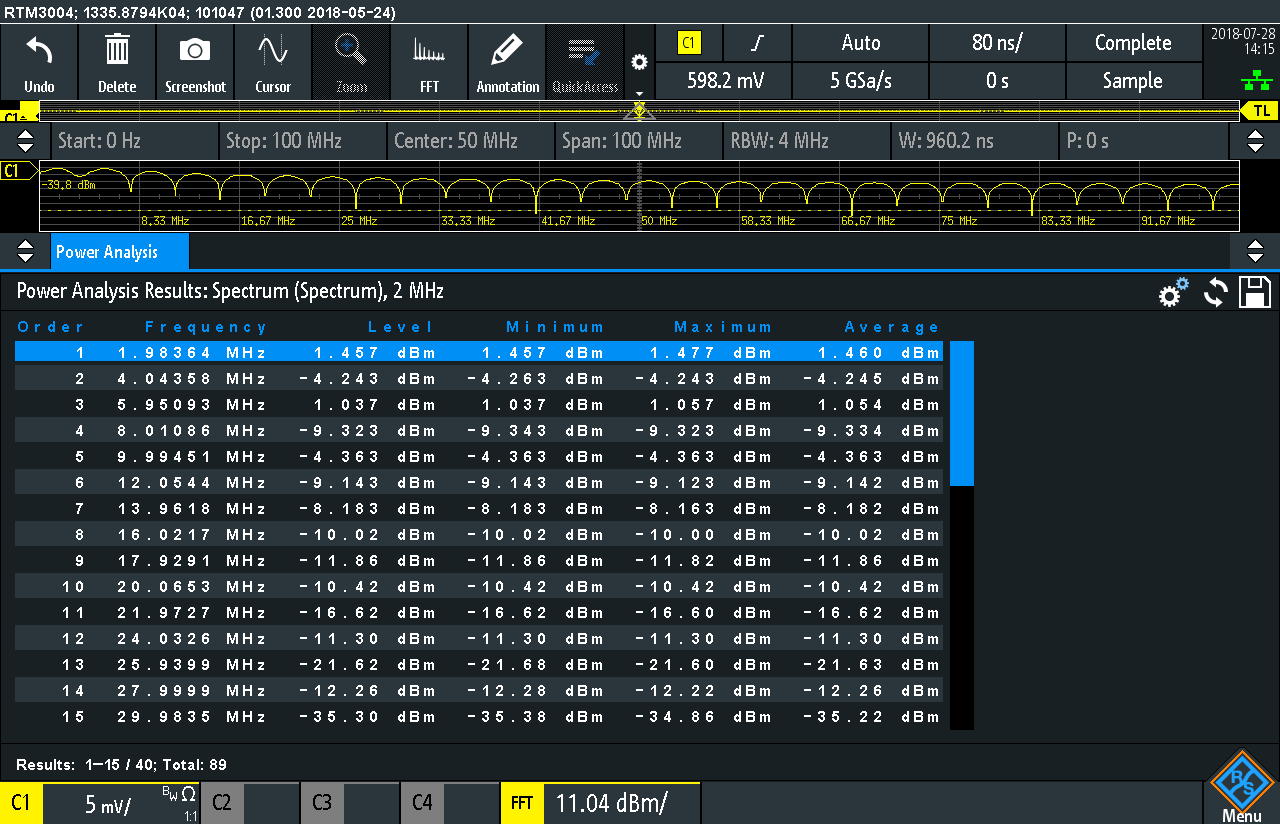
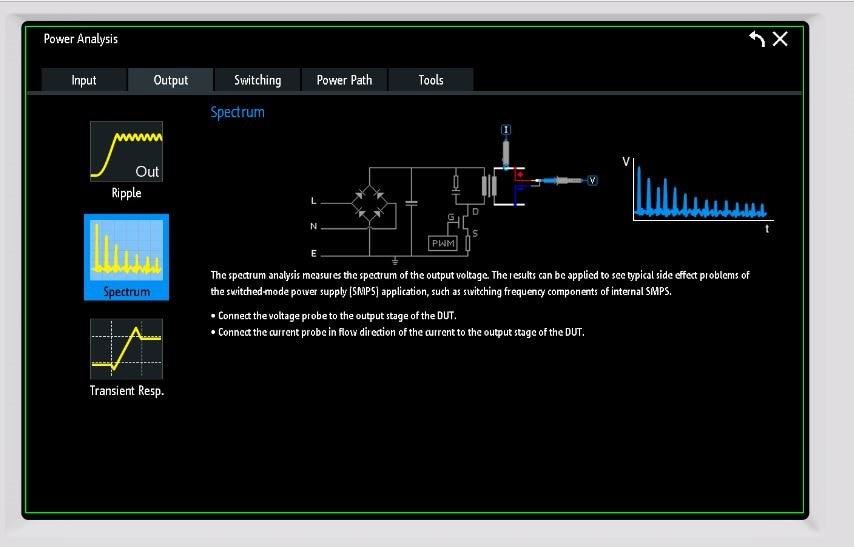
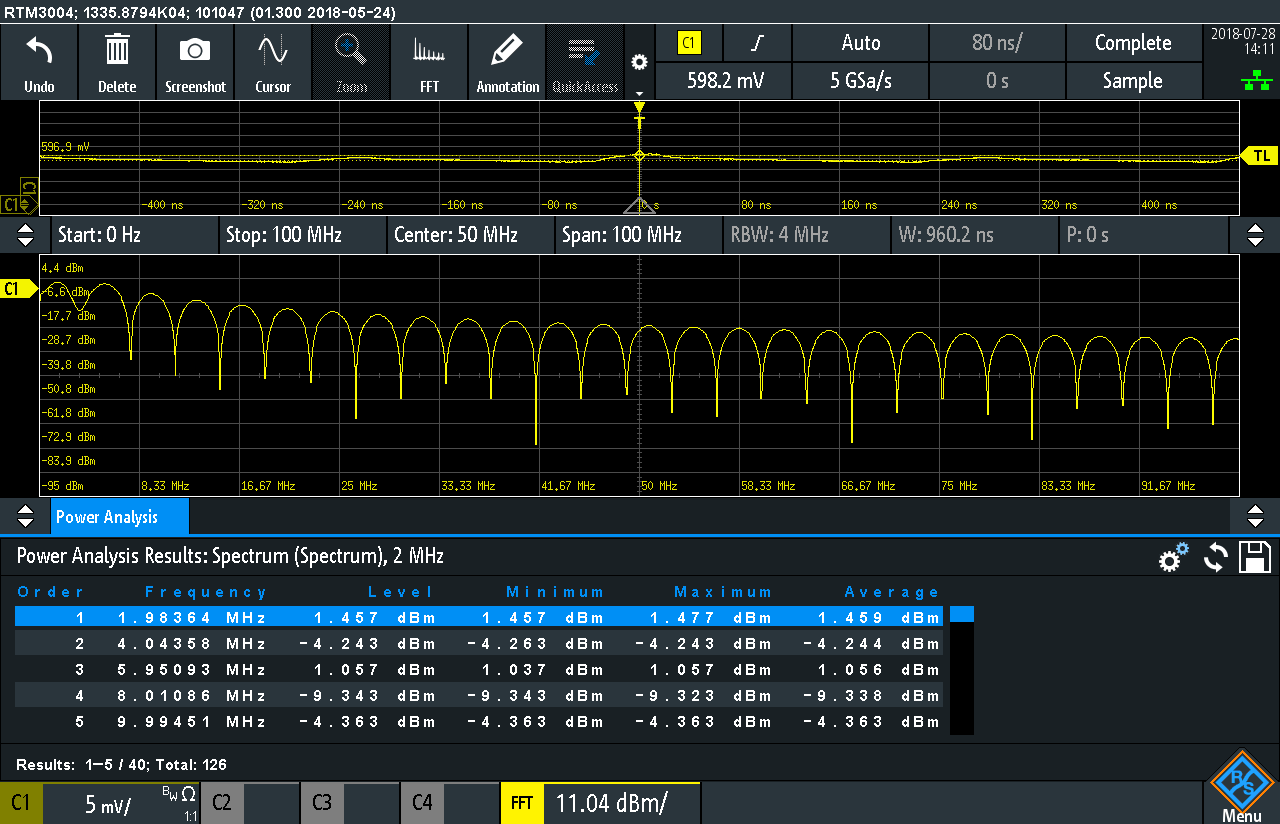
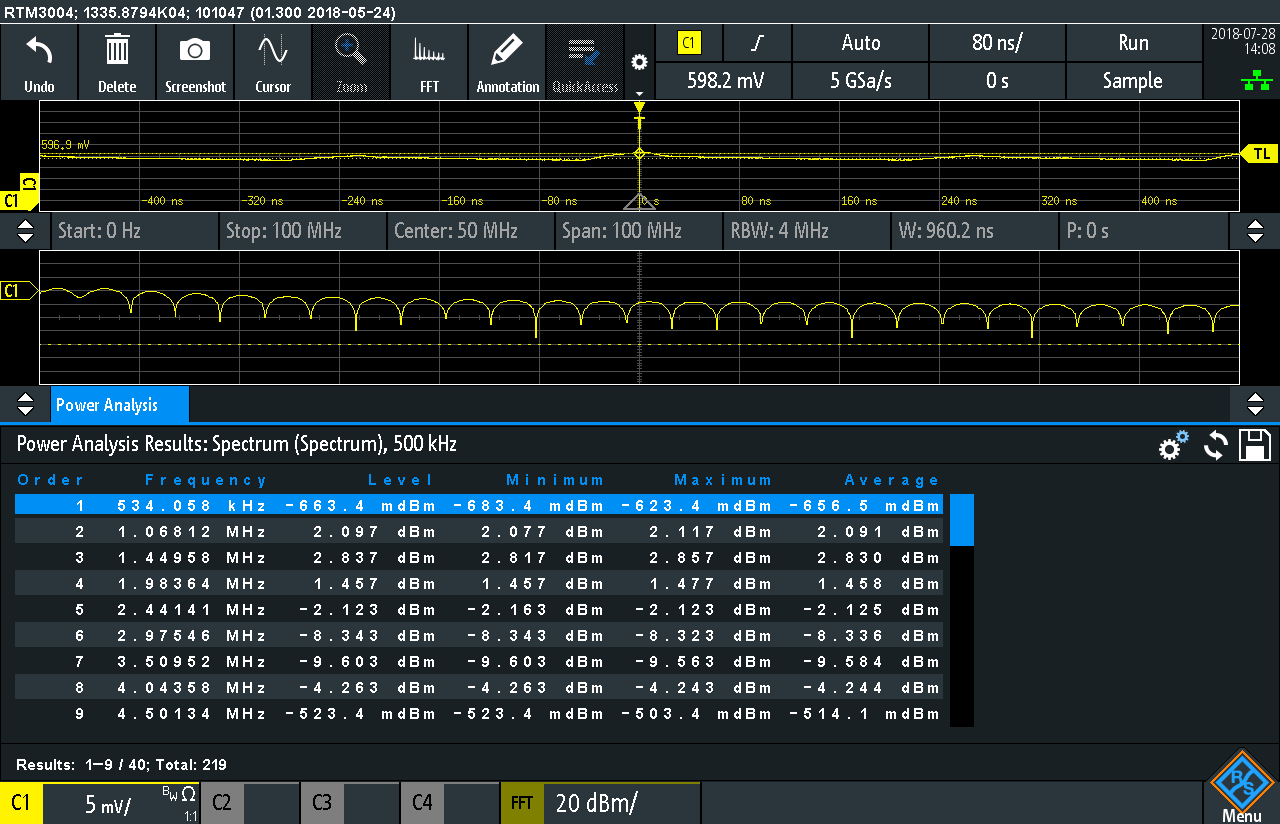
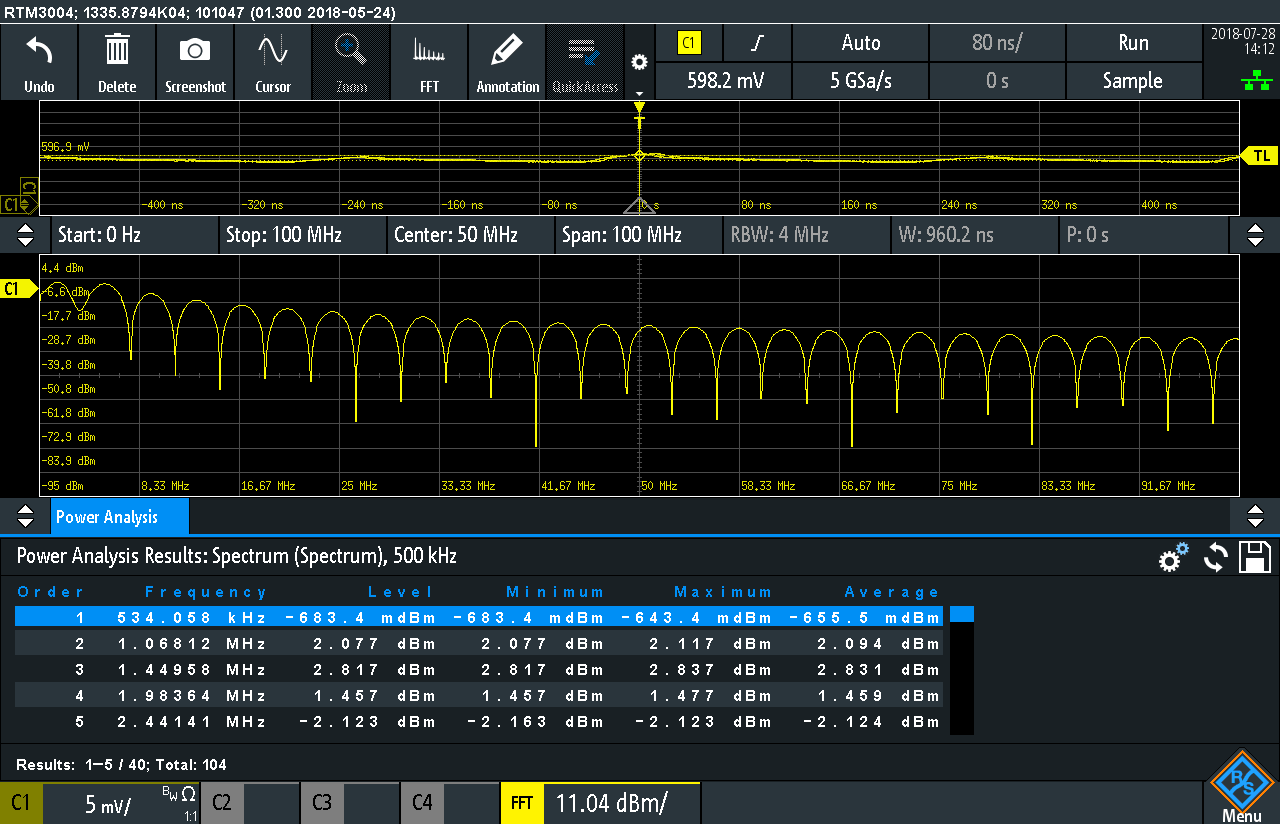
The settings to measure are as below. The Vin = 12V and Vout = 0.8V of the DC/DC TPSM84A21 Power Module. The frequency measured of the output signal is as measured above is 2MHz
 

image

Fig: Settings for spectrum analysis


image

Fig: The spectrum output for Vout = 0.8V
 

image

Fig: Detailed look into the measured data


The minimum horizontal measurement setting for RTM 3004 is 8MHz hence the spectrum behavior immediately after the switching of the device cannot be analyzed here as it is around 2MHz.
image


image


image

Fig: Detailed look into the measured data


Transient Analysis of the Output voltage
 

image

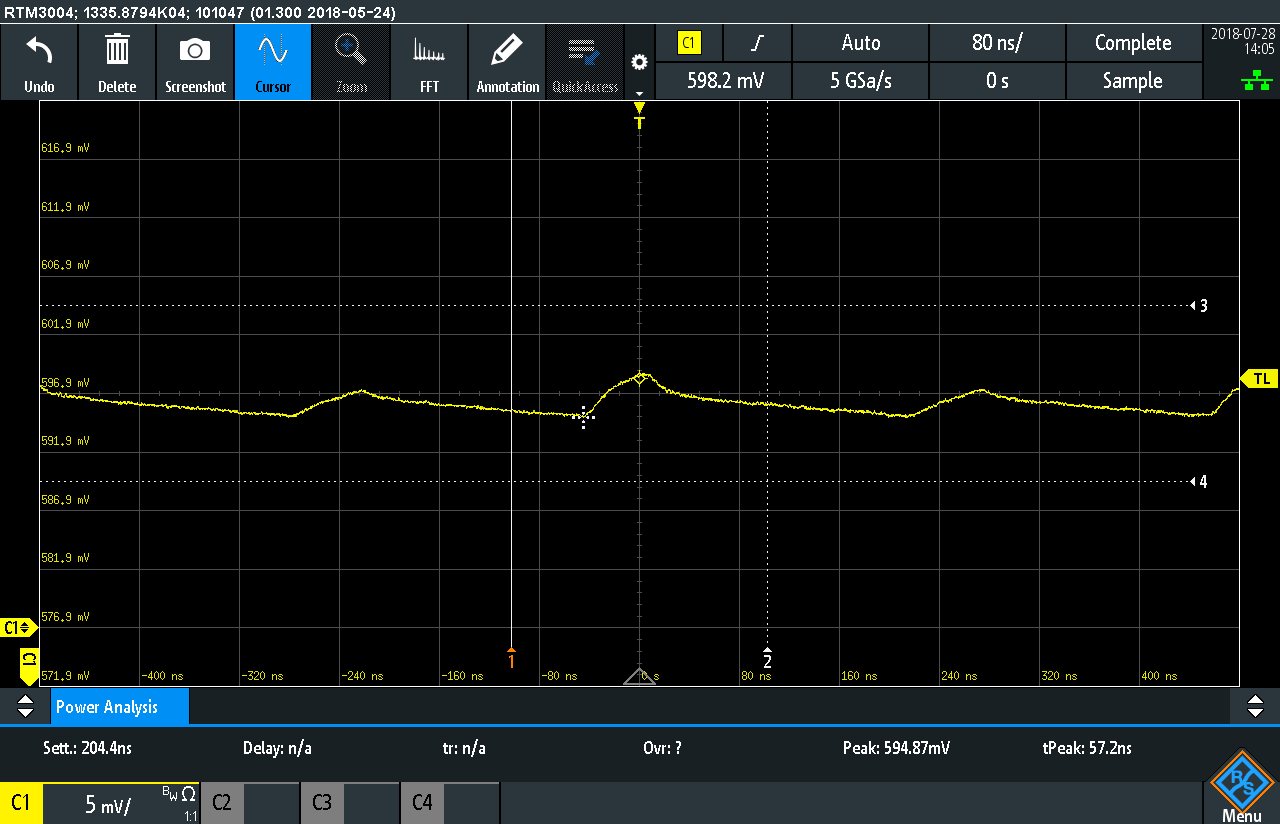
Fig: Measuring the transient response on the output signal for Vout = 0.6V


Measuring with Digital Voltmeter in RTM 3004

 

image

Fig: DVM features of RTM 3004


Below, the DVM can be seen live in action and measuring the input signal voltage of the DC/DC TPSM84A21 Power Module.


You don't have permission to edit metadata of this video.
Edit media
x
image
Upload Preview
image

Fig: Measuring with the DVM in RTM 3004


In conclusion the power measurement features of the RTM 3004 are quite powerful & allows results to be obtained with minimum effort. By one click of the button the scope settings are done and one can do fast measurements instead of investing time for finding the correct settings for the tests.

  • Sign in to reply

Top Comments

  • three-phase
    three-phase over 7 years ago +4
    Another good blog, seems like quite a useful feature to have. Kind regards
  • snidhi
    snidhi over 7 years ago in reply to jc2048 +4
    hi Jon jc2048 wrote: With the transient test, what was the transient that you were measuring? Did you have a switched load on the output? The results look much too good to me (although a 4MHz converter…
  • genebren
    genebren over 7 years ago +2
    Another great addition to your roadtest review. The layers of detail that you have generated in this review are quite impressive. All of these features are making less and less satisfied with my present…
  • snidhi
    snidhi over 7 years ago in reply to jc2048

    But how can you impede the air flow if there are no hole on the top. This device has only holes on the sides and behind.

    Due to the rug, there can be heat which may not be dissipated via the PSU housing body from the top-side because the rug is blocking it perhaps. Is this what you mean?


    And of-course better cautious than sorry image

    • Cancel
    • Vote Up 0 Vote Down
    • Sign in to reply
    • More
    • Cancel
  • jc2048
    jc2048 over 7 years ago in reply to snidhi

    Speaking for myself, if I saw ventilation holes on a piece of equipment, and a heatsink on the back, I wouldn't impede the airflow around them as a matter of course, whether or not I knew it would have a negative effect. Perhaps I'm just over-cautious.

    • Cancel
    • Vote Up 0 Vote Down
    • Sign in to reply
    • More
    • Cancel
  • snidhi
    snidhi over 7 years ago in reply to jc2048

    Hi Jon,

    jc2048  wrote:

    BTW It might not be a good idea to run your analogue PSU with a rug blocking the ventilation for the power transistor heatsink inside. Won't matter for the situation in the picture, where it's only supplying 20mA, but it might matter at higher output currents. You might know to remove it under those circumstances, but it sets a bad example to others who don't.

    The ventilation for this PSU is only on the sides and the behind.  

    On top there is only a holding handle so I guess it won't make a difference for this PSU.

    I know for some old devices the ventilation is on the top but not for this one I have. Do you think it still makes a difference with the rug on top?


    Cheers

    • Cancel
    • Vote Up +1 Vote Down
    • Sign in to reply
    • More
    • Cancel
  • jc2048
    jc2048 over 7 years ago

    The tools that the oscilloscope provides look really useful for doing these measurements. Thank you for showing us this in addition to your main review.


    A couple of questions for you.


    I don't know much about spectrum analysers (never having used one), but don't you need to set a RBW of much lower than 4MHz to pick out a 4MHz fundamental and its harmonics sensibly? The RBW defines the resolution, doesn't it?


    With the transient test, what was the transient that you were measuring? Did you have a switched load on the output? The results look much too good to me (although a 4MHz converter is going to be fast, you wouldn't expect the control loop to recover things that quickly - a rough 'rule of thumb' is that the control loop bandwidth might be something like a tenth to a twentieth of the switching frequency). Or were you just showing us how the measurement might work by simply letting it measure the rise time of the ripple?


    BTW It might not be a good idea to run your analogue PSU with a rug blocking the ventilation for the power transistor heatsink inside. Won't matter for the situation in the picture, where it's only supplying 20mA, but it might matter at higher output currents. You might know to remove it under those circumstances, but it sets a bad example to others who don't.

    • Cancel
    • Vote Up +2 Vote Down
    • Sign in to reply
    • More
    • Cancel
  • rachaelp
    rachaelp over 7 years ago in reply to rachaelp

    Oh and to add insult to injury you also need the "deskew fixture" in order to calibrate the setup before taking measurements which you can only get from Keysight and you guessed it, it costs a pretty penny too!

    • Cancel
    • Vote Up +1 Vote Down
    • Sign in to reply
    • More
    • Cancel
<>
element14 Community

element14 is the first online community specifically for engineers. Connect with your peers and get expert answers to your questions.

  • Members
  • Learn
  • Technologies
  • Challenges & Projects
  • Products
  • Store
  • About Us
  • Feedback & Support
  • FAQs
  • Terms of Use
  • Privacy Policy
  • Legal and Copyright Notices
  • Sitemap
  • Cookies

An Avnet Company © 2026 Premier Farnell Limited. All Rights Reserved.

Premier Farnell Ltd, registered in England and Wales (no 00876412), registered office: Farnell House, Forge Lane, Leeds LS12 2NE.

ICP 备案号 10220084.

Follow element14

  • X
  • Facebook
  • linkedin
  • YouTube