We have the opportunity to offer up the STEMlab 125-14 PRO Gen 2 Starter Kit - which is available on our online store .
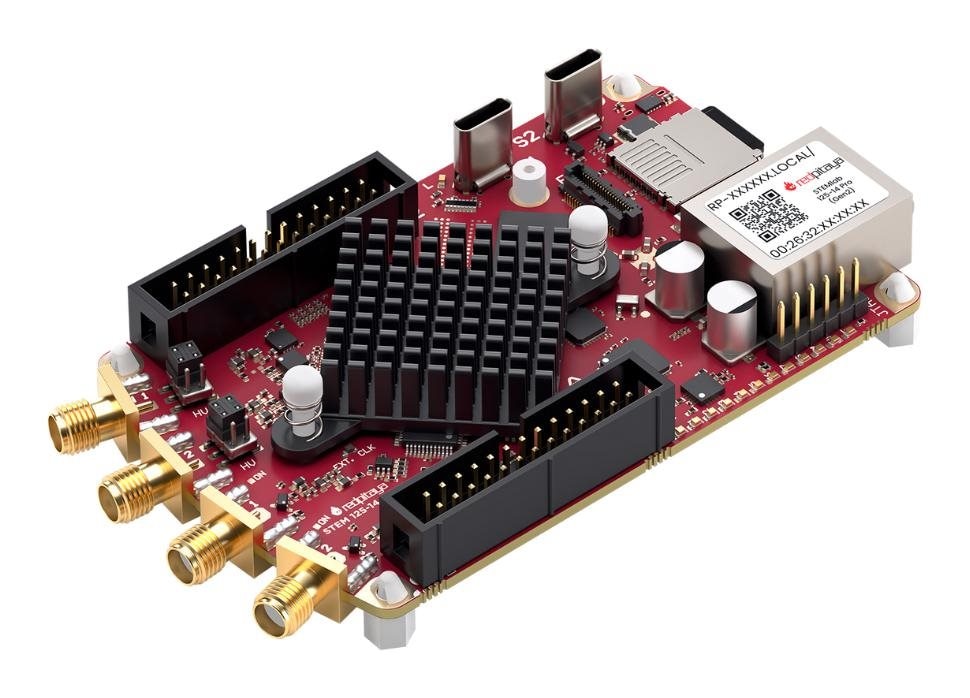
Here's a little bit about the hardware:
What do you think?
We have the opportunity to offer up the STEMlab 125-14 PRO Gen 2 Starter Kit - which is available on our online store .

Here's a little bit about the hardware:
What do you think?
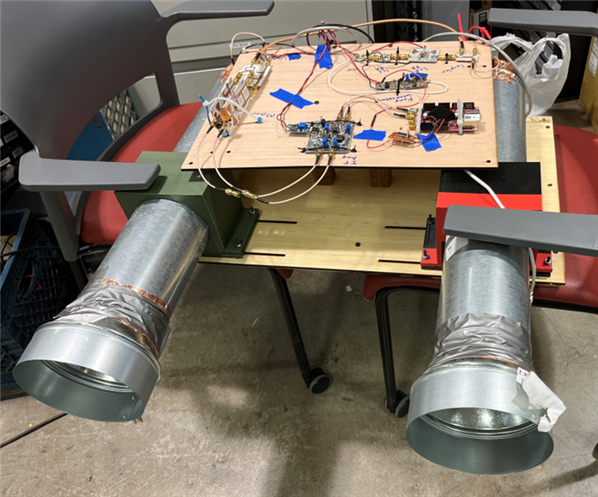
Thanks for the reference community.element14.com/.../scottiebabe
An interesting project but the Red Pitaya involvement was not very significant and their hype is a bit irksome.
Full kudos to the student for the real RF work - but it was done at 2.4GHz and the RP was only operating at much lower frequencies.
They said:
Red Pitaya bridges the gap between theoretical RF engineering and practical hardware design. With its 125 Msps ADC, FPGA, and built-in ARM processor, it lets students digitize high-frequency signals, run real-time processing, and control the entire radar system — all on a single board.
But then they say:
Here’s what made David’s DIY FMCW radar project possible with Red Pitaya:
Operating Frequency: 2.4–2.5 GHz
Sweep Rate: 1 kHz
Transmit Power: 26 dBm (400 mW)
ADC Sampling Rate: 125 Msps (14-bit resolution)
Core Capabilities: Simultaneous distance and velocity measurement
The RP can't do anything useful at 2.4GHz, and it has no influence at all on transmit power.
So the RF design would have required the usual RF gear and software.
It would be nice to know what software was used to design the mixer and other RF stuff and how it was tested.
In this design the RP generates a 1kHz ramp to modulate the VCO and measures the beat frequency of the RF return signal with the local oscillator (actual frequencies not disclosed).
It doesn't look as if the RP is doing anything a £25 ST Nucleo board couldn't do.
The Red Pitaya is an interesting and potentially useful product but over-hyping the way they do does no one any favours.
MK
Thanks for the reference community.element14.com/.../scottiebabe
An interesting project but the Red Pitaya involvement was not very significant and their hype is a bit irksome.
Full kudos to the student for the real RF work - but it was done at 2.4GHz and the RP was only operating at much lower frequencies.
They said:
Red Pitaya bridges the gap between theoretical RF engineering and practical hardware design. With its 125 Msps ADC, FPGA, and built-in ARM processor, it lets students digitize high-frequency signals, run real-time processing, and control the entire radar system — all on a single board.
But then they say:
Here’s what made David’s DIY FMCW radar project possible with Red Pitaya:
Operating Frequency: 2.4–2.5 GHz
Sweep Rate: 1 kHz
Transmit Power: 26 dBm (400 mW)
ADC Sampling Rate: 125 Msps (14-bit resolution)
Core Capabilities: Simultaneous distance and velocity measurement
The RP can't do anything useful at 2.4GHz, and it has no influence at all on transmit power.
So the RF design would have required the usual RF gear and software.
It would be nice to know what software was used to design the mixer and other RF stuff and how it was tested.
In this design the RP generates a 1kHz ramp to modulate the VCO and measures the beat frequency of the RF return signal with the local oscillator (actual frequencies not disclosed).
It doesn't look as if the RP is doing anything a £25 ST Nucleo board couldn't do.
The Red Pitaya is an interesting and potentially useful product but over-hyping the way they do does no one any favours.
MK