element14 Community
element14 Community
    Register Log In
  • Site
  • Search
  • Log In Register
  • Community Hub
    Community Hub
    • What's New on element14
    • Feedback and Support
    • Benefits of Membership
    • Personal Blogs
    • Members Area
    • Achievement Levels
  • Learn
    Learn
    • Ask an Expert
    • eBooks
    • element14 presents
    • Learning Center
    • Tech Spotlight
    • STEM Academy
    • Webinars, Training and Events
    • Learning Groups
  • Technologies
    Technologies
    • 3D Printing
    • FPGA
    • Industrial Automation
    • Internet of Things
    • Power & Energy
    • Sensors
    • Technology Groups
  • Challenges & Projects
    Challenges & Projects
    • Design Challenges
    • element14 presents Projects
    • Project14
    • Arduino Projects
    • Raspberry Pi Projects
    • Project Groups
  • Products
    Products
    • Arduino
    • Avnet & Tria Boards Community
    • Dev Tools
    • Manufacturers
    • Multicomp Pro
    • Product Groups
    • Raspberry Pi
    • RoadTests & Reviews
  • About Us
  • Store
    Store
    • Visit Your Store
    • Choose another store...
      • Europe
      •  Austria (German)
      •  Belgium (Dutch, French)
      •  Bulgaria (Bulgarian)
      •  Czech Republic (Czech)
      •  Denmark (Danish)
      •  Estonia (Estonian)
      •  Finland (Finnish)
      •  France (French)
      •  Germany (German)
      •  Hungary (Hungarian)
      •  Ireland
      •  Israel
      •  Italy (Italian)
      •  Latvia (Latvian)
      •  
      •  Lithuania (Lithuanian)
      •  Netherlands (Dutch)
      •  Norway (Norwegian)
      •  Poland (Polish)
      •  Portugal (Portuguese)
      •  Romania (Romanian)
      •  Russia (Russian)
      •  Slovakia (Slovak)
      •  Slovenia (Slovenian)
      •  Spain (Spanish)
      •  Sweden (Swedish)
      •  Switzerland(German, French)
      •  Turkey (Turkish)
      •  United Kingdom
      • Asia Pacific
      •  Australia
      •  China
      •  Hong Kong
      •  India
      •  Korea (Korean)
      •  Malaysia
      •  New Zealand
      •  Philippines
      •  Singapore
      •  Taiwan
      •  Thailand (Thai)
      • Americas
      •  Brazil (Portuguese)
      •  Canada
      •  Mexico (Spanish)
      •  United States
      Can't find the country/region you're looking for? Visit our export site or find a local distributor.
  • Translate
  • Profile
  • Settings
Business of Engineering
  • Technologies
  • More
Business of Engineering
Blog Automation Might Eliminate 70 Million US Jobs by 2030
  • Blog
  • Forum
  • Documents
  • Quiz
  • Events
  • Polls
  • Files
  • Members
  • Mentions
  • Sub-Groups
  • Tags
  • More
  • Cancel
  • New
Join Business of Engineering to participate - click to join for free!
  • Share
  • More
  • Cancel
Group Actions
  • Group RSS
  • More
  • Cancel
Engagement
  • Author Author: Catwell
  • Date Created: 15 Jan 2018 5:16 PM Date Created
  • Views 606 views
  • Likes 2 likes
  • Comments 2 comments
  • business of engineering
  • jobs
  • cabeatwell
  • job forcast
  • business
  • automation
Related
Recommended

Automation Might Eliminate 70 Million US Jobs by 2030

Catwell
Catwell
15 Jan 2018

image


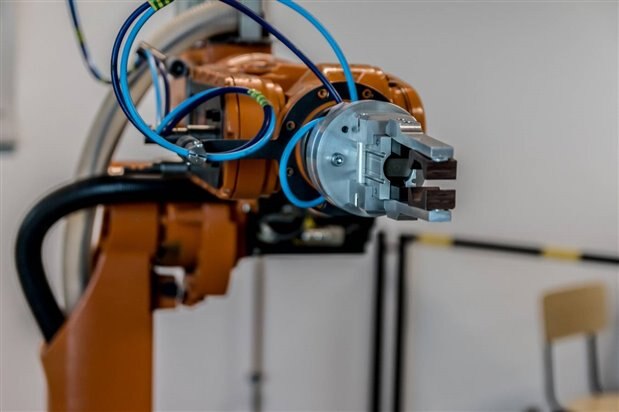
The key word here is ‘might.’ It’s more probable that while some jobs will become obsolete, others will take their place, according to a report from McKinsey Global Institute. Their key findings state that while there may be enough work for full employment up to the year 2030, in most cases the transition to new jobs as the old become automated will be very challenging. McKinsey estimates that almost a half of all work activities on a global scale have the ability to be automated and based on economic, social and technical factors- zero to a third of those could be displaced by 2030.


In the US, 39 to 73-million jobs could be eliminated by then, but roughly 20-million of those would have the ability to be shifted into similar occupations but perform different tasks. If those numbers are correct, that means 16 to 54-million workers would need to be retrained for new occupations. The employment growth necessary to replace those axed jobs, ironically, will come from automation itself, workers will be required to operate those machines. Jobs will also be created with the rise in demand for more healthcare workers, engineers and the renewable energy industry, which is why there is a significant push of the STEM curriculum in most US schools.


As you might imagine, the jobs affected by automation are physical ones- assembly line workers, those in fast food are already on track to lose their jobs, even those working in data collection and processing (mortgage origination, paralegal work, accounting, etc.) would suffer under automation. On the other side of the coin, the safest jobs from the effects of automation will be those that manage people, those requiring high-level expertise and those in unpredictable environments, including scientists, educators, and IT professionals. Gardeners, those in the trades (carpenters, plumbers, electricians, etc.) and those that care for the elderly will also survive.


To put that into perspective- those with high-paying jobs will likely be unaffected while those in mid-level positions will see the most significant decline and low-level earners could see growth in job numbers. McKinsey states that because low-level employees cost less, they are often not worth supplanting with technology. Ultimately, this will widen the divide between wealthy and middle/lower-class households.
 

image

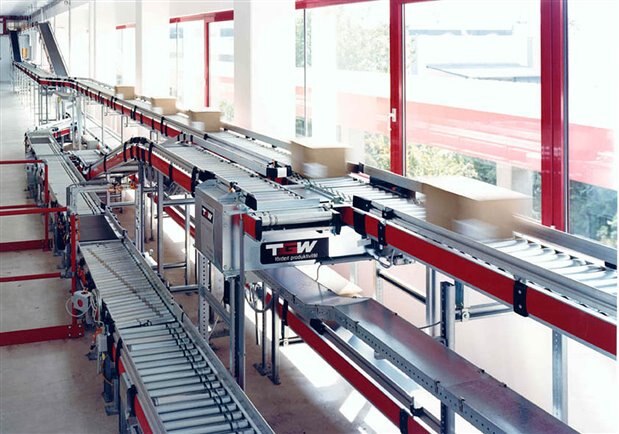
Image credit: TGW Mechanics via Wikipedia)


There are two major challenges with this perspective outlook according to the report, with the first being the retraining of workers in the middle of their careers- the Great Recession (2007-2012) showed businesses fell short in the retraining of the 15-million workers who lost jobs in the US. The other major challenge will be trying to find employment for low-wage earners as the report states, “there are few precedents in which societies have successfully retrained such large numbers of people.”


In these cases, the government would need to provide income support and other assistance to supplement worker’s transitions to new occupations as well as increasing investments in infrastructure and energy to bolster economic growth. The report maintains that automation will disrupt the employment sector and the transitions will rival or exceed past shifts out of agriculture and manufacturing.


According to the authors of the report, the question about the future of work was done using two different sets of analyses- “one based on a limited number of catalysts of new labor demand and automation, the other using a macroeconomic model of the economy that incorporates the dynamic interactions among variables.” Both led them to conclude that with sufficient economic growth, innovation and investment there will spur enough job growth to offset the impact automation will have on employment.  


Though this study was focused on the USA, what is the global impact going to look like?


Have a story tip? Message me at: cabe(at)element14(dot)com

http://twitter.com/Cabe_Atwell

  • Sign in to reply

Top Comments

  • Catwell
    Catwell over 7 years ago in reply to genebren +1
    We don't already?
  • Catwell
    Catwell over 7 years ago in reply to genebren

    We don't already? image

    • Cancel
    • Vote Up +1 Vote Down
    • Sign in to reply
    • More
    • Cancel
  • genebren
    genebren over 7 years ago

    Robots and engineers could rule the world!

    • Cancel
    • Vote Up 0 Vote Down
    • Sign in to reply
    • More
    • Cancel
element14 Community

element14 is the first online community specifically for engineers. Connect with your peers and get expert answers to your questions.

  • Members
  • Learn
  • Technologies
  • Challenges & Projects
  • Products
  • Store
  • About Us
  • Feedback & Support
  • FAQs
  • Terms of Use
  • Privacy Policy
  • Legal and Copyright Notices
  • Sitemap
  • Cookies

An Avnet Company © 2025 Premier Farnell Limited. All Rights Reserved.

Premier Farnell Ltd, registered in England and Wales (no 00876412), registered office: Farnell House, Forge Lane, Leeds LS12 2NE.

ICP 备案号 10220084.

Follow element14

  • X
  • Facebook
  • linkedin
  • YouTube