element14 Community
element14 Community
    Register Log In
  • Site
  • Search
  • Log In Register
  • Community Hub
    Community Hub
    • What's New on element14
    • Feedback and Support
    • Benefits of Membership
    • Personal Blogs
    • Members Area
    • Achievement Levels
  • Learn
    Learn
    • Ask an Expert
    • eBooks
    • element14 presents
    • Learning Center
    • Tech Spotlight
    • STEM Academy
    • Webinars, Training and Events
    • Learning Groups
  • Technologies
    Technologies
    • 3D Printing
    • FPGA
    • Industrial Automation
    • Internet of Things
    • Power & Energy
    • Sensors
    • Technology Groups
  • Challenges & Projects
    Challenges & Projects
    • Design Challenges
    • element14 presents Projects
    • Project14
    • Arduino Projects
    • Raspberry Pi Projects
    • Project Groups
  • Products
    Products
    • Arduino
    • Avnet & Tria Boards Community
    • Dev Tools
    • Manufacturers
    • Multicomp Pro
    • Product Groups
    • Raspberry Pi
    • RoadTests & Reviews
  • About Us
  • Store
    Store
    • Visit Your Store
    • Choose another store...
      • Europe
      •  Austria (German)
      •  Belgium (Dutch, French)
      •  Bulgaria (Bulgarian)
      •  Czech Republic (Czech)
      •  Denmark (Danish)
      •  Estonia (Estonian)
      •  Finland (Finnish)
      •  France (French)
      •  Germany (German)
      •  Hungary (Hungarian)
      •  Ireland
      •  Israel
      •  Italy (Italian)
      •  Latvia (Latvian)
      •  
      •  Lithuania (Lithuanian)
      •  Netherlands (Dutch)
      •  Norway (Norwegian)
      •  Poland (Polish)
      •  Portugal (Portuguese)
      •  Romania (Romanian)
      •  Russia (Russian)
      •  Slovakia (Slovak)
      •  Slovenia (Slovenian)
      •  Spain (Spanish)
      •  Sweden (Swedish)
      •  Switzerland(German, French)
      •  Turkey (Turkish)
      •  United Kingdom
      • Asia Pacific
      •  Australia
      •  China
      •  Hong Kong
      •  India
      • Japan
      •  Korea (Korean)
      •  Malaysia
      •  New Zealand
      •  Philippines
      •  Singapore
      •  Taiwan
      •  Thailand (Thai)
      • Vietnam
      • Americas
      •  Brazil (Portuguese)
      •  Canada
      •  Mexico (Spanish)
      •  United States
      Can't find the country/region you're looking for? Visit our export site or find a local distributor.
  • Translate
  • Profile
  • Settings
Business of Engineering
  • Technologies
  • More
Business of Engineering
Blog How Did Your Military Experience Influence Your Engineering Career?
  • Blog
  • Forum
  • Documents
  • Quiz
  • Events
  • Polls
  • Files
  • Members
  • Mentions
  • Sub-Groups
  • Tags
  • More
  • Cancel
  • New
Join Business of Engineering to participate - click to join for free!
  • Share
  • More
  • Cancel
Group Actions
  • Group RSS
  • More
  • Cancel
Engagement
  • Author Author: rscasny
  • Date Created: 24 Oct 2016 7:16 PM Date Created
  • Views 1067 views
  • Likes 2 likes
  • Comments 4 comments
Related
Recommended

How Did Your Military Experience Influence Your Engineering Career?

rscasny
rscasny
24 Oct 2016

The First Armistice Day


On November 11th, Veteran's Day (in the US) and Remembrance Day (in Canada) will be celebrated.image
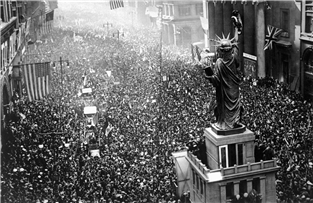
 

Originally known as Armistice Day, it was originally celebrated as a commemoration of the end of armed engagement in World War I. But this day (a national holiday in both countries) goes well beyond a reminder of how long and painful "the Great War," was. It is a day that serves as a reminder to all citizens of the duty and sacrifices that armed forces members (no matter what branch of service -- Army, Navy, Marine Corps, Air Force, etc.) make for their respective homeland's way of Life, safety and security.


Since element14 is community of engineers, we thought we would reflect upon the service that the engineers of the armed forces have provided. While the military engineers are not always on the front lines of action, they make it possible for those necessary operations to be waged successfully in terms of materiel, technical and intelligence support.


Many of those who are engineers today got their first taste of the occupation during their service in the military. If you never served in the military, you may not fully realize that the military has an extensive training and development program in electronics, electrical power, mechanics (gas turbines to nuclear power), IT, radio and radar technology -- the list of training is too long to list here.


These training programs provide highly marketable job skills for ex-armed forces members that often springboard into engineering and technical post-military careers. The military engineers are shining example of the skills that military veterans do possess. I know I benefited from the skills I received in the U.S. Navy. I was in the engineering department on the ships I served on. I ran an electric shop that served the engine room spaces, among others. The engineering skills I learned while I was in the military I use to this day, decades later, albeit in a different capacity as a technical writer. I think my time in the military was highly influential in what I have done in my career after the military. What about you?


How did your military experience influence your subsequent engineering career? Feel free to leave your comments below.


The Life of One Veteran's Service in Pictures

 

imageimageimageimageimageimageimage
As I look at this photo, 30 years after it was taken, I see I look young. Too young, I suppose, to be in the military-- as my Mom believed. But Boot camp not only teaches you to march under the hot sun, but how to adapt and persevere in uncomfortable situations -- the most important skills the Navy gave me.
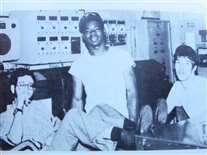
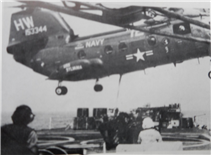
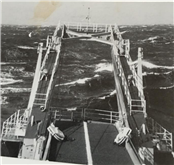
This was the ship that was my "home" for nearly 5 years. The USS Manitowoc LST 1180. (If you look at the center of the ship and go down a few floors below the waterline, that's where I spent most of my time. In the engineer spaces, which were commonly called "the holes."How I changed in just a couple of years in the fleet! I'm sitting on the left. The guys standing worked for me. We are in my shop, next to the main engine space. We had been at sea for a long time. Grooming and dress gets relaxed on a deployment. While my ship was not an aircraft career, it had a flight deck that was large enough to land helicopters typically for food or snail mail. I rode on this class of  helo. It's loud, noisey and cold!This looks like it's taken from the PilotHouse (the top of the ship.) I believe we were crossing the Atlantic. Not a place for people with weak stomachs! As I think back, as scarey as it looks, I never felt I was at risk.
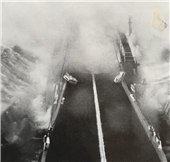
The weather had deteriorated quite a bit in this photo. Not surprisingly, the weatherdecks were off limits in this kind of weather. (This is the photo  I never showed my parents, especially my Mom. Most of the time, they did not know where I was.)
I spent a lot of time reading tech manuals late at night. You couldn't go to bed ("hit the rack" in Navy parlance) until everything was fixed. We had a lot of problems with grounds from the wet environment and the erratic power that adversely impacted equipment. I believe this was taken when we were in Beirut, Lebanon.I t was extremely hot and our AC went out. The political situation was unstable.
  • Sign in to reply

Top Comments

  • DAB
    DAB over 9 years ago +2
    Hi Randall, I did not serve in the Military, but I did work in the defense industry for 35 years. As an engineer I worked on a lot of projects and helped make a lot of useful equipment, some of which is…
  • Jan Cumps
    Jan Cumps over 9 years ago +2
    I served in West-Germany in 1987, while the cold war was still on. No impact on my engineering carreer I was 19 at the time. Things change....
  • the-dubster
    the-dubster over 9 years ago +1
    Well, I spent 25 Years in the Royal Air Force as an Aircraft Avionics Engineering Technician, RADAR, ESM, ECM, ECCM, Comms, Navigation Systems, AC/DC Power Generation and Distribution. My interests began…
  • LucHardware
    LucHardware over 9 years ago

    Even if you have very good results at school, it can not be compared with the military hightech. Here you learn to use spectrum and networkanalysers which are not available at school. Also circuits as PLL (build with TTL and analog components), digital Filtering, radar and sonar are complete new for trouble shooting.  I learn a lot on technical and social area in the '80.

    • Cancel
    • Vote Up +1 Vote Down
    • Sign in to reply
    • More
    • Cancel
  • the-dubster
    the-dubster over 9 years ago

    Well, I spent 25 Years in the Royal Air Force as an Aircraft Avionics Engineering Technician, RADAR, ESM, ECM, ECCM, Comms, Navigation Systems, AC/DC Power Generation and Distribution.

    My interests began before this and probably shaped my career choice and not the other way around. Cold War? Check. That and most stuff since . . . (1985 - 2010)


    Since I retired from the RAF in 2010 I've stayed close to my roots and now teach others to fix those very same systems on Fast Jets, I guess this was led by my previous experiences and knowledge.


    Plus I work 5 miles from home!! image

    • Cancel
    • Vote Up +1 Vote Down
    • Sign in to reply
    • More
    • Cancel
  • Jan Cumps
    Jan Cumps over 9 years ago

    I served in West-Germany in 1987, while the cold war was still on.

    No impact on my engineering carreer image


    image


    image


    I was 19 at the time. Things change....

    • Cancel
    • Vote Up +2 Vote Down
    • Sign in to reply
    • More
    • Cancel
  • DAB
    DAB over 9 years ago

    Hi Randall,


    I did not serve in the Military, but I did work in the defense industry for 35 years.

    As an engineer I worked on a lot of projects and helped make a lot of useful equipment, some of which is still in use some 15 years after I retired.


    November 11 is bitter sweet for me as I was disabled while traveling to a Military Conference on CMMI, which ended my engineering career.


    I never doubted my reasons for helping to make advanced capabilities for the Military.  After all, we mostly had peace during the years and many small wars are better than big ones.


    The current situation came about because some politicians decided that war was no longer possible after the Soviet Union fell.  We tried to tell them they were wrong, but they were bent on their Peace Dividend.


    Well that dividend and cut I'm military spending led to 9/11 and the current Middle East mess.  A clear case of penny wise and pound foolish decisions.


    DAB

    • Cancel
    • Vote Up +2 Vote Down
    • Sign in to reply
    • More
    • Cancel
element14 Community

element14 is the first online community specifically for engineers. Connect with your peers and get expert answers to your questions.

  • Members
  • Learn
  • Technologies
  • Challenges & Projects
  • Products
  • Store
  • About Us
  • Feedback & Support
  • FAQs
  • Terms of Use
  • Privacy Policy
  • Legal and Copyright Notices
  • Sitemap
  • Cookies

An Avnet Company © 2026 Premier Farnell Limited. All Rights Reserved.

Premier Farnell Ltd, registered in England and Wales (no 00876412), registered office: Farnell House, Forge Lane, Leeds LS12 2NE.

ICP 备案号 10220084.

Follow element14

  • X
  • Facebook
  • linkedin
  • YouTube