element14 Community
element14 Community
    Register Log In
  • Site
  • Search
  • Log In Register
  • Community Hub
    Community Hub
    • What's New on element14
    • Feedback and Support
    • Benefits of Membership
    • Personal Blogs
    • Members Area
    • Achievement Levels
  • Learn
    Learn
    • Ask an Expert
    • eBooks
    • element14 presents
    • Learning Center
    • Tech Spotlight
    • STEM Academy
    • Webinars, Training and Events
    • Learning Groups
  • Technologies
    Technologies
    • 3D Printing
    • FPGA
    • Industrial Automation
    • Internet of Things
    • Power & Energy
    • Sensors
    • Technology Groups
  • Challenges & Projects
    Challenges & Projects
    • Design Challenges
    • element14 presents Projects
    • Project14
    • Arduino Projects
    • Raspberry Pi Projects
    • Project Groups
  • Products
    Products
    • Arduino
    • Avnet & Tria Boards Community
    • Dev Tools
    • Manufacturers
    • Multicomp Pro
    • Product Groups
    • Raspberry Pi
    • RoadTests & Reviews
  • About Us
    About the element14 Community
  • Store
    Store
    • Visit Your Store
    • Choose another store...
      • Europe
      •  Austria (German)
      •  Belgium (Dutch, French)
      •  Bulgaria (Bulgarian)
      •  Czech Republic (Czech)
      •  Denmark (Danish)
      •  Estonia (Estonian)
      •  Finland (Finnish)
      •  France (French)
      •  Germany (German)
      •  Hungary (Hungarian)
      •  Ireland
      •  Israel
      •  Italy (Italian)
      •  Latvia (Latvian)
      •  
      •  Lithuania (Lithuanian)
      •  Netherlands (Dutch)
      •  Norway (Norwegian)
      •  Poland (Polish)
      •  Portugal (Portuguese)
      •  Romania (Romanian)
      •  Russia (Russian)
      •  Slovakia (Slovak)
      •  Slovenia (Slovenian)
      •  Spain (Spanish)
      •  Sweden (Swedish)
      •  Switzerland(German, French)
      •  Turkey (Turkish)
      •  United Kingdom
      • Asia Pacific
      •  Australia
      •  China
      •  Hong Kong
      •  India
      •  Japan
      •  Korea (Korean)
      •  Malaysia
      •  New Zealand
      •  Philippines
      •  Singapore
      •  Taiwan
      •  Thailand (Thai)
      •  Vietnam
      • Americas
      •  Brazil (Portuguese)
      •  Canada
      •  Mexico (Spanish)
      •  United States
      Can't find the country/region you're looking for? Visit our export site or find a local distributor.
  • Translate
  • Profile
  • Settings
Business of Engineering
  • Technologies
  • More
Business of Engineering
Blog What does being an engineer mean to you?
  • Blog
  • Forum
  • Documents
  • Quiz
  • Events
  • Polls
  • Files
  • Members
  • Mentions
  • Sub-Groups
  • Tags
  • More
  • Cancel
  • New
Join Business of Engineering to participate - click to join for free!
  • Share
  • More
  • Cancel
Group Actions
  • Group RSS
  • More
  • Cancel
Engagement
  • Author Author: JenCooke
  • Date Created: 23 Jun 2014 9:35 AM Date Created
  • Views 5728 views
  • Likes 1 like
  • Comments 21 comments
  • engineer
  • birthday
Related
Recommended

What does being an engineer mean to you?

JenCooke
JenCooke
23 Jun 2014

We’ve got a birthday coming up. The element14 Community will turn five years old soon and this milestone has got us thinking about the big questions. Who we are, why we’re here and what we mean to people, that sort of thing.


The element14 Community was created for engineers. So we wanted to spend our birthday week celebrating and recognising you, the people who design, build and maintain the technology in our world today.
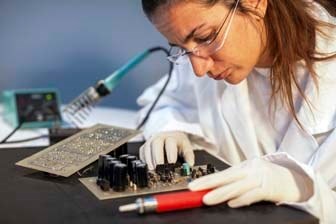
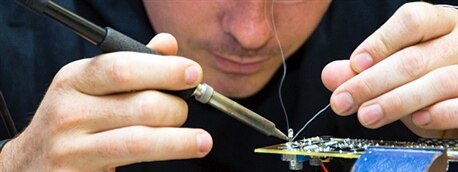
 

imageimage


We want to really understand what being an engineer means and what drives you all in your engineering endeavours. We’ve put together a few questions and we’d love to know what you think:


What characteristics do you feel determine you as an engineer?


How did you come to the realisation you wanted to be an engineer?


Are there any ‘rites of passage’ an engineer should go through?


What advice would you give to any budding engineers?


Do you communicate and network with other engineers? How?


Do you have any stories to show what being an engineer is all about?


Please answer in the comments below!

  • Sign in to reply

Top Comments

  • DAB
    DAB over 11 years ago +3
    I always liked to figure out how things worked and applying technology to solve problems, so being an engineer was a natural choice for me. I initially became an electronics technician, but found that…
  • Instructorman
    Instructorman over 11 years ago +2
    What characteristics do you feel determine you as an engineer? There are several. First, there is a comfort with things artificial - machines, devices, systems, infrastructure - that not all people seem…
  • dougw
    dougw over 11 years ago +2
    What characteristics do you feel determine you as an engineer? The primary characteristic that I feel defines me as an engineer is a passion for solving problems. I get real satisfaction from building…
Parents
  • michaelwylie
    michaelwylie over 11 years ago

    What characteristics do you feel determine you as an engineer?

    Problem Solving. That’s essentially what you are as an engineer, you’re a professional problem solver. Ever have a friend who’s always trying to come up with a solution to some problem? It doesn’t have to be a technical issue, it just has to be a problem in need of a solution. That’s the dominant engineering characteristic. This characteristic fills up and overflows into the other characteristics that make a good engineer. You want to find a solution to the problem, so you study the appropriate materials (Studious). You want to find a solution to the problem, so you begin to experiment with the problem (curiosity). See where I’m going here?


    How did you come to the realisation you wanted to be an engineer?

    Warning: Long story approaching.


    When I finished high school I immediately entered university to study Electrical Engineering. I hated it. I mean, I really hated it. The morning commute to the school was enough to ruin my day. I didn’t understand why I had to learn more chemistry, physics, and math. I just wanted to study electrical engineering. I wasn’t getting poor grades, but I was really unhappy. Much to my parents dismay I left university. My parents never really voiced a major concern, but later they told me it was quite hard for them to accept my choice to leave university. I was 19 years of age at this time, and I decided to study music full-time.


    I studied music full-time for a year and went for my audition and exams to enter university. I aced the aural (listening) part of the exam, but I had never played in front of anyone before and I did very poorly at my audition. In the meantime my parents had relocated as per my father’s retirement plans, and I relocated with them. For the summer I got a job moving boxes at a courier company, and I realized I didn’t want to move boxes for the rest of my life. I enrolled in an Electronics Engineering Technology program at my local community college. It was only a two year program that resulted in a technologist diploma (midway between engineer and electrician).


    It was at this point that I met the man who changed it all for me. It was, in all seriousness, the math instructor. I remember the first day; he came into the classroom, drew a right triangle on the chalk board, and wrote down the famous trigonometry relationships. I forgot to mention, when he came into the classroom he was pushing a cart with a piece of equipment on it I had never seen before. So, when he finished writing on the chalk board he asked everyone something like this: “Why is it important to learn trigonometry for your field?” I had no idea why, and neither did anyone else apparently because this classroom full of pupils went quiet. Up until this point I had no idea how trigonometry was actually used in the “real world” except for determining the angle at which a ladder is placed against the side of a house. You know, those classic, useless homework problems which lead you to question who actually goes up a ladder without someone at the bottom holding it anyway. He then turned on the piece of equipment, which he called an oscilloscope, and explained that it is used to monitor time-varying voltages. Then, he took the probe of the oscilloscope and connected it to the wall socket, and this beautiful sine wave was displayed on the oscilloscope screen. His next words went something like, “If you can’t do trigonometry, then you can’t figure out anything that’s going on with our power grid.” Something inside clicked and I finally understood why it was important to learn this subject they called math.


    This instructor opened my eyes over the next two years and I became addicted to learning. When I finished my diploma I got my Bachelor’s degree and kept going until I got a Ph.D. The learning journey continues, even today.


    Are there any ‘rites of passage’ an engineer should go through?

    I’m not sure there are any that pertain to being an engineer specifically. There are a few in life in general, but I wouldn’t presume to limit them to only engineers.


    What advice would you give to any budding engineers?

    Everyone has a different life story that led them to being an engineer. There are a few common themes like taking things apart as a child and being enthralled with how things work, but we’re all just trying to make a living. In recent years there has been a lot of this talk about life being too short to waste, and do something you love. If you’re really an engineer, you’ll love problem solving and the rush that comes with finding a solution. It doesn’t matter what engineering problem I am given I always see it as a problem solving activity. I program embedded systems every day. I don’t love programming, but I do love problem solving and the satisfaction that comes from creating the solution. So my advice is: “If you’re an engineer at heart you don’t have to like the problem to love the solution”.


    Do you communicate and network with other engineers? How?

    Mostly online these days. It allows quick and painless access to other engineers. Plus, we’re mostly an antisocial bunch anyway. O.K that’s not entirely true. I attend conferences and workshops, but mostly I view webinars and use online social media to communicate.


    Do you have any stories to show what being an engineer is all about?

    If you’re an electrical engineer I can almost guarantee you’ve heard the expression, “The most common failure of all electronic components is that they have no power”. This, surprisingly, includes not being plugged in. I can vividly remember doing an active filter lab as a young student and thinking, “These active filters aren't very active”, only to find out I did the entire experiment with the power turned off.


    I went to a family vacation at a cabin one year. There were a lot of people in this cabin and once we settled in we all sat down in the living room area and started having a conversation. One of my sister-in-laws mentioned that the washer was broken. My problem solving characteristic kicked in and I asked, “Is it plugged in?” It was at this point that the barrage of snarky comments came about. “No, Mike, I didn’t check that! (sarcastically)” “Oooh, Mr. Smart Electrical Engineer and his degree says check the plug.” I’m pretty sure my brother-in-law shouted “Bazinga” and “Oooh, SNAP!” as well, but as you can imagine the barrage was relentless and all in good fun. I was a little shocked, but not enough to stop me from venturing down towards the washer, my brother-in-law in tote behind me. I turned the dial for the washer, popped in the knob, and nothing happened. I looked behind the unit, and it was plugged in. I spotted a fan oscillating nearby and asked my brother-in-law to grab it for me. I plugged the fan into the same wall socket as the washer and the fan didn’t turn on. I looked over at my brother-in-law and said, “The breaker for the washer isn’t turned on”. Now this is the interesting part, because my brother-in-law was the one who turned on all the breakers. So I walked down to the breaker box with him and he examines it. I could see everyone in the living room from where I was standing, and after a click from the breaker box the sound of the washing machine filling up with water could be heard throughout the cabin. It was my most gratifying feeling ever as an engineer, and my wife was pretty proud as well.

    • Cancel
    • Vote Up 0 Vote Down
    • Sign in to reply
    • More
    • Cancel
  • JenCooke
    JenCooke over 11 years ago in reply to michaelwylie

    Some great stories Michael, I particularly like the washing machine story!  It seems problem solving is a common theme here, thank for calling that out.  Would you be happy for me to use your comments in the media?

    Jen

    • Cancel
    • Vote Up 0 Vote Down
    • Sign in to reply
    • More
    • Cancel
  • michaelwylie
    michaelwylie over 11 years ago in reply to JenCooke

    Sure Jen. Feel free!

    • Cancel
    • Vote Up 0 Vote Down
    • Sign in to reply
    • More
    • Cancel
Comment
  • michaelwylie
    michaelwylie over 11 years ago in reply to JenCooke

    Sure Jen. Feel free!

    • Cancel
    • Vote Up 0 Vote Down
    • Sign in to reply
    • More
    • Cancel
Children
No Data
element14 Community

element14 is the first online community specifically for engineers. Connect with your peers and get expert answers to your questions.

  • Members
  • Learn
  • Technologies
  • Challenges & Projects
  • Products
  • Store
  • About Us
  • Feedback & Support
  • FAQs
  • Terms of Use
  • Privacy Policy
  • Legal and Copyright Notices
  • Sitemap
  • Cookies

An Avnet Company © 2026 Premier Farnell Limited. All Rights Reserved.

Premier Farnell Ltd, registered in England and Wales (no 00876412), registered office: Farnell House, Forge Lane, Leeds LS12 2NE.

ICP 备案号 10220084.

Follow element14

  • X
  • Facebook
  • linkedin
  • YouTube