element14 Community
element14 Community
    Register Log In
  • Site
  • Search
  • Log In Register
  • Community Hub
    Community Hub
    • What's New on element14
    • Feedback and Support
    • Benefits of Membership
    • Personal Blogs
    • Members Area
    • Achievement Levels
  • Learn
    Learn
    • Ask an Expert
    • eBooks
    • element14 presents
    • Learning Center
    • Tech Spotlight
    • STEM Academy
    • Webinars, Training and Events
    • Learning Groups
  • Technologies
    Technologies
    • 3D Printing
    • FPGA
    • Industrial Automation
    • Internet of Things
    • Power & Energy
    • Sensors
    • Technology Groups
  • Challenges & Projects
    Challenges & Projects
    • Design Challenges
    • element14 presents Projects
    • Project14
    • Arduino Projects
    • Raspberry Pi Projects
    • Project Groups
  • Products
    Products
    • Arduino
    • Avnet & Tria Boards Community
    • Dev Tools
    • Manufacturers
    • Multicomp Pro
    • Product Groups
    • Raspberry Pi
    • RoadTests & Reviews
  • About Us
    About the element14 Community
  • Store
    Store
    • Visit Your Store
    • Choose another store...
      • Europe
      •  Austria (German)
      •  Belgium (Dutch, French)
      •  Bulgaria (Bulgarian)
      •  Czech Republic (Czech)
      •  Denmark (Danish)
      •  Estonia (Estonian)
      •  Finland (Finnish)
      •  France (French)
      •  Germany (German)
      •  Hungary (Hungarian)
      •  Ireland
      •  Israel
      •  Italy (Italian)
      •  Latvia (Latvian)
      •  
      •  Lithuania (Lithuanian)
      •  Netherlands (Dutch)
      •  Norway (Norwegian)
      •  Poland (Polish)
      •  Portugal (Portuguese)
      •  Romania (Romanian)
      •  Russia (Russian)
      •  Slovakia (Slovak)
      •  Slovenia (Slovenian)
      •  Spain (Spanish)
      •  Sweden (Swedish)
      •  Switzerland(German, French)
      •  Turkey (Turkish)
      •  United Kingdom
      • Asia Pacific
      •  Australia
      •  China
      •  Hong Kong
      •  India
      •  Japan
      •  Korea (Korean)
      •  Malaysia
      •  New Zealand
      •  Philippines
      •  Singapore
      •  Taiwan
      •  Thailand (Thai)
      •  Vietnam
      • Americas
      •  Brazil (Portuguese)
      •  Canada
      •  Mexico (Spanish)
      •  United States
      Can't find the country/region you're looking for? Visit our export site or find a local distributor.
  • Translate
  • Profile
  • Settings
Business of Engineering
  • Technologies
  • More
Business of Engineering
Blog Wiliot’s battery free Bluetooth chip receives $30 million from Amazon and Samsung among others
  • Blog
  • Forum
  • Documents
  • Quiz
  • Events
  • Polls
  • Files
  • Members
  • Mentions
  • Sub-Groups
  • Tags
  • More
  • Cancel
  • New
Join Business of Engineering to participate - click to join for free!
  • Share
  • More
  • Cancel
Group Actions
  • Group RSS
  • More
  • Cancel
Engagement
  • Author Author: Catwell
  • Date Created: 17 Jan 2019 8:10 PM Date Created
  • Views 795 views
  • Likes 7 likes
  • Comments 1 comment
  • funding
  • business of engineering
  • startup
  • Wearable
  • battery
  • no battery
  • cabeatwell
  • wireless
  • medical
  • business
  • innovation
Related
Recommended

Wiliot’s battery free Bluetooth chip receives $30 million from Amazon and Samsung among others

Catwell
Catwell
17 Jan 2019

image

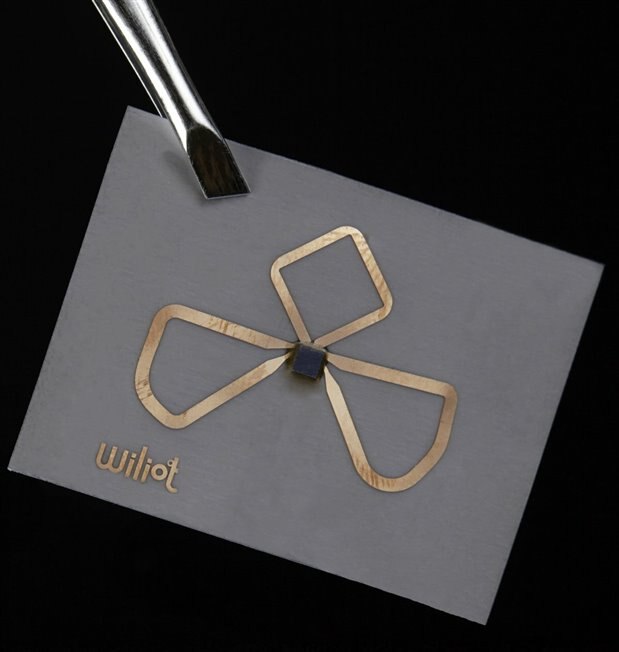
Wiliot’s chip sensor is the first of its kind and has the ability to communicate with devices enabled by Bluetooth Low Energy. Wiliot’s concept for their Bluetooth chip. (Photo via Wiliot)


A new startup called WIliot is getting a lot of attention and funding from some big-name companies. Wiliot makes semiconductors that harness ambient nanowatts of electromagnetic energy from cellular, WiFi, and Bluetooth networks allowing it to function without batteries or other traditional wired power sources. Recently, the startup received $30 million in a series B round of funding giving them a total of $50 million.


Backers include several high profile names, including Amazon, Samsung, and Avery Dennison along with previous investors Nortwest Venture Partners, 83North Venture Capital, Grove Venture Partners, Qualcomm Ventures, and M Ventures. There’s also an undisclosed “retail giant” who invested in this round, but their name is not being revealed.


It’s amazing that Wiliot managed to get so much funding without manufacturing or commercializing its chips, which have only been recently revealed to the public. But seeing how innovative and promising the chip sounds, it’s easy to understand what made backers so eager. It marks the first battery-free Bluetooth sticker sensor tag. The chip can be attached to a simple antenna printed on plastic or paper and then will authenticate the range of a product by transmitting an encrypted serial number along with weight and temperature data from a device as big as a postage stamp.


Using Wiliot’s nanowatt computing, it can communicate with any device enabled by Bluetooth Low Energy, like smartphones, WiFi access points, and Internet of Things devices. Since it doesn’t need most components used with traditional Bluetooth, the sale and maintenance costs are lowered a considerable amount. The chip also has the ability to measure air pressure and location and can send data back to the cloud.


So what can this battery-free sensor be used for? While it would be ideal for manufacturing, logistics, and tagging, Wiliot’s SVP of marketing Steve Statler says the first customers will most likely be in the apparel industry. The chips could be inserted on care labels to help track the clothing from the manufacturer to sale and provide services to people who buy them.


“That can cover anything from washing instructions to helping provide wardrobing recommendations,” he noted. That will, of course, depend on whether the customer opts in for such assistance and/or doesn’t cut the label off the clothes.


Wiliot also envisions the tag being used to track valuable items when they’re stolen and for customers at home who need instructions on how to use certain products. The chip hasn’t been rolled out commercially, but they hope this latest round of funding will help get the product out. The next steps for the company include figuring out how to produce the chips at scale and at a competitive price and how to earn its first customers.


Have a story tip? Message me at: cabe(at)element14(dot)com

http://twitter.com/Cabe_Atwell

  • Sign in to reply

Top Comments

  • shabaz
    shabaz over 7 years ago +4
    Interesting technology! I wonder if those three shapes are two separate antennas, one for energy harvesting perhaps? I've seen non-Bluetooth systems but those tend to have a single antenna (like batwings…
  • shabaz
    shabaz over 7 years ago

    Interesting technology!

    I wonder if those three shapes are two separate antennas, one for energy harvesting perhaps?

    I've seen non-Bluetooth systems but those tend to have a single antenna (like batwings off the sides of the chip), they rely on backscatter to modulate the response back. The batwings are larger than postage stamp, but means it can operate to a few tens of feet.The technology feels like magic the first time you see it. Some major clothing retailer uses such technology.

    • Cancel
    • Vote Up +4 Vote Down
    • Sign in to reply
    • More
    • Cancel
element14 Community

element14 is the first online community specifically for engineers. Connect with your peers and get expert answers to your questions.

  • Members
  • Learn
  • Technologies
  • Challenges & Projects
  • Products
  • Store
  • About Us
  • Feedback & Support
  • FAQs
  • Terms of Use
  • Privacy Policy
  • Legal and Copyright Notices
  • Sitemap
  • Cookies

An Avnet Company © 2026 Premier Farnell Limited. All Rights Reserved.

Premier Farnell Ltd, registered in England and Wales (no 00876412), registered office: Farnell House, Forge Lane, Leeds LS12 2NE.

ICP 备案号 10220084.

Follow element14

  • X
  • Facebook
  • linkedin
  • YouTube