element14 Community
element14 Community
    Register Log In
  • Site
  • Search
  • Log In Register
  • Community Hub
    Community Hub
    • What's New on element14
    • Feedback and Support
    • Benefits of Membership
    • Personal Blogs
    • Members Area
    • Achievement Levels
  • Learn
    Learn
    • Ask an Expert
    • eBooks
    • element14 presents
    • Learning Center
    • Tech Spotlight
    • STEM Academy
    • Webinars, Training and Events
    • Learning Groups
  • Technologies
    Technologies
    • 3D Printing
    • FPGA
    • Industrial Automation
    • Internet of Things
    • Power & Energy
    • Sensors
    • Technology Groups
  • Challenges & Projects
    Challenges & Projects
    • Design Challenges
    • element14 presents Projects
    • Project14
    • Arduino Projects
    • Raspberry Pi Projects
    • Project Groups
  • Products
    Products
    • Arduino
    • Avnet & Tria Boards Community
    • Dev Tools
    • Manufacturers
    • Multicomp Pro
    • Product Groups
    • Raspberry Pi
    • RoadTests & Reviews
  • About Us
  • Store
    Store
    • Visit Your Store
    • Choose another store...
      • Europe
      •  Austria (German)
      •  Belgium (Dutch, French)
      •  Bulgaria (Bulgarian)
      •  Czech Republic (Czech)
      •  Denmark (Danish)
      •  Estonia (Estonian)
      •  Finland (Finnish)
      •  France (French)
      •  Germany (German)
      •  Hungary (Hungarian)
      •  Ireland
      •  Israel
      •  Italy (Italian)
      •  Latvia (Latvian)
      •  
      •  Lithuania (Lithuanian)
      •  Netherlands (Dutch)
      •  Norway (Norwegian)
      •  Poland (Polish)
      •  Portugal (Portuguese)
      •  Romania (Romanian)
      •  Russia (Russian)
      •  Slovakia (Slovak)
      •  Slovenia (Slovenian)
      •  Spain (Spanish)
      •  Sweden (Swedish)
      •  Switzerland(German, French)
      •  Turkey (Turkish)
      •  United Kingdom
      • Asia Pacific
      •  Australia
      •  China
      •  Hong Kong
      •  India
      • Japan
      •  Korea (Korean)
      •  Malaysia
      •  New Zealand
      •  Philippines
      •  Singapore
      •  Taiwan
      •  Thailand (Thai)
      • Vietnam
      • Americas
      •  Brazil (Portuguese)
      •  Canada
      •  Mexico (Spanish)
      •  United States
      Can't find the country/region you're looking for? Visit our export site or find a local distributor.
  • Translate
  • Profile
  • Settings
Embedded and Microcontrollers
  • Technologies
  • More
Embedded and Microcontrollers
Embedded Forum Design Challenge : relay spike protection
  • Blog
  • Forum
  • Documents
  • Quiz
  • Polls
  • Files
  • Members
  • Mentions
  • Sub-Groups
  • Tags
  • More
  • Cancel
  • New
Join Embedded and Microcontrollers to participate - click to join for free!
Actions
  • Share
  • More
  • Cancel
Forum Thread Details
  • State Suggested Answer
  • Replies 15 replies
  • Answers 1 answer
  • Subscribers 475 subscribers
  • Views 5270 views
  • Users 0 members are here
  • embedded
  • development
  • relay
Related

Design Challenge : relay spike protection

Catwell
Catwell over 15 years ago
This is a common problem with relays. The relay coil acts like an inductor when power is removed, and it sends a spike of power back into your circuit. And let's say you are originally putting 5V through the coil. When the power is removed, in some cases, the coil could send a spike of any level, even in the range of 400V, back into your circuit. And the problems cause by that are many, from burning out circuitry to tremendous electromagnetic interference.
 
 
I have seen spikes that oscillate between hundreds of volts positive and negative. Like below:
 
image
The challenge is to eliminate the problem in the cheapest way, with as few components as possible. Let's just say space and money are scarce for this project. And the relay is connected to very sensitive circuitry.
 
 
Use the relay drawing here to draw your ideas.
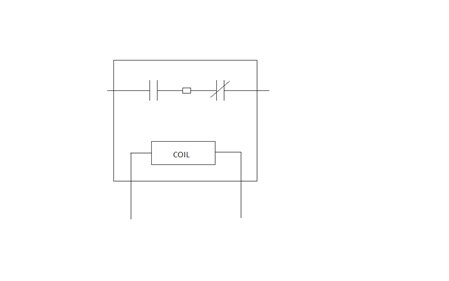
image
The relay drawing here has NC & NO contacts.
 
Cabe
Attachments:
image
  • Sign in to reply
  • Cancel

Top Replies

  • Catwell
    Catwell over 15 years ago +1
    Besides feedback and EMI, not suppressing transient spikes in relays reduces the life of the contacts significantly. Like welding, metal is deposited from one contact to another. In extreme cases, the…
Parents
  • enrico.migchels
    0 enrico.migchels over 15 years ago

    Hi Cabe,


    Apparently I missed the discussions on the relay coil switching. I don't have a lot to add, the most is said already but you never know...

    The suggested diode across the coil is absolute textbook proof. The type of diode however might make a difference. A mains rectifier diode (1N4001) is really slow and would not be my choice. I would go for a fast signal diode, like 1N4148 or similar (or with higher rating if needed). The diode is mainly needed to protect the switch that drives the relay. A semiconductor device (transistors are the worst) are killed by high voltages. Mosfet's are more robust, they have a avalanche diode (zenerdiode) protection the drain .

    Your oscilloscope plot might be influenced by the ground loop wire which pickes up a lot of noise. If you measure HF ringing use a short tip probe (or at least wrap the ground wire around the probe tip to have the smallest magnetic loop).

    Interference in your circuit is more likely induced by contact sparks (wide broadband noise) or the coupling between the wires (or tracks) of the switching contact to the rest of the circuit (high dI/dt). Placing an RC across the contact damps the spark and the emitted noise.


    Best regards, Enrico Migchels

    • Cancel
    • Vote Up 0 Vote Down
    • Sign in to reply
    • Verify Answer
    • Cancel
Reply
  • enrico.migchels
    0 enrico.migchels over 15 years ago

    Hi Cabe,


    Apparently I missed the discussions on the relay coil switching. I don't have a lot to add, the most is said already but you never know...

    The suggested diode across the coil is absolute textbook proof. The type of diode however might make a difference. A mains rectifier diode (1N4001) is really slow and would not be my choice. I would go for a fast signal diode, like 1N4148 or similar (or with higher rating if needed). The diode is mainly needed to protect the switch that drives the relay. A semiconductor device (transistors are the worst) are killed by high voltages. Mosfet's are more robust, they have a avalanche diode (zenerdiode) protection the drain .

    Your oscilloscope plot might be influenced by the ground loop wire which pickes up a lot of noise. If you measure HF ringing use a short tip probe (or at least wrap the ground wire around the probe tip to have the smallest magnetic loop).

    Interference in your circuit is more likely induced by contact sparks (wide broadband noise) or the coupling between the wires (or tracks) of the switching contact to the rest of the circuit (high dI/dt). Placing an RC across the contact damps the spark and the emitted noise.


    Best regards, Enrico Migchels

    • Cancel
    • Vote Up 0 Vote Down
    • Sign in to reply
    • Verify Answer
    • Cancel
Children
No Data
element14 Community

element14 is the first online community specifically for engineers. Connect with your peers and get expert answers to your questions.

  • Members
  • Learn
  • Technologies
  • Challenges & Projects
  • Products
  • Store
  • About Us
  • Feedback & Support
  • FAQs
  • Terms of Use
  • Privacy Policy
  • Legal and Copyright Notices
  • Sitemap
  • Cookies

An Avnet Company © 2026 Premier Farnell Limited. All Rights Reserved.

Premier Farnell Ltd, registered in England and Wales (no 00876412), registered office: Farnell House, Forge Lane, Leeds LS12 2NE.

ICP 备案号 10220084.

Follow element14

  • X
  • Facebook
  • linkedin
  • YouTube