element14 Community
element14 Community
    Register Log In
  • Site
  • Search
  • Log In Register
  • Community Hub
    Community Hub
    • What's New on element14
    • Feedback and Support
    • Benefits of Membership
    • Personal Blogs
    • Members Area
    • Achievement Levels
  • Learn
    Learn
    • Ask an Expert
    • eBooks
    • element14 presents
    • Learning Center
    • Tech Spotlight
    • STEM Academy
    • Webinars, Training and Events
    • Learning Groups
  • Technologies
    Technologies
    • 3D Printing
    • FPGA
    • Industrial Automation
    • Internet of Things
    • Power & Energy
    • Sensors
    • Technology Groups
  • Challenges & Projects
    Challenges & Projects
    • Design Challenges
    • element14 presents Projects
    • Project14
    • Arduino Projects
    • Raspberry Pi Projects
    • Project Groups
  • Products
    Products
    • Arduino
    • Avnet & Tria Boards Community
    • Dev Tools
    • Manufacturers
    • Multicomp Pro
    • Product Groups
    • Raspberry Pi
    • RoadTests & Reviews
  • About Us
  • Store
    Store
    • Visit Your Store
    • Choose another store...
      • Europe
      •  Austria (German)
      •  Belgium (Dutch, French)
      •  Bulgaria (Bulgarian)
      •  Czech Republic (Czech)
      •  Denmark (Danish)
      •  Estonia (Estonian)
      •  Finland (Finnish)
      •  France (French)
      •  Germany (German)
      •  Hungary (Hungarian)
      •  Ireland
      •  Israel
      •  Italy (Italian)
      •  Latvia (Latvian)
      •  
      •  Lithuania (Lithuanian)
      •  Netherlands (Dutch)
      •  Norway (Norwegian)
      •  Poland (Polish)
      •  Portugal (Portuguese)
      •  Romania (Romanian)
      •  Russia (Russian)
      •  Slovakia (Slovak)
      •  Slovenia (Slovenian)
      •  Spain (Spanish)
      •  Sweden (Swedish)
      •  Switzerland(German, French)
      •  Turkey (Turkish)
      •  United Kingdom
      • Asia Pacific
      •  Australia
      •  China
      •  Hong Kong
      •  India
      • Japan
      •  Korea (Korean)
      •  Malaysia
      •  New Zealand
      •  Philippines
      •  Singapore
      •  Taiwan
      •  Thailand (Thai)
      • Vietnam
      • Americas
      •  Brazil (Portuguese)
      •  Canada
      •  Mexico (Spanish)
      •  United States
      Can't find the country/region you're looking for? Visit our export site or find a local distributor.
  • Translate
  • Profile
  • Settings
Experts, Learning and Guidance
  • Technologies
  • More
Experts, Learning and Guidance
Ask an Expert Forum Distributing battery power to multiple components
  • Blog
  • Forum
  • Documents
  • Leaderboard
  • Files
  • Members
  • Mentions
  • Sub-Groups
  • Tags
  • More
  • Cancel
  • New
Join Experts, Learning and Guidance to participate - click to join for free!
Actions
  • Share
  • More
  • Cancel
Forum Thread Details
  • Replies 14 replies
  • Subscribers 303 subscribers
  • Views 2981 views
  • Users 0 members are here
Related
See a helpful answer?

Be sure to click 'more' and select 'suggest as answer'!

If you're the thread creator, be sure to click 'more' then 'Verify as Answer'!

Distributing battery power to multiple components

skjohnson
skjohnson over 11 years ago

Hello all,


I'm hoping to get some help with a problem that I'm not remotely qualified to figure out myself. It calls for an electrical engineering type, while I'm a physicist. Unfortunately, I'm all there is, so here I find myself.


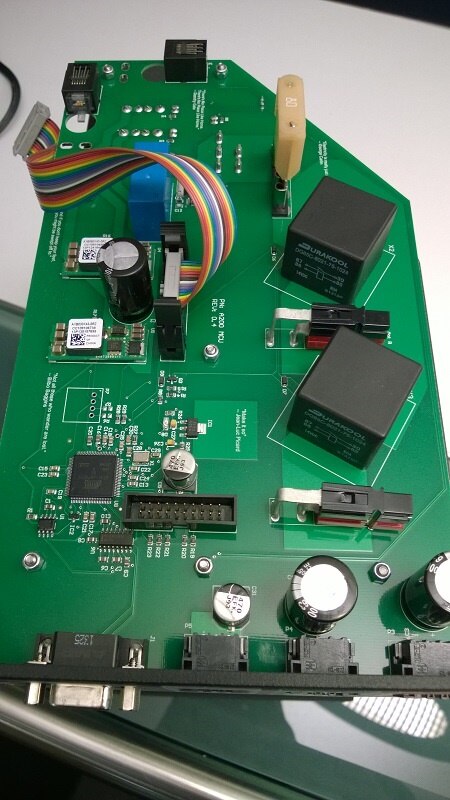
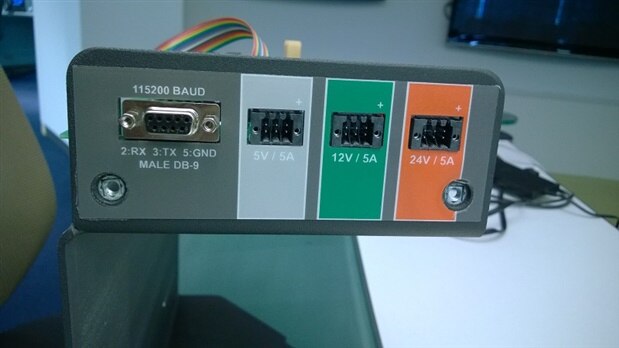
I have a robot platform powered by a 24V 20Ah battery. The platform includes three set onboard power options:

  • 24V/5A
  • 12V/5A
  • 5V/5A


My requirements are actually the following:

  • 2x computer @12V/5A


Then the other items use a variable amount of current:

  • 3x DSLR @8.1V
  • 3x camera lights @7.2 to 8.4V (according to the specs, "9.6
  • 1x stepper motor @11V+ and current somewhere in the neighbourhood of 2 to 4A


I'm not really good with power, but from my limited understanding, I should ideally have some sort of circuitry to regulate the power and avoid any sort of spikes. The robot has just this sort of solution, as shown below:
 

image

image

I'd like to keep the computers running from the above convenient rail, but I'm wondering what a solution might look like, to power the other components that have variable current requirements. Should I be focusing on getting the specific voltage correct to each of the components and then letting the battery supply the appropriate current, or am I supposed to keep both in mind?


If I don't have to design anything from scratch, it would make life easier, but I'm game for anything, really.

  • Sign in to reply
  • Cancel
Parents
  • jw0752
    jw0752 over 11 years ago

    Hi Stephen  It is important to get the voltages right. If the voltages are right the current will follow. When you have a power source marked 12V 6 A they are telling you that the supply has 12 volts of potential. This voltage will cause different amounts of current to flow in a circuit depending on the resistance of the circuit. The 6A tells us that eveything will work fine as long as the circuit has more than 2 ohms of resistance. 12 volts accross 2 ohms of resistance will cause 6 amps to flow. If the resistance in the circuit is less than 2 ohms the power supply will try to supply more than 6 amps which may exceed its ability and something will overheat or a fuse will blow. You can get a rough idea if your power supply has enough power for all you applications by calculating its wattage. Multiply the Volts by the Amps. In my example above we get 12V X 6A which gives us 72 watts. If you know the voltage and current demands of the things you want to hook up to the power supply you can multiply their voltages and currents to also obtain their watts. If you add up all the watts used by the things you want to hook up to the power supply they have to add to less than the wattage of the power supply. If you have to convert to different voltages to run your periferal equipment then you will also use up some of the powersupply's power (watts) to make the conversion. From your physics it is a consequence of the 2nd law of thermodynamics.  I wasn't clear on your question regarding the jacks on the side of the panel whether are they power supply outputs or are they where you supply power to the unit. If they are power supply outputs then you have 25 Watts on the 5V  5A, 60Watts on the 12V, 5A, and 120 Watts on the 24V 5 A jack. This should give you adequate power to run the voltage regulators or converters necessary to power your periferals.

    • Cancel
    • Vote Up 0 Vote Down
    • Sign in to reply
    • Cancel
  • michaelkellett
    michaelkellett over 11 years ago in reply to jw0752

    @ John, It could easily not be enough power - the two computers need 120W (but at 12V not 24V) , the cameras and lights need unknown amounts of power, possibly at odd voltages so there may be conversion losses.


    @ Stephen, could you post the details of the computers, cameras and lights so we can work out exactly what volts and amps they need. (Sometimes things like cameras work with a 7.2V battery or equally happily with 12V, sometimes not - you have to check the spec.)


    MK

    • Cancel
    • Vote Up 0 Vote Down
    • Sign in to reply
    • Cancel
Reply
  • michaelkellett
    michaelkellett over 11 years ago in reply to jw0752

    @ John, It could easily not be enough power - the two computers need 120W (but at 12V not 24V) , the cameras and lights need unknown amounts of power, possibly at odd voltages so there may be conversion losses.


    @ Stephen, could you post the details of the computers, cameras and lights so we can work out exactly what volts and amps they need. (Sometimes things like cameras work with a 7.2V battery or equally happily with 12V, sometimes not - you have to check the spec.)


    MK

    • Cancel
    • Vote Up 0 Vote Down
    • Sign in to reply
    • Cancel
Children
  • jw0752
    jw0752 over 11 years ago in reply to michaelkellett

    Michael you are correct. After I shut down last night I began to rethink what I had said. In addition even if  Stephen can get the power he needs the source is a 24 volt 20Ah battery which will be quickly drained. Granted the 12V 5A for the computers is probably the rating on the power supplies and not the actual current draw of the computers. If these are laptop computers they should have their own batteries that could also contribute to the power resources. You are right though, to go any further analyzing this question we will need more information. It does look like the stepper can be grouped with the computers on a 12 volt supply and the others will work off a common 8 volt supply so there shouldn't be to much complexity.


    Stephen, what are your plans for using the device? How long do you need it to run before recharging the battery? Does it need to be portable or can you use a power supply connected to your power grid? Are the computers laptops with their own internal batteries?

    John

    • Cancel
    • Vote Up 0 Vote Down
    • Sign in to reply
    • Cancel
element14 Community

element14 is the first online community specifically for engineers. Connect with your peers and get expert answers to your questions.

  • Members
  • Learn
  • Technologies
  • Challenges & Projects
  • Products
  • Store
  • About Us
  • Feedback & Support
  • FAQs
  • Terms of Use
  • Privacy Policy
  • Legal and Copyright Notices
  • Sitemap
  • Cookies

An Avnet Company © 2025 Premier Farnell Limited. All Rights Reserved.

Premier Farnell Ltd, registered in England and Wales (no 00876412), registered office: Farnell House, Forge Lane, Leeds LS12 2NE.

ICP 备案号 10220084.

Follow element14

  • X
  • Facebook
  • linkedin
  • YouTube