element14 Community
element14 Community
    Register Log In
  • Site
  • Search
  • Log In Register
  • Community Hub
    Community Hub
    • What's New on element14
    • Feedback and Support
    • Benefits of Membership
    • Personal Blogs
    • Members Area
    • Achievement Levels
  • Learn
    Learn
    • Ask an Expert
    • eBooks
    • element14 presents
    • Learning Center
    • Tech Spotlight
    • STEM Academy
    • Webinars, Training and Events
    • Learning Groups
  • Technologies
    Technologies
    • 3D Printing
    • FPGA
    • Industrial Automation
    • Internet of Things
    • Power & Energy
    • Sensors
    • Technology Groups
  • Challenges & Projects
    Challenges & Projects
    • Design Challenges
    • element14 presents Projects
    • Project14
    • Arduino Projects
    • Raspberry Pi Projects
    • Project Groups
  • Products
    Products
    • Arduino
    • Avnet & Tria Boards Community
    • Dev Tools
    • Manufacturers
    • Multicomp Pro
    • Product Groups
    • Raspberry Pi
    • RoadTests & Reviews
  • About Us
  • Store
    Store
    • Visit Your Store
    • Choose another store...
      • Europe
      •  Austria (German)
      •  Belgium (Dutch, French)
      •  Bulgaria (Bulgarian)
      •  Czech Republic (Czech)
      •  Denmark (Danish)
      •  Estonia (Estonian)
      •  Finland (Finnish)
      •  France (French)
      •  Germany (German)
      •  Hungary (Hungarian)
      •  Ireland
      •  Israel
      •  Italy (Italian)
      •  Latvia (Latvian)
      •  
      •  Lithuania (Lithuanian)
      •  Netherlands (Dutch)
      •  Norway (Norwegian)
      •  Poland (Polish)
      •  Portugal (Portuguese)
      •  Romania (Romanian)
      •  Russia (Russian)
      •  Slovakia (Slovak)
      •  Slovenia (Slovenian)
      •  Spain (Spanish)
      •  Sweden (Swedish)
      •  Switzerland(German, French)
      •  Turkey (Turkish)
      •  United Kingdom
      • Asia Pacific
      •  Australia
      •  China
      •  Hong Kong
      •  India
      • Japan
      •  Korea (Korean)
      •  Malaysia
      •  New Zealand
      •  Philippines
      •  Singapore
      •  Taiwan
      •  Thailand (Thai)
      • Vietnam
      • Americas
      •  Brazil (Portuguese)
      •  Canada
      •  Mexico (Spanish)
      •  United States
      Can't find the country/region you're looking for? Visit our export site or find a local distributor.
  • Translate
  • Profile
  • Settings
Experts, Learning and Guidance
  • Technologies
  • More
Experts, Learning and Guidance
Ask an Expert Forum doubt regarding  BQ24650EVM-639
  • Blog
  • Forum
  • Documents
  • Leaderboard
  • Files
  • Members
  • Mentions
  • Sub-Groups
  • Tags
  • More
  • Cancel
  • New
Join Experts, Learning and Guidance to participate - click to join for free!
Actions
  • Share
  • More
  • Cancel
Forum Thread Details
  • State Verified Answer
  • Replies 13 replies
  • Answers 2 answers
  • Subscribers 304 subscribers
  • Views 1711 views
  • Users 0 members are here
  • solar_cells
  • bq24650evm-639
Related
See a helpful answer?

Be sure to click 'more' and select 'suggest as answer'!

If you're the thread creator, be sure to click 'more' then 'Verify as Answer'!

doubt regarding  BQ24650EVM-639

fabian_sl
fabian_sl over 7 years ago

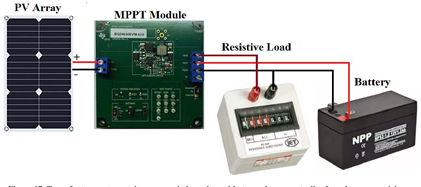
I've been working with BQ24650EVM-639 and have successfully charged a battery with a couple of solar cells. I've even done the test suggested on the User's Guide and everything works as expected. My only doubt is regarding VSYS, I don't understand what is it's use. I would like to understand because on a project I'm working, I need to charge a battery AND at the same time, have 12V available for another load, and I'm not sure if VSYS could be my solution. If it's not, I still think it's important to understand what is VSYS for. Thanks in advance!

  • Sign in to reply
  • Cancel

Top Replies

  • rsc
    rsc over 7 years ago +4 suggested
    From Figure 8. bq24650EVM Schematic pg17, VSYS = VIN - 1 diode drop (D1 - PDS1040) http://www.ti.com/lit/ug/sluu444a/sluu444a.pdf You should be able to use this for a general load < 8A if your power supply…
  • jc2048
    jc2048 over 7 years ago +2 verified
    VSYS is the output (system voltage). VOUT is the battery connection. It might have been better if they'd called VOUT 'VBAT'. As rsc says, VSYS is the diode-OR of the panel and the battery and is supplied…
  • jc2048
    jc2048 over 7 years ago in reply to fabian_sl +2 suggested
    The switchover occurs naturally, it doesn't need the charger chip to actively switch anything. When the panel is above the battery voltage it supplies the load and charges the battery. When the panel gets…
Parents
  • jc2048
    0 jc2048 over 7 years ago

    VSYS is the output (system voltage).


    VOUT is the battery connection.


    It might have been better if they'd called VOUT 'VBAT'.


    As  rsc says, VSYS is the diode-OR of the panel and the battery and is supplied by whichever has the higher voltage.


    In case you're tempted to try running a load directly from the battery (both supplied by the charger), I think you'll find you get to a stage where you can then overcharge the battery (as the current won't decline in the way the charger expects, the charger will keep going even though the battery has reached 100% capacity and is starting to work its way into the buffer region, and then you get to the point where the buffering runs out and you're just wrecking the chemistry and degrading the battery). You might get away with a light load that comes in a fair way below the end-point charge current, though.

    • Cancel
    • Vote Up +2 Vote Down
    • Sign in to reply
    • Verify Answer
    • Reject Answer
    • Cancel
Reply
  • jc2048
    0 jc2048 over 7 years ago

    VSYS is the output (system voltage).


    VOUT is the battery connection.


    It might have been better if they'd called VOUT 'VBAT'.


    As  rsc says, VSYS is the diode-OR of the panel and the battery and is supplied by whichever has the higher voltage.


    In case you're tempted to try running a load directly from the battery (both supplied by the charger), I think you'll find you get to a stage where you can then overcharge the battery (as the current won't decline in the way the charger expects, the charger will keep going even though the battery has reached 100% capacity and is starting to work its way into the buffer region, and then you get to the point where the buffering runs out and you're just wrecking the chemistry and degrading the battery). You might get away with a light load that comes in a fair way below the end-point charge current, though.

    • Cancel
    • Vote Up +2 Vote Down
    • Sign in to reply
    • Verify Answer
    • Reject Answer
    • Cancel
Children
  • fabian_sl
    0 fabian_sl over 7 years ago in reply to jc2048

    So if I understood you guys correctly the purpose of VOUT is specifically to charge the battery and VSYS for the load the latter being powered by the battery OR the panel So  BQ24650EVM-639BQ24650EVM-639 will be doing the switching between using panel or battery to supply power for the load(I guess using the panel as long as there's enough light to avoid using energy stored on the battery By the way thanks a lot for your quick response Both were great answers

    • Cancel
    • Vote Up 0 Vote Down
    • Sign in to reply
    • Verify Answer
    • Cancel
  • jc2048
    0 jc2048 over 7 years ago in reply to fabian_sl

    The switchover occurs naturally, it doesn't need the charger chip to actively switch anything.


    When the panel is above the battery voltage it supplies the load and charges the battery. When the panel gets down to just above the battery voltage the charger shuts down and then the handover is done passively by the diodes. (The charger is a buck converter and only operates when the panel voltage is above the battery.)


    When you're designing your system, you'll need to look carefully at the panel characteristics and make sure it can support the load and the charging (or the battery may never charge or take an excessive time to do so). You'll also lose the adaption that the charger does to try and operate the panel at peak efficiency.


    You've got the test setup, so you can look at those things and satisfy yourself that it does what you want it to do.

    • Cancel
    • Vote Up +2 Vote Down
    • Sign in to reply
    • Verify Answer
    • Reject Answer
    • Cancel
  • fabian_sl
    0 fabian_sl over 7 years ago in reply to jc2048

    great!! Once again,  thanks a lot  Jon!

    • Cancel
    • Vote Up 0 Vote Down
    • Sign in to reply
    • Verify Answer
    • Cancel
  • piyushy
    0 piyushy over 5 years ago in reply to jc2048

    Hi

    what is the maximum current the load can draw from the EVM board. I am using a 3s LiPo battery and my Load current varies between 1A to 40A.

    Can this board support 40A?

    • Cancel
    • Vote Up 0 Vote Down
    • Sign in to reply
    • Verify Answer
    • Cancel
  • michaelkellett
    0 michaelkellett over 5 years ago in reply to piyushy

    It's all in the data sheet:


    Symbol Description Min Typ Max Unit Notes

    Supply voltage, VIN Input voltage 5 20 28 V

    Battery voltage, VOUT Voltage applied at VOUT terminal 2.1 12.6 26 V

    of J2

    Supply current Maximum input current 0 8 A

    Charge current, Ichrg Battery charge current 0 2 8 A For charge current above 2 A, replace R6

    and L1 with high-current rating

    components

    Operating junction temperature range, TJ 0 125 °C


    So max current as standard 2A, with some parts changes, 8A


    MK

    • Cancel
    • Vote Up 0 Vote Down
    • Sign in to reply
    • Verify Answer
    • Cancel
  • piyushy
    0 piyushy over 5 years ago in reply to michaelkellett

    Hi, thanks!

    I meant the load that is connected to Vsys, not the battery charge current. How much current can the board provide to Vsys ?


    image

    • Cancel
    • Vote Up 0 Vote Down
    • Sign in to reply
    • Verify Answer
    • Cancel
  • piyushy
    0 piyushy over 5 years ago in reply to piyushy

    Is it possible if Vsys can draw current directly from battery in this case?

    • Cancel
    • Vote Up 0 Vote Down
    • Sign in to reply
    • Verify Answer
    • Cancel
  • michaelkellett
    0 michaelkellett over 5 years ago in reply to piyushy

    Study the schematic, it tells you the max current for Vsys.

    Vsys is not regulated, it will be battery voltage or more.


    MK

    • Cancel
    • Vote Up 0 Vote Down
    • Sign in to reply
    • Verify Answer
    • Cancel
  • piyushy
    0 piyushy over 5 years ago in reply to michaelkellett

    Ok.

    My load requires 40A, so should I then connect it directly to my battery like in the image below?


    image

    • Cancel
    • Vote Up 0 Vote Down
    • Sign in to reply
    • Verify Answer
    • Cancel
element14 Community

element14 is the first online community specifically for engineers. Connect with your peers and get expert answers to your questions.

  • Members
  • Learn
  • Technologies
  • Challenges & Projects
  • Products
  • Store
  • About Us
  • Feedback & Support
  • FAQs
  • Terms of Use
  • Privacy Policy
  • Legal and Copyright Notices
  • Sitemap
  • Cookies

An Avnet Company © 2025 Premier Farnell Limited. All Rights Reserved.

Premier Farnell Ltd, registered in England and Wales (no 00876412), registered office: Farnell House, Forge Lane, Leeds LS12 2NE.

ICP 备案号 10220084.

Follow element14

  • X
  • Facebook
  • linkedin
  • YouTube