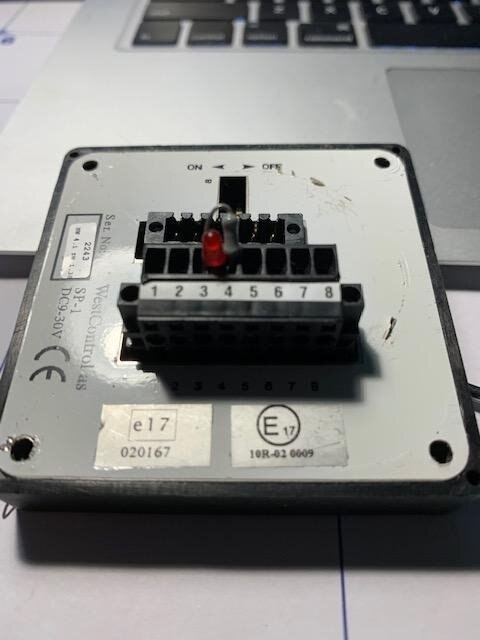
I have a control panel for a fire suppression system and on the firing circuit output there is an LED with a .68k resistor
in parallel for testing. 24V when activated. What specs would the LED be?
Be sure to click 'more' and select 'suggest as answer'!
If you're the thread creator, be sure to click 'more' then 'Verify as Answer'!
I have a control panel for a fire suppression system and on the firing circuit output there is an LED with a .68k resistor
in parallel for testing. 24V when activated. What specs would the LED be?
Typical LEDs turn on at a forward voltage around 2V and have a maximum current that they can tolerate without failing which is specified in the data sheet. Are you sure the resistor is in parallel? In a simple circuit where the current is controlled by a resistor they will be in series. Is it a single panel mounted LED? Please confirm the LED / resistor arrangement. Assuming the issue is the LED no longer lights was there something that occurred that might explain the failure?
EDIT: I have concerns about repairs on a safety system without understanding the circuit or cause of failure.
I think the other comments are correct - the LED needs to be in series with the resistor.
A 6.8K resistor would put about 3 mA through any LED if they were in series across 24V - which will illuminate most LEDs (fairly dimly).
If you want to protect the LED from being inserted backwards, put a regular diode in series with both the LED and the resistor.
I think the other comments are correct - the LED needs to be in series with the resistor.
A 6.8K resistor would put about 3 mA through any LED if they were in series across 24V - which will illuminate most LEDs (fairly dimly).
If you want to protect the LED from being inserted backwards, put a regular diode in series with both the LED and the resistor.