element14 Community
element14 Community
    Register Log In
  • Site
  • Search
  • Log In Register
  • Community Hub
    Community Hub
    • What's New on element14
    • Feedback and Support
    • Benefits of Membership
    • Personal Blogs
    • Members Area
    • Achievement Levels
  • Learn
    Learn
    • Ask an Expert
    • eBooks
    • element14 presents
    • Learning Center
    • Tech Spotlight
    • STEM Academy
    • Webinars, Training and Events
    • Learning Groups
  • Technologies
    Technologies
    • 3D Printing
    • FPGA
    • Industrial Automation
    • Internet of Things
    • Power & Energy
    • Sensors
    • Technology Groups
  • Challenges & Projects
    Challenges & Projects
    • Design Challenges
    • element14 presents Projects
    • Project14
    • Arduino Projects
    • Raspberry Pi Projects
    • Project Groups
  • Products
    Products
    • Arduino
    • Avnet & Tria Boards Community
    • Dev Tools
    • Manufacturers
    • Multicomp Pro
    • Product Groups
    • Raspberry Pi
    • RoadTests & Reviews
  • About Us
  • Store
    Store
    • Visit Your Store
    • Choose another store...
      • Europe
      •  Austria (German)
      •  Belgium (Dutch, French)
      •  Bulgaria (Bulgarian)
      •  Czech Republic (Czech)
      •  Denmark (Danish)
      •  Estonia (Estonian)
      •  Finland (Finnish)
      •  France (French)
      •  Germany (German)
      •  Hungary (Hungarian)
      •  Ireland
      •  Israel
      •  Italy (Italian)
      •  Latvia (Latvian)
      •  
      •  Lithuania (Lithuanian)
      •  Netherlands (Dutch)
      •  Norway (Norwegian)
      •  Poland (Polish)
      •  Portugal (Portuguese)
      •  Romania (Romanian)
      •  Russia (Russian)
      •  Slovakia (Slovak)
      •  Slovenia (Slovenian)
      •  Spain (Spanish)
      •  Sweden (Swedish)
      •  Switzerland(German, French)
      •  Turkey (Turkish)
      •  United Kingdom
      • Asia Pacific
      •  Australia
      •  China
      •  Hong Kong
      •  India
      • Japan
      •  Korea (Korean)
      •  Malaysia
      •  New Zealand
      •  Philippines
      •  Singapore
      •  Taiwan
      •  Thailand (Thai)
      • Vietnam
      • Americas
      •  Brazil (Portuguese)
      •  Canada
      •  Mexico (Spanish)
      •  United States
      Can't find the country/region you're looking for? Visit our export site or find a local distributor.
  • Translate
  • Profile
  • Settings
Experts, Learning and Guidance
  • Technologies
  • More
Experts, Learning and Guidance
Ask an Expert Forum LED
  • Blog
  • Forum
  • Documents
  • Leaderboard
  • Files
  • Members
  • Mentions
  • Sub-Groups
  • Tags
  • More
  • Cancel
  • New
Join Experts, Learning and Guidance to participate - click to join for free!
Actions
  • Share
  • More
  • Cancel
Forum Thread Details
  • State Suggested Answer
  • Replies 10 replies
  • Answers 7 answers
  • Subscribers 302 subscribers
  • Views 1548 views
  • Users 0 members are here
Related
See a helpful answer?

Be sure to click 'more' and select 'suggest as answer'!

If you're the thread creator, be sure to click 'more' then 'Verify as Answer'!

LED

vapyro
vapyro over 5 years ago

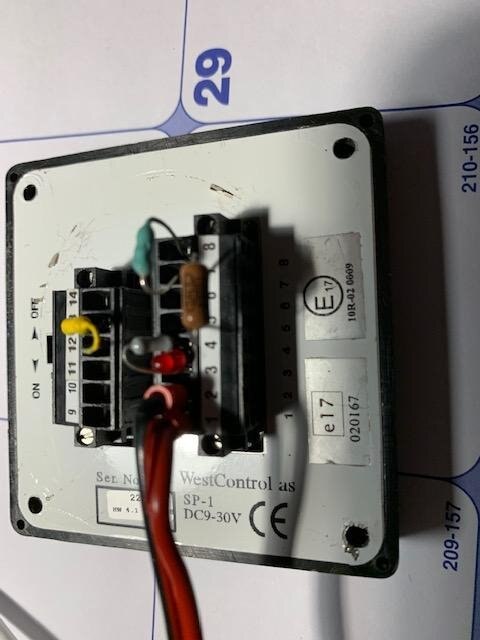
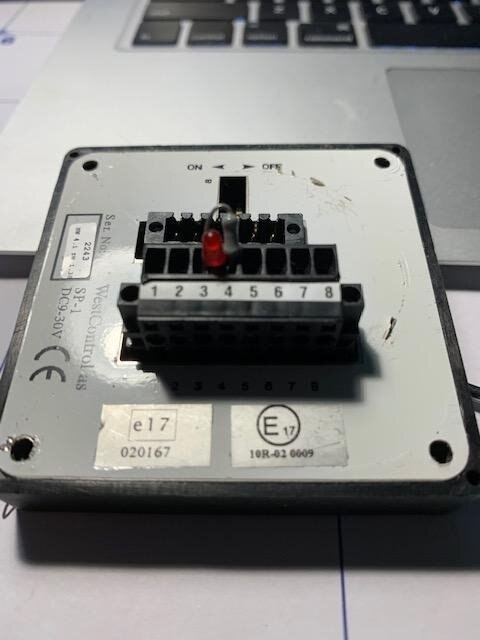
I have a control panel for a fire suppression system and on the firing circuit output there is an LED with a .68k resistor

in parallel for testing. 24V when activated. What specs would the LED be?

  • Sign in to reply
  • Cancel

Top Replies

  • dougw
    dougw over 5 years ago in reply to vapyro +2
    If that resistor is really in parallel to present a load, the LED may have a built-in resistor. This would be the case if the voltage stays at 24V even with the LED in place. Such LEDs may be substituted…
  • shabaz
    shabaz over 5 years ago in reply to vapyro +1 suggested
    Hi Harry, There's not enough information, but I suspect it could be a current loop? If so, that's important information that was omitted. If the current system used an LED and resistor in parallel, then…
  • shabaz
    shabaz over 5 years ago in reply to shabaz +1
    Also, those photos were really unusable. Sharp, in-focus, showing color bands is important. Any mobile phone can do that, as long as there is decent lighting. Appreciate it may be hard to do that when…
  • fmilburn
    0 fmilburn over 5 years ago

    Typical LEDs turn on at a forward voltage around 2V and have a maximum current that they can tolerate without failing which is specified in the data sheet.  Are you sure the resistor is in parallel?  In a simple circuit where the current is controlled by a resistor they will be in series.  Is it a single panel mounted LED? Please confirm the LED / resistor arrangement.  Assuming the issue is the LED no longer lights was there something that occurred that might explain the failure?

    EDIT:  I have concerns about repairs on a safety system without understanding the circuit or cause of failure.

    • Cancel
    • Vote Up 0 Vote Down
    • Sign in to reply
    • Verify Answer
    • Reject Answer
    • Cancel
  • vapyro
    0 vapyro over 5 years ago in reply to fmilburn

    This is not a repair, I am trying to put together a repair kit for dealers to use. Sorry about poor photo but the LED and resistor can be seen across #3 and #4. 24v is the supply voltage and the voltage between 3 and 4 when activated.


    image

    • Cancel
    • Vote Up 0 Vote Down
    • Sign in to reply
    • Verify Answer
    • Reject Answer
    • Cancel
  • vapyro
    0 vapyro over 5 years ago in reply to fmilburn

    The LED when lit shows the circuit is working for test purposes and I believe that in both in parallel are also a dummy load as the circuit is monitored for faults.

    • Cancel
    • Vote Up 0 Vote Down
    • Sign in to reply
    • Verify Answer
    • Cancel
  • vapyro
    0 vapyro over 5 years ago in reply to fmilburn

    Try this photo. The bias is 2.7V and I tried a blue one with 2.6 bias that failed immediately.


    image

    • Cancel
    • Vote Up 0 Vote Down
    • Sign in to reply
    • Verify Answer
    • Reject Answer
    • Cancel
  • aswinvenu
    0 aswinvenu over 5 years ago

    Hi Harris,


    If I understand the question correctly you need to turn on the LED when you supply 24volts right?


    Please do not connect a resistor in parallel to the LED. Voltage across the LED will be 24 volts. LEDs work in forward bias and when you connect 24 volts parallel diods resistance drops very low. So a huge current passes through the LED and burns it immediately. The high resistor you put in parallel doesn't even matter when you forward bias the LED with 24Volt.


    To get the results you need to use a resistor in series with the LED.


    Supply voltage is = 24 Volts

    LED Forward voltage = 2 volts (take whichever the LED you are planning to use)

    LED Current = 15mA (again take this number from the datasheet)

    Now apply KVL and find the Series Resistor value.


    R = (24 - 2)/(15x10^-3) = 1.1KOhms.


    Regards,

    Aswin

    • Cancel
    • Vote Up 0 Vote Down
    • Sign in to reply
    • Verify Answer
    • Reject Answer
    • Cancel
  • dougw
    0 dougw over 5 years ago in reply to vapyro

    I think the other comments are correct - the LED needs to be in series with the resistor.

    A 6.8K resistor would put about 3 mA through any LED if they were in series across 24V - which will illuminate most LEDs (fairly dimly).

    If you want to protect the LED from being inserted backwards, put a regular diode in series with both the LED and the resistor.

    • Cancel
    • Vote Up 0 Vote Down
    • Sign in to reply
    • Verify Answer
    • Reject Answer
    • Cancel
  • vapyro
    0 vapyro over 5 years ago in reply to aswinvenu

    I need to explain further. This is a factory set up. I am simply trying to duplicate what they have to use as spare parts. For some reason I can't attach the control spec sheet. The LED and resistor are in the ignition circuit for test purposes and are removed when the extinguishing generators are installed. The system is manually activated to simulate a thermal event and the LED lights up to show that the control is working properly. They are removed when the actual extinguishing generators are installed. Since the circuit is monitored, when testing they also act as a dummy load so no fault is shown on the control. I understand the basics of LEDs and resistors but need to understand what is being used. I contacted the factory but got no response. this system works on 8 to 28V with 2ma monitoring current and up to 1.2a when activated. I can supply further data by email.

    • Cancel
    • Vote Up 0 Vote Down
    • Sign in to reply
    • Verify Answer
    • Reject Answer
    • Cancel
  • shabaz
    0 shabaz over 5 years ago in reply to vapyro

    Hi Harry,


    There's not enough information, but I suspect it could be a current loop? If so, that's important information that was omitted.

    If the current system used an LED and resistor in parallel, then you can buy any generic red LED and it will work.

    You can search (on say newark.com or farnell.com) for "5mm red LED" and you'll see plenty. Personally I would choose a few, and see which one works best with the resistor you're using.

    Test it out (i.e. with and without a fault activated).


    Some LEDs may glow dimly when in the LED off situation, so you can try a different one, to optimise it.

    Don't stray from generic low-power (20mA or so) Red 5mm LEDs; if you choose a different colour or a more powerful LED then the electrical characteristics are different.

    • Cancel
    • Vote Up +1 Vote Down
    • Sign in to reply
    • Verify Answer
    • Reject Answer
    • Cancel
  • shabaz
    0 shabaz over 5 years ago in reply to shabaz

    Also, those photos were really unusable. Sharp, in-focus, showing color bands is important.

    Any mobile phone can do that, as long as there is decent lighting. Appreciate it may be hard to do that when working in areas with limited accessibility.

    • Cancel
    • Vote Up +1 Vote Down
    • Sign in to reply
    • Verify Answer
    • Cancel
  • dougw
    0 dougw over 5 years ago in reply to vapyro

    If that resistor is really in parallel to present a load, the LED may have a built-in resistor. This would be the case if the voltage stays at 24V even with the LED in place. Such LEDs may be substituted by any LED with a resistor in series.

    What should the voltage be across the LED when it is active?

    • Cancel
    • Vote Up +2 Vote Down
    • Sign in to reply
    • Verify Answer
    • Cancel
element14 Community

element14 is the first online community specifically for engineers. Connect with your peers and get expert answers to your questions.

  • Members
  • Learn
  • Technologies
  • Challenges & Projects
  • Products
  • Store
  • About Us
  • Feedback & Support
  • FAQs
  • Terms of Use
  • Privacy Policy
  • Legal and Copyright Notices
  • Sitemap
  • Cookies

An Avnet Company © 2025 Premier Farnell Limited. All Rights Reserved.

Premier Farnell Ltd, registered in England and Wales (no 00876412), registered office: Farnell House, Forge Lane, Leeds LS12 2NE.

ICP 备案号 10220084.

Follow element14

  • X
  • Facebook
  • linkedin
  • YouTube