element14 Community
element14 Community
    Register Log In
  • Site
  • Search
  • Log In Register
  • Community Hub
    Community Hub
    • What's New on element14
    • Feedback and Support
    • Benefits of Membership
    • Personal Blogs
    • Members Area
    • Achievement Levels
  • Learn
    Learn
    • Ask an Expert
    • eBooks
    • element14 presents
    • Learning Center
    • Tech Spotlight
    • STEM Academy
    • Webinars, Training and Events
    • Learning Groups
  • Technologies
    Technologies
    • 3D Printing
    • FPGA
    • Industrial Automation
    • Internet of Things
    • Power & Energy
    • Sensors
    • Technology Groups
  • Challenges & Projects
    Challenges & Projects
    • Design Challenges
    • element14 presents Projects
    • Project14
    • Arduino Projects
    • Raspberry Pi Projects
    • Project Groups
  • Products
    Products
    • Arduino
    • Avnet & Tria Boards Community
    • Dev Tools
    • Manufacturers
    • Multicomp Pro
    • Product Groups
    • Raspberry Pi
    • RoadTests & Reviews
  • About Us
    About the element14 Community
  • Store
    Store
    • Visit Your Store
    • Choose another store...
      • Europe
      •  Austria (German)
      •  Belgium (Dutch, French)
      •  Bulgaria (Bulgarian)
      •  Czech Republic (Czech)
      •  Denmark (Danish)
      •  Estonia (Estonian)
      •  Finland (Finnish)
      •  France (French)
      •  Germany (German)
      •  Hungary (Hungarian)
      •  Ireland
      •  Israel
      •  Italy (Italian)
      •  Latvia (Latvian)
      •  
      •  Lithuania (Lithuanian)
      •  Netherlands (Dutch)
      •  Norway (Norwegian)
      •  Poland (Polish)
      •  Portugal (Portuguese)
      •  Romania (Romanian)
      •  Russia (Russian)
      •  Slovakia (Slovak)
      •  Slovenia (Slovenian)
      •  Spain (Spanish)
      •  Sweden (Swedish)
      •  Switzerland(German, French)
      •  Turkey (Turkish)
      •  United Kingdom
      • Asia Pacific
      •  Australia
      •  China
      •  Hong Kong
      •  India
      •  Japan
      •  Korea (Korean)
      •  Malaysia
      •  New Zealand
      •  Philippines
      •  Singapore
      •  Taiwan
      •  Thailand (Thai)
      •  Vietnam
      • Americas
      •  Brazil (Portuguese)
      •  Canada
      •  Mexico (Spanish)
      •  United States
      Can't find the country/region you're looking for? Visit our export site or find a local distributor.
  • Translate
  • Profile
  • Settings
Experts, Learning and Guidance
  • Technologies
  • More
Experts, Learning and Guidance
Ask an Expert Forum I need opinions on improving my nice ABS enclosure.
  • Blog
  • Forum
  • Documents
  • Leaderboard
  • Files
  • Members
  • Mentions
  • Sub-Groups
  • Tags
  • More
  • Cancel
  • New
Join Experts, Learning and Guidance to participate - click to join for free!
Actions
  • Share
  • More
  • Cancel
Forum Thread Details
  • State Not Answered
  • Replies 9 replies
  • Subscribers 323 subscribers
  • Views 260 views
  • Users 0 members are here
Related
See a helpful answer?

Be sure to click 'more' and select 'suggest as answer'!

If you're the thread creator, be sure to click 'more' then 'Verify as Answer'!

I need opinions on improving my nice ABS enclosure.

HKPhysicist
HKPhysicist 5 days ago

Dear Engineers and Experts,  Blush

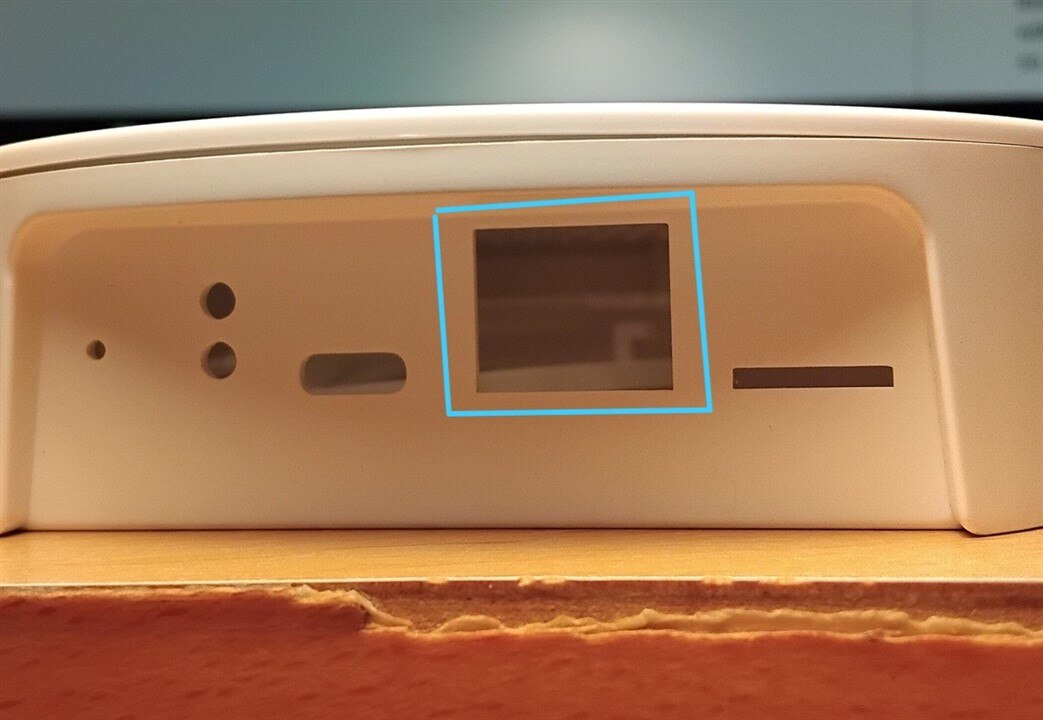
I have found a very nice enclosure to contain my air monitor and sensors.

The only drawback of it is - there is a large opening (perhaps for ethernet) which is redundant for my design.

So, could you suggest a way to cover or patch this rectangular hole (inside the blue lines) so my end-users cannot see or touch the electronics inside?

The manufacturer claims that this enclosure is made from ABS plastic.

Tooling I have - a Bosch Dremel 3000 mini drill with wheel cutters, a mini table vice.  Wink

image

  • Sign in to reply
  • Cancel

Top Replies

  • shabaz
    shabaz 5 days ago +4
    Low volume production? Design a PCB to cover all those unused holes in one go, and get it made at say 0.8 mm thickness and glue it on. You don't need any of those tools you mentioned. Hobby use? Do the…
  • Fred27
    Fred27 5 days ago +3
    This looks to me like the perfect opportunity to buy more tools. If you want a 3D printer then now you need one.
  • beacon_dave
    beacon_dave 5 days ago in reply to HKPhysicist +2
    Shabaz means to use a separate PCB as a cover for the hole, not to use the main PCB to cover the hole. Another option might be to apply tape over one side of the hole and then pour resin from the other…
  • shabaz
    0 shabaz 5 days ago

    Low volume production? Design a PCB to cover all those unused holes in one go, and get it made at say 0.8 mm thickness and glue it on. You don't need any of those tools you mentioned.

    Hobby use? Do the same with thin plastic sheet (e.g. a cheap plastic document wallet, doesn't matter if it's flexible) and hand-trim with scissors and glue it on. 

    • Cancel
    • Vote Up +4 Vote Down
    • Sign in to reply
    • Verify Answer
    • Cancel
  • HKPhysicist
    0 HKPhysicist 5 days ago in reply to shabaz

    Yes, it is for low volume production.  I have designed 3 PCB layouts for other 3 enclosures with Kicad v10.  Only this one has the extra rectangular hole.

    I need the USB-C opening, switch button hole and the light hole.

    The main PCB is horizontal to the enclosure bottom.  According to your suggestion, how do I get a PCB which is also vertical?  Neutral face

    • Cancel
    • Vote Up 0 Vote Down
    • Sign in to reply
    • Verify Answer
    • Cancel
  • kmikemoo
    0 kmikemoo 5 days ago

    Since it is low volumes, why not use a keystone jack cover?  You can glue it in place - either with epoxy or even hot glue.  It should fit the opening perfectly and it's readily available.  You can get enough at a cheap price to play around with modifying them 

    Of course, as shabaz said, just gluing a blank on the backside of the opening would be the fastest, cheapest and probably most effective.  It doesn't have to be a flush closure.

    • Cancel
    • Vote Up +1 Vote Down
    • Sign in to reply
    • Verify Answer
    • Cancel
  • geralds
    0 geralds 5 days ago

    Hi  HKPhysicist ,

    I often use openings like these as passageways for controls, buttons, switches, indicators, cable management, etc.

    You can mount it as a suitable front panel, making it slightly larger all around so it doesn't slip through.

    Along the edge of the front panel, you can attach a very narrow strip of sealing tape (soft adhesive tape from a hardware store) to make it moisture-proof.

    On the inside of the housing, attach locknuts (glued on) so you can screw the front panel in place neatly.

    This makes the opening quite functional.

    If you don't have any specific functions planned, you can simply create a blank front panel and attach the nameplate to it.

    Best Regards

    Gerald

    ---

    • Cancel
    • Vote Up +1 Vote Down
    • Sign in to reply
    • Verify Answer
    • Cancel
  • Fred27
    0 Fred27 5 days ago

    This looks to me like the perfect opportunity to buy more tools. If you want a 3D printer then now you need one. Wink

    • Cancel
    • Vote Up +3 Vote Down
    • Sign in to reply
    • Verify Answer
    • Cancel
  • shabaz
    0 shabaz 5 days ago in reply to HKPhysicist

    Not sure what you mean, but I think PCB covers, keystone covers, 3D printed covers mentioned by all, are all viable options to meet the requirement to cover/patch the cutout.

    • Cancel
    • Vote Up 0 Vote Down
    • Sign in to reply
    • Verify Answer
    • Cancel
  • beacon_dave
    0 beacon_dave 5 days ago in reply to HKPhysicist

    Shabaz means to use a separate PCB as a cover for the hole, not to use the main PCB to cover the hole.

    Another option might be to apply tape over one side of the hole and then pour resin from the other side to fill the hole. Once set, remove the tape. You can colour the resin to match the colour of the case before pouring.

     Another option might be to get some thick self-adhesive labels printed and stick them over the hole. You could make this label larger so as to cover the whole end so as to provide meaningful and neat labelling for the holes you are using and cover the ones you aren't.

    • Cancel
    • Vote Up +2 Vote Down
    • Sign in to reply
    • Verify Answer
    • Cancel
  • HKPhysicist
    0 HKPhysicist 4 days ago

    I also find a cheap option.

    I have found that this rectangle is perfectly a RJ45 dimensions 16mm x 13.5mm.

    So, I can actually add this cheap cheap dummy through-hole RJ45 socket to my PCB:

    https://www.aliexpress.com/item/1005005570284582.html

    5 items for about US$2.

    Easy to work with and good looking.

    Thanks for all the valuable opinions.  PrayBlush

    • Cancel
    • Vote Up +1 Vote Down
    • Sign in to reply
    • Verify Answer
    • Cancel
  • HKPhysicist
    0 HKPhysicist 4 days ago in reply to Fred27

    Hey,

    This looks like a good choice for low volume production.  Nor sure whether it is a 3D printer?

    https://www.aliexpress.com/item/1005005654989723.html

    • Cancel
    • Vote Up 0 Vote Down
    • Sign in to reply
    • Verify Answer
    • Cancel
element14 Community

element14 is the first online community specifically for engineers. Connect with your peers and get expert answers to your questions.

  • Members
  • Learn
  • Technologies
  • Challenges & Projects
  • Products
  • Store
  • About Us
  • Feedback & Support
  • FAQs
  • Terms of Use
  • Privacy Policy
  • Legal and Copyright Notices
  • Sitemap
  • Cookies

An Avnet Company © 2026 Premier Farnell Limited. All Rights Reserved.

Premier Farnell Ltd, registered in England and Wales (no 00876412), registered office: Farnell House, Forge Lane, Leeds LS12 2NE.

ICP 备案号 10220084.

Follow element14

  • X
  • Facebook
  • linkedin
  • YouTube