element14 Community
element14 Community
    Register Log In
  • Site
  • Search
  • Log In Register
  • Community Hub
    Community Hub
    • What's New on element14
    • Feedback and Support
    • Benefits of Membership
    • Personal Blogs
    • Members Area
    • Achievement Levels
  • Learn
    Learn
    • Ask an Expert
    • eBooks
    • element14 presents
    • Learning Center
    • Tech Spotlight
    • STEM Academy
    • Webinars, Training and Events
    • Learning Groups
  • Technologies
    Technologies
    • 3D Printing
    • FPGA
    • Industrial Automation
    • Internet of Things
    • Power & Energy
    • Sensors
    • Technology Groups
  • Challenges & Projects
    Challenges & Projects
    • Design Challenges
    • element14 presents Projects
    • Project14
    • Arduino Projects
    • Raspberry Pi Projects
    • Project Groups
  • Products
    Products
    • Arduino
    • Avnet & Tria Boards Community
    • Dev Tools
    • Manufacturers
    • Multicomp Pro
    • Product Groups
    • Raspberry Pi
    • RoadTests & Reviews
  • About Us
    About the element14 Community
  • Store
    Store
    • Visit Your Store
    • Choose another store...
      • Europe
      •  Austria (German)
      •  Belgium (Dutch, French)
      •  Bulgaria (Bulgarian)
      •  Czech Republic (Czech)
      •  Denmark (Danish)
      •  Estonia (Estonian)
      •  Finland (Finnish)
      •  France (French)
      •  Germany (German)
      •  Hungary (Hungarian)
      •  Ireland
      •  Israel
      •  Italy (Italian)
      •  Latvia (Latvian)
      •  
      •  Lithuania (Lithuanian)
      •  Netherlands (Dutch)
      •  Norway (Norwegian)
      •  Poland (Polish)
      •  Portugal (Portuguese)
      •  Romania (Romanian)
      •  Russia (Russian)
      •  Slovakia (Slovak)
      •  Slovenia (Slovenian)
      •  Spain (Spanish)
      •  Sweden (Swedish)
      •  Switzerland(German, French)
      •  Turkey (Turkish)
      •  United Kingdom
      • Asia Pacific
      •  Australia
      •  China
      •  Hong Kong
      •  India
      •  Japan
      •  Korea (Korean)
      •  Malaysia
      •  New Zealand
      •  Philippines
      •  Singapore
      •  Taiwan
      •  Thailand (Thai)
      •  Vietnam
      • Americas
      •  Brazil (Portuguese)
      •  Canada
      •  Mexico (Spanish)
      •  United States
      Can't find the country/region you're looking for? Visit our export site or find a local distributor.
  • Translate
  • Profile
  • Settings
Experts, Learning and Guidance
  • Technologies
  • More
Experts, Learning and Guidance
Ask an Expert Forum ERSA soldering iron tip suddenly un-tinnable
  • Blog
  • Forum
  • Documents
  • Leaderboard
  • Files
  • Members
  • Mentions
  • Sub-Groups
  • Tags
  • More
  • Cancel
  • New
Join Experts, Learning and Guidance to participate - click to join for free!
Actions
  • Share
  • More
  • Cancel
Forum Thread Details
  • State Suggested Answer
  • Replies 13 replies
  • Answers 1 answer
  • Subscribers 336 subscribers
  • Views 700 views
  • Users 0 members are here
Related
See a helpful answer?

Be sure to click 'more' and select 'suggest as answer'!

If you're the thread creator, be sure to click 'more' then 'Verify as Answer'!

ERSA soldering iron tip suddenly un-tinnable

davebullockmbe
davebullockmbe 2 months ago

Hi I have an ERSA I-CON PICO solder station that has served me really well for several years when suddenly the 'pencil' tip has become un-tinnable.
It is the :-

://uk.farnell.com/ersa/0102pdlf04-sb/tip-soldering-iron-pencil-0-4mm/dp/1203967

A 0.4mm pencil tip which is great for getting into solder the tiny legs of SMD IC's.
I had used ERSA Digital 2000A's for years and years and then bought two of the I-Con Pico's (one for me and one for my son) a few years ago as we are both into SMD development and assembly.
I have never had a problem with the tip of the iron until recently when I just couldn't get the very tip of the bit to accept solder.
The solder station is not used on a daily basis (hobby use only) and is only switched on when required, I always use the supplied brass (Brillo pad) tip cleaner and this has kept the tip clean and operational until now.
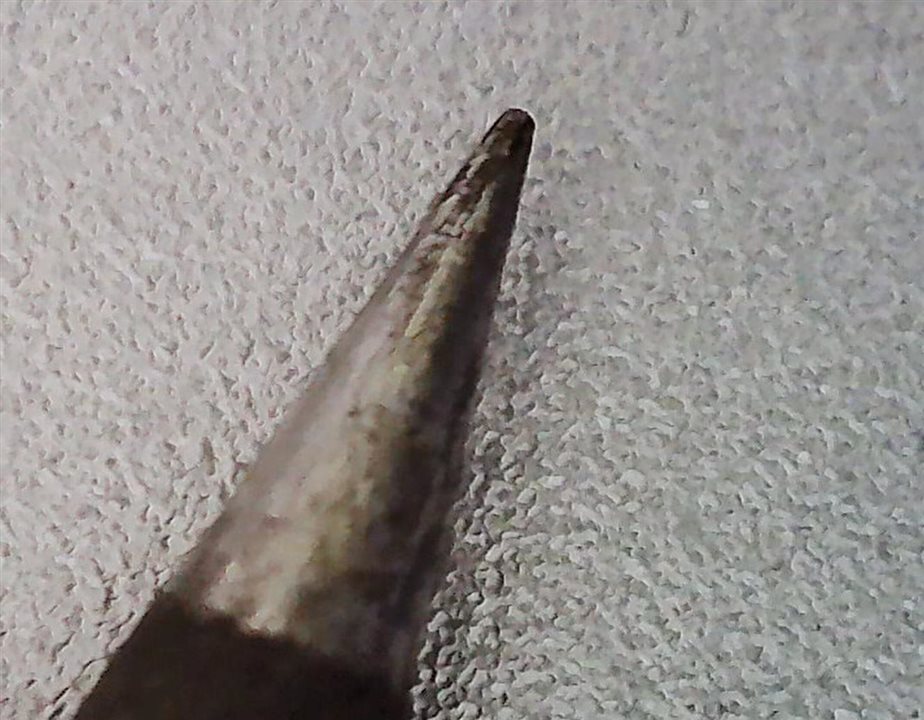
Inspecting the tip I can see that it is still sharp with no visible pitting or corrosion, however it has a grey appearance instead of a 'silver' tinned area right at the tip.
I imagine that these tips have a special coating and shouldn't have anything abrasive applied (sandpaper/file etc) so I am wondering if the tip can be easily restored, or has it reached the end of it's life??
Any suggestions would be gratefully received, as both solder stations are suffering the same problem.

Thanks ...Daveimage
  • Sign in to reply
  • Cancel

Top Replies

  • michaelkellett
    michaelkellett 2 months ago +3
    I think that you have to treat the tip as having reached the end of its life. I have used tip cleaner (sort of waxy stuff in a little pot) but the effect doesn't last long). MK
  • Jan Cumps
    Jan Cumps 2 months ago in reply to phoenixcomm +2
    phoenixcomm said: did you read the NASA spec. only sponges For earth-bound projects, there's the IPC standard. " IPC advises in the IPC-7711/7721 that especially in lead-free soldering it is better…
  • Jan Cumps
    Jan Cumps 2 months ago +2
    I have used these products to revive tip wetting issues: They aren't general maintenance solutions. Intended to recover what otherwise would be a throwaway.
Parents
  • dougw
    0 dougw 2 months ago

     RE: Reviving an oxidized tip 

    The business end of a soldering tip is plated with iron to protect the copper and allow solder wetting. When solder is scraped off the iron (by brass wool) it can expose small areas that start to oxidize. Solder does not stick to rust. To revive the tip, it is necessary to remove the rust and immediately tin the tip with solder. Rust can be uneven, forming micro-pits which are hard to see and hard to remove. The iron layer is also pretty thin, so aggressive rust removal can remove the iron, which is needed. Tips can usually be revived enough to be used for non-critical soldering, but at some point it is not worth the fight.

    The reason I don't use brass wool is that it seems like it might be able to scrape the solder down to bare iron. (I do not have any proof)

    I did a video of trying to mechanically refurbish oxidized tips....

    https://youtu.be/i-bmQsPNSQ0

    • Cancel
    • Vote Up +1 Vote Down
    • Sign in to reply
    • Verify Answer
    • Cancel
  • Jan Cumps
    0 Jan Cumps 2 months ago in reply to dougw
    dougw said:
    The reason I don't use brass wool is that it seems like it might be able to scrape the solder down to bare iron. (I do not have any proof)

    No. It's too soft for that.

    • Cancel
    • Vote Up 0 Vote Down
    • Sign in to reply
    • Verify Answer
    • Cancel
  • phoenixcomm
    0 phoenixcomm 2 months ago in reply to Jan Cumps

    proof? did you read the NASA spec. only sponges 

    • Cancel
    • Vote Up +1 Vote Down
    • Sign in to reply
    • Verify Answer
    • Cancel
Reply
  • phoenixcomm
    0 phoenixcomm 2 months ago in reply to Jan Cumps

    proof? did you read the NASA spec. only sponges 

    • Cancel
    • Vote Up +1 Vote Down
    • Sign in to reply
    • Verify Answer
    • Cancel
Children
  • Jan Cumps
    0 Jan Cumps 2 months ago in reply to phoenixcomm
    phoenixcomm said:
    did you read the NASA spec. only sponges 

    For earth-bound projects, there's the IPC standard.

    "IPC advises in the IPC-7711/7721 that especially in lead-free soldering it is better to clean the soldering tip with brass wool / brush (dry cleaning) because this will prevent a temperature shock on your soldering iron tip. However, you can also clean in a wet sponge."

    source: https://piektraining.com/en/training-courses/ipc-7711-7721-training/

    • Cancel
    • Vote Up +2 Vote Down
    • Sign in to reply
    • Verify Answer
    • Cancel
  • shabaz
    0 shabaz 2 months ago in reply to Jan Cumps

    I got curious, looks like NASA also adopts IPC along with a 'space standard' modification. The IPC standard recommends brass wool as you say (confirmed by looking at a few videos from IPC trained instructors, they show tools with brass wool, e.g. this one: Master Soldering: IPC-J-STD-001 Soldering Techniques ), and the 'space standard' modification makes the tools recommendations in the appendix of that standard mandatory, because they state "shall be".

    I looked at these docs:

    nasa-std-87396b.pdf

    https://studylib.net/doc/27900669/ipc-j-std-001es-space-application?p=11 (admittedly an older release, it's not possible to view the latest IPC docs without paying for them : (

    • Cancel
    • Vote Up +1 Vote Down
    • Sign in to reply
    • Verify Answer
    • Cancel
element14 Community

element14 is the first online community specifically for engineers. Connect with your peers and get expert answers to your questions.

  • Members
  • Learn
  • Technologies
  • Challenges & Projects
  • Products
  • Store
  • About Us
  • Feedback & Support
  • FAQs
  • Terms of Use
  • Privacy Policy
  • Legal and Copyright Notices
  • Sitemap
  • Cookies

An Avnet Company © 2026 Premier Farnell Limited. All Rights Reserved.

Premier Farnell Ltd, registered in England and Wales (no 00876412), registered office: Farnell House, Forge Lane, Leeds LS12 2NE.

Follow element14

  • X
  • Facebook
  • linkedin
  • YouTube