element14 Community
element14 Community
    Register Log In
  • Site
  • Search
  • Log In Register
  • Community Hub
    Community Hub
    • What's New on element14
    • Feedback and Support
    • Benefits of Membership
    • Personal Blogs
    • Members Area
    • Achievement Levels
  • Learn
    Learn
    • Ask an Expert
    • eBooks
    • element14 presents
    • Learning Center
    • Tech Spotlight
    • STEM Academy
    • Webinars, Training and Events
    • Learning Groups
  • Technologies
    Technologies
    • 3D Printing
    • FPGA
    • Industrial Automation
    • Internet of Things
    • Power & Energy
    • Sensors
    • Technology Groups
  • Challenges & Projects
    Challenges & Projects
    • Design Challenges
    • element14 presents Projects
    • Project14
    • Arduino Projects
    • Raspberry Pi Projects
    • Project Groups
  • Products
    Products
    • Arduino
    • Avnet & Tria Boards Community
    • Dev Tools
    • Manufacturers
    • Multicomp Pro
    • Product Groups
    • Raspberry Pi
    • RoadTests & Reviews
  • About Us
    About the element14 Community
  • Store
    Store
    • Visit Your Store
    • Choose another store...
      • Europe
      •  Austria (German)
      •  Belgium (Dutch, French)
      •  Bulgaria (Bulgarian)
      •  Czech Republic (Czech)
      •  Denmark (Danish)
      •  Estonia (Estonian)
      •  Finland (Finnish)
      •  France (French)
      •  Germany (German)
      •  Hungary (Hungarian)
      •  Ireland
      •  Israel
      •  Italy (Italian)
      •  Latvia (Latvian)
      •  
      •  Lithuania (Lithuanian)
      •  Netherlands (Dutch)
      •  Norway (Norwegian)
      •  Poland (Polish)
      •  Portugal (Portuguese)
      •  Romania (Romanian)
      •  Russia (Russian)
      •  Slovakia (Slovak)
      •  Slovenia (Slovenian)
      •  Spain (Spanish)
      •  Sweden (Swedish)
      •  Switzerland(German, French)
      •  Turkey (Turkish)
      •  United Kingdom
      • Asia Pacific
      •  Australia
      •  China
      •  Hong Kong
      •  India
      •  Japan
      •  Korea (Korean)
      •  Malaysia
      •  New Zealand
      •  Philippines
      •  Singapore
      •  Taiwan
      •  Thailand (Thai)
      •  Vietnam
      • Americas
      •  Brazil (Portuguese)
      •  Canada
      •  Mexico (Spanish)
      •  United States
      Can't find the country/region you're looking for? Visit our export site or find a local distributor.
  • Translate
  • Profile
  • Settings
Experts, Learning and Guidance
  • Technologies
  • More
Experts, Learning and Guidance
Ask an Expert Forum Would someone be interested to create Ben Bulsink's NFC Game Board?
  • Blog
  • Forum
  • Documents
  • Leaderboard
  • Files
  • Members
  • Mentions
  • Sub-Groups
  • Tags
  • More
  • Cancel
  • New
Join Experts, Learning and Guidance to participate - click to join for free!
Actions
  • Share
  • More
  • Cancel
Forum Thread Details
  • State Not Answered
  • Replies 1 reply
  • Subscribers 330 subscribers
  • Views 143 views
  • Users 0 members are here
  • help
  • experts
  • rfid
  • game
  • nfc
  • electronics
  • ask_the_expert
  • arduino
Related
See a helpful answer?

Be sure to click 'more' and select 'suggest as answer'!

If you're the thread creator, be sure to click 'more' then 'Verify as Answer'!

Would someone be interested to create Ben Bulsink's NFC Game Board?

Luka851
Luka851 24 days ago

Hello everyone, 

I wanted to make a custom smart chess board and I came across to Ben Bulsink's open source technology on nfcgameboard.com. Following is a demo video of his creation: https://www.youtube.com/watch?v=4qKndjF60Js&t=12s. 

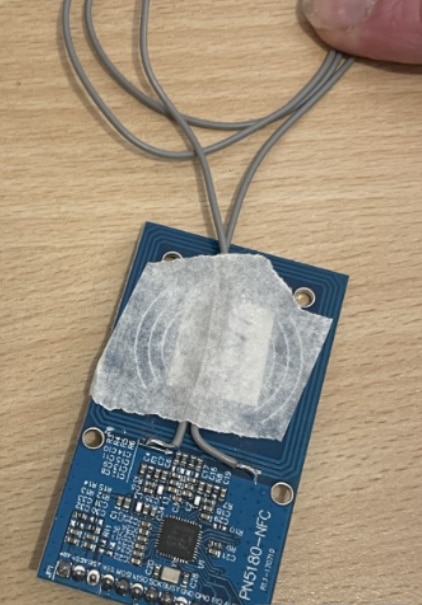
I wrote to him, and together we decided to upgrade the device and use the newer PN5180 IC instead of the CLRC632 IC that he used in the prototype. We used Playfultechnology library for PN5180 and encountered issues, such as the library wasn't detecting multiple tags. We have solved and improved that library, and that challenge now is solved, however we now encountered next issue which is connecting the IC to the external antenna. When we cut the PCB antenna traces on the module the IC stops to respond correctly, such as returning EEPROM and seems to get stuck in the loop even before it reaches communicating with the antenna. We don't know what may be causing this. Does anyone has any idea on it and how to fix this?
image

My next question is will there be anyone who would be curious enough to also try to recreate the improved board? We want to create an open source technology - hardware as a sandbox, so anyone can make the board, and then write their own code to create any kind of the game on top on it, whatever they want, perhaps share their game on the common platform with other players to download and play their games. We are communicating through email and having more brains working on it will make things easier, faster, and thought maybe ask if anyone was interested to join, will be here to help and explain, what I know.

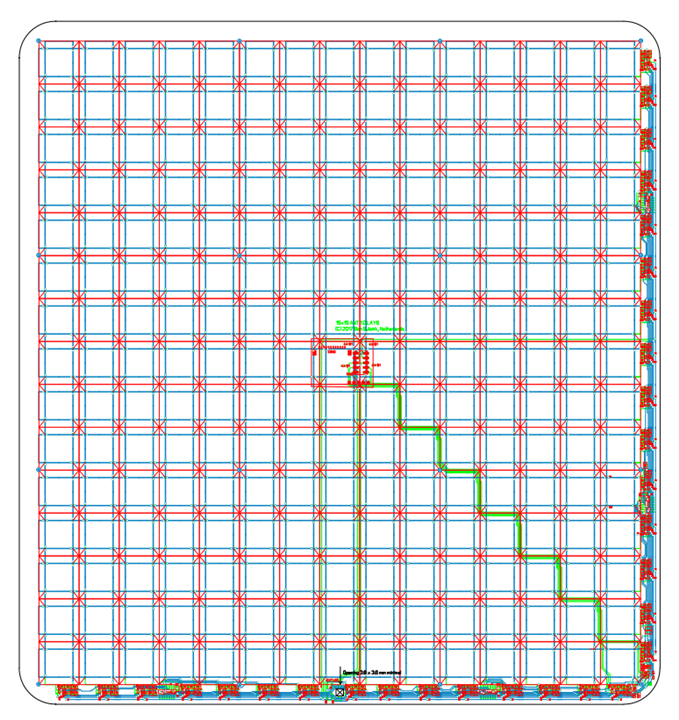
https://nfcgameboard.com/schematics/ - gives the idea, schematics, pcb, and similar, but for CLRC632. in short, we will make 15x15 grid board, using multiplex antennas - each antenna being 15x30mm, we will have then 30 antennas (15 rows, and 15 columns), instead of 225 small antennas, a matching circuit and one PN5180 IC. 
image

  • Sign in to reply
  • Cancel
Parents
  • jc2048
    0 jc2048 21 days ago

    "Does anyone has any idea on it and how to fix this?"

    Maybe it's trying to protect itself from your coil. I've never worked with NFC, but it seems obvious that there would need to be a way for the chip to protect itself from any items placed into the volume of the operating magnetic field that would, in effect, 'short' the field. A technology used extensively, like this is, needs to be pretty robust and difficult to kill. Imagine the economic mayhem if you could put a card reader out of action with a simple shorted turn. With a low frequency transformer, you'd rely on a fuse to get you out of trouble with a shorted secondary, but here it would either be indirect with a temperature monitor or directly by looking at the current supplied to the TX drive. It's possibly a bit complicated because of the need to power 16 tags simultaneously over a short period with the ISO scheme to enumerate them, so maybe it can't simply be a sensible limit easily within the dissipation limit of the chip - there possibly needs to be a time element to it as well.

    If the resonance of your makeshift coil with the parallel capacitance on the board is a long way from the operating frequency, it will look like a heavy load to the chip.

    Just a theory.

    If you know the parallel capacitance on the board, perhaps you could try the same capacitance alone with the coil, find the resonance, and then adjust the coil so the resonance moves back to 13.56MHz. Then your coil's inductance will match that of the one on the board. Use a good quality SMD cap, similar to the ones on the board (if you use an old leaded part, you'd just be measuring the self resonance of the cap). You could probably get it close enough to function, even if it's not spot on. After all, it can't be too hard a resonance because the signalling sidebands are so far away from the centre (800kHz is it?) and they'll want a reasonable signal level for the RX detection.

    The grid of coils is an interesting idea, but what would you use to do the multiplexing? Lots of RF relays?

    • Cancel
    • Vote Up 0 Vote Down
    • Sign in to reply
    • Verify Answer
    • Cancel
Reply
  • jc2048
    0 jc2048 21 days ago

    "Does anyone has any idea on it and how to fix this?"

    Maybe it's trying to protect itself from your coil. I've never worked with NFC, but it seems obvious that there would need to be a way for the chip to protect itself from any items placed into the volume of the operating magnetic field that would, in effect, 'short' the field. A technology used extensively, like this is, needs to be pretty robust and difficult to kill. Imagine the economic mayhem if you could put a card reader out of action with a simple shorted turn. With a low frequency transformer, you'd rely on a fuse to get you out of trouble with a shorted secondary, but here it would either be indirect with a temperature monitor or directly by looking at the current supplied to the TX drive. It's possibly a bit complicated because of the need to power 16 tags simultaneously over a short period with the ISO scheme to enumerate them, so maybe it can't simply be a sensible limit easily within the dissipation limit of the chip - there possibly needs to be a time element to it as well.

    If the resonance of your makeshift coil with the parallel capacitance on the board is a long way from the operating frequency, it will look like a heavy load to the chip.

    Just a theory.

    If you know the parallel capacitance on the board, perhaps you could try the same capacitance alone with the coil, find the resonance, and then adjust the coil so the resonance moves back to 13.56MHz. Then your coil's inductance will match that of the one on the board. Use a good quality SMD cap, similar to the ones on the board (if you use an old leaded part, you'd just be measuring the self resonance of the cap). You could probably get it close enough to function, even if it's not spot on. After all, it can't be too hard a resonance because the signalling sidebands are so far away from the centre (800kHz is it?) and they'll want a reasonable signal level for the RX detection.

    The grid of coils is an interesting idea, but what would you use to do the multiplexing? Lots of RF relays?

    • Cancel
    • Vote Up 0 Vote Down
    • Sign in to reply
    • Verify Answer
    • Cancel
Children
No Data
element14 Community

element14 is the first online community specifically for engineers. Connect with your peers and get expert answers to your questions.

  • Members
  • Learn
  • Technologies
  • Challenges & Projects
  • Products
  • Store
  • About Us
  • Feedback & Support
  • FAQs
  • Terms of Use
  • Privacy Policy
  • Legal and Copyright Notices
  • Sitemap
  • Cookies

An Avnet Company © 2026 Premier Farnell Limited. All Rights Reserved.

Premier Farnell Ltd, registered in England and Wales (no 00876412), registered office: Farnell House, Forge Lane, Leeds LS12 2NE.

ICP 备案号 10220084.

Follow element14

  • X
  • Facebook
  • linkedin
  • YouTube