element14 Community
element14 Community
    Register Log In
  • Site
  • Search
  • Log In Register
  • Community Hub
    Community Hub
    • What's New on element14
    • Feedback and Support
    • Benefits of Membership
    • Personal Blogs
    • Members Area
    • Achievement Levels
  • Learn
    Learn
    • Ask an Expert
    • eBooks
    • element14 presents
    • Learning Center
    • Tech Spotlight
    • STEM Academy
    • Webinars, Training and Events
    • Learning Groups
  • Technologies
    Technologies
    • 3D Printing
    • FPGA
    • Industrial Automation
    • Internet of Things
    • Power & Energy
    • Sensors
    • Technology Groups
  • Challenges & Projects
    Challenges & Projects
    • Design Challenges
    • element14 presents Projects
    • Project14
    • Arduino Projects
    • Raspberry Pi Projects
    • Project Groups
  • Products
    Products
    • Arduino
    • Avnet & Tria Boards Community
    • Dev Tools
    • Manufacturers
    • Multicomp Pro
    • Product Groups
    • Raspberry Pi
    • RoadTests & Reviews
  • About Us
    About the element14 Community
  • Store
    Store
    • Visit Your Store
    • Choose another store...
      • Europe
      •  Austria (German)
      •  Belgium (Dutch, French)
      •  Bulgaria (Bulgarian)
      •  Czech Republic (Czech)
      •  Denmark (Danish)
      •  Estonia (Estonian)
      •  Finland (Finnish)
      •  France (French)
      •  Germany (German)
      •  Hungary (Hungarian)
      •  Ireland
      •  Israel
      •  Italy (Italian)
      •  Latvia (Latvian)
      •  
      •  Lithuania (Lithuanian)
      •  Netherlands (Dutch)
      •  Norway (Norwegian)
      •  Poland (Polish)
      •  Portugal (Portuguese)
      •  Romania (Romanian)
      •  Russia (Russian)
      •  Slovakia (Slovak)
      •  Slovenia (Slovenian)
      •  Spain (Spanish)
      •  Sweden (Swedish)
      •  Switzerland(German, French)
      •  Turkey (Turkish)
      •  United Kingdom
      • Asia Pacific
      •  Australia
      •  China
      •  Hong Kong
      •  India
      •  Japan
      •  Korea (Korean)
      •  Malaysia
      •  New Zealand
      •  Philippines
      •  Singapore
      •  Taiwan
      •  Thailand (Thai)
      •  Vietnam
      • Americas
      •  Brazil (Portuguese)
      •  Canada
      •  Mexico (Spanish)
      •  United States
      Can't find the country/region you're looking for? Visit our export site or find a local distributor.
  • Translate
  • Profile
  • Settings
Industrial Automation
  • Technologies
  • More
Industrial Automation
Blog Tiny Robots Could Collect Lithium Ions from Seawater
  • Blog
  • Forum
  • Documents
  • Quiz
  • Events
  • Polls
  • Files
  • Members
  • Mentions
  • Sub-Groups
  • Tags
  • More
  • Cancel
  • New
Join Industrial Automation to participate - click to join for free!
  • Share
  • More
  • Cancel
Group Actions
  • Group RSS
  • More
  • Cancel
Engagement
  • Author Author: Catwell
  • Date Created: 12 Aug 2026 7:23 PM Date Created
  • Views 17 views
  • Likes 1 like
  • Comments 0 comments
  • alternative energy
  • robotics
  • lithium
  • robot
  • on_campus
  • university
  • innovation
Related
Recommended

Tiny Robots Could Collect Lithium Ions from Seawater

Catwell
Catwell
12 Aug 2026

image

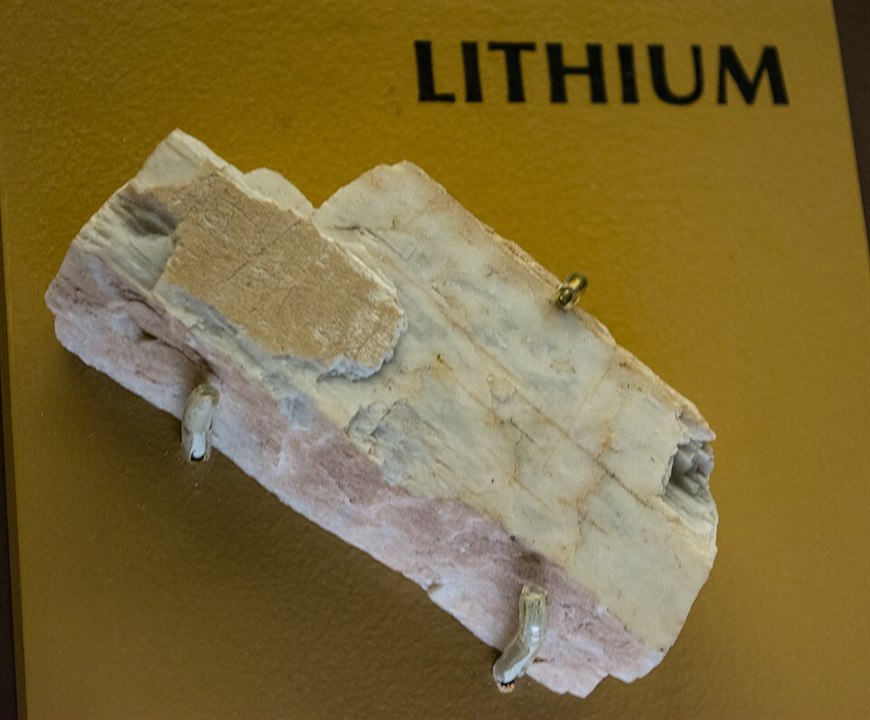
Lithium ore. (Image Credit: James St. John. Used under CC BY-SA 2.0 via Wikimedia Commons)

Texas A&M University researchers are developing autonomous nanobots designed to dive in seawater to retrieve lithium ions. In turn, seawater can serve as an alternative source of lithium for EVs, batteries, and energy storage. They believe this method may be more efficient than mining for the mineral. The U.S. Department of Energy is backing this project with a $1 million award.

“Unlike traditional mining that digs up land or pumps brine from underground and requires massive amounts of energy, these autonomous micro/nanorobots move freely through seawater to harvest lithium with virtually zero infrastructure footprint,” said Dr. Jingjing (Jenny) Qiu in the J. Mike Walker ’66 Department of Mechanical Engineering. 

The fish-like robot relies on micro- and nanoparticles, activated by light or other external forces, to swim through seawater. Swimming like fish allows them to find and capture lithium ions instead of using stationary extraction. Once they retrieve the lithium, magnetic fields pull the robots out of the water. The microparticles can then be used again.  

“Seawater lithium recovery could provide a stable alternative source to address the growing global demand for lithium,” Qiu said. “Our goal is to develop a technology that supports a more reliable domestic lithium supply chain while reducing the environmental footprint associated with traditional extraction methods.”

The team is working to improve the technology’s performance, test lithium recovery efficiency, and develop techniques for larger-scale demonstrations. They also want to create a cheaper, reusable, and continuously running process.

However, the team still needs to address a few obstacles. For example, separating lithium from other minerals in seawater may be difficult. These robots also need to be sufficiently durable to survive the harsh and complex marine environment. Meanwhile, the technology must undergo testing at a larger scale before industrial deployment. The researchers plan to evaluate the potential environmental effects of deploying the system.  

Have a story tip? Message me here at element14.

  • Sign in to reply
element14 Community

element14 is the first online community specifically for engineers. Connect with your peers and get expert answers to your questions.

  • Members
  • Learn
  • Technologies
  • Challenges & Projects
  • Products
  • Store
  • About Us
  • Feedback & Support
  • FAQs
  • Terms of Use
  • Privacy Policy
  • Legal and Copyright Notices
  • Sitemap
  • Cookies

An Avnet Company © 2026 Premier Farnell Limited. All Rights Reserved.

Premier Farnell Ltd, registered in England and Wales (no 00876412), registered office: Farnell House, Forge Lane, Leeds LS12 2NE.

Follow element14

  • X
  • Facebook
  • linkedin
  • YouTube