


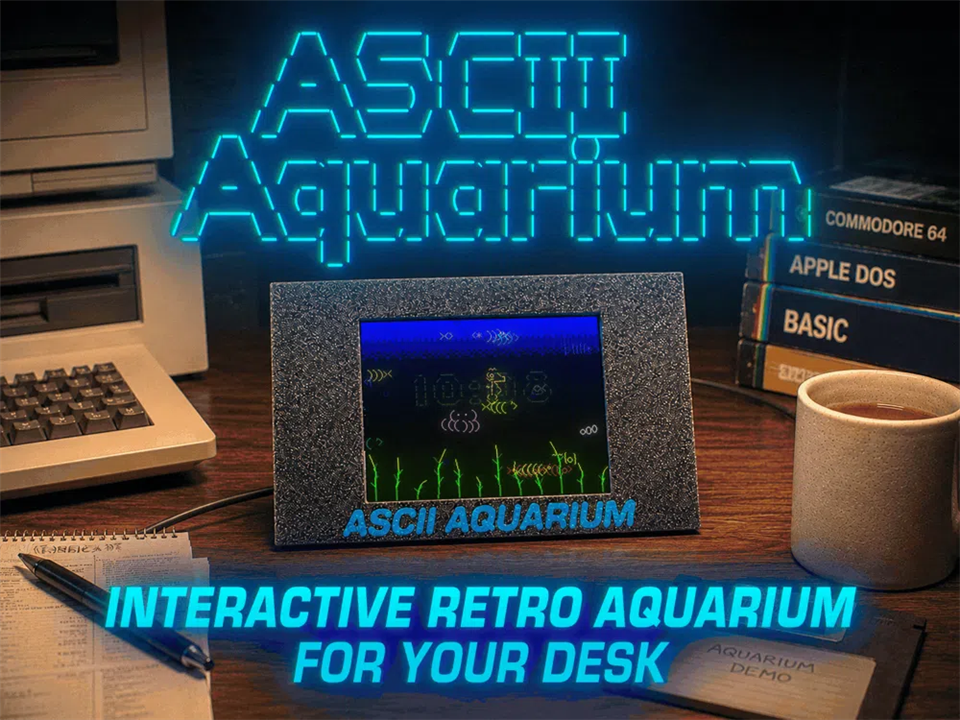
POWER-PILL came up with an interactive aquarium that runs on ESP32 hardware. (Image Credit: POWER-PILL)
I love, love, love, love this. I'm a huge fan of ASCII art, probably due to my BBS days. This is one of those situations where I'm thinking, "why didn't I come up with that?" So, cool.
There are countless nifty devices engineers can make, including a tiny animated aquarium. POWER-PILL’s creation takes the prize with their ASCII Aquarium, a mini underworld with fish and other sea creatures. Running on an ESP32 Cheap Yellow Display (CYD), the device uses lightweight real-time graphics to make everything come to life.
The ASCII Aquarium has swimming ASCII fish, rising bubbles, swaying seaweed, tap-to-feed flakes, and other visitors like a seahorse and an octopus. Additionally, it comes with touch controls, Wi-Fi time synchronization, persistent settings, and SD-card screenshot capture.
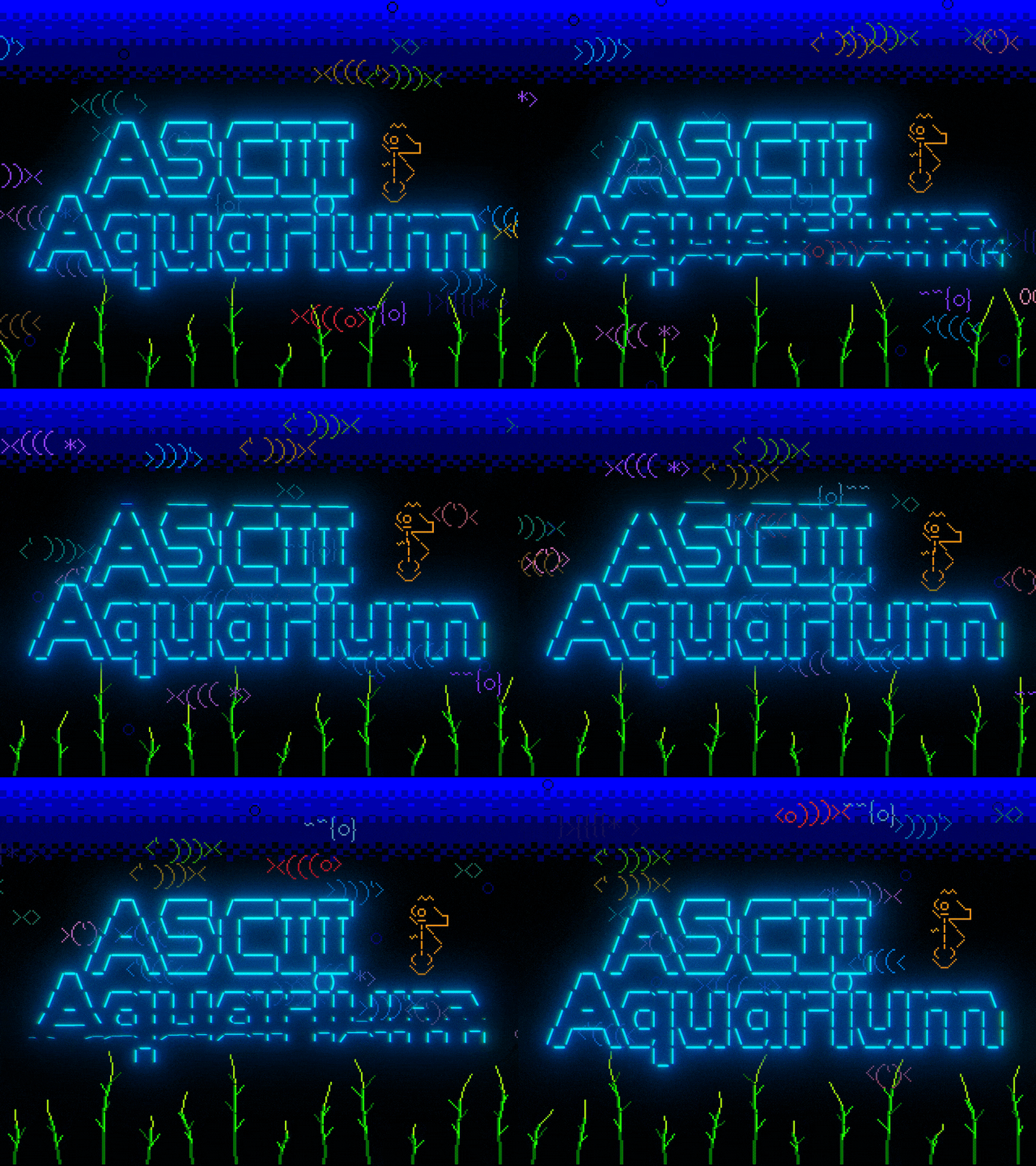
Great! GIFs work here. This is mesmerizing. (Image Credit: POWER-PILL)
However, instead of a video loop, the aquarium is generated live on the ESP32 display. Fish wander around the tank, avoid one another, school, turn around, adjust brightness, and chase food if you tap the glass. And it’s actually very simple to install the ASCII Aquarium through the browser-based flasher. All you need to do is connect a supported CYD board via a USB data cable, open the flasher page in the Chrome or Edge browser, click “Flash ASCII Aquarium”, select the CYD serial port, and allow the installer to complete the process.
POWER-PILL says the firmware is designed for the ESP32-2432S028R CYD board. This comes with the ESP32 MCU, an ILI9341 320x240 display, an XPT2046 resistive touchscreen, and an optional SD card support for BMP screenshots and frame capture. The creator also says that other CYD-style boards may appear similar, but use different display, touch, or SD hardware, which could affect compatibility.
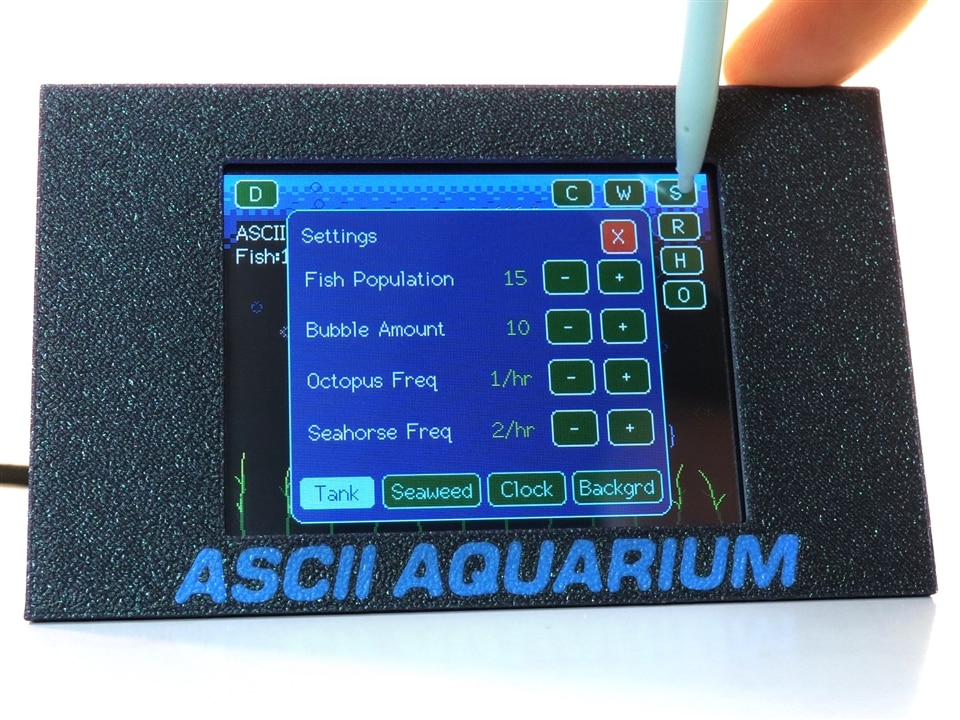
Users can customize the tiny aquarium by adjusting fish population, bubble amount, and visitor frequency. (Image Credit: POWER-PILL)
The ASCII Aquarium has interactive tools and customization for the user. For example, by tapping the top-left corner of the screen, you can see a hidden HUD, and tapping the tank drops food for the fish. Meanwhile, users can adjust fish behavior, bubbles, visitors, seaweed, clock, and backgrounds, including blue fade, black, purple fade, and a randomized SpongeBob-inspired floral backdrop. A Wi-Fi panel features network scan, saved credentials, on-screen keyboard, reconnect handling, and internet time sync.
The capture panel saves BMP frame sequences to the SD card. However, this is a slow process as the tank simulation is slowed down so all the frames can be recorded. Lastly, you can press and hold the BOOT button on the back of the CYD to save BMP screenshots to the SD card.
Although the ASCII Aquarium runs on compact ESP32 hardware, it comes bundled with a wide range of features. POWER-PILL’s aquarium supports multiple glyph species with different colors, depth shading, school behavior, wandering patterns, and smooth screen wraparound. Users can also adjust the fish population ranging from 6 to 36, bubble count from 0 to 50, and animated seaweed with tunable sway, randomness, and length settings. Octopus, seahorse, and other characters can appear at selectable spawn rates. A built-in clock supports manual and internet-synced time, 12-hour and 24-hour time.
Have a story tip? Message me here at element14.
