


Prelude - Age industrial age
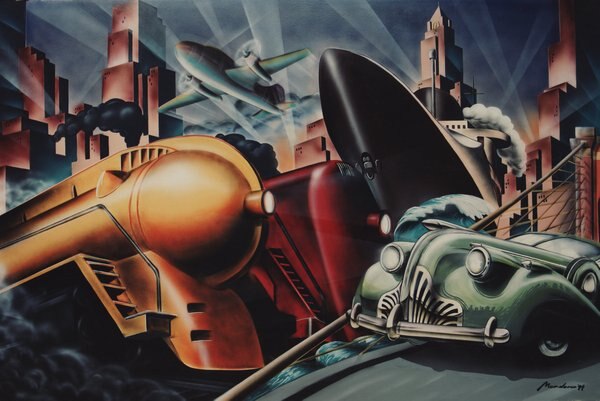
The industrial age came about with the advent of the desire of people to live better lives and have access to facilities. These higher standards of living were attained by the use of machines and chemicals and so the agricultural society was slowly supplanted by the Industrial one. People moved to careers in the industry which was based on production of all kinds of things from electricity to electric products, from transportation and construction to consumer appliances etc. The jobs were well paying and cities grew where there were once farms and they saw growth. Happy times!
(Image: http://awtew.deviantart.com/art/Industrial-Age-2-115744009)
The industrial revolution changed our quality of life, social progress rate and even our education system. In the last hundred years or so the industry has flourished and the economy has been focused on the marketing mix with a focus on making money by selling things i.e. retail opportunities. People buy products that can make their lives easier like the air conditioner, cell phone and even the kitchen sink. Service opportunities presented themselves for the maintenance of machines for the most part and that was it. Moore's law successfully ruled and computers grew smaller in size. So what next?
The marketing problem
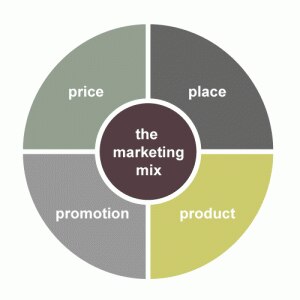
Inventions are still happening like the driver-less car and hoverboards, but from the point of marketing, there began a slight problem. Marketing works on the concept of needs, wants and demands and then designing the marketing mix around it. Every person has a 'need' which he fulfills with 'wants' e.g. I need hot water for a bath in the morning in winters, so people sell the water heater as the product. Its easy right?... Well not exactly. With so much of industrial advancements, there is a lot of competition and everyone wants to sell their water heater so marketers come up with the 4Ps - Product(and its features), Place(where to sell it- try selling icecream in Alaska?), Promotion(Let them know about the product) and Price(at how much). This works for a lot of things and as long as people see their needs fulfilled, they will pay for the product and even extra features.
The other side is to create a demand of a product like an iPhone- Can you do without it? Probably. Do you want the shiny new toy? Yes? Thats a demand. The term niche marketing is used for products which are intended for a smaller audience who will pay(a little extra) for a specialized product like a Porsche.
(image: http://www.marketingplan.net/marketing-mix/)
So what does all this have to do with IOT? Well everything! In the industrial and consumer market, products kept on improving and they still are but the rate of improvement has decreased because of the quality of products being made. As consumers, we bought laptops which needed upgrades until Moore's Law ceased to be applicable and we now have laptops that can take on applications for a few years. Similarly in the industry like transport and production, the machines have a longer life and can withstand the test of time. Now everyone has a car and laptop and industries are doing OK. Now what? What do you sell to people who already have everything?
We find a problem to solve in that case!
The next step in technology:
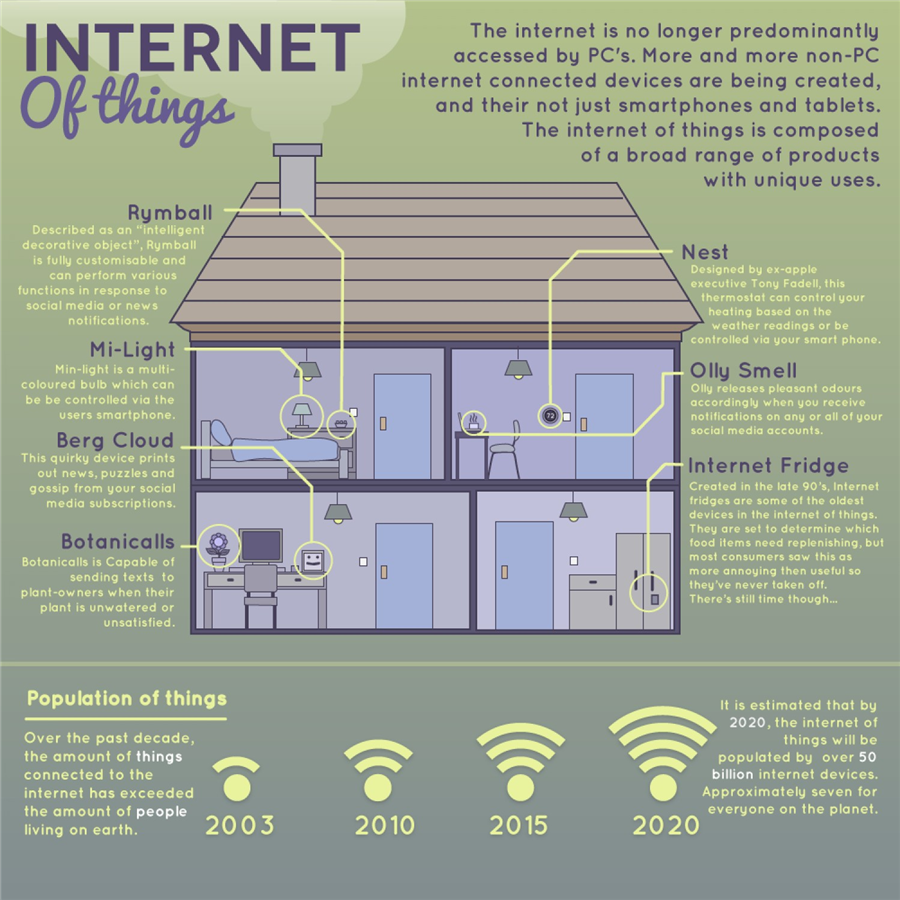
Retail opportunities not growing as before, it was time to find another market- Service! The obvious next requirement of people with a lot of gadgets and gizmos was to refine the services. This is where the internet of things fits in. Lets take an example. Our regular home thermostat controls indoor temperatures and it was simple. The Google NEST goes a step ahead by connecting to a service and letting to monitor and control it over the Internet. How does google profit from this service? Ads of course! Buts thats OK. Is that really bad? Well no and its not new either. We pay for TV subscriptions so why not these services? Additionally its not completely a marketing hoax either. We pay for something far more than wires and silicon... we pay for information.
(Image: http://visual.ly/internet-things-1)
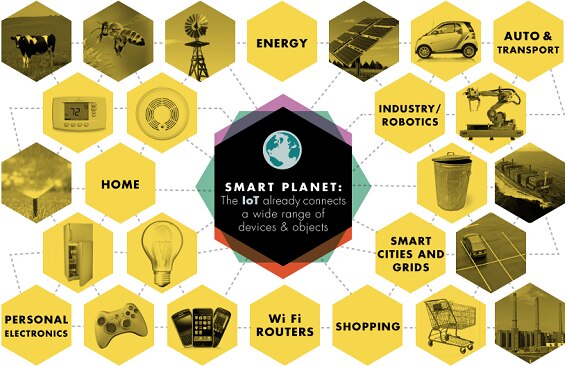
The internet of things is about connecting sensors and actuators to the Internet. Thats simple enough. So we can know the temperature of our house over the Internet? So I can then control an appliance from the web? Thats useful but does everyone need it? Actually thats just the surface of it. Remote control and alerts are just a small part of how IOT can fit into our lives. The real power IOT is with the cloud or services online. Once the sensors transmit data to the internet, we can store them in a database. This data can be then used by data analysts or algorithms to find patterns amongst various sensed parameters. E.g. You may be turning the thermostat to 22 degrees every night at 8 PM if outside temperatures are 25 degrees and to 25 degrees in the morning at around 4am. Patterns in thermostats around the year depending on the weather etc if recognized and converted to rules can make your thermostat a Smart Thermostat!
(Image: https://datafloq.com/read/internet-create-smart-world-infographic/400)
On the industrial side, you may be able to track packages automatically using GPS based systems and if a package is getting delayed, an alert may be generated to you to do something about it. Similarly information about the shop floor and status of the machines operating can be transmitted directly to the service engineer can quicken repairs and reduce downtime. We are already using this kind of data in our lives today e.g. we check weather reports of destination holiday spots before we depart and we use alert services for things like TV shows and due bill payments. The internet of things moves the information gathering to the next level and into your house.
Information Society
The postlude to the industrial society is the information society where it will not supplant the industry but rather supplement it. It works by using information instead of machines and chemicals to progress our economy, social and educational systems. You might be thinking how much more information could we possibly need. Well the answer is a lot more! Till now we are dependent on general information about the world around us and the trends there of. The next step is collecting and analyzing information of every single individual from health, to finance and even their daily rituals. Imagine a world where the refrigerator wont let you eat ice-cream because your office chair says your weight has been increasing recently. Or the TV would only allow channels with soothing programs and music because you had a rough day at work and your heart rate and blood pressure is already high.
This means a lot of information needs to be generated and then stored and then transported and analyzed. This opens up a whole new market on top of the food chain will be the information store and analysis jobs. Information analysis will generate more data about habits and actions to be performed. This gives the data storage industry a lot of opportunities. Since this data is critical and can also be misused, data security will be a big selling point of a lot of new services. If thats not enough, the efficient transport of this data is also necessary which gives the network software and hardware guys a lot to do. Lastly it is manufacturers of hardware and software of end devices and gateways and that is what we focus on these days. There is a much larger world coming where the handling and processing of data will be in high demand.
(Image: http://www.intomobile.com/2014/02/19/infographic-look-internet-things/)
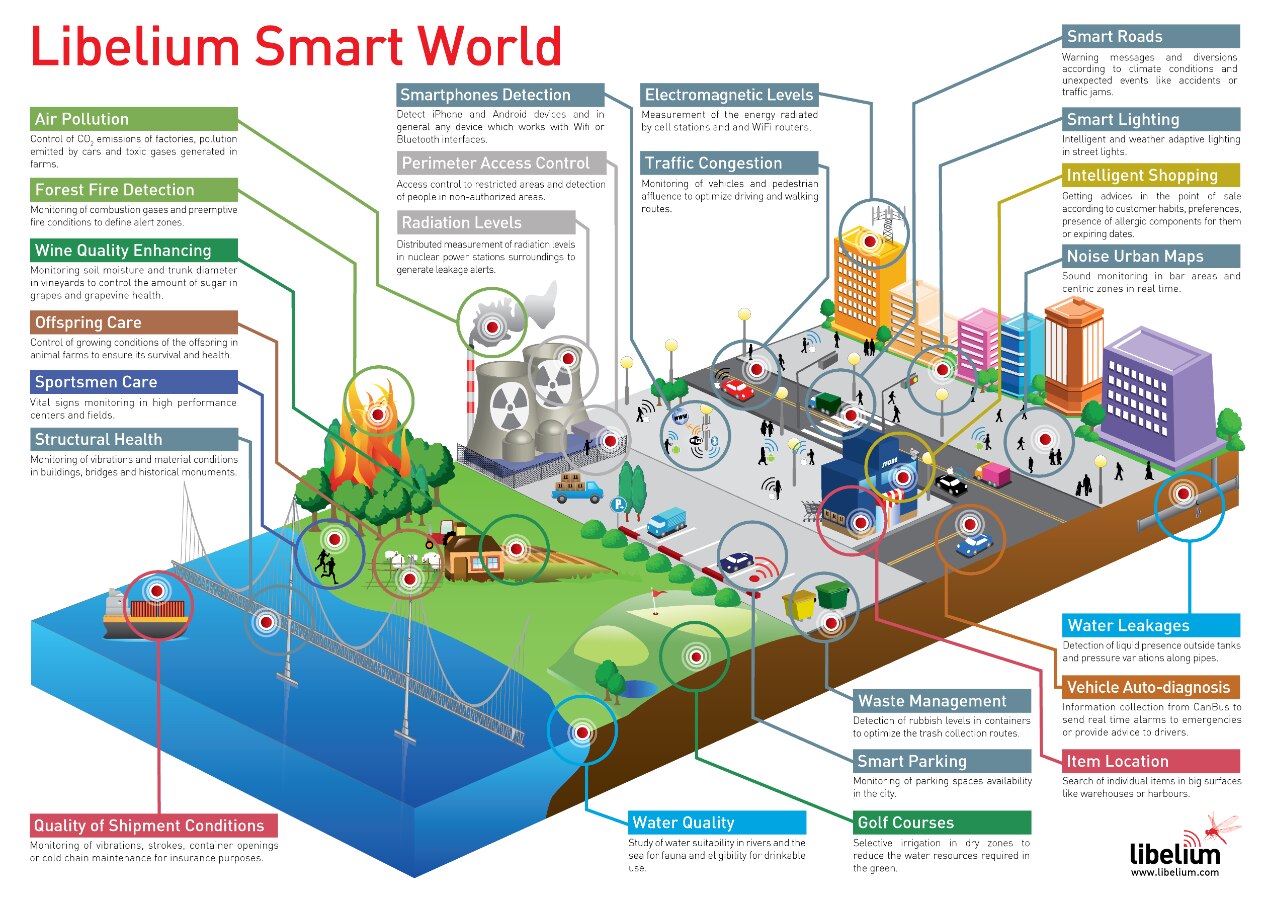
The same is applicable for infrastructure and city wide IOT. Recently a lot of companies including Cisco have presented a lot of interest in IOT for smart cities. (http://www.cisco.com/web/about/ac79/docs/ps/motm/IoE-Smart-City_PoV.pdf). The smart Santander Project (http://www.smartsantander.eu/) and Hamburgs plans (http://newsroom.cisco.com/release/1414144/City-of-Hamburg-and-Cisco-Launch-Plans-for-Smart-City-of-the-Future-and-Lay-Foundation-for-a-Partner-Ecosystem) are great examples. Everyday there is news about new smart city proposals. A major reason is that city wide resources are getting expensive and scarce. The objective is to effectively utilize resources and manage infrastructure while providing services to people.
The entire concept works around information and operations on it.
The "where house" of data
When considering architectures of IOT or connected devices, there are two broad categories to be considered:
1. Cloud hosting of data and analytics
2. Local hosting of data and analytics
Either of the two has distinct advantages and disadvantages.
-> Cloud hosting of data and analytics
When data is transported to a cloud based service like a database and rule engine, it qualifies as service product. It would be a preferred means for corporates as they can charge fees. The advantage is that the data is managed by a group of experts and the systems are maintained by professionals. You pay for the expertise. There are other advantages such as decentralization of data etc as well.
The disadvantages however are more. All that data needs to be transmitted over a network. Imagine 50 million devices talking over a network. Unless the data is really compressed, this will cause network problems of all sorts. Additionally Internet connectivity is a must and might incur additional cost. Another disadvantage is that the data is under the control of the cloud provider which may seem like a privacy concern for some.
-> Local hosting of data and analytics
The data can be stored locally as well. Both the architectures will have a gateway device which will allow us to "funnel" the data from various devices to its destination. The gateway will also function to monitor health of the devices as well as their management. This enables cost reductions but on the other hand makes devices dependent on a local communication technology. The gateway here can store the data and allow users to access the systems remotely. The advantages and disadvantages are totally flipped from the cloud hosting case and the selection of architecture is a matter of preference and requirement.
Standardization and simplification - Protocols and software stacks
In order for IOT devices to inter-operate its is important for standards to be set. A discussion on this has been done too many times and too much in detail to be repeated here. My take is that today there are far too many standards and the only thing I would be looking forward to is 802.15.4 and zigbee for low power RF application because of the large adaption and mesh networking capabilities. 6LowPAN is also worth looking into and might rise in the future. I personally have not gone into the details but the specs look impressive. For working on the Internet and communication, MQTT is getting close to becoming the IOT god protocol and will allows the future unification of IOT devices on the Internet. CoAP is also getting attention and is worth looking at. LWM2M relies on CoAP for management of devices across networks.
I am really a fan of iot.eclipse.org and not afraid to admit that their projects are great. The objective of projects such as Kura and Mihini for creating IOT gateways is allowing people to collaborate and giving software developers capabilities for IOT development. I myself do not code Java but it seems to be the most used language which gives IOT developers. Software developers need not have information about the underlying hardware which makes developers comfortable and facilitates quicker development.
Conclusion
From marketing to better cities and software projects, the future is definitely connected. The future will see things connected to the Internet but I a sure there will be a class of devices and systems which will still be standalone. The private cloud is coming which will give users a small low powered storage and gateway solution in their homes. It will sit besides the wifi router and allow devices such as IOT sub devices to be connected to the internet. You might end up paying for managing and securing a single gateway and I think the first device will come soon. Our lives will become better and things more efficient but the true power of IOT is making people realize the currency of information in comparison to money. Here's hoping for a better future...


