element14 Community
element14 Community
    Register Log In
  • Site
  • Search
  • Log In Register
  • Community Hub
    Community Hub
    • What's New on element14
    • Feedback and Support
    • Benefits of Membership
    • Personal Blogs
    • Members Area
    • Achievement Levels
  • Learn
    Learn
    • Ask an Expert
    • eBooks
    • element14 presents
    • Learning Center
    • Tech Spotlight
    • STEM Academy
    • Webinars, Training and Events
    • Learning Groups
  • Technologies
    Technologies
    • 3D Printing
    • FPGA
    • Industrial Automation
    • Internet of Things
    • Power & Energy
    • Sensors
    • Technology Groups
  • Challenges & Projects
    Challenges & Projects
    • Design Challenges
    • element14 presents Projects
    • Project14
    • Arduino Projects
    • Raspberry Pi Projects
    • Project Groups
  • Products
    Products
    • Arduino
    • Avnet & Tria Boards Community
    • Dev Tools
    • Manufacturers
    • Multicomp Pro
    • Product Groups
    • Raspberry Pi
    • RoadTests & Reviews
  • About Us
    About the element14 Community
  • Store
    Store
    • Visit Your Store
    • Choose another store...
      • Europe
      •  Austria (German)
      •  Belgium (Dutch, French)
      •  Bulgaria (Bulgarian)
      •  Czech Republic (Czech)
      •  Denmark (Danish)
      •  Estonia (Estonian)
      •  Finland (Finnish)
      •  France (French)
      •  Germany (German)
      •  Hungary (Hungarian)
      •  Ireland
      •  Israel
      •  Italy (Italian)
      •  Latvia (Latvian)
      •  
      •  Lithuania (Lithuanian)
      •  Netherlands (Dutch)
      •  Norway (Norwegian)
      •  Poland (Polish)
      •  Portugal (Portuguese)
      •  Romania (Romanian)
      •  Russia (Russian)
      •  Slovakia (Slovak)
      •  Slovenia (Slovenian)
      •  Spain (Spanish)
      •  Sweden (Swedish)
      •  Switzerland(German, French)
      •  Turkey (Turkish)
      •  United Kingdom
      • Asia Pacific
      •  Australia
      •  China
      •  Hong Kong
      •  India
      •  Japan
      •  Korea (Korean)
      •  Malaysia
      •  New Zealand
      •  Philippines
      •  Singapore
      •  Taiwan
      •  Thailand (Thai)
      •  Vietnam
      • Americas
      •  Brazil (Portuguese)
      •  Canada
      •  Mexico (Spanish)
      •  United States
      Can't find the country/region you're looking for? Visit our export site or find a local distributor.
  • Translate
  • Profile
  • Settings
Power & Energy
  • Technologies
  • More
Power & Energy
Alt Energy Solutions & Tech Researchers want to replace copper with aluminum as a new conductor for power systems
  • Blog
  • Forum
  • Quiz
  • Documents
  • Polls
  • Events
  • Mentions
  • Sub-Groups
  • Tags
  • More
  • Cancel
  • New
  • Share
  • More
  • Cancel
Group Actions
  • Group RSS
  • More
  • Cancel
Engagement
  • Author Author: Eavesdropper
  • Date Created: 14 Feb 2011 6:58 PM Date Created
  • Views 664 views
  • Likes 0 likes
  • Comments 1 comment
  • energy_transfer
  • copper
  • on_campus
  • alimunim
  • university
  • conductiviy
  • innovation
Related
Recommended

Researchers want to replace copper with aluminum as a new conductor for power systems

Eavesdropper
Eavesdropper
14 Feb 2011
image
 
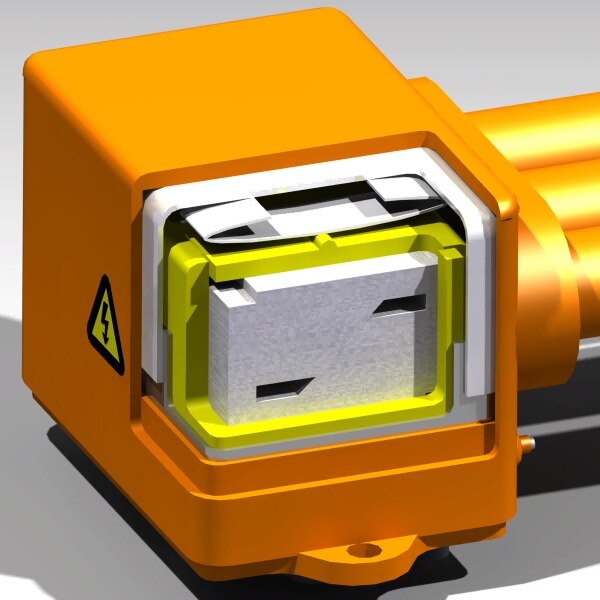
Scientists from the Technische Universitat Munchen (TUM) are collaborating with engineers from BMW to develop the means to replace copper with aluminum as a conductor in on-board power systems. ‘But why’, you might ask?  Price. Copper is the conductive material of choice; however, in comparison to aluminum copper is heavy and expensive. With electric power and electronics playing an ever-increasing role in all kinds of vehicles, and in particular for fully electric vehicles, the switch to the cheaper and lighter aluminum could be an attractive option. Before the lighter and less expensive aluminum can replace copper in power supply systems, a number of technological challenges need to be surmounted. When temperatures are high, as one example, aluminum displays a distinct creep behavior. Conventional connectors could thus not be used, as they would become loose with time. A possible alternative, the use of aluminum-based elements in the cables and copper-based elements in the connection zone is fraught with difficulties. Since there is contact between the copper and aluminum cable is a large electrochemical potential, such cables would be greatly endangered by corrosion. So the scientists developed the aluminum-based LEIKO concept to counteract these difficulties. A sheet metal cage (an electromagnetic compatibility requirement anyway) enhances the mechanical stability of the plug and guarantees the long-term support of the contact pressure spring. Because the necessary contact force is no longer provided by the contact elements themselves, the originally problematic 'creep' behavior of aluminum turns into a contact stabilizing, and thus, positive property. This, in turn, also guarantees a constant contact force over a lifetime of ten years. To this end the researchers came up with a special wedge-shaped geometry for the aluminum contacts. The aluminum creep now leads to the two contacts snuggling closer and closer together over time, thereby rendering the electrical connection better yet. Moreover, the consistent use of aluminum alloys and the application of precious metal plating made it possible to relocate the formation of corrosion-prone local elements to less critical locations in the system. Initial results indicate that the material substitution will lead to significant improvements in weight, cost, and ultimately emissions. For more information please visit: http://translate.google.com/translate?hl=en&sl=de&tl=en&u=http%3A%2F%2Fwww.tum.de%2F&anno=2

Eavesdropper
  • Sign in to reply
  • M0DCD
    M0DCD over 15 years ago

    May I make a few comments that I suspect may have been mutterred under the breath of a few engineers.


    Automotive environments are not healthy ones for any sort of connection - the temperature cycling and potential exposure to moisture do nothing for reliablility. One fear is that the sealing in the connector will degrade over time and then the electrolytic corrosion starts in earnest. This is largely why aluminium is not used in power distribution if it can't be helped.


    There is a move towards 42V systems in automotive, but no single manufacturer has made this leap as yet. The advantage is that you can "bus" the power in thinner cabling (less i2R loss) and use canbus control rather than more complex looming (reduced manufacturing complexity). It will however leav a lot of the "add-on" market floundering.


    A 10 year reliability is not good enough for automotive! With ABS and electric PAS systems these need to be 100% for the life of the vehicle.

    • Cancel
    • Vote Up 0 Vote Down
    • Sign in to reply
    • More
    • Cancel
element14 Community

element14 is the first online community specifically for engineers. Connect with your peers and get expert answers to your questions.

  • Members
  • Learn
  • Technologies
  • Challenges & Projects
  • Products
  • Store
  • About Us
  • Feedback & Support
  • FAQs
  • Terms of Use
  • Privacy Policy
  • Legal and Copyright Notices
  • Sitemap
  • Cookies

An Avnet Company © 2026 Premier Farnell Limited. All Rights Reserved.

Premier Farnell Ltd, registered in England and Wales (no 00876412), registered office: Farnell House, Forge Lane, Leeds LS12 2NE.

ICP 备案号 10220084.

Follow element14

  • X
  • Facebook
  • linkedin
  • YouTube