


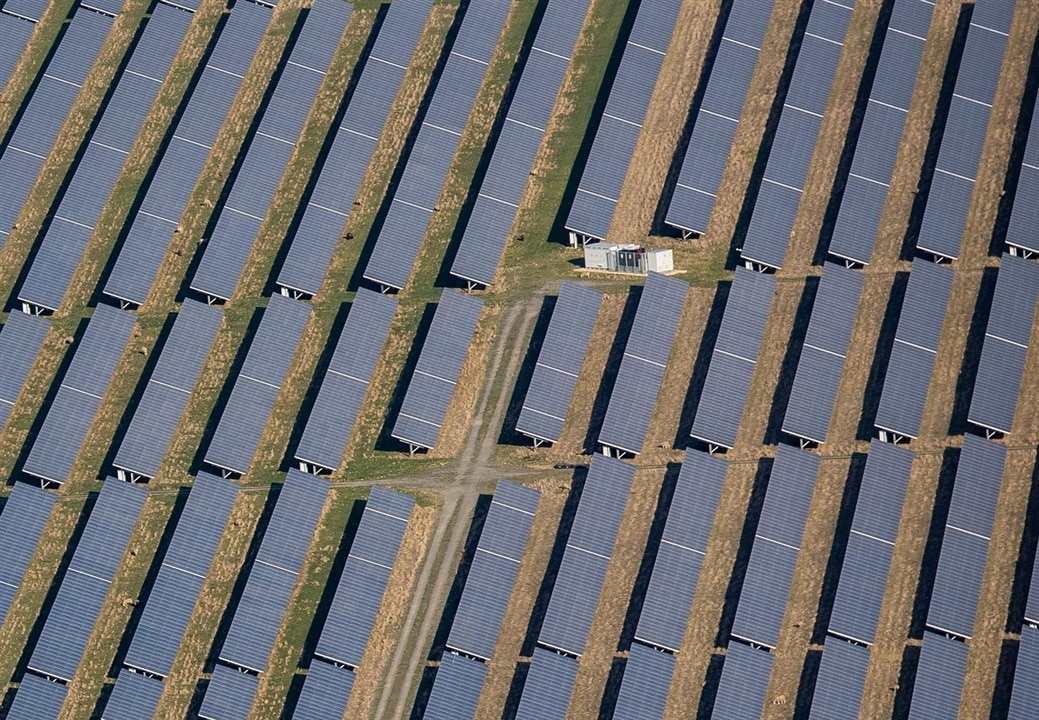
A solar farm. (Image Credit: TheOtherKev/pixabay)
Is that bad?
In the UAE, where water is harder to come by than oil, cloud seeding or desalination plants produce freshwater for everyone living there. Now, a 2024 modeling study says huge solar farms could theoretically impact the weather. In the simulations, dark solar panels absorbed sunlight and warmed the air above them. This may create stronger updrafts that lead to cloud formation and rainfall if there is sufficient moisture.
A 2020 study looked into what happens if solar farms took up over 300,000 miles2 in the Sahara Desert. The team determined solar farms of that size have the risk of making more rain fall and allowing plants to grow. However, that also means it would have a significant effect on the atmospheric circulation. As a consequence, tropical rain belts have the potential to move further north, affecting the Amazon.
The 2024 modeling study team tested whether weather patterns would be changed by real-world-sized solar farms. They used a sophisticated climate model developed by the U.S. National Center for Atmospheric Research, which takes land surface changes into consideration. Their simulations represented solar farms as dark surfaces that soaked up 95% of the sun’s energy. Once the solar farms were larger than 9 miles2, the extra heat that the panels absorbed led to stronger convection, which forms clouds.
Even then, atmospheric moisture must be present. The simulations revealed that the Persian Gulf’s humid, high-altitude winds fit that requirement. Given favorable conditions, the model determined that a 12 mile2 solar farm may raise rainfall by almost 600,000 meters3. It’s worth noting that the solar panels in the simulation had darker surfaces than those produced by manufacturers.
The researchers hope to test this concept in real-world settings. For example, China and other places have sufficiently-sized solar farms that could work for those tests. Installing them in specific areas with small adjustments, like darkening the panels and planting drought-resistant vegetation, could replicate the effects in the model. In addition, the team is validating the model against field data from solar farms to improve the simulations. They hope that other regions will notice the rainmaking potential and build more solar farms.
Have a story tip? Message me here at element14.
Top Comments