


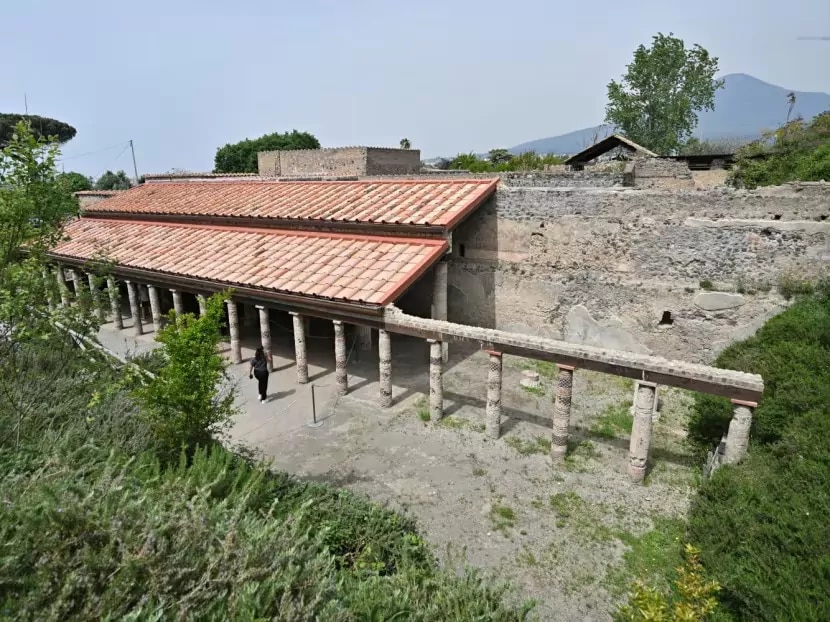
Roof tiles in the Villa of the Mysteries produce power. (Image Credit: Pompeii Archaeological Park)
Renewables in ancient cities?
While solar panels produce clean energy, there’s usually a catch. The problem? Solar panels affect the appearance of historic buildings. That change makes them unsuitable for protected heritage sites. To solve that issue, manufacturers developed roof tiles that hide photovoltaic cells under materials that resemble traditional roofing. This allows buildings to generate power without sacrificing their historical appearance.
The Villa of the Mysteries in Pompeii has photovoltaic cells integrated into roof tiles that look like Roman tiles from the street. These tiles, developed by AHLUX ITALIA S.r.l. --- the VISEN division, produces power for the building’s lighting system while preserving the archaeological design. Now, Pompeii is considering adding more of these solar roof tiles to other parts of the archaeological park---far from the power grid.
The Portuguese city of Évora has also used renewables this way. In the city hall, photovoltaic shingles have been installed on the roof. The panels generate 20 kilowatt-peak (kWp) of electricity to power the building while ensuring its historical appearance remains intact.
Manufacturers create these photovoltaic roof tiles by embedding solar cells in resin. After sealing them under another protective layer, they look like a roof tile, which still works as a solar panel.
This solar installation is part of the European POCITYF project that helps historic cities adopt renewable energy. The project also assesses other technologies like solar canopies and photovoltaic glass roofs placed in school courtyards. Both Evora and Alkmaar, a Dutch city, are evaluating how these technologies could be deployed across Europe in historic cities.
Have a story tip? Message me here at element14.

