element14 Community
element14 Community
    Register Log In
  • Site
  • Search
  • Log In Register
  • Community Hub
    Community Hub
    • What's New on element14
    • Feedback and Support
    • Benefits of Membership
    • Personal Blogs
    • Members Area
    • Achievement Levels
  • Learn
    Learn
    • Ask an Expert
    • eBooks
    • element14 presents
    • Learning Center
    • Tech Spotlight
    • STEM Academy
    • Webinars, Training and Events
    • Learning Groups
  • Technologies
    Technologies
    • 3D Printing
    • FPGA
    • Industrial Automation
    • Internet of Things
    • Power & Energy
    • Sensors
    • Technology Groups
  • Challenges & Projects
    Challenges & Projects
    • Design Challenges
    • element14 presents Projects
    • Project14
    • Arduino Projects
    • Raspberry Pi Projects
    • Project Groups
  • Products & Partners
    Products & Partners
    • Arduino
    • Avnet & Tria Boards Community
    • Dev Tools
    • Manufacturers
    • Multicomp Pro
    • Product Groups
    • Raspberry Pi
    • RoadTests & Reviews
  • About Us
    About the element14 Community
  • Store
    Store
    • Visit Your Store
    • Choose another store...
      • Europe
      •  Austria (German)
      •  Belgium (Dutch, French)
      •  Bulgaria (Bulgarian)
      •  Czech Republic (Czech)
      •  Denmark (Danish)
      •  Estonia (Estonian)
      •  Finland (Finnish)
      •  France (French)
      •  Germany (German)
      •  Hungary (Hungarian)
      •  Ireland
      •  Israel
      •  Italy (Italian)
      •  Latvia (Latvian)
      •  
      •  Lithuania (Lithuanian)
      •  Netherlands (Dutch)
      •  Norway (Norwegian)
      •  Poland (Polish)
      •  Portugal (Portuguese)
      •  Romania (Romanian)
      •  Russia (Russian)
      •  Slovakia (Slovak)
      •  Slovenia (Slovenian)
      •  Spain (Spanish)
      •  Sweden (Swedish)
      •  Switzerland(German, French)
      •  Turkey (Turkish)
      •  United Kingdom
      • Asia Pacific
      •  Australia
      •  China
      •  Hong Kong
      •  India
      •  Japan
      •  Korea (Korean)
      •  Malaysia
      •  New Zealand
      •  Philippines
      •  Singapore
      •  Taiwan
      •  Thailand (Thai)
      •  Vietnam
      • Americas
      •  Brazil (Portuguese)
      •  Canada
      •  Mexico (Spanish)
      •  United States
      Can't find the country/region you're looking for? Visit our export site or find a local distributor.
  • Translate
  • Profile
  • Settings
Power & Energy
  • Technologies
  • More
Power & Energy
Blog ANDRITZ is Replacing the Old Hickory Dam Equipment
  • Blog
  • Forum
  • Quiz
  • Documents
  • Polls
  • Events
  • Mentions
  • Sub-Groups
  • Tags
  • More
  • Cancel
  • New
  • Share
  • More
  • Cancel
Group Actions
  • Group RSS
  • More
  • Cancel
Engagement
  • Author Author: Catwell
  • Date Created: 18 Sep 2026 8:00 AM Date Created
  • Views 606 views
  • Likes 4 likes
  • Comments 2 comments
  • hydroelectric
  • Old Hickory
  • energy_harvesting
  • generator
  • power
  • energy
  • dam
Related
Recommended

ANDRITZ is Replacing the Old Hickory Dam Equipment

Catwell
Catwell
18 Sep 2026

image

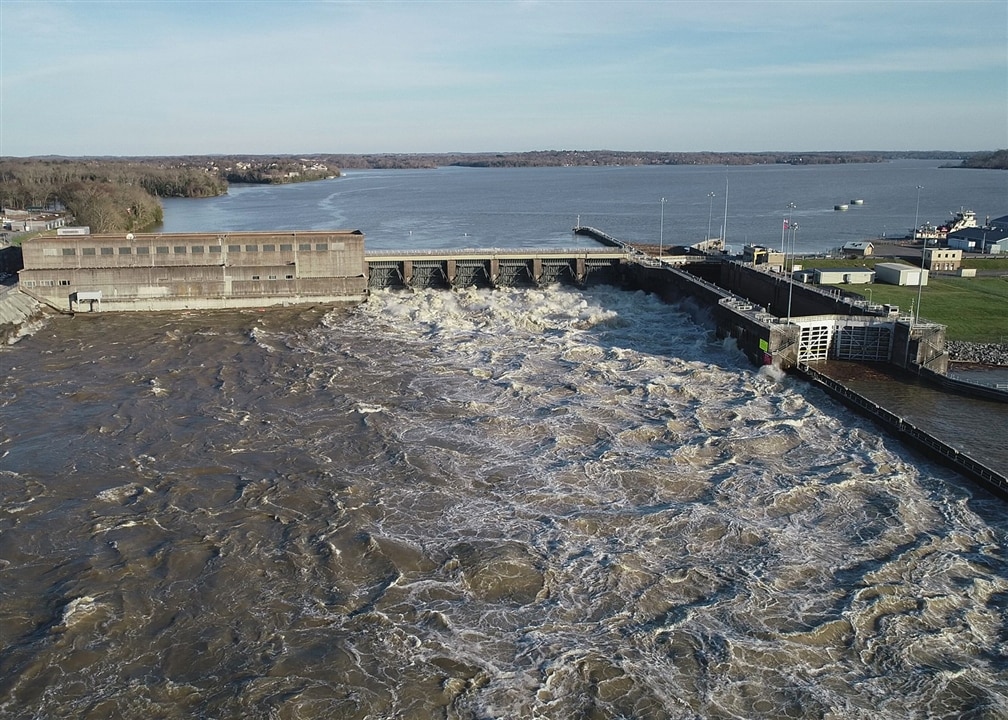
The Old Hickory Dam is being upgraded with a 7-blade turbine and new runners. (Image Credit: Mark Rankin/US Army Corps of Engineers)

Big projects usually don’t finish when first expected. At Tennessee’s Old Hickory Dam, ANDRITZ was supposed to finish re-equipping the Kaplan turbines and runners. They planned to commission it by August 2026. However, that date has been pushed to December 2026. While the turbines have operated since the 1950s, the runners have been running for 70 years in the Cumberland River. For the project, the runner will have seven blades instead of five.

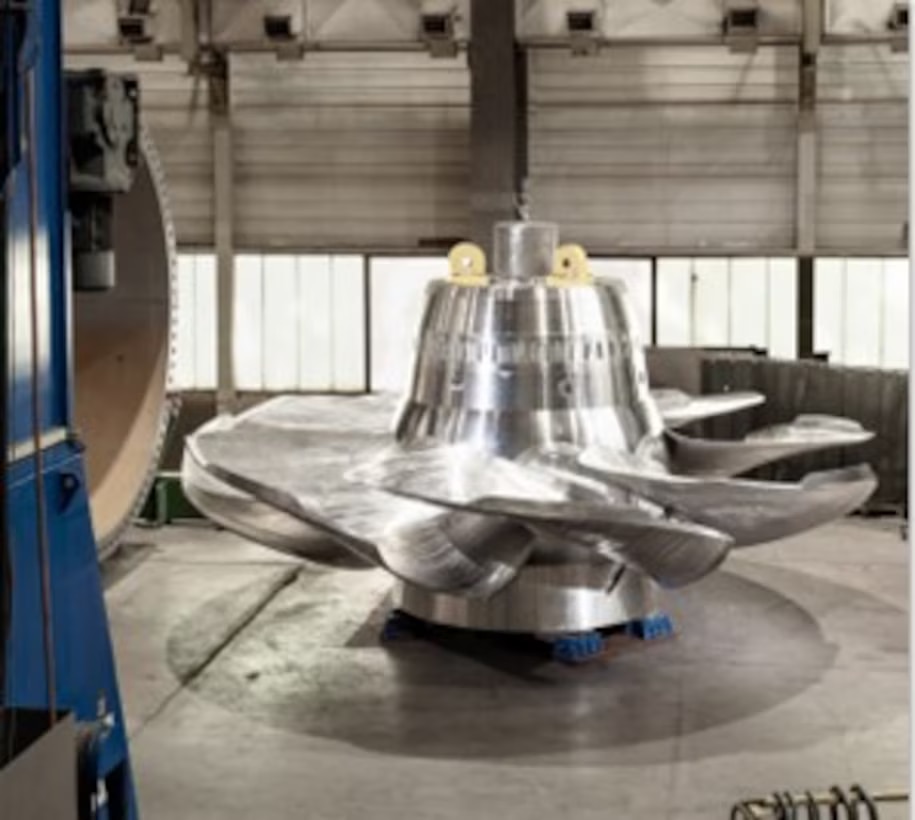
All four of Old Hickory’s generating units began operating between 1955 and 1957. The vertical-shaft Kaplan turbines feature five blade runners that measure 264” in diameter. Each unit is 25,000 kW and 31,250 kVA. They spin at 75 rpm, and the generators produce power at 13.8 kV. The replacements have the same size and spinning speed, with an increased output of 40,500 kW and 45,000 kVA at a 0.90 power factor. We’re looking at an additional 15,000 kW per unit, a 45% capacity increase.
image
The new seven blaturbine replaces the five blade one. (Image Credit: USACE)

ANDRITZ’s seven blades are the reason behind this power boost. According to the company, the configuration enables the turbines to provide higher output while staying within the project’s cavitation limits. Cavitation is the result of local pressure dropping low enough for vapor bubbles to form in the water before collapsing, which can damage turbine surfaces.

The Corps says the replacement is stainless steel, with seven blade runner hubs, and the five blades have a steel design. Installing it takes work. In September 2025, workers used the powerhouse bridge crane to remove a 504,000-pound generator rotor. On October 9th, 2025, they removed a 1957 turbine from Unit 3. Crew members are only doing one unit rehabilitation at a time. That way, the other three units can generate power during upgrades.

Powerhouse changes also need to be considered for this project. ANDRITZ says that stationary and rotating components in Units one through three aren’t in concentricity by as much as a quarter inch, linked to the powerhouse’s movement. This means alignment is necessary for modernization. Each new turbine must fit in the 264” runner opening as it handles more power.

Old Hickory is part of the Corps’ Section 212 Hydropower Rehabilitation Program. This is a $1.2 billion initiative for nine hydropower plants and 28 turbine generators across the Cumberland River Basin. The program replaces old equipment while the current facilities generate power.  Old Hickory is a 162-MW run-of-river station located 25 miles upstream of Nashville. The Corps estimates that the re-equipped plant will generate around 565 GWh of electricity per year.

The first rebuilt unit should be done by December 2026, with the Old Hickory and nearby Barkley rehabilitation projects continuing through 2030.

Have a story tip? Message me here at element14.

  • Sign in to reply
  • kmikemoo
    kmikemoo 21 days ago

    This is awesome.  This equipment was designed and built back when energy was cheap and small inefficiencies - like concentricity - were acceptable losses.

    I did chuckle at the change in power factor rating.  On the generation side, kVA is what matters - because it's really all about amperes. kW is a marketing number - calculated based on NEMA MG-1 in the US.  Almost pure fiction - unless your generator is engine limited (lacks the horsepower to carry the true (real) power load).  Engine limited generators are not the norm because they come with a host of other issues (high voltage dip, slow recovery times, no overload capability, etc.)  Hydropower only experiences this during times of low water.

    • Cancel
    • Vote Up 0 Vote Down
    • Sign in to reply
    • More
    • Cancel
  • DAB
    DAB 22 days ago

    Based upon recent flooding patterns, the US needs to go through Kentucky and create a similar water flow control system. Plus we can always use more power sources.

    • Cancel
    • Vote Up 0 Vote Down
    • Sign in to reply
    • More
    • Cancel
element14 Community

element14 is the first online community specifically for engineers. Connect with your peers and get expert answers to your questions.

  • Members
  • Learn
  • Technologies
  • Challenges & Projects
  • Products
  • Store
  • About Us
  • Feedback & Support
  • FAQs
  • Terms of Use
  • Privacy Policy
  • Legal and Copyright Notices
  • Sitemap
  • Cookies

An Avnet Company © 2026 Premier Farnell Limited. All Rights Reserved.

Premier Farnell Ltd, registered in England and Wales (no 00876412), registered office: Farnell House, Forge Lane, Leeds LS12 2NE.

Follow element14

  • X
  • Facebook
  • linkedin
  • YouTube