


Deep Fission is a startup focusing on the burial of nuclear reactors as a cheaper, simpler alternative to traditional above-ground power plants. (Image Credit: Deep Fission)
Nuclear power is becoming more complex and costly, and one startup wants to address that by burying reactors a mile deep underground. That’s why Elizabeth Muller and her father, physicist Richard Muller, founded Deep Fission. Rather than using large above-ground structures to contain each reactor, they hope the Earth can make it safer, cheaper, and easier to deploy.
Deep Fission uses modern drilling techniques from the oil, gas, and geothermal industries to drill a mile-deep, 30” diameter cased borehole. The company then lowers a pressurized water reactor into each hole, producing 30 megawatts thermal to create steam. That steam is carried through pipes to the surface, where it generates up to 10-15 megawatts of electric power. By putting the reactors underground, Deep Fission says it can keep them away from weather hazards while reducing the physical footprint.
The project also promises lower costs when it becomes fully operational. According to its estimates, expenses could shrink by up to 80% compared to traditional nuclear plants, with construction taking six months to complete. It also hopes to reach $50 to $70 per megawatt hour.
Even the Department of Energy has noticed Deep Fission. In August 2025, the DoE selected the startup as one of ten firms for its Reactor Pilot Program, which fast-tracks an evaluation of new, compact reactors designed for simpler construction. Although the other reactors have something new going on, they all stick to the above-ground design.
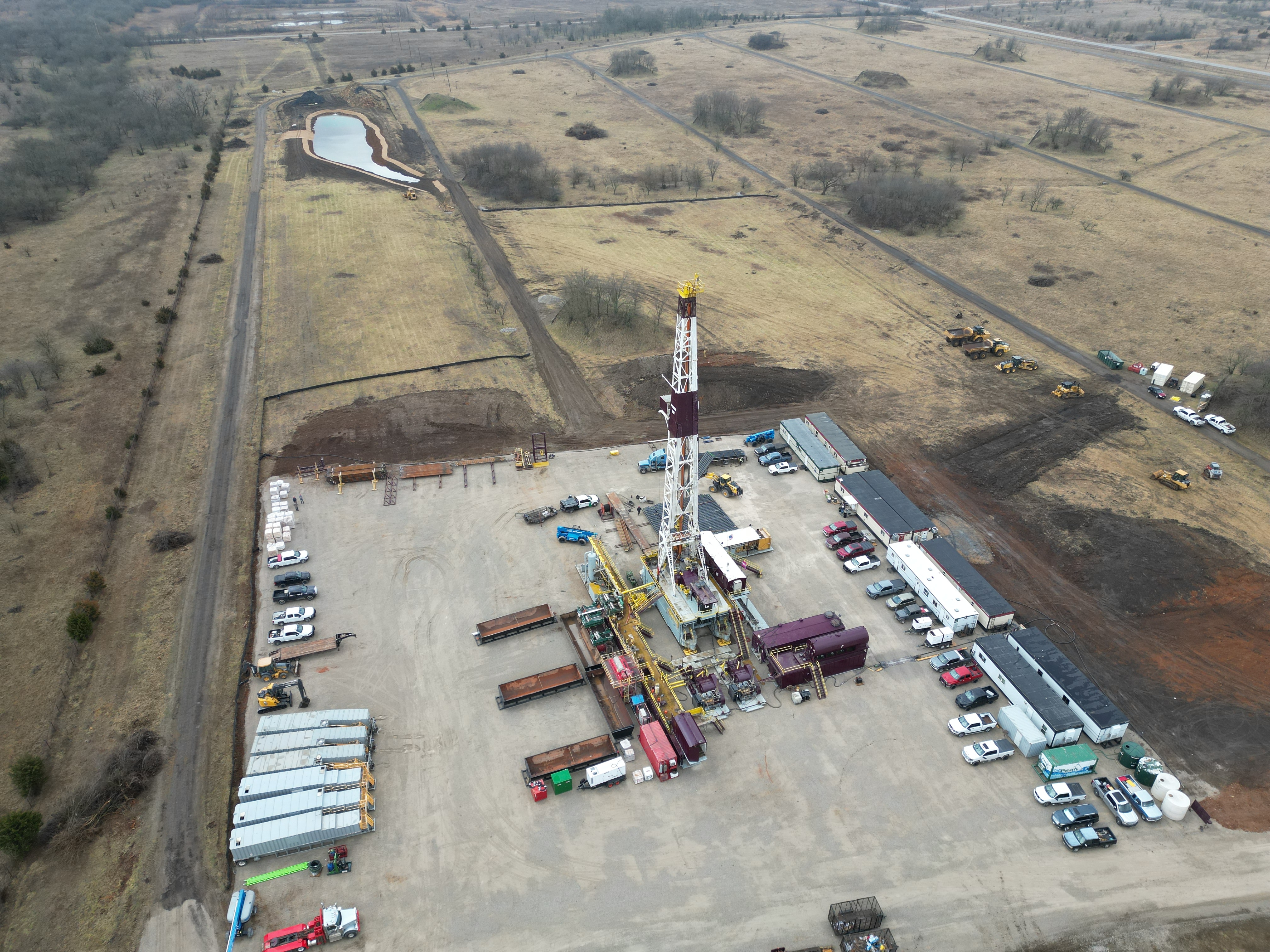
Construction progress of an underground nuclear reactor site. (Image Credit: Deep Fission)
To date, Deep Fission has collected $122 million in funding, including a recent round that values the company at $1 billion. While Elizabeth owns a 19% share, Richard controls 10%, and Joe Lonsdale, Palantir cofounder, holds an 8% stake through his 8VC firm. Sometime this year, they will sell equity to help fund research and development. This also includes investing $84 million in a test reactor in hopes of reaching criticality---a self-sustaining nuclear reactor.
Although the White House Administration set a July 4th target for these new reactors to achieve criticality, the Mullers haven’t committed to that timeline. If they can obtain a license from the Nuclear Regulatory Commission, Deep Fission aims to begin commercial power sales by 2027. This puts them ahead of other startups, such as Aalo Atomics, Oklo, Valar Atomis, and Kairos Power, funded by the DoE.
Drilling the first test 30”-diameter borehole is taking place in Parsons, Kansas, within the 14,000-acre Great Plains Industrial Park. Deep Fission’s plan is to insert a reactor canister holding four conventional fuel assemblies enriched to 5% uranium. They will then trigger it remotely by withdrawing neutron-absorbing control rods, which accelerates the nuclear chain reaction. Keeping the radioactive site at the bottom ensures that the steam moving to the surface remains contamination-free. With the closed-loop system, condensed steam returns underground, restricting water use.
Elizabeth and Richard believe that burying the nuclear reactors underground may result in safer, simpler, and cheaper nuclear power. After all, the surrounding rock works like a barrier that contains the reactor and makes us less reliant on large, expensive above ground power plants. Plus, it uses drilling methods that speed up the construction process. Even though the approach still has major engineering and regulatory challenges, reactor deployment may become less expensive.
Have a story tip? Message me here at element14.
