


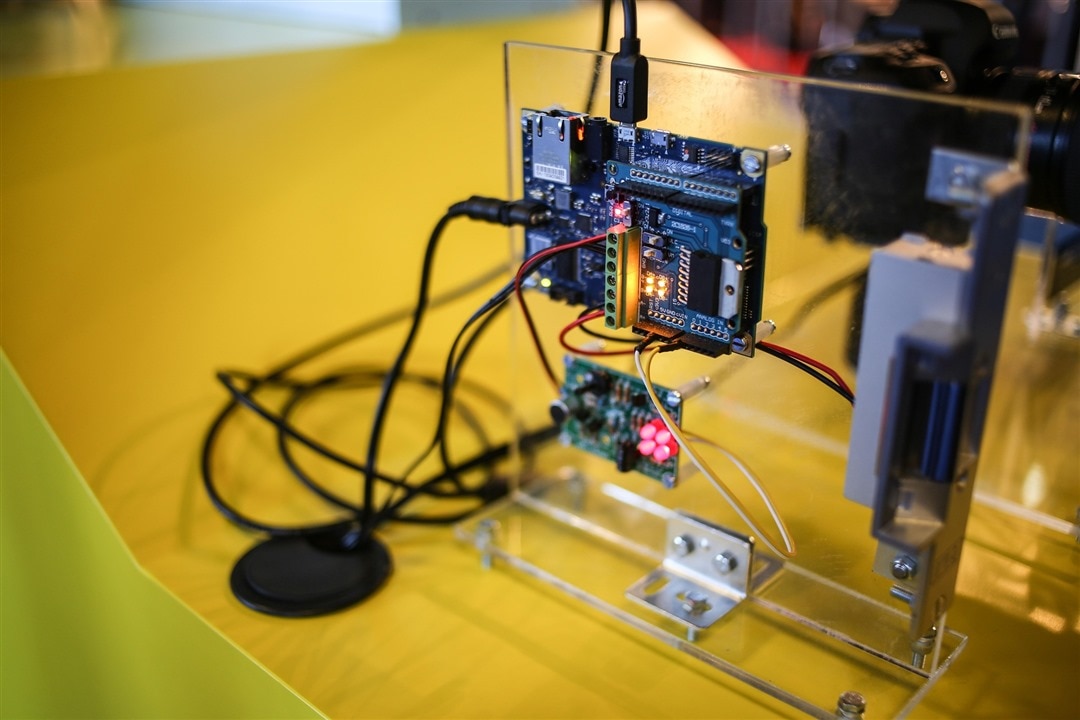
(Image credit: Pixabay)
If you’ve ever designed a product meant to run off a battery and last a long time, you know how brutal reality can be. You start with hope and a 10,000 mAh battery, and six months later, you’re back in meetings explaining why the device died on shift two. That’s because ultra-low power isn’t a checkbox on a specs sheet; it’s the entire architecture of a system. True low-power design isn’t just about picking a “low-power” microcontroller; it’s about shaping how the device lives its life, including when it wakes, when it talks, when it sleeps, and how it uses every joule it gets.
When you’re designing battery or edge devices that have to run for months or years without attention, you quickly realize that the parts with the flashy datasheet numbers aren’t always the parts that save the most power in the real world. What matters is how the whole system functions over time.
Choosing the right compute platform
One of the biggest mistakes people make is choosing the wrong compute option. Lots of engineers assume that higher performance means “future-proof,” but that logic is backwards for battery-powered gear. Ultra-low-power architectures, such as microcontrollers and low-power SoCs, are designed to enter deep sleep and wake only rarely. The difference between a part that idles at 1 mA and one that idles at 1 µA adds up fast: at 1 mA, a 2,000 mAh battery is gone in a few weeks; at 1 µA, it lasts years.
Architectural tools like dynamic voltage and frequency scaling (where a processor bumps its voltage and speed only when needed) help cut active power, and techniques like clock gating and power gating shut off unused logic to reduce leakage. These aren’t gimmicks; they’re invaluable tools that allow devices to spend most of their lives drawing minute currents while still doing real work when needed. Solve the compute platform first, and the rest of your design has a fighting chance.
Sleep hard, wake fast and duty cycle everything
The most effective way to reduce battery drain is to keep the system asleep as much as possible. In many production-edge systems, the device spends more than 99% of its lifetime doing nothing. That sounds weird until you realize that most of the time, a sensor or edge node is just waiting for something meaningful to happen.
This is what people mean by duty cycling: the system stays in deep sleep, wakes briefly to take a sample or transmit, and goes right back to sleep. These architectural designs avoid constant polling and instead use interrupts and thresholds so the processor doesn’t run unless the trigger is active. Getting this right isn’t just good engineering, it’s the difference between a product that’s “good enough” and one that actually survives a field deployment without constant battery swaps.
Radios kill batteries, so manage them wisely
If you want to ruin a battery, leave a radio on all the time. In most battery-powered designs, the radio, whether it’s Wi-Fi, cellular, BLE, LoRa, or Zigbee, ends up consuming more power than the processor itself.
Different protocols have different tradeoffs, but the pattern is the same: radio transmit and receive events are expensive. That’s why best practice is to transmit in batches, reduce handshake overhead, and turn the radio completely off between events. For example, Bluetooth Low Energy (BLE) is designed to spend very little time on the air, which helps keep average current lower than that of classic Bluetooth or Wi-Fi.
Choosing the right radio and protocol isn’t optional if you want years of operation. It’s the biggest variable in the power equation.
Firmware behavior determines power consumption
Firmware plays the decisive role in how power is used. An efficient processor sitting in a badly written firmware loop will chew through energy just as fast as a poor choice of hardware. Good low-power firmware avoids busy loops and instead relies on interrupts. It batches tasks to avoid frequent wake-sleep transitions that cost energy. It uses hardware timers that keep the system asleep until an event is triggered. Developers who don’t treat firmware as a power management tool will see the worst battery life of all.
Sensors matter
Sometimes sensors draw as much energy as the processor. If a temperature sensor warms up slowly, or a gas sensor needs minutes to stabilize, that’s energy you’re burning just to get a number. Good low-power design disconnects sensors when they aren’t needed, or uses analog comparators that wake the system only when thresholds are crossed. Rather than letting an MCU poll an ADC repeatedly, let the analog hardware listen and wake only on real events.
Energy harvesting
In some edge use cases, batteries remain necessary, but they don’t have to be the only source. Solar cells, vibration harvesters, and thermal energy converters can dramatically extend life, especially when coupled with supercapacitors that handle bursts of high current during transmit events. Smart harvesting doesn’t replace the power architecture, but it can stretch it, especially outdoors or in industrial environments.
Choosing the correct battery
Not all batteries behave the same. Lithium coin cells are great for ultra-idle devices, but they struggle when asked to supply high peak currents. Primary lithium packs have excellent shelf life, but performance drops as temperatures drop. Rechargeable lithium-ion packs offer high energy density but require careful charge and thermal management. Matching the battery to the expected load profile is essential, and engineers who choose a battery after they’ve designed the system almost always pay for it in reduced life.
Ultra-low power is a system design, not a feature
Designing ultra-low power devices isn’t something you tack on at the end of the development cycle. It’s an architectural drive at the chip level, the power conversion stage, the sensor suite, the firmware schedule, and the communication stack. Most importantly, it treats the device’s lifetime as the primary metric of success, not the peak performance numbers or shiny features.
Parts with “low power” in their names help, but the real savings come from how those parts are utilized, when they run, and how long they stay asleep. If you want a device to go months or years without attention, you don’t just shave wattage; you design a system that never wastes a joule it doesn’t need.
Have a story tip? Message me here at element14.
