element14 Community
element14 Community
    Register Log In
  • Site
  • Search
  • Log In Register
  • Community Hub
    Community Hub
    • What's New on element14
    • Feedback and Support
    • Benefits of Membership
    • Personal Blogs
    • Members Area
    • Achievement Levels
  • Learn
    Learn
    • Ask an Expert
    • eBooks
    • element14 presents
    • Learning Center
    • Tech Spotlight
    • STEM Academy
    • Webinars, Training and Events
    • Learning Groups
  • Technologies
    Technologies
    • 3D Printing
    • FPGA
    • Industrial Automation
    • Internet of Things
    • Power & Energy
    • Sensors
    • Technology Groups
  • Challenges & Projects
    Challenges & Projects
    • Design Challenges
    • element14 presents Projects
    • Project14
    • Arduino Projects
    • Raspberry Pi Projects
    • Project Groups
  • Products
    Products
    • Arduino
    • Avnet & Tria Boards Community
    • Dev Tools
    • Manufacturers
    • Multicomp Pro
    • Product Groups
    • Raspberry Pi
    • RoadTests & Reviews
  • About Us
    About the element14 Community
  • Store
    Store
    • Visit Your Store
    • Choose another store...
      • Europe
      •  Austria (German)
      •  Belgium (Dutch, French)
      •  Bulgaria (Bulgarian)
      •  Czech Republic (Czech)
      •  Denmark (Danish)
      •  Estonia (Estonian)
      •  Finland (Finnish)
      •  France (French)
      •  Germany (German)
      •  Hungary (Hungarian)
      •  Ireland
      •  Israel
      •  Italy (Italian)
      •  Latvia (Latvian)
      •  
      •  Lithuania (Lithuanian)
      •  Netherlands (Dutch)
      •  Norway (Norwegian)
      •  Poland (Polish)
      •  Portugal (Portuguese)
      •  Romania (Romanian)
      •  Russia (Russian)
      •  Slovakia (Slovak)
      •  Slovenia (Slovenian)
      •  Spain (Spanish)
      •  Sweden (Swedish)
      •  Switzerland(German, French)
      •  Turkey (Turkish)
      •  United Kingdom
      • Asia Pacific
      •  Australia
      •  China
      •  Hong Kong
      •  India
      •  Japan
      •  Korea (Korean)
      •  Malaysia
      •  New Zealand
      •  Philippines
      •  Singapore
      •  Taiwan
      •  Thailand (Thai)
      •  Vietnam
      • Americas
      •  Brazil (Portuguese)
      •  Canada
      •  Mexico (Spanish)
      •  United States
      Can't find the country/region you're looking for? Visit our export site or find a local distributor.
  • Translate
  • Profile
  • Settings
Power & Energy
  • Technologies
  • More
Power & Energy
Forum What is you surge suppression experience
  • Blog
  • Forum
  • Quiz
  • Documents
  • Polls
  • Events
  • Mentions
  • Sub-Groups
  • Tags
  • More
  • Cancel
  • New
Actions
  • Share
  • More
  • Cancel
Forum Thread Details
  • Replies 21 replies
  • Subscribers 282 subscribers
  • Views 519 views
  • Users 0 members are here
  • surge_suppression
  • lightning
  • protection
Related

What is you surge suppression experience

colporteur
colporteur 24 days ago

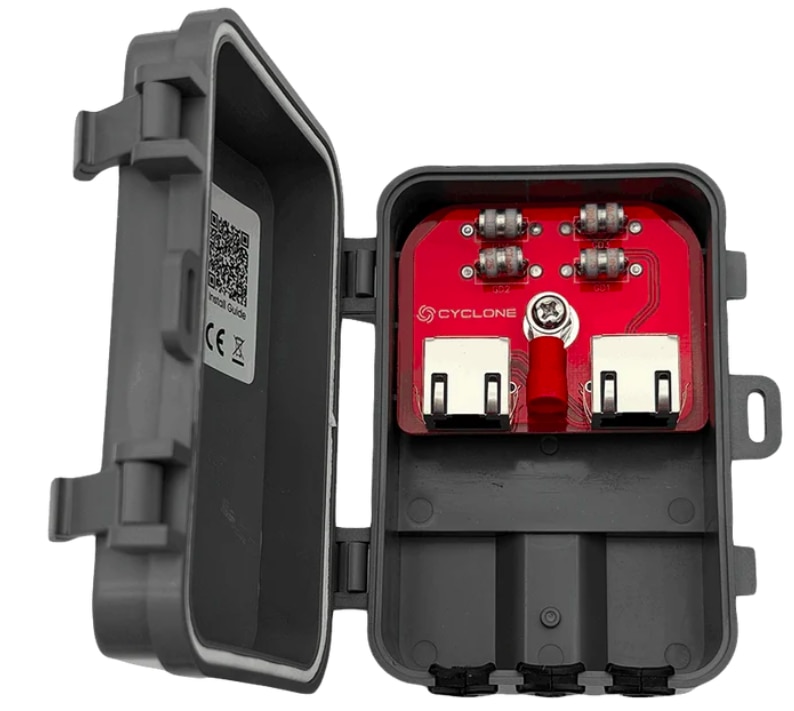
image

Key Features • Supports 10/100/1000/10GBASE-T Ethernet speeds • Full PoE, PoE+, and PoE++ (IEEE 802.3af/at/bt) compatibility • Supports up to 90W of power delivery • IP65-rated waterproof outdoor enclosure • Designed to protect against lightning strikes and electrical surges • Ultra-low capacitance for high-speed data performance • Fast response time for critical equipment protection • Simple inline RJ45 installation • Flexible mounting options for poles, enclosures, and walls • Tested to international surge protection standards Ideal Applications • Outdoor wireless radios and backhaul links • Fixed wireless and WISP deployments • Outdoor WiFi access points • IP surveillance and security cameras • Network switches and outdoor enclosures • Industrial networking and SCADA systems • Municipal, campus, and enterprise network infrastructure

I am on my third install of CAT6 cables to Access points on the top of grain bins. This advertisement for Data Surge Protection Outdoor SPD IP65 10GB Ethernet came across my desk.

Many a fault over 20 years working in telecommunications were repaired on two wire copper pairs by replacing the fuse or surge suppressor. I never gave a thought to network cable. Then I was never running them up the side of grain bins. Now I'm thinking about them after the ad appeared to remind me.

Looking to find anyone that has experience and can provide some insight.

  • Sign in to reply
  • Cancel

Top Replies

  • colporteur
    colporteur 18 days ago in reply to Jan Cumps +2
    The CAT6 cable runs are outside the bin. On some other bins there are GPS antennas and cameras. I default to the yard supervisor for installation. He hasn't told me NO to this point. I would have thought…
  • kmikemoo
    kmikemoo 18 days ago in reply to colporteur +2
    Ah... so kind of telecom to provide you with some lightning protection. I think you are at low risk of a direct strike but still at average risk of the elevated ground plane created by a near lightning…
  • kmikemoo
    kmikemoo 17 days ago in reply to colporteur +2
    That is a reasonable question. Another IT guy would probably read any notes you have on the AP or network map. To everyone else... connectivity is magic. Even if you tell them, they will forget. SO...…
Parents
  • geralds
    geralds 7 days ago

    Hi,

    First, to put it simply: I highly recommend a fiber optic cable connection.

    Why?!!!! -> Because you have two major problems, plus a few other minor issues that also play a role.

    1) Lightning strikes
    2) Different grounding potentials between the buildings.

    1.a) Lightning strikes can NEVER be intercepted with just a single component. That's the "minor" issue I was referring to.

    Please look here at Eaton, USA (I use this in EU, Austria):

    https://www.eaton.com/us/en-us/products/backup-power-ups-surge-it-power-distribution/surge-protection.html#sortCriteria=%40p_navigation_title%20descending%2C%40page_title%20descending%2C%40title%20descending&f-product_attributes_product_status=Active&enableQuerySyntax=true&cq=%40sub_category_id%3D%3D%22surge-protection-devices%22%20AND%20%40country%3D%22us%22%20AND%20%40language%3D%22en_US%22

    So, the building needs a foundation grounding system, which is driven very deep into the ground in the center.

    There are regulations regarding whether there needs to be one or more of these; this depends on the size of the building site.

    You've roughly illustrated the extent in the video, about 300m on each side, approximately...
    Therefore, also because there are several buildings, multiple foundation grounding systems are necessary; depending on the size, two or three.

    This also depends on where the power source is located and where the transformer is situated.

    The point is:

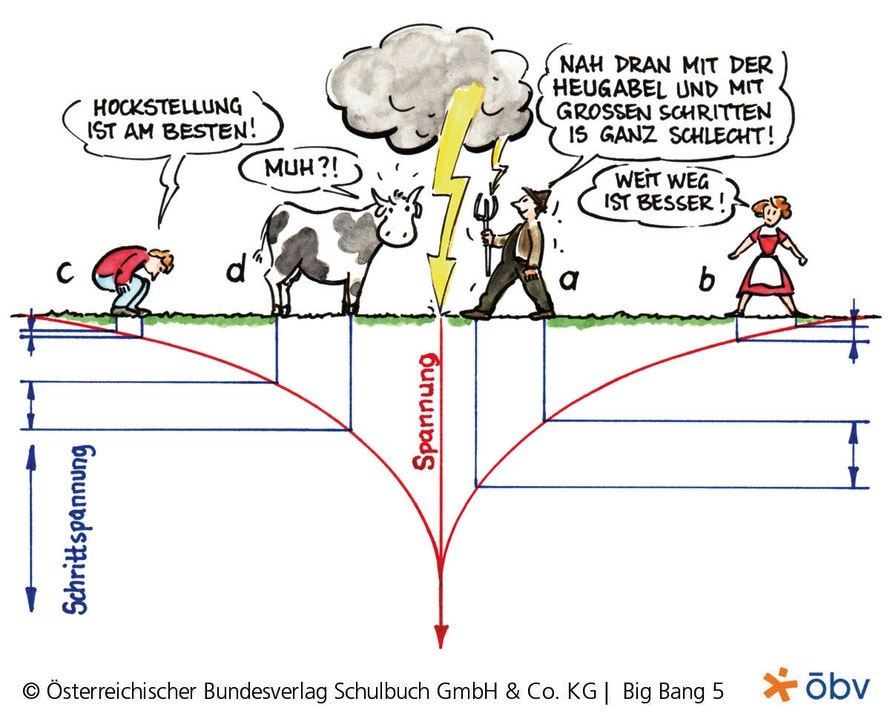
    The power lines, in this case the lightning strike from where it would originate, create a voltage cone. Within this voltage field, the building's infrastructure, and even living beings with their step voltages, can be affected.

    image

    Therefore, first, the building must be protected with a lightning rod. This lightning rod already dissipates a significant amount of energy.

    Second, the building needs surge protection for the three-phase power supply in the distribution box, directly at the inlet of the power line, along with an RCD (residual current device) and fuses.

    With this surge protection, you can also install filters if a modem is installed that transmits data over the power line.

    Third, surge protection devices for the equipment are then installed in the building, for example, as you showed in your post.

    For the building, it is crucial that the protective earth conductor (PE) is very well connected to the foundation earth electrode, located at the bottom of the building on the equipotential bonding bar.


    For the building, it is important that the protective earth conductor (PE) is very well connected to the foundation earth electrode, which is connected to the equipotential bonding bar at the bottom of the building.

    The better these buildings are connected to the ground, the better the grounding potential between them. The lower the grounding potential, the better, ideally less than 2 volts.

    The problem is minimized between buildings when you need to run data cables; underground is better than above ground.

    The shielding of the LAN cable then acts as a ground conductor because it's connected to the protective earth (PE). Be careful not to create a ground loop.

    Precisely for this reason, I recommend using fiber optic cable instead of copper cable.

    Since you need power and LAN in all buildings, you can use fiber optic cable as the "backbone." The LAN cabling infrastructure is then located within the building.

    Strictly speaking, this would eliminate the need for a wireless setup. In my experience, wireless LAN has its own set of problems, mostly related to weather conditions. Whether fiber optic or wireless, you'll need to use data converters in both cases. So, the effort involved is comparable. Fiber optic cables might be a bit more expensive to install, but after that you practically have no problems, unless an excavator tears the cable off, or the laser diode weakens after many years.

    This was just the first thinking about, ok.

    In the 1990s and 2000s, I offered these devices at my company as an electronics technician. Later, I was an electrician for the railway. Now I'm retired.

    If you like, you can post here some details of your project.

    Best Regards

    Gerald

    • Cancel
    • Vote Up +2 Vote Down
    • Sign in to reply
    • Cancel
  • shabaz
    shabaz 7 days ago in reply to geralds

    Hi Gerald,

    Very useful information!

    • Cancel
    • Vote Up +2 Vote Down
    • Sign in to reply
    • Cancel
Reply
  • shabaz
    shabaz 7 days ago in reply to geralds

    Hi Gerald,

    Very useful information!

    • Cancel
    • Vote Up +2 Vote Down
    • Sign in to reply
    • Cancel
Children
No Data
element14 Community

element14 is the first online community specifically for engineers. Connect with your peers and get expert answers to your questions.

  • Members
  • Learn
  • Technologies
  • Challenges & Projects
  • Products
  • Store
  • About Us
  • Feedback & Support
  • FAQs
  • Terms of Use
  • Privacy Policy
  • Legal and Copyright Notices
  • Sitemap
  • Cookies

An Avnet Company © 2026 Premier Farnell Limited. All Rights Reserved.

Premier Farnell Ltd, registered in England and Wales (no 00876412), registered office: Farnell House, Forge Lane, Leeds LS12 2NE.

Follow element14

  • X
  • Facebook
  • linkedin
  • YouTube