element14 Community
element14 Community
    Register Log In
  • Site
  • Search
  • Log In Register
  • Community Hub
    Community Hub
    • What's New on element14
    • Feedback and Support
    • Benefits of Membership
    • Personal Blogs
    • Members Area
    • Achievement Levels
  • Learn
    Learn
    • Ask an Expert
    • eBooks
    • element14 presents
    • Learning Center
    • Tech Spotlight
    • STEM Academy
    • Webinars, Training and Events
    • Learning Groups
  • Technologies
    Technologies
    • 3D Printing
    • FPGA
    • Industrial Automation
    • Internet of Things
    • Power & Energy
    • Sensors
    • Technology Groups
  • Challenges & Projects
    Challenges & Projects
    • Design Challenges
    • element14 presents Projects
    • Project14
    • Arduino Projects
    • Raspberry Pi Projects
    • Project Groups
  • Products & Partners
    Products & Partners
    • Arduino
    • Avnet & Tria Boards Community
    • Dev Tools
    • Manufacturers
    • Multicomp Pro
    • Product Groups
    • Raspberry Pi
    • RoadTests & Reviews
  • About Us
    About the element14 Community
  • Store
    Store
    • Visit Your Store
    • Choose another store...
      • Europe
      •  Austria (German)
      •  Belgium (Dutch, French)
      •  Bulgaria (Bulgarian)
      •  Czech Republic (Czech)
      •  Denmark (Danish)
      •  Estonia (Estonian)
      •  Finland (Finnish)
      •  France (French)
      •  Germany (German)
      •  Hungary (Hungarian)
      •  Ireland
      •  Israel
      •  Italy (Italian)
      •  Latvia (Latvian)
      •  
      •  Lithuania (Lithuanian)
      •  Netherlands (Dutch)
      •  Norway (Norwegian)
      •  Poland (Polish)
      •  Portugal (Portuguese)
      •  Romania (Romanian)
      •  Russia (Russian)
      •  Slovakia (Slovak)
      •  Slovenia (Slovenian)
      •  Spain (Spanish)
      •  Sweden (Swedish)
      •  Switzerland(German, French)
      •  Turkey (Turkish)
      •  United Kingdom
      • Asia Pacific
      •  Australia
      •  China
      •  Hong Kong
      •  India
      •  Japan
      •  Korea (Korean)
      •  Malaysia
      •  New Zealand
      •  Philippines
      •  Singapore
      •  Taiwan
      •  Thailand (Thai)
      •  Vietnam
      • Americas
      •  Brazil (Portuguese)
      •  Canada
      •  Mexico (Spanish)
      •  United States
      Can't find the country/region you're looking for? Visit our export site or find a local distributor.
  • Translate
  • Profile
  • Settings
Sensors
  • Technologies
  • More
Sensors
Blog Citizen Scientists Revived an Old Spacecraft
  • Blog
  • Forum
  • Documents
  • Quiz
  • Events
  • Polls
  • Members
  • Mentions
  • Sub-Groups
  • Tags
  • More
  • Cancel
  • New
Join Sensors to participate - click to join for free!
  • Share
  • More
  • Cancel
Group Actions
  • Group RSS
  • More
  • Cancel
Engagement
  • Author Author: Catwell
  • Date Created: 16 Oct 2026 12:17 PM Date Created
  • Views 28 views
  • Likes 5 likes
  • Comments 0 comments
  • citizen scientist
  • nasa
  • space
  • satellite
  • wireless
  • telemetry
  • sensor
  • communication
Related
Recommended

Citizen Scientists Revived an Old Spacecraft

Catwell
Catwell
16 Oct 2026

image

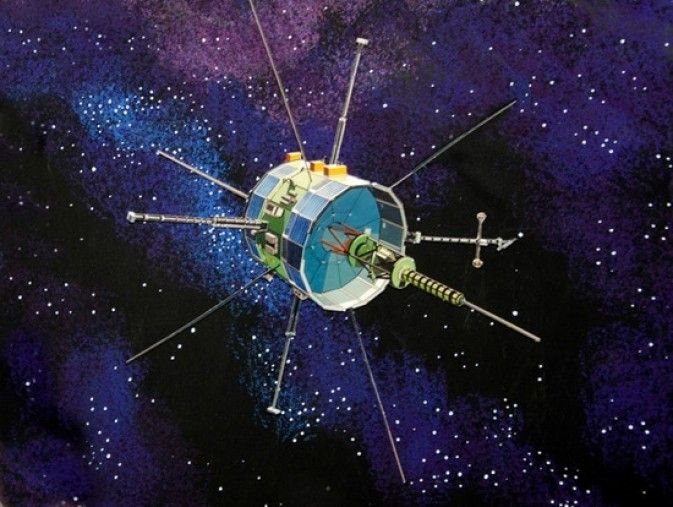
Artist’s illustration of the ISEE-3 spacecraft. (Image Credit: NASA)

In 1978, NASA’s International Sun Earth Explorer 3 (ISEE-3) was launched to investigate solar wind and how it interacted with the magnetic environment. Eventually, NASA redirected the mission, which was renamed the International Cometary Explorer (ICE), toward the Giacobini-Zinner comet. The spacecraft flew through the comet’s tail in September 1985, and NASA ended the mission support and operations in 1997. It left the spacecraft in solar orbit.

In 2014, ISEE-3 returned to Earth’s vicinity for the first time in decades. A crowdfunded team of engineers, radio specialists, and programmers worked with SkyCorp to take control of the spacecraft to redirect it. Before doing so, the initiative got NASA’s permission to rebuild its communication capability, using software-defined radio technology and radio telescopes.

Two-way communication was re-established in May 2014. From there, it transmitted commands, and the probe sent telemetry data back. With this capability restored, the team examined the probe’s condition and attempted to redirect it to a practical Earth-Sun orbit. For the first time since 1987, they commanded eleven short thruster pulses on July 2nd, boosting the revolutions per minute from 19.16 to 19.75.

Although the team restored its original spin, a trajectory-altering maneuver failed on July 8th. The citizen scientists needed to change the velocity by 7.3 meters per second for a trajectory adjustment to achieve a planned lunar flyby. Their goal was to send ISEE-3 toward the Sun-Earth L1 region. However, that burn generated 0.15 meters/second before the thrust rapidly declined.

According to telemetry data, an empty fuel tank probably didn’t cause the problem. The probe’s propulsion system used hydrazine as propellant. Pressurized nitrogen forced the liquid hydrazine through fuel lines toward its thrusters. A catalyst then decomposed the hydrazine into hot gases that created thrust. Telemetry indicated that the nitrogen pressurant was depleted. Nitrogen leaking while the ISEE-3 probe drifted in space means the system wouldn’t deliver a sustained supply of propellant. This may explain why the spacecraft was able to short-fire, while the longer maneuver failed. However, since the team couldn’t physically inspect the spacecraft for issues like a leak, the diagnosis remains unconfirmed.

Because the velocity didn’t change, the ISEE-3 spacecraft flew 15,600 km from the Moon on August 10, 2014. It could not enter the planned return trajectory and remained in heliocentric orbit. The team still managed to power on scientific instruments and collect scientific data. They lost contact with the spacecraft on September 16, 2014 as if moved away from Earth.

Instead of abandoning the mission, the team received telemetry from the activated instruments. They made the resulting observations available online. In August 2014, the Planetary Society announced it had created a public home for the ISEE-3 data. Researchers and the public can access measurements of the spacecraft.

Have a story tip? Message me here at element14.

  • Sign in to reply
element14 Community

element14 is the first online community specifically for engineers. Connect with your peers and get expert answers to your questions.

  • Members
  • Learn
  • Technologies
  • Challenges & Projects
  • Products
  • Store
  • About Us
  • Feedback & Support
  • FAQs
  • Terms of Use
  • Privacy Policy
  • Legal and Copyright Notices
  • Sitemap
  • Cookies

An Avnet Company © 2026 Premier Farnell Limited. All Rights Reserved.

Premier Farnell Ltd, registered in England and Wales (no 00876412), registered office: Farnell House, Forge Lane, Leeds LS12 2NE.

Follow element14

  • X
  • Facebook
  • linkedin
  • YouTube