


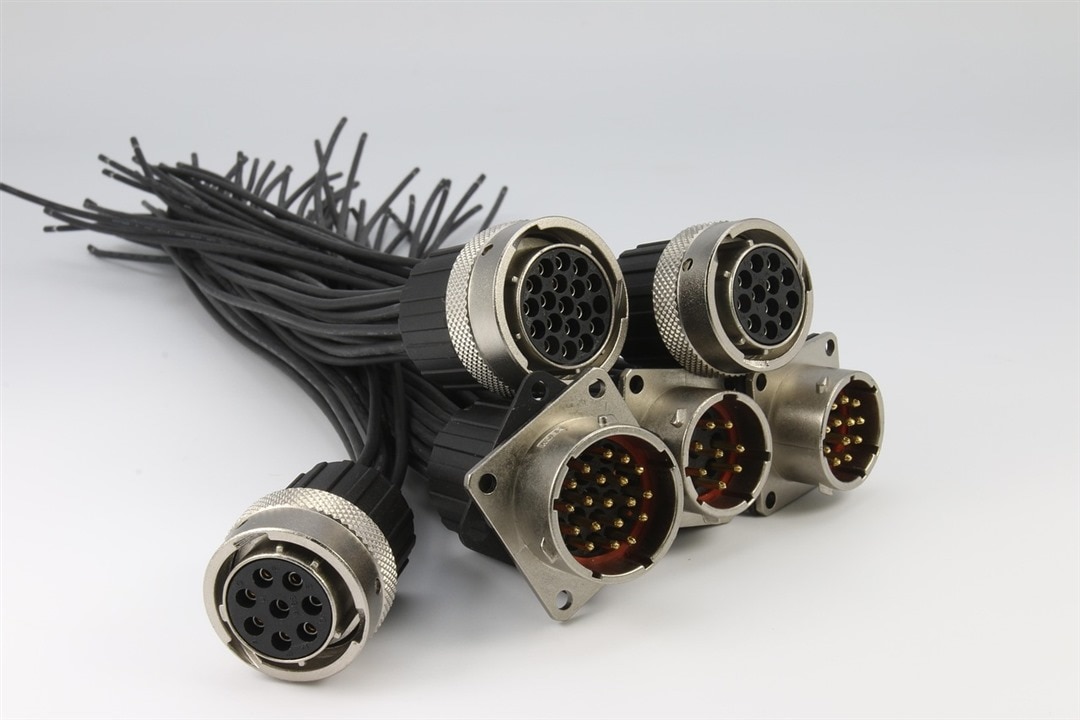
(Image credit: Pixabay)
Engineers working in industrial, automotive, marine, or outdoor systems know that connectors aren't just passive hardware; they can be a critical point of failure when environments become extreme. Dust, moisture, vibration, temperatures, and corrosive elements can all degrade connectivity over time, which can degrade performance or, worse, lead to complete system failures. For engineers, knowing how connectors are specified, protected, and integrated into designs is critical to maintain reliability in harsh environments.
At the core of rugged connector design is the concept of Ingress Protection (IP) ratings, a standard that classifies a component's resistance to dust and liquids. A connector doesn't just need to connect two circuits; it also has to protect against unwanted elements. Standard ratings like IP65, IP67, IP68 and the more stringent IP69K offer increased degrees of dust tightness and water resistance. For example, an IP67-rated connector is dust-tight and can withstand immersion in up to 1 meter of water for a period, while IP69K devices are designed to survive close-range, high-pressure, high-temperature wash in food processing and industrial cleaning. This rating system helps engineers translate environmental requirements into measurable specifications.
Connectors for harsh environments also share common features beyond IP ratings. These include features such as robust sealing, typically achieved with elastomeric gaskets and O-rings to prevent moisture from entering around mating interfaces, while robust housing materials, such as stainless steel or polymers, offer resistance to corrosion, chemicals, and UV exposure. The mechanical design of a connector, its locking or coupling mechanism, also matters. Threaded, push-pull, and bayonet locks help maintain reliable connections in applications subject to vibration or frequent mating cycles. These features help ensure connectors stay mated and maintain electrical efficiency even under mechanical shock and thermal cycling.
Miniaturization and Rugged Performance
One challenge in modern connector design is miniaturization without sacrificing ruggedness or performance. As systems become smaller, engineers are seeking compact interconnects that withstand harsh environments. Rugged, miniaturized connectors achieve this by combining mechanical strength with compact footprints and optimized materials. They often incorporate vibration-resistant housing and locking mechanisms that keep pins and sockets engaged even under high shock or vibration loads.
Those features are evident in ruggedized USB Type-C connectors designed for industrial environments. These connectors support data rates up to 10 Gb/s while incorporating waterproof seals and robust shells that meet IP67 specifications. This is done by incorporating a sealed rubber gasket around the shell to prevent moisture and dust from entering the mating interface.
Miniaturization doesn't only apply to USB-type designs. Circular and M12 connectors, common in industrial automation, have evolved into compact, rugged connectors with push-pull interfaces and IP67/IP69K ratings. These parts are ideal for factory automation, robotics, and electric vehicle applications.
Signal Integrity under Stress
A connector's performance isn't just about keeping water and dust out; it also directly affects signal integrity. In high-speed digital or RF applications, transmission line behavior becomes critical. Connector geometry, contact spacing, and shielding all influence impedance, crosstalk, and insertion loss. Poorly designed connector interfaces can introduce reflections and EMI artifacts that degrade data integrity, especially over long cable runs or at multi-gigabit speeds. In harsh environments, these effects can be exacerbated by corrosion or mechanical wear if materials aren't chosen for both electrical performance and environmental durability.
360-degree shielding is a common technique used to preserve signal integrity in areas with increased EMI. Metal shell connectors, controlled impedance layouts, and strategic ground-pin placement help reduce the impact of external noise. Some rugged connectors combat that interference using metal shells that provide both mechanical protection and integral EMI shielding.
Testing and Standards
Connector design for harsh environments isn't provisional; it's grounded in standards and repeatable testing. Beyond IP ratings, connectors may be qualified to military standards like MIL-DTL-38999 for aerospace and defense use, or to automotive specs that include vibration, shock, and thermal cycling tests simulating years of real-world use. These tests validate not only environmental resistance but also contact retention forces, dielectric strength, and mechanical robustness.
Understanding these criteria helps avoid costly failures down the line. It's not uncommon for a connector to be sealed against moisture yet still suffer functional degradation due to thermal-mismatch-induced thermal expansion or vibration-induced microfractures. Robust testing, including exposure to vibration profiles, thermal shocks, and humidity, ensures that the chosen connector matches both the environmental and electrical requirements of its application.
Final Thoughts
As systems become more connected and compact, the demand for connectors that deliver both environmental protection and electrical performance will only increase. Engineers should prioritize parts with documented performance data, clear IP ratings and mechanical features that align with the target application. Collaboration with connector manufacturers and suppliers can help provide options that meet specified requirements and space constraints without compromising performance.
Connector design in harsh environments is about balancing priorities: size versus ruggedness, IP protection versus ease of assembly, and signal performance versus mechanical complexity. With clear standards, careful material choices, and insight into operating in real-world environmental conditions, engineers can design connectivity solutions that survive and thrive rather than compromise or fail.
Have a story tip? Message me here at element14.
Top Comments