



Harvard’s lab-grown organoids. (Image Credit: Carlos Sanchez/Harvard FAS Staff Photographer)
It takes years for the human brain to develop. And this makes it difficult to experimentally study some maturation stages. Harvard University researchers have been maintaining human cortical organoids in culture for up to five years, and they discovered the cells keep maturing over this period. The team also says the progenitor cells can be manipulated to generate later-stage cell types and retain a molecular record of their developmental history.
As part of their study, the team profiled 34 organoids comprising over 424,000 single cells. They studied these organoids at multiple points between six months and five years in culture, combining them with data from organoids studied as early as 15 days. Single-cell RNA sequencing tracked gene expression changes, and whole-genome bisulfite sequencing was used to examine DNA methylation.
The organoids’ electrical activity was monitored to see if their neural networks still functioned while maturing. To do this, they used 3Brain’s Accura 3D CMOS-HD-MEA system (samples at 20 kHz and has 12-bit resolution). It features 4,096 penetrating uNeedle electrodes arranged in a 64 x 64 grid. Each electrode detected neuron-generated electrical signals. The team used BrainWave v5 to record individual neuronal spikes and coordinated activity bursts across the organoids for 15-20 minutes.
Those recordings, processed by Kilosort2, revealed that the organoids generated higher coordinated neural activity. After one year, nine organoids grown in the team’s activity-permissive medium produced robust network bursts. None of the eight control organoids had that happen.
Zeiss LSM880 and LSM900 microscopes imaged the organoids and examined their cell structure. Illumina NovaSeq 6000 and Element Biosciences AVITI platforms was used for sequencing during the DNA methylation experiments, targeting 800-900 million reads per sample. The team also used electron microscopy and expansion microscopy to view the organoids’ ultrastructure and synapses from different angles.
Molecular changes were very similar to the human brain’s developmental patterns. The organoids from the earliest time points resembled first-trimester fetal brain tissue. Meanwhile, older organoids gradually acquired gene-expression signatures related to later prenatal and postnatal development. Over time, the DNA methylation also changed. Two DNA methylation-based epigenetic clocks predicted biological age with high accuracy (0.88 and 0.90 correlations).
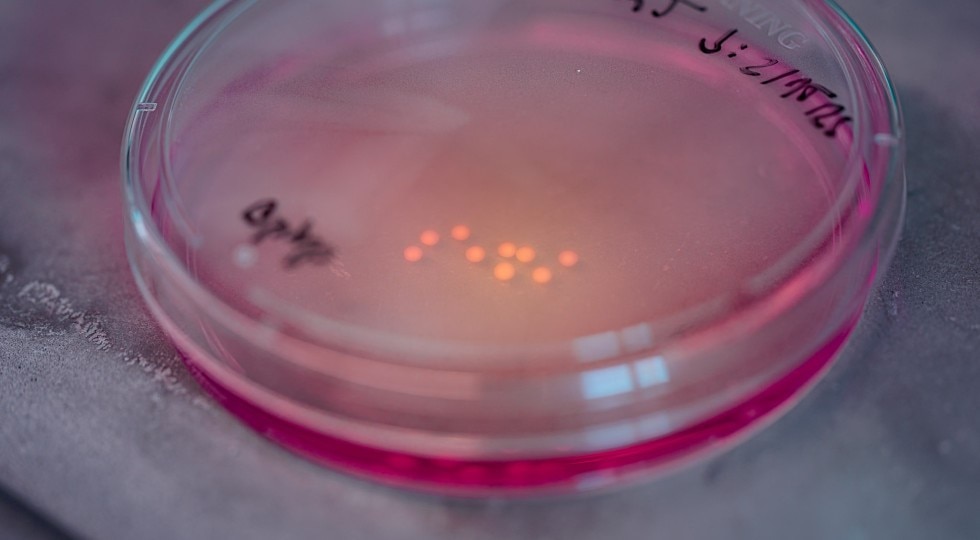
Culture in a lab dish. (Image Credit: Carlos Sanchez/Harvard FAS Staff Photographer)
Afterward, the Harvard team determined whether neural progenitor cells preserved information about developmental age. They generated heterochronic chimeric organoids. This was done by mixing neural progenitors of different ages. From there, the researchers figured out which cells came from the young or old organoids. They also studied the types of cells they produced.
There is a significant difference in these results. In this case, young cells produced cell types associated with early development. The older ones kept producing later-stage cell types. Both of those populations grew together and were set in the same conditions.
In chimeric organoids, 40% of the cells derived from the older progenitors became callosal projection neurons compared to <1% in non-chimeric older organoids. Neurons like these typically appear after months of development. Within two weeks of the older-younger cell combination process, the older progenitors produced cell types with a much later developmental stage.
Their discovery suggests that neural progenitors respond to local signals but do not revert to earlier stages. They also retain information about completed developmental stages. Exposing them to signals from an earlier stage causes the older cells to respond to those signals without reverting to an earlier developmental stage.
The team calls this a form of temporal memory. Instead of consciously sensing time, these cells preserve their developmental history through molecular and epigenetic changes. Long-lived brain organoids could then be used as a model to study human brain maturation stages that are difficult to observe.
Have a story tip? Message me here at element14.