


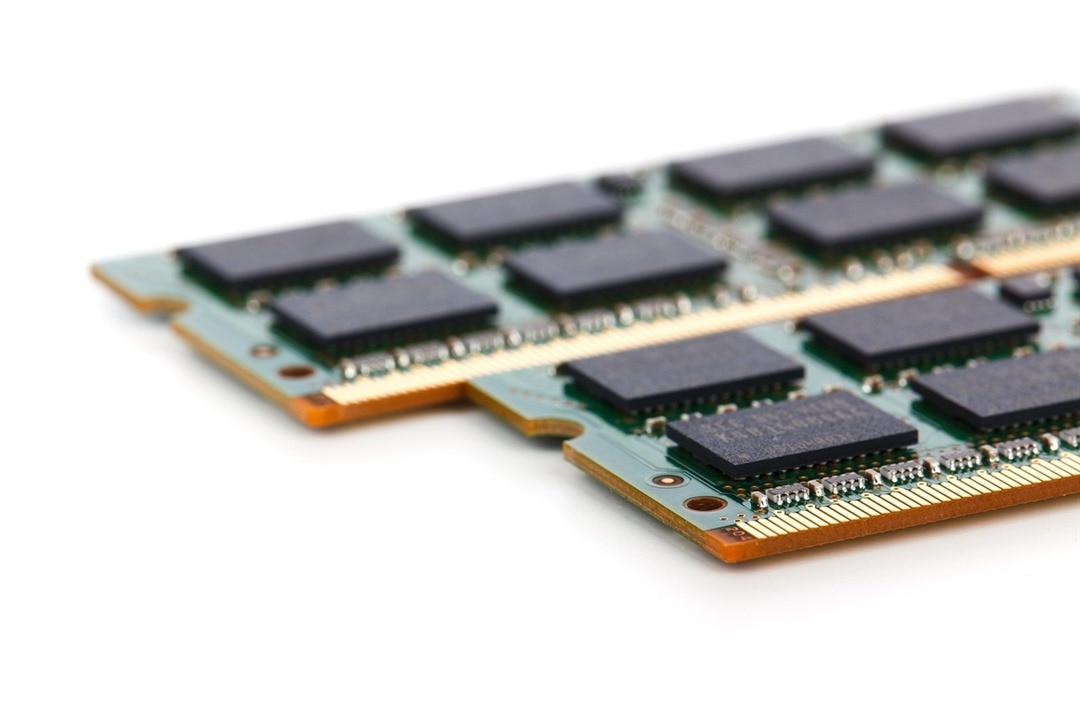
RAM. (Image Credit: PublicDomainPictures/pixabay)
I’d love to upgrade to DDR5 ram someday, I was just looking at those prices. I think we all know, RAM prices are crazy high due to the AI demand soaking up the memory supply. And there may not be much relief anytime soon. That’s where Dr. Semiconductor steps in. He turned his backyard shed into a class 100 semiconductor cleanroom to make his own RAM. In the YouTube video, he shows us exactly how he pulled it off.
Dr. Semiconductor starts his DRAM-making process by cutting silicon wafer chips from a large sheet into small pieces. He then grows a thin oxide layer in a high-temperature furnace, which keeps the silicon protected and isolated. According to reports, this oxide layer is around 330 nm thick. Afterward, he added an adhesive layer, baked it, and then added a photoresist film on the surface. After baking, the chips had a 1-micron-thick photosensitive surface. Then, he uses UV light through a mask to pattern the chip, shrinking it down with microscope magnification stages. Software also helped dry-etch transistor patterns onto the chip. This photolithography step is also used in chip manufacturing, and Dr. Semiconductor’s setup is much smaller.
Once the pattern is exposed, he uses dimethyl sulfoxide to wash away unwanted photoresist. Doing so ensures precise openings remain, so later steps alter the silicon. He also forms transistor source and drain regions by doping the silicon with phosphorus and thermally annealing it. This enables the dopant to spread deeper into the material. His later steps involve layer etching, making contact holes, and spraying aluminum with a stencil to allow the tiny structures to conduct electricity and be tested.
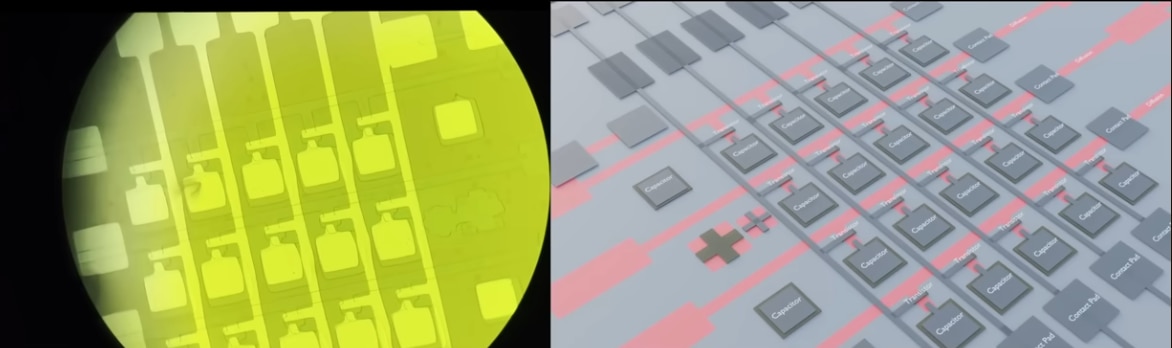
Complete structure of the homemade DRAM with the transistors, capacitors, and connections for the DRAM array. (Image Credit: Dr. Semiconductor)
The scale of this project is also noteworthy. All the DRAM cells are tiny, which means DIYers can’t test them out on machinery, as wires won’t be able to reach them. Instead, he uses micromanipulator probes. Dr. Semiconductor was happy enough with his DRAM chips, especially because the cells achieved a practical 12 pF capacitance. By the end of the video, he mentions that he will build on this DRAM project. His goal is to create an expanded memory cell array that connects to a PC.
Have a story tip? Message me here at element14.

