


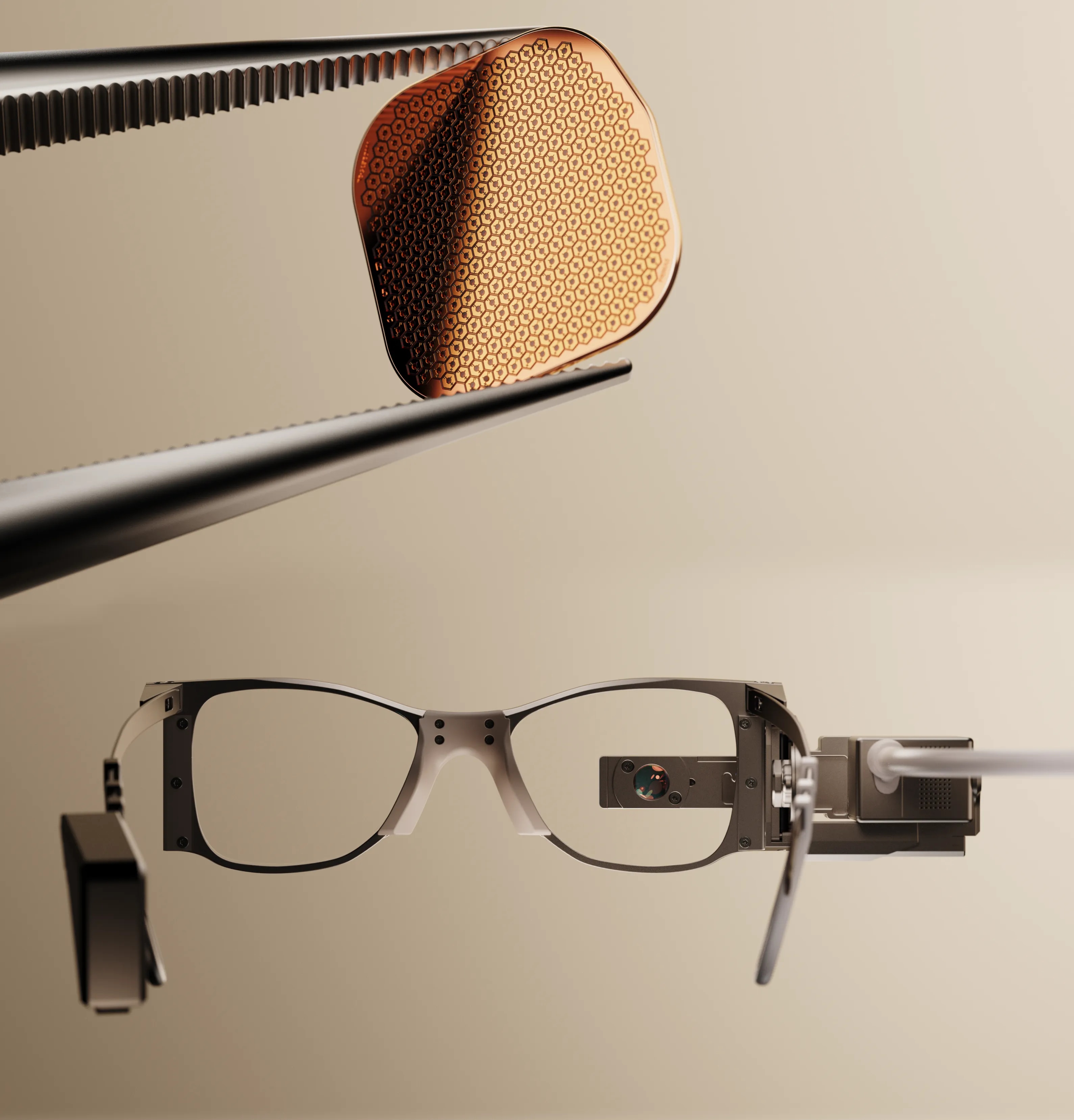
The tiny PRIMA implant helps restore lost vision. (Image Credit: Science Corporation)
Brain-computer interfaces have come a long way. And now they’re being deployed in real-world healthcare, with new devices helping patients regain lost abilities. Among those is Science Corporation’s PRIMA retinal implant. It’s designed to help those with vision loss due to age-related macular degeneration. European regulators recently approved the device for sale, paving the way for Europe-based patients to access the technology.
PRIMA features a small photovoltaic chip implanted under the retina. It comes with camera-equipped glasses that project near-infrared light to the implant, converting it into electrical stimulation signals. To magnify letters and numbers, patients can use the zoom-in feature. Science Corporation designed PRIMA to be ultra-thin and operate wirelessly.
This is the first BCI to receive CE marking for vision restoration. Patients can wear it to read letters, numbers, and words. Science Corporation has started reimbursement applications and clinical sites in Europe. The first implant is expected to occur in Germany in September. PRIMA also received an FDA Breakthrough Device designation and Humanitarian Use Device designation. These may speed up the regulatory review process to treat two rare blindness conditions.
In clinical trials involving 38 patients, the PRIMA implant was placed under the atrophic macula and improved vision. After one year, patients achieved an average improvement of 25.5 letters on the ETDRS eye chart. 84% of participants said they could read words, letters, and numbers, a sign that their central vision has been restored. According to the study, 80% of patients experienced an improvement of at least logMAR 0.2 (equivalent to 10 letters on the ETDRS chart) in prosthetic visual acuity.
Science Corporation plans to continue improving PRIMA, which involves developing a new chip and refining the glasses design. While this version needs a battery pack, the startup aims to develop a sleeker form factor like AR glasses. That may be difficult to achieve due to the implant’s need for additional processing power and energy.
Apart from retinal implants, the company wants to work on other BCIs. Science Corporation is partnering up with Dr. Murat Günel, chair of Yale Medical School’s Department of Neurosurgery, to develop procedures for human trials that involve a bio-hybrid brain sensor.
Have a story tip? Message me here at element14.