element14 Community
element14 Community
    Register Log In
  • Site
  • Search
  • Log In Register
  • Community Hub
    Community Hub
    • What's New on element14
    • Feedback and Support
    • Benefits of Membership
    • Personal Blogs
    • Members Area
    • Achievement Levels
  • Learn
    Learn
    • Ask an Expert
    • eBooks
    • element14 presents
    • Learning Center
    • Tech Spotlight
    • STEM Academy
    • Webinars, Training and Events
    • Learning Groups
  • Technologies
    Technologies
    • 3D Printing
    • FPGA
    • Industrial Automation
    • Internet of Things
    • Power & Energy
    • Sensors
    • Technology Groups
  • Challenges & Projects
    Challenges & Projects
    • Design Challenges
    • element14 presents Projects
    • Project14
    • Arduino Projects
    • Raspberry Pi Projects
    • Project Groups
  • Products
    Products
    • Arduino
    • Avnet & Tria Boards Community
    • Dev Tools
    • Manufacturers
    • Multicomp Pro
    • Product Groups
    • Raspberry Pi
    • RoadTests & Reviews
  • About Us
  • Store
    Store
    • Visit Your Store
    • Choose another store...
      • Europe
      •  Austria (German)
      •  Belgium (Dutch, French)
      •  Bulgaria (Bulgarian)
      •  Czech Republic (Czech)
      •  Denmark (Danish)
      •  Estonia (Estonian)
      •  Finland (Finnish)
      •  France (French)
      •  Germany (German)
      •  Hungary (Hungarian)
      •  Ireland
      •  Israel
      •  Italy (Italian)
      •  Latvia (Latvian)
      •  
      •  Lithuania (Lithuanian)
      •  Netherlands (Dutch)
      •  Norway (Norwegian)
      •  Poland (Polish)
      •  Portugal (Portuguese)
      •  Romania (Romanian)
      •  Russia (Russian)
      •  Slovakia (Slovak)
      •  Slovenia (Slovenian)
      •  Spain (Spanish)
      •  Sweden (Swedish)
      •  Switzerland(German, French)
      •  Turkey (Turkish)
      •  United Kingdom
      • Asia Pacific
      •  Australia
      •  China
      •  Hong Kong
      •  India
      • Japan
      •  Korea (Korean)
      •  Malaysia
      •  New Zealand
      •  Philippines
      •  Singapore
      •  Taiwan
      •  Thailand (Thai)
      • Vietnam
      • Americas
      •  Brazil (Portuguese)
      •  Canada
      •  Mexico (Spanish)
      •  United States
      Can't find the country/region you're looking for? Visit our export site or find a local distributor.
  • Translate
  • Profile
  • Settings
Test & Tools
  • Technologies
  • More
Test & Tools
Blog AI and nanotechnology could make cancer treatment more affordable
  • Blog
  • Forum
  • Documents
  • Files
  • Members
  • Mentions
  • Sub-Groups
  • Tags
  • More
  • Cancel
  • New
Join Test & Tools to participate - click to join for free!
  • Share
  • More
  • Cancel
Group Actions
  • Group RSS
  • More
  • Cancel
Engagement
  • Author Author: Catwell
  • Date Created: 20 May 2021 5:45 PM Date Created
  • Views 812 views
  • Likes 4 likes
  • Comments 1 comment
  • research
  • cabeatwell
  • ai
  • nanotechnology
  • university
  • medical
  • innovation
Related
Recommended

AI and nanotechnology could make cancer treatment more affordable

Catwell
Catwell
20 May 2021

image

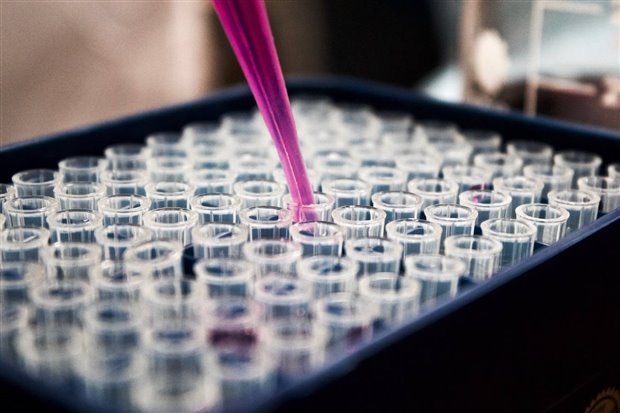
(Image Credit: Louis Reed/Unsplash)

To treat her leukemia, six-year-old Emily Whitehead underwent chemotherapy for 16 months, showing no signs of improvement while exhausting alternative treatments. The University of Pennsylvania ended up enrolling Emily in a clinical trial focused on reprogramming her immune cells to eliminate cancer.  With outstanding results, Emily survived and is now a 100% healthy teenager. Her recovery process benefited from using  CAR-T (Chimeric Antigen Receptor T-cells), a revolutionary cell-based therapy that helps treat blood cancers.


CAR-T cell therapy works by genetically modifying immune cells to find and destroy cancer cells. It provides lasting remissions for terminally ill patients who have tried traditional treatment options that proved ineffective. Over 400 CAR-T clinical trials are underway, which could have a significant impact. The World Health Organization states that cancer causes one in six deaths around the world. Personalized cell therapy could even save millions of lives. Other medical ailments like heart failure, autoimmune diseases, diabetes, and HIV could be treated by modifying a patient’s immune cells.


CAR-T treatment costs up to $475,000, and hospitals could charge $1.5 million just to apply it, which comes into effect after ancillary costs. This price has to do with CAR-T being specifically developed for each patient, and each treatment involves a time-consuming and expensive sophisticated process.

This involves collecting, purifying in various stages, genetically modifying, formulating at the correct dose, and reinfusing the patient’s immune cells. It requires shipments to different labs and manual interventions, which could cause human errors and life-threatening side effects. Since CAR-T contains living cells with varying effectiveness, manufacturers must constantly test results during the process. Ultimately, it takes weeks to produce the treatment. However, the price makes it inaccessible for patients that depend on it, but it reaches those who can afford the treatment.

Now, with AI, nanotechnology, biosensors, and IoT gaining new insights, personalized cell therapy could become more affordable. This would be achieved by automating the manufacturing process, which reduces costs, time, and risks.


Chip technology advancements draw inspiration. Demand for better gaming consoles, computers, and smartphones resulted in smaller transistors, providing new and improved technological capabilities. Capital spending went into chip engineering, which produced small-scale materials and systems, allowing the ability to screen, select, and genetically modify immune cells.


Using these techniques to advance medical research can lead to the development and mass production of machines that re-engineer the immune system. Doing so would revolutionize safe and effective treatment against diseases.


Traditional methods focused on producing drug candidates that split discovery, clinical trials, and manufacturing won’t work since pharmaceutical companies need to re-engineer living cells. Implementing programs designed to share knowledge and infrastructure should help in the long run. This enables researchers to use technology they originally wouldn’t have access to while engineers continue developing it.


For these therapies to be successful, the right ecosystems need to be built with the essential skill sets. To accomplish this, life scientists and AI experts need to collaborate. Additionally, pharmaceutical and technology companies would be required to form partnerships.


Have a story tip? Message me at: http://twitter.com/Cabe_Atwell

  • Sign in to reply
  • dubbie
    dubbie over 4 years ago

    This looks a promising cancer treatment.


    Dubbie

    • Cancel
    • Vote Up 0 Vote Down
    • Sign in to reply
    • More
    • Cancel
element14 Community

element14 is the first online community specifically for engineers. Connect with your peers and get expert answers to your questions.

  • Members
  • Learn
  • Technologies
  • Challenges & Projects
  • Products
  • Store
  • About Us
  • Feedback & Support
  • FAQs
  • Terms of Use
  • Privacy Policy
  • Legal and Copyright Notices
  • Sitemap
  • Cookies

An Avnet Company © 2026 Premier Farnell Limited. All Rights Reserved.

Premier Farnell Ltd, registered in England and Wales (no 00876412), registered office: Farnell House, Forge Lane, Leeds LS12 2NE.

ICP 备案号 10220084.

Follow element14

  • X
  • Facebook
  • linkedin
  • YouTube