element14 Community
element14 Community
    Register Log In
  • Site
  • Search
  • Log In Register
  • Community Hub
    Community Hub
    • What's New on element14
    • Feedback and Support
    • Benefits of Membership
    • Personal Blogs
    • Members Area
    • Achievement Levels
  • Learn
    Learn
    • Ask an Expert
    • eBooks
    • element14 presents
    • Learning Center
    • Tech Spotlight
    • STEM Academy
    • Webinars, Training and Events
    • Learning Groups
  • Technologies
    Technologies
    • 3D Printing
    • FPGA
    • Industrial Automation
    • Internet of Things
    • Power & Energy
    • Sensors
    • Technology Groups
  • Challenges & Projects
    Challenges & Projects
    • Design Challenges
    • element14 presents Projects
    • Project14
    • Arduino Projects
    • Raspberry Pi Projects
    • Project Groups
  • Products
    Products
    • Arduino
    • Avnet & Tria Boards Community
    • Dev Tools
    • Manufacturers
    • Multicomp Pro
    • Product Groups
    • Raspberry Pi
    • RoadTests & Reviews
  • About Us
  • Store
    Store
    • Visit Your Store
    • Choose another store...
      • Europe
      •  Austria (German)
      •  Belgium (Dutch, French)
      •  Bulgaria (Bulgarian)
      •  Czech Republic (Czech)
      •  Denmark (Danish)
      •  Estonia (Estonian)
      •  Finland (Finnish)
      •  France (French)
      •  Germany (German)
      •  Hungary (Hungarian)
      •  Ireland
      •  Israel
      •  Italy (Italian)
      •  Latvia (Latvian)
      •  
      •  Lithuania (Lithuanian)
      •  Netherlands (Dutch)
      •  Norway (Norwegian)
      •  Poland (Polish)
      •  Portugal (Portuguese)
      •  Romania (Romanian)
      •  Russia (Russian)
      •  Slovakia (Slovak)
      •  Slovenia (Slovenian)
      •  Spain (Spanish)
      •  Sweden (Swedish)
      •  Switzerland(German, French)
      •  Turkey (Turkish)
      •  United Kingdom
      • Asia Pacific
      •  Australia
      •  China
      •  Hong Kong
      •  India
      • Japan
      •  Korea (Korean)
      •  Malaysia
      •  New Zealand
      •  Philippines
      •  Singapore
      •  Taiwan
      •  Thailand (Thai)
      • Vietnam
      • Americas
      •  Brazil (Portuguese)
      •  Canada
      •  Mexico (Spanish)
      •  United States
      Can't find the country/region you're looking for? Visit our export site or find a local distributor.
  • Translate
  • Profile
  • Settings
Test & Tools
  • Technologies
  • More
Test & Tools
Blog Bees Carrying “Backpack” with a Human Survival Payload
  • Blog
  • Forum
  • Documents
  • Files
  • Members
  • Mentions
  • Sub-Groups
  • Tags
  • More
  • Cancel
  • New
Join Test & Tools to participate - click to join for free!
  • Share
  • More
  • Cancel
Group Actions
  • Group RSS
  • More
  • Cancel
Engagement
  • Author Author: Catwell
  • Date Created: 4 Sep 2018 3:19 PM Date Created
  • Views 1015 views
  • Likes 2 likes
  • Comments 2 comments
  • research
  • bees
  • nature
  • on_campus
  • bee
  • tracking
  • cabeatwell
  • university
  • sensor
Related
Recommended

Bees Carrying “Backpack” with a Human Survival Payload

Catwell
Catwell
4 Sep 2018

image

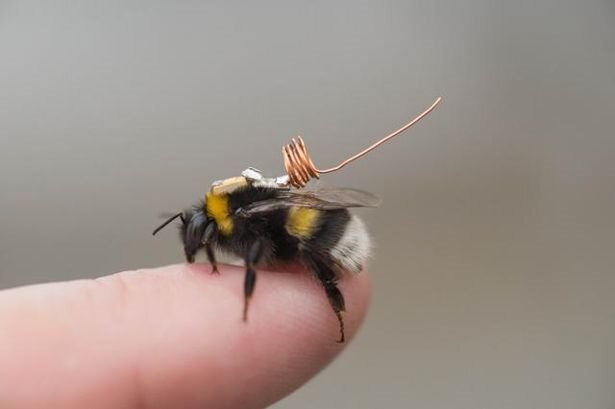
In 2015, researchers set out to track bees to understand the reasons behind the slow decline in bee population. Honeybee carrying a tracking device (Image from RBG/KEW)


According to Darwin’s theory of evolution, the species that survive are the ones that adapt and change based on their environment. It seems to be a very simple and clear shot on the journey of survival, and on the surface, it probably makes a lot of sense. Maybe that is the reason mankind appears to be at the top of the food chain right now; thanks to the disappearance of dinosaurs and other species that would have made men one of the most vulnerable preys. There is no doubt mankind evolved and is thriving, but Darwin certainly didn’t take into account that it’s not just the species that have to change and adapt; the environment and its every actor should support that change as well. The illusion that the homo sapiens knows and does it all by himself has made him violate its environment in multiple ways, in the name of evolution.


Nobody will contest that things are better in today’s society than they were a couple of millennia back, even better than a couple of decades behind. However, the speed of such “evolution” also lead to many disasters that mankind’s wit has not comprehend yet. The question is whether it will take many more disasters before the end of the tunnel.


Here is a hypothesis: every species is valuable and necessary to the survival of the other. If not, why would zoologists try so hard to preserve the balance between predators and preys? Why are some animals classified endangered and why would there be organizations to protect animals? Some members of the homo sapiens might be on to something, but not enough people. Right now it  is not just about the other animals. The “wise man” might have adopted behaviors that could lead to his extinction.


Bees, seemingly insignificant creatures, are so important to the survival of mankind. They make honey and wax, but in the process, they pollinate the flowers that will become the grains, seeds and fruits we consume. Without pollination, there won’t be food to eat, and eventually, there won’t be any homo sapiens left on earth. To put it in perspective, in the U.S alone it is estimated that bees contribute to $15billion in crop values, and the U.S government is worried that the decline in bees might affect the economy in unprecedented way. There are a lot of theories as to why the population of bees is decreasing, but the most common belief is that the excessive use of pesticide and insecticide on crops and plant is intoxicating the bees. To clear all the fog on that mystery, the homo sapiens has to utilize his biggest weapon to date: technology.


Smart 3-D printed beehives, bee sperm banks, beespotter (a database for bees), and using solar farms to plant more wild flowers are all solutions that will help increase the population of bees, but the problem is not solved till what is killing the bees is discovered. And, that is the mission of a team of researchers who built a device to track bees. There have been many devices planted on bees in the past to track them, but they will fail due to their invasive aspect for the bees. This time the device, a miniature backpack, is as light as a drop of water, so the bee wearing it will barely notice its presence. The bee backpack also solved the issue of energy source to power the device; the backpack will be powered by energy produced by the batting of the bee’s wings while flying. Now to trace the signal of the backpack, the team planned to use a drone that will simply follow the signal and the bee from a wide range. It is also important to note that the bee wearing the backpack has not been harmed in no way. In fact, to avoid any resistance which could lead to injury of the bee, the team placed it in a cold environment to slow the bee’s activity. Only then was the backpack placed on the bee. Scientists hope that tracking bees with the backpack will shed some light on the reason for their decline.


The homo sapiens might be able to save the bees after all, but shouldn’t the situation bring awareness on the fact that we are all part of a bigger circle where every link matters? Or will it take a situation like the one described in the movie Interstellar to wake humanity up?


You don't have permission to edit metadata of this video.
Edit media
x
image
Upload Preview
image


Have a story tip? Message me at: cabe(at)element14(dot)com

http://twitter.com/Cabe_Atwell


  • Sign in to reply

Top Comments

  • mp2100
    mp2100 over 7 years ago +2
    OK, interesting. Do you have more details, more to come? How is the beating of the wings powering the backpack? How much does the backpack actually weigh? Is that really a honeybee? My father, brother…
  • 14rhb
    14rhb over 7 years ago +1
    Like mp2100 asks, a bit of information on the design would be really interesting. I like bees so I'm not sure I'd like to harm one by attaching electronics to it...but I guess this is a powerful method…
  • 14rhb
    14rhb over 7 years ago

    Like mp2100 asks, a bit of information on the design would be really interesting. I like bees so I'm not sure I'd like to harm one by attaching electronics to it...but I guess this is a powerful method to determine their movements and habits.


    NB: There was a Sci-Fi short film on Black Mirror about Colony Collapse Disorder called Hated in the Nation


    Rod

    • Cancel
    • Vote Up +1 Vote Down
    • Sign in to reply
    • More
    • Cancel
  • mp2100
    mp2100 over 7 years ago

    OK, interesting.  Do you have more details, more to come?  How is the beating of the wings powering the backpack?   How much does the backpack actually weigh?  Is that really a honeybee?  My father, brother and grandfather are/were beekeepers, what species is that bee?

    • Cancel
    • Vote Up +2 Vote Down
    • Sign in to reply
    • More
    • Cancel
element14 Community

element14 is the first online community specifically for engineers. Connect with your peers and get expert answers to your questions.

  • Members
  • Learn
  • Technologies
  • Challenges & Projects
  • Products
  • Store
  • About Us
  • Feedback & Support
  • FAQs
  • Terms of Use
  • Privacy Policy
  • Legal and Copyright Notices
  • Sitemap
  • Cookies

An Avnet Company © 2025 Premier Farnell Limited. All Rights Reserved.

Premier Farnell Ltd, registered in England and Wales (no 00876412), registered office: Farnell House, Forge Lane, Leeds LS12 2NE.

ICP 备案号 10220084.

Follow element14

  • X
  • Facebook
  • linkedin
  • YouTube