


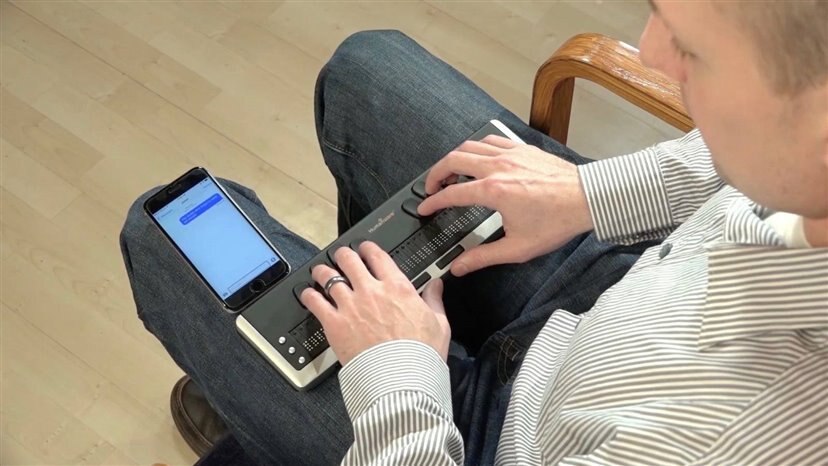
Many tech companies come together to devise a tool that will allow blind people to have a more normal life and feel more included in social dynamics. USB-IF HID plugged into a phone. (Image via Microsoft)
In the United States, it is a crime to discriminate against anyone when it comes to basic necessities like holding a job. Actually, discrimination against anyone is not recommended, but it is probably harder to defend oneself against it when carrying a disability. To prevent discrimination against handicapped people, Microsoft worked in collaboration with other tech companies to develop a tool that will make disabled people around the world enjoy a more normal life. Even though Microsoft is already working on similar projects, it is the collaboration that gave birth to this tool that makes it even more precious.
There is no doubt that technology can improve lives. However, tech companies taken separately don’t always have the exact answers to a problem, which will explain how rivals like Apple and Microsoft end up working together. Both companies being customer-centered, it only makes sense that they want to open their services to all potential customers, disabled included. The fruit of their collaboration is the USB-IF HID (USB Implementers Forum Human Interface Design specially designed with Braille display. In short, it is a device that allows blind people to communicate using a computer, Braille being a written language for blinds. The device was welcome by many institutions such as assistive technology companies and even people in the tech world.
With or without a computer, Braille is necessary for a blind person to express himself in writing, learn in schools, or hold a job. The USB-IF HID will translate regular words into Braille for the blind person to read and vice versa. The President of the National Federation of the Blind confessed he was proud to be in partnership with tech companies to make Braille a key element of the development of blind people. The USB-IF HID sets a standard for all future assistive devices.
For starter, the new HID is cost effective and easy to market. There was a time when Braille devices must have their own customized software based on the operating system on the host computer, but the standardization of HID remove that hassle. Users will be able to switch from their computers to their phones without having to plug different devices. Mike Hill, the Technical Director of Dolphin Computer Access, predicts that particular feature will be the wining ticket that will get more blind or low vision people interested in the HID. Anywhere they go all they have to do is plug their HID into any electronic device they intend to use, whether at work or at home.
The goal was as simple as creating a free world for people with disabilities, and they started with blind people. They are Apple, Microsoft, Google, Tech GmbH, Baum, HumanWare, and a few others. And they were catering to 253 million people who have challenged sight. Even though designed for blind people, another way to market it is for places of employment, coffee shops, and libraries to have it available for their future blind customers and employees to use. Time will reveal more about this project and its potential.
Have a story tip? Message me at: cabe(at)element14(dot)com