element14 Community
element14 Community
    Register Log In
  • Site
  • Search
  • Log In Register
  • Community Hub
    Community Hub
    • What's New on element14
    • Feedback and Support
    • Benefits of Membership
    • Personal Blogs
    • Members Area
    • Achievement Levels
  • Learn
    Learn
    • Ask an Expert
    • eBooks
    • element14 presents
    • Learning Center
    • Tech Spotlight
    • STEM Academy
    • Webinars, Training and Events
    • Learning Groups
  • Technologies
    Technologies
    • 3D Printing
    • FPGA
    • Industrial Automation
    • Internet of Things
    • Power & Energy
    • Sensors
    • Technology Groups
  • Challenges & Projects
    Challenges & Projects
    • Design Challenges
    • element14 presents Projects
    • Project14
    • Arduino Projects
    • Raspberry Pi Projects
    • Project Groups
  • Products
    Products
    • Arduino
    • Avnet & Tria Boards Community
    • Dev Tools
    • Manufacturers
    • Multicomp Pro
    • Product Groups
    • Raspberry Pi
    • RoadTests & Reviews
  • About Us
  • Store
    Store
    • Visit Your Store
    • Choose another store...
      • Europe
      •  Austria (German)
      •  Belgium (Dutch, French)
      •  Bulgaria (Bulgarian)
      •  Czech Republic (Czech)
      •  Denmark (Danish)
      •  Estonia (Estonian)
      •  Finland (Finnish)
      •  France (French)
      •  Germany (German)
      •  Hungary (Hungarian)
      •  Ireland
      •  Israel
      •  Italy (Italian)
      •  Latvia (Latvian)
      •  
      •  Lithuania (Lithuanian)
      •  Netherlands (Dutch)
      •  Norway (Norwegian)
      •  Poland (Polish)
      •  Portugal (Portuguese)
      •  Romania (Romanian)
      •  Russia (Russian)
      •  Slovakia (Slovak)
      •  Slovenia (Slovenian)
      •  Spain (Spanish)
      •  Sweden (Swedish)
      •  Switzerland(German, French)
      •  Turkey (Turkish)
      •  United Kingdom
      • Asia Pacific
      •  Australia
      •  China
      •  Hong Kong
      •  India
      • Japan
      •  Korea (Korean)
      •  Malaysia
      •  New Zealand
      •  Philippines
      •  Singapore
      •  Taiwan
      •  Thailand (Thai)
      • Vietnam
      • Americas
      •  Brazil (Portuguese)
      •  Canada
      •  Mexico (Spanish)
      •  United States
      Can't find the country/region you're looking for? Visit our export site or find a local distributor.
  • Translate
  • Profile
  • Settings
Test & Tools
  • Technologies
  • More
Test & Tools
Blog MIT Researchers use Machine Learning to Translate Dead Languages
  • Blog
  • Forum
  • Documents
  • Files
  • Members
  • Mentions
  • Sub-Groups
  • Tags
  • More
  • Cancel
  • New
Join Test & Tools to participate - click to join for free!
  • Share
  • More
  • Cancel
Group Actions
  • Group RSS
  • More
  • Cancel
Engagement
  • Author Author: Catwell
  • Date Created: 5 Jul 2019 3:41 PM Date Created
  • Views 1638 views
  • Likes 6 likes
  • Comments 1 comment
  • mit
  • on_campu
  • artificial intelligence
  • cabeatwell
  • ai
  • university
  • sensor
Related
Recommended

MIT Researchers use Machine Learning to Translate Dead Languages

Catwell
Catwell
5 Jul 2019

image

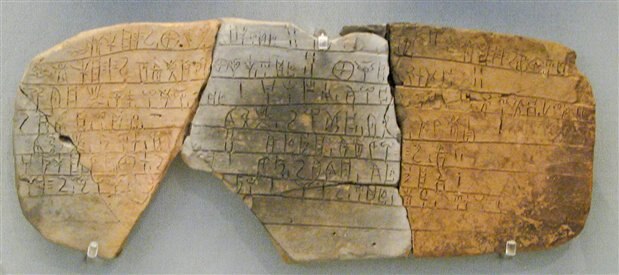
The researchers created a neural network system that can decipher text from lost languages. (Image credit: Sharon Mollerus via Wikipedia)


Researchers from MIT’s CSAIL (Computer Science and Artificial Intelligence Laboratory) and Google Brain have developed a neural network that is capable of deciphering dead languages, including Linear B- a syllabic script that was used for writing Mycenaean Greek, the most ancient form of the Greek language. In a recent paper titled “Neural Decipherment via Minimum-Cost Flow: from Ugaritic to Linear B,” the research team detail how they adapted deep learning to solve the puzzle of translation.


Their platform differs from traditional AI methods of language translation, as there is a lack of data when it comes to lost ancient languages. To get around this issue, the researchers based their translation matrixes based on a principle that languages evolve over time, and understanding that words are related to each other in similar ways.


Their machine-learning platform starts the process of translating by mapping-out those relationships for that specific language, which requires an enormous amount of text. It then searches to see how often each word appears next to other words, which creates a pattern using unique signatures that define a word as a vector in space. The researchers explain that those vectors follow simple mathematical rules, for example- King – Man + Woman = Queen, so a sentence can be thought of as a set of vectors, following one after another to produce a trajectory.


This principle is applied to words in two separate languages, which occupy the same vectors in their own parameters of space, making it possible to map one language on to another using a one-to-one comparison. It’s those trajectory similarities through those respective spaces that allow for translation, and the system doesn’t even need to know what the words mean to figure it out.   


Have a story tip? Message me at: cabe(at)element14(dot)com

http://twitter.com/Cabe_Atwell

  • Sign in to reply
  • dubbie
    dubbie over 6 years ago

    An innovative use of AI systems. I always like a good mapping from one domain to another as I think it is fascinating how changing the domain can lead to greater understanding. I think my first exposure to this was in control theory although I didn't really understand it at the time and now I've forgotten it all, except the joyous intellectual mystery of mathematics.


    Dubbie

    • Cancel
    • Vote Up 0 Vote Down
    • Sign in to reply
    • More
    • Cancel
element14 Community

element14 is the first online community specifically for engineers. Connect with your peers and get expert answers to your questions.

  • Members
  • Learn
  • Technologies
  • Challenges & Projects
  • Products
  • Store
  • About Us
  • Feedback & Support
  • FAQs
  • Terms of Use
  • Privacy Policy
  • Legal and Copyright Notices
  • Sitemap
  • Cookies

An Avnet Company © 2025 Premier Farnell Limited. All Rights Reserved.

Premier Farnell Ltd, registered in England and Wales (no 00876412), registered office: Farnell House, Forge Lane, Leeds LS12 2NE.

ICP 备案号 10220084.

Follow element14

  • X
  • Facebook
  • linkedin
  • YouTube