element14 Community
element14 Community
    Register Log In
  • Site
  • Search
  • Log In Register
  • Community Hub
    Community Hub
    • What's New on element14
    • Feedback and Support
    • Benefits of Membership
    • Personal Blogs
    • Members Area
    • Achievement Levels
  • Learn
    Learn
    • Ask an Expert
    • eBooks
    • element14 presents
    • Learning Center
    • Tech Spotlight
    • STEM Academy
    • Webinars, Training and Events
    • Learning Groups
  • Technologies
    Technologies
    • 3D Printing
    • FPGA
    • Industrial Automation
    • Internet of Things
    • Power & Energy
    • Sensors
    • Technology Groups
  • Challenges & Projects
    Challenges & Projects
    • Design Challenges
    • element14 presents Projects
    • Project14
    • Arduino Projects
    • Raspberry Pi Projects
    • Project Groups
  • Products
    Products
    • Arduino
    • Avnet & Tria Boards Community
    • Dev Tools
    • Manufacturers
    • Multicomp Pro
    • Product Groups
    • Raspberry Pi
    • RoadTests & Reviews
  • About Us
  • Store
    Store
    • Visit Your Store
    • Choose another store...
      • Europe
      •  Austria (German)
      •  Belgium (Dutch, French)
      •  Bulgaria (Bulgarian)
      •  Czech Republic (Czech)
      •  Denmark (Danish)
      •  Estonia (Estonian)
      •  Finland (Finnish)
      •  France (French)
      •  Germany (German)
      •  Hungary (Hungarian)
      •  Ireland
      •  Israel
      •  Italy (Italian)
      •  Latvia (Latvian)
      •  
      •  Lithuania (Lithuanian)
      •  Netherlands (Dutch)
      •  Norway (Norwegian)
      •  Poland (Polish)
      •  Portugal (Portuguese)
      •  Romania (Romanian)
      •  Russia (Russian)
      •  Slovakia (Slovak)
      •  Slovenia (Slovenian)
      •  Spain (Spanish)
      •  Sweden (Swedish)
      •  Switzerland(German, French)
      •  Turkey (Turkish)
      •  United Kingdom
      • Asia Pacific
      •  Australia
      •  China
      •  Hong Kong
      •  India
      •  Korea (Korean)
      •  Malaysia
      •  New Zealand
      •  Philippines
      •  Singapore
      •  Taiwan
      •  Thailand (Thai)
      • Americas
      •  Brazil (Portuguese)
      •  Canada
      •  Mexico (Spanish)
      •  United States
      Can't find the country/region you're looking for? Visit our export site or find a local distributor.
  • Translate
  • Profile
  • Settings
Test & Tools
  • Technologies
  • More
Test & Tools
Blog Mitsubishi creates new GPS system for indoor navigation
  • Blog
  • Forum
  • Documents
  • Files
  • Members
  • Mentions
  • Sub-Groups
  • Tags
  • More
  • Cancel
  • New
Join Test & Tools to participate - click to join for free!
  • Share
  • More
  • Cancel
Group Actions
  • Group RSS
  • More
  • Cancel
Engagement
  • Author Author: Catwell
  • Date Created: 27 Feb 2016 3:45 AM Date Created
  • Views 1446 views
  • Likes 5 likes
  • Comments 7 comments
  • indoor_tracking
  • car
  • tracking
  • cabeatwell
  • mitsubishi
  • gps
  • innovation
Related
Recommended

Mitsubishi creates new GPS system for indoor navigation

Catwell
Catwell
27 Feb 2016

image


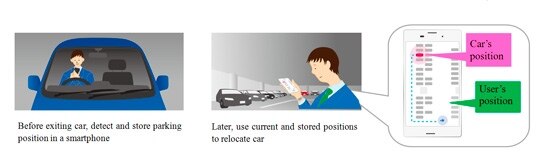
Mitsubishi's idea of how the new technology will work. The car company uses WLAN and acoustic ranging for new indoor GPS technology. (via Mitsubishi)


There's seems to be no excuse to get lost since GPS is easily accessible. If it's not in your car, it's on your phone. No more relying on Map Quest to get you where you need to go. But once you leave the car and head indoors GPS gets a little spotty. WiFi can be helpful, but it's not always reliable or accurate. But now Mitsubishi believes they have a solution to this problem.


The car company has recently developed an indoor positioning system that uses wireless LAN communication and acoustic ranging. This new system finds your location based on how long it takes for sound to reach positioning-capable WiFi access points. The positioning trigger and other data is exchanged via a WLAN. The system is accurate within 3.3 feet and works with as like as three hotspots.


The system is meant to be used for applications involving walking navigation and warehouse management in underground locations where GPS signals often weaken. Other indoor positioning tools are available, but they require the purchase of positioning-specific hardware, like RF tags. Mitsubishi's system is simpler since it only requires WLAN communication and sound-wave transmission. This actually comes equipped on most smartphones, so most users will only need to install the positioning application on their phone.


As it stands, accurate, cost-effective indoor positioning methods have not been available due to a number of issues including low accuracy WLAN, acoustic signals, time of arrival for WLAN packets, and WLAN RSSI mapping. Mitsubishi hopes to eliminates these problems with their new system.


Though this system is ideal for underground warehouses where GPS is limited, it can also come in handy in everyday situations. For example, this technology can be used to help you locate your car in parking garages. No more being stranded in a desert of cars when you go to the mall. If this technology works as well as Mitsubishi is promising it would be a great innovation. It also helps to ensure GPS systems are accessible and reliable. No one wants to be standing in the middle of a garage walking in circles trying to get a signal.

  • Sign in to reply

Top Comments

  • clem57
    clem57 over 9 years ago in reply to DAB +1
    I agree with DAB . But why has this taken this long. Sems more like old tech. Clem
  • mcb1
    mcb1 over 9 years ago in reply to shabaz +1
    Sounds similar to Multi Lateration. They use the time difference (TOA) for a signal at multiple sites to decide where the source is (in three dimensions). For MLAT there are some considerations for the…
  • nellyc
    nellyc over 7 years ago

    cool idea uses ble in a parking. I think it is cool technology for maps and navigation. I read about airports indoor navigation. thank you. but i think , find a empty place or where you park your car in big parking it is also the brilliant idea.

    • Cancel
    • Vote Up 0 Vote Down
    • Sign in to reply
    • More
    • Cancel
  • shabaz
    shabaz over 9 years ago in reply to mcb1

    Hi Mark,


    I think so, probably the principle is very similar. Sounds like a very interesting thing to work on to be honest!

    • Cancel
    • Vote Up 0 Vote Down
    • Sign in to reply
    • More
    • Cancel
  • mcb1
    mcb1 over 9 years ago in reply to shabaz

    Sounds similar to Multi Lateration.

    They use the time difference (TOA) for a signal at multiple sites to decide where the source is (in three dimensions).


    For MLAT there are some considerations for the transport path, but having it all in one these are removed which may allow a much finer tolerance.


    Mark

    • Cancel
    • Vote Up +1 Vote Down
    • Sign in to reply
    • More
    • Cancel
  • shabaz
    shabaz over 9 years ago in reply to clem57

    I don't really understand it in detail, but one method relies on signal strength and triangulation, which as you say in theory is quite an old tech. The other method relies on a load of antennas, about 32 of them in the Halo example and loads of signal processing to figure out 'angle of arrival' which as I understand means in three dimensions, and combined with signal strength, means that you don't need to triangulate at all. The signal processing maybe involves a lot of high-speed calculations going on for data received from all 32 antennas captured simultaneously I'm guessing (I don't have any knowledge at all! heavy guesswork here) and the slight difference in phase allows to identify the angle of arrival. Apparently similar to military tech, and perhaps means you need heavy signal processing, which I'm guessing was costly in the past.


    EDIT: Some diagram from the Internet, the yellow part is the 32-or-so antennas mounted on the ceiling, arranged in a square perhaps about 25cm per side.

    image

    • Cancel
    • Vote Up 0 Vote Down
    • Sign in to reply
    • More
    • Cancel
  • clem57
    clem57 over 9 years ago in reply to DAB

    I agree with DAB  . But why has this taken this long. Sems more like old tech.

    Clem

    • Cancel
    • Vote Up +1 Vote Down
    • Sign in to reply
    • More
    • Cancel
>
element14 Community

element14 is the first online community specifically for engineers. Connect with your peers and get expert answers to your questions.

  • Members
  • Learn
  • Technologies
  • Challenges & Projects
  • Products
  • Store
  • About Us
  • Feedback & Support
  • FAQs
  • Terms of Use
  • Privacy Policy
  • Legal and Copyright Notices
  • Sitemap
  • Cookies

An Avnet Company © 2025 Premier Farnell Limited. All Rights Reserved.

Premier Farnell Ltd, registered in England and Wales (no 00876412), registered office: Farnell House, Forge Lane, Leeds LS12 2NE.

ICP 备案号 10220084.

Follow element14

  • X
  • Facebook
  • linkedin
  • YouTube