element14 Community
element14 Community
    Register Log In
  • Site
  • Search
  • Log In Register
  • Community Hub
    Community Hub
    • What's New on element14
    • Feedback and Support
    • Benefits of Membership
    • Personal Blogs
    • Members Area
    • Achievement Levels
  • Learn
    Learn
    • Ask an Expert
    • eBooks
    • element14 presents
    • Learning Center
    • Tech Spotlight
    • STEM Academy
    • Webinars, Training and Events
    • Learning Groups
  • Technologies
    Technologies
    • 3D Printing
    • FPGA
    • Industrial Automation
    • Internet of Things
    • Power & Energy
    • Sensors
    • Technology Groups
  • Challenges & Projects
    Challenges & Projects
    • Design Challenges
    • element14 presents Projects
    • Project14
    • Arduino Projects
    • Raspberry Pi Projects
    • Project Groups
  • Products
    Products
    • Arduino
    • Avnet & Tria Boards Community
    • Dev Tools
    • Manufacturers
    • Multicomp Pro
    • Product Groups
    • Raspberry Pi
    • RoadTests & Reviews
  • About Us
  • Store
    Store
    • Visit Your Store
    • Choose another store...
      • Europe
      •  Austria (German)
      •  Belgium (Dutch, French)
      •  Bulgaria (Bulgarian)
      •  Czech Republic (Czech)
      •  Denmark (Danish)
      •  Estonia (Estonian)
      •  Finland (Finnish)
      •  France (French)
      •  Germany (German)
      •  Hungary (Hungarian)
      •  Ireland
      •  Israel
      •  Italy (Italian)
      •  Latvia (Latvian)
      •  
      •  Lithuania (Lithuanian)
      •  Netherlands (Dutch)
      •  Norway (Norwegian)
      •  Poland (Polish)
      •  Portugal (Portuguese)
      •  Romania (Romanian)
      •  Russia (Russian)
      •  Slovakia (Slovak)
      •  Slovenia (Slovenian)
      •  Spain (Spanish)
      •  Sweden (Swedish)
      •  Switzerland(German, French)
      •  Turkey (Turkish)
      •  United Kingdom
      • Asia Pacific
      •  Australia
      •  China
      •  Hong Kong
      •  India
      • Japan
      •  Korea (Korean)
      •  Malaysia
      •  New Zealand
      •  Philippines
      •  Singapore
      •  Taiwan
      •  Thailand (Thai)
      • Vietnam
      • Americas
      •  Brazil (Portuguese)
      •  Canada
      •  Mexico (Spanish)
      •  United States
      Can't find the country/region you're looking for? Visit our export site or find a local distributor.
  • Translate
  • Profile
  • Settings
Test & Tools
  • Technologies
  • More
Test & Tools
Blog The first ever video call was made 50 years ago using Picturephone Mod II
  • Blog
  • Forum
  • Documents
  • Files
  • Members
  • Mentions
  • Sub-Groups
  • Tags
  • More
  • Cancel
  • New
Join Test & Tools to participate - click to join for free!
  • Share
  • More
  • Cancel
Group Actions
  • Group RSS
  • More
  • Cancel
Engagement
  • Author Author: Catwell
  • Date Created: 9 Jul 2020 7:45 PM Date Created
  • Views 1631 views
  • Likes 5 likes
  • Comments 3 comments
  • video phone
  • videophone
  • cabeatwell
  • at&t
  • history
  • innovation
Related
Recommended

The first ever video call was made 50 years ago using Picturephone Mod II

Catwell
Catwell
9 Jul 2020

image

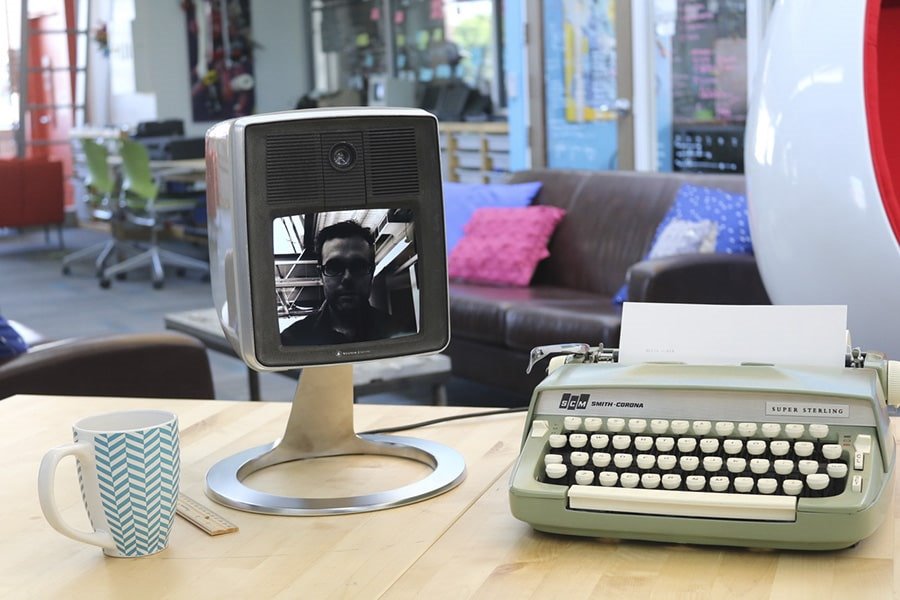
The very first video call took place fifty years ago, which involved using the Picturephone Mod II device. (Image Credit: Chris Harrison/Carnegie Mellon University)


Fifty years ago, the first-ever video call took place using AT&T’s Picturephone Mod II between Peter Flaherty, then-Pittsburgh Mayor, and John Harper, former chairman of Alcoa. This was the first video phone that could be installed in your home or office, and when AT&T’s network went live on July 1, 1970, 38 of these devices were being used across eight Pittsburgh companies.


AT&T was able to develop the Picturephone Mod II for home and office use due to the emergence of smaller cameras and advancements in signal compression, switchboards and circuitry. It featured a 5 x 5”, 250-resolution black and white screen with a refresh rate of 30 interlaced frames per second. Meanwhile, the camera’s resolution was equal to 0.8 megapixels. The Picturephone Mod II needed three phone lines, which meant that one of the phone lines transmitted voice since video requires higher bandwidth than audio.


AT&T’s Picturephone Mod II also contained an integrated mirror, which could be used as an early type of screen sharing by flipping it to either display documents or the user behind the Mod II. Prices to use it were also pretty steep, costing $160/month, which is equivalent to $1,092 today, and you would only get 30 minutes' worth of call time.


However, the Picturephone wasn’t a big hit on the market as AT&T anticipated. By 1973, approximately 450 of these devices were in use, and the company projected that by 1975, 100,000 Mod IIs would be active on its network.


With very little success, AT&T, which put $500 million into videophone research and development from the ’50s to the early ’70s, attempted to create different versions of the Picturephone Mod II until the ’90s. It turned out to be a failure due to high costs, low demand and people’s unwillingness to be seen over the phone.


Today’s technology, which consists of cameras in smartphones, tablets and laptops, makes it much more affordable and easier to have video calls for billions of people around the world. The Mod II device wasn’t the game-changer AT&T hoped for, but it helped make a significant impact on video calling technology.


In the future, video calling could have more immersive technologies to connect and collaborate with remote teams. This includes using advanced VR and AR technologies in the workplace, making it seem like employees are in the same virtual room during a conference call. 5G’s emergence also means that AR and VR technology will make an appearance in the industry. Some companies, like ARcall, have already developed a new form of communication that uses holograms in augmented reality via a smartphone or AR glasses. Another company, Spatial, has created a holographic collaboration platform, which turns virtual meetings into a more interactive VR 3D experience.


You don't have permission to edit metadata of this video.
Edit media
x
image
Upload Preview
image


Have a story tip? Message me at: cabe(at)element14(dot)com

http://twitter.com/Cabe_Atwell

  • Sign in to reply

Top Comments

  • rosylinda
    rosylinda over 5 years ago in reply to dubbie +1
    "Necessity is the mother of invention" - Old memories are fresh. Thank you
  • Fred27
    Fred27 over 5 years ago +1
    If the first video call was made on a Picturephone Mod II, what did they use the Picturephone Mod I for?
Parents
  • dubbie
    dubbie over 5 years ago

    Funny how times change. Not many people now would object to being seen in a video call. If I did I wouldn't have seen my children at all for 3 months.


    Dubbie

    • Cancel
    • Vote Up 0 Vote Down
    • Sign in to reply
    • More
    • Cancel
Comment
  • dubbie
    dubbie over 5 years ago

    Funny how times change. Not many people now would object to being seen in a video call. If I did I wouldn't have seen my children at all for 3 months.


    Dubbie

    • Cancel
    • Vote Up 0 Vote Down
    • Sign in to reply
    • More
    • Cancel
Children
  • rosylinda
    rosylinda over 5 years ago in reply to dubbie

    "Necessity is the mother of invention" - Old memories are fresh. Thank you

    • Cancel
    • Vote Up +1 Vote Down
    • Sign in to reply
    • More
    • Cancel
element14 Community

element14 is the first online community specifically for engineers. Connect with your peers and get expert answers to your questions.

  • Members
  • Learn
  • Technologies
  • Challenges & Projects
  • Products
  • Store
  • About Us
  • Feedback & Support
  • FAQs
  • Terms of Use
  • Privacy Policy
  • Legal and Copyright Notices
  • Sitemap
  • Cookies

An Avnet Company © 2025 Premier Farnell Limited. All Rights Reserved.

Premier Farnell Ltd, registered in England and Wales (no 00876412), registered office: Farnell House, Forge Lane, Leeds LS12 2NE.

ICP 备案号 10220084.

Follow element14

  • X
  • Facebook
  • linkedin
  • YouTube