element14 Community
element14 Community
    Register Log In
  • Site
  • Search
  • Log In Register
  • Community Hub
    Community Hub
    • What's New on element14
    • Feedback and Support
    • Benefits of Membership
    • Personal Blogs
    • Members Area
    • Achievement Levels
  • Learn
    Learn
    • Ask an Expert
    • eBooks
    • element14 presents
    • Learning Center
    • Tech Spotlight
    • STEM Academy
    • Webinars, Training and Events
    • Learning Groups
  • Technologies
    Technologies
    • 3D Printing
    • FPGA
    • Industrial Automation
    • Internet of Things
    • Power & Energy
    • Sensors
    • Technology Groups
  • Challenges & Projects
    Challenges & Projects
    • Design Challenges
    • element14 presents Projects
    • Project14
    • Arduino Projects
    • Raspberry Pi Projects
    • Project Groups
  • Products
    Products
    • Arduino
    • Avnet & Tria Boards Community
    • Dev Tools
    • Manufacturers
    • Multicomp Pro
    • Product Groups
    • Raspberry Pi
    • RoadTests & Reviews
  • About Us
    About the element14 Community
  • Store
    Store
    • Visit Your Store
    • Choose another store...
      • Europe
      •  Austria (German)
      •  Belgium (Dutch, French)
      •  Bulgaria (Bulgarian)
      •  Czech Republic (Czech)
      •  Denmark (Danish)
      •  Estonia (Estonian)
      •  Finland (Finnish)
      •  France (French)
      •  Germany (German)
      •  Hungary (Hungarian)
      •  Ireland
      •  Israel
      •  Italy (Italian)
      •  Latvia (Latvian)
      •  
      •  Lithuania (Lithuanian)
      •  Netherlands (Dutch)
      •  Norway (Norwegian)
      •  Poland (Polish)
      •  Portugal (Portuguese)
      •  Romania (Romanian)
      •  Russia (Russian)
      •  Slovakia (Slovak)
      •  Slovenia (Slovenian)
      •  Spain (Spanish)
      •  Sweden (Swedish)
      •  Switzerland(German, French)
      •  Turkey (Turkish)
      •  United Kingdom
      • Asia Pacific
      •  Australia
      •  China
      •  Hong Kong
      •  India
      •  Japan
      •  Korea (Korean)
      •  Malaysia
      •  New Zealand
      •  Philippines
      •  Singapore
      •  Taiwan
      •  Thailand (Thai)
      •  Vietnam
      • Americas
      •  Brazil (Portuguese)
      •  Canada
      •  Mexico (Spanish)
      •  United States
      Can't find the country/region you're looking for? Visit our export site or find a local distributor.
  • Translate
  • Profile
  • Settings
Test & Tools
  • Technologies
  • More
Test & Tools
Blog Using an Electric Tongue to Find the Best-Tasting Fish
  • Blog
  • Forum
  • Documents
  • Files
  • Members
  • Mentions
  • Sub-Groups
  • Tags
  • More
  • Cancel
  • New
Join Test & Tools to participate - click to join for free!
  • Share
  • More
  • Cancel
Group Actions
  • Group RSS
  • More
  • Cancel
Engagement
  • Author Author: coward.cameron
  • Date Created: 20 May 2019 7:52 PM Date Created
  • Views 872 views
  • Likes 6 likes
  • Comments 3 comments
  • research
  • food
  • sensors
  • test tools
  • science
Related
Recommended

Using an Electric Tongue to Find the Best-Tasting Fish

coward.cameron
coward.cameron
20 May 2019

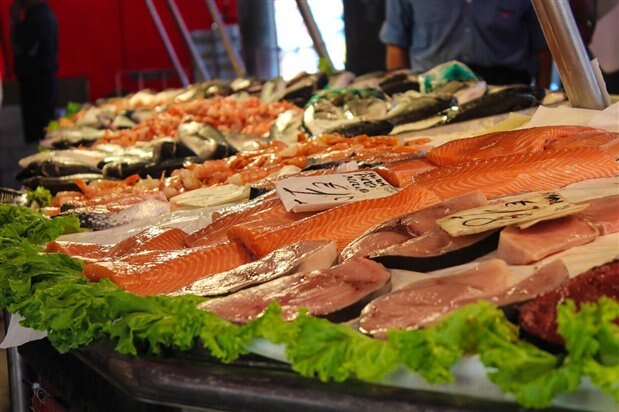
If you run a restaurant, or simply enjoy cooking at home, you are going to want to select the best ingredients available. Salt and other simple commodity ingredients probably don’t require much thought—one brand of table salt is likely as good as any other. But many ingredients, particularly fresh produce and meat, can vary wildly in quality and taste. Those can either end up elevating a meal, or ruining it. That’s why a team of scientists from Japan’s Prefectural University of Hiroshima and Hiroshima Prefectural Technology Research Institute have developed an electric tongue to identify the best-tasting fish.
image

An experienced chef will choose their ingredients, including fish, based on many qualities that they’ve learned to identify through experience. It’s hardly practical for them to taste every fish they select at the market, and so they look at color, smell, age, and other factors to infer whether the fish will taste good or not. That ultimately helps them decide whether a fish is worth buying at all, and how much to pay for it if so. When you go to a nice restaurant, you’re trusting that they have chosen fish that will taste great.


However, it quickly stops being feasible for a highly-experienced chef to procure all of the ingredients themselves. So, they find a supplier they believe can provide a steady supply of consistently good fish. Those suppliers then work with fisherman and fisheries to deliver the food. The problem is that there is a lot of trust involved there, and a restaurant may find their customers complaining if a bad delivery comes in. For that reason, it would be incredibly useful to have method for automatically taste testing fish. To make that possible, the scientists developed an artificial electric tongue specifically for tasting fish.


A human tongue can detect five basic tastes: sweetness, sourness, bitterness, saltiness, and umami (or savory). It is the relative prominence of each taste, along with scents, that ultimately determines the flavor of a specific food or beverage. Your tongue is able to detect those because food starts to dissolve in your mouth, and then comes into contact with your taste buds through the lipid layer. As it does, the compounds within the food cause differences in the electrical potential between your saliva and your tongue. You can sense those electrical changes, which is how you’re able to identify a taste.


This electric tongue works in much the same way, using a set of four sensors. Those detect sourness, bitterness, saltiness, and umami—but, notably, not sweetness. The artificial tongue is dipped into a solution to be tasted, and the corresponding taste data is logged. It’s then lightly washed, and dipped into a saliva-like solution. That second set of readings provides an approximation of what the aftertaste of a food is like. Both sets of readings are more granular and are far more objective then a description given by a human.


As you might imagine, however, it would be difficult to go through this rigorous scientific process every time someone wanted to see if a fish would taste good. What the electric tongue helps with is to identify which of those five specific tastes corresponds to a fish should, theoretically at least, taste good. The scientists can have human taste testers pick the fish they think taste best, and the ones they think taste the worst. The electric tongue can then identify with much more accuracy which tastes are present in which fish.


The final step of the process, from a food technology point of view, is to make that information useful in the real world. To do that, the scientists use a mass spectrometer, which is a device that can be used to measure the relative amounts of different molecules in a sample. Mass spectrometers are already common scientific instruments that many food labs have on hand. The electric tongue, with the process outlined above, allows those mass spectrometers to be used for automated taste testing.


As an example, let’s say that a large fish supplier wants to ensure that each day’s catch from a particular fisherman tastes good. They would first use the electric tongue to identify a good tasting fish, based on its sourness, bitterness, saltiness, and umami levels. They then use a mass spectrometer to determine what molecules are present in that fish, and in what quantities. From then on, all they to do is place a sample of the day’s catch into the mass spectrometer to find out if it will taste as good as the original fish.


This basic process could also be applied to many other types of food. A sensor for tasting sweetness would be required to get the entire picture of a food’s taste, but the overall principles would be the same. In our modern world of factory farming, this kind of technology would be a valuable asset for food supplier’s quality control. And, at the end of the day, that means your food will taste better.

  • Sign in to reply

Top Comments

  • danzima
    danzima over 6 years ago in reply to dubbie +3
    "I worked on an electronic nose, but got sued" sounds like a Monty Python sketch, right?
  • dubbie
    dubbie over 6 years ago +1
    Looks like it could be an interesting sensor. I have no idea how to tell if fish is edible so something like this would be useful. I worked on an electronic nose once, but was threatened with legal action…
  • dubbie
    dubbie over 6 years ago in reply to danzima +1
    Daniel, It might sound like a Monty Python sketch now but at the time it was pretty scary and annoying, as I was working for the company and threatened legal action what we had agreed I could do. Dubb…
  • dubbie
    dubbie over 6 years ago in reply to danzima

    Daniel,


    It might sound like a Monty Python sketch now but at the time it was pretty scary and annoying, as I was working for the company and threatened legal action what we had agreed I could do.


    Dubbie

    • Cancel
    • Vote Up +1 Vote Down
    • Sign in to reply
    • More
    • Cancel
  • danzima
    danzima over 6 years ago in reply to dubbie

    "I worked on an electronic nose, but got sued" sounds like a Monty Python sketch, right?

    • Cancel
    • Vote Up +3 Vote Down
    • Sign in to reply
    • More
    • Cancel
  • dubbie
    dubbie over 6 years ago

    Looks like it could be an interesting sensor. I have no idea how to tell if fish is edible so something like this would be useful.


    I worked on an electronic nose once, but was threatened with legal action, which took all the fun out of the process.


    Dubbie

    (If anyone asks, I never said nuffin.)

    • Cancel
    • Vote Up +1 Vote Down
    • Sign in to reply
    • More
    • Cancel
element14 Community

element14 is the first online community specifically for engineers. Connect with your peers and get expert answers to your questions.

  • Members
  • Learn
  • Technologies
  • Challenges & Projects
  • Products
  • Store
  • About Us
  • Feedback & Support
  • FAQs
  • Terms of Use
  • Privacy Policy
  • Legal and Copyright Notices
  • Sitemap
  • Cookies

An Avnet Company © 2026 Premier Farnell Limited. All Rights Reserved.

Premier Farnell Ltd, registered in England and Wales (no 00876412), registered office: Farnell House, Forge Lane, Leeds LS12 2NE.

ICP 备案号 10220084.

Follow element14

  • X
  • Facebook
  • linkedin
  • YouTube