element14 Community
element14 Community
    Register Log In
  • Site
  • Search
  • Log In Register
  • Community Hub
    Community Hub
    • What's New on element14
    • Feedback and Support
    • Benefits of Membership
    • Personal Blogs
    • Members Area
    • Achievement Levels
  • Learn
    Learn
    • Ask an Expert
    • eBooks
    • element14 presents
    • Learning Center
    • Tech Spotlight
    • STEM Academy
    • Webinars, Training and Events
    • Learning Groups
  • Technologies
    Technologies
    • 3D Printing
    • FPGA
    • Industrial Automation
    • Internet of Things
    • Power & Energy
    • Sensors
    • Technology Groups
  • Challenges & Projects
    Challenges & Projects
    • Design Challenges
    • element14 presents Projects
    • Project14
    • Arduino Projects
    • Raspberry Pi Projects
    • Project Groups
  • Products
    Products
    • Arduino
    • Avnet & Tria Boards Community
    • Dev Tools
    • Manufacturers
    • Multicomp Pro
    • Product Groups
    • Raspberry Pi
    • RoadTests & Reviews
  • About Us
  • Store
    Store
    • Visit Your Store
    • Choose another store...
      • Europe
      •  Austria (German)
      •  Belgium (Dutch, French)
      •  Bulgaria (Bulgarian)
      •  Czech Republic (Czech)
      •  Denmark (Danish)
      •  Estonia (Estonian)
      •  Finland (Finnish)
      •  France (French)
      •  Germany (German)
      •  Hungary (Hungarian)
      •  Ireland
      •  Israel
      •  Italy (Italian)
      •  Latvia (Latvian)
      •  
      •  Lithuania (Lithuanian)
      •  Netherlands (Dutch)
      •  Norway (Norwegian)
      •  Poland (Polish)
      •  Portugal (Portuguese)
      •  Romania (Romanian)
      •  Russia (Russian)
      •  Slovakia (Slovak)
      •  Slovenia (Slovenian)
      •  Spain (Spanish)
      •  Sweden (Swedish)
      •  Switzerland(German, French)
      •  Turkey (Turkish)
      •  United Kingdom
      • Asia Pacific
      •  Australia
      •  China
      •  Hong Kong
      •  India
      •  Korea (Korean)
      •  Malaysia
      •  New Zealand
      •  Philippines
      •  Singapore
      •  Taiwan
      •  Thailand (Thai)
      • Americas
      •  Brazil (Portuguese)
      •  Canada
      •  Mexico (Spanish)
      •  United States
      Can't find the country/region you're looking for? Visit our export site or find a local distributor.
  • Translate
  • Profile
  • Settings
Test & Tools
  • Technologies
  • More
Test & Tools
Forum Show us your junk!
  • Blog
  • Forum
  • Documents
  • Files
  • Members
  • Mentions
  • Sub-Groups
  • Tags
  • More
  • Cancel
  • New
Join Test & Tools to participate - click to join for free!
Actions
  • Share
  • More
  • Cancel
Forum Thread Details
  • Replies 143 replies
  • Subscribers 368 subscribers
  • Views 12347 views
  • Users 0 members are here
Related

Show us your junk!

neuromodulator
neuromodulator over 6 years ago

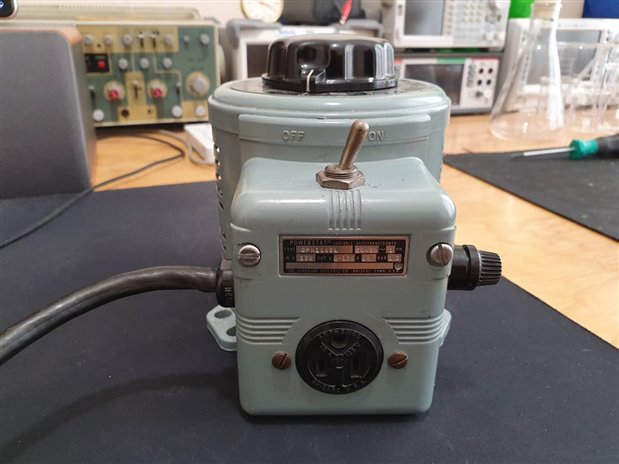
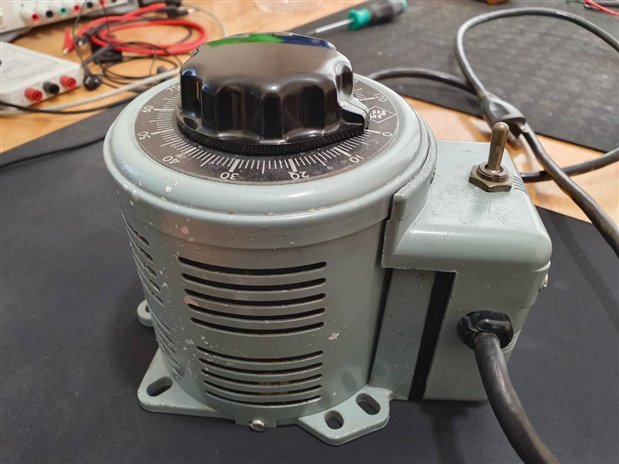
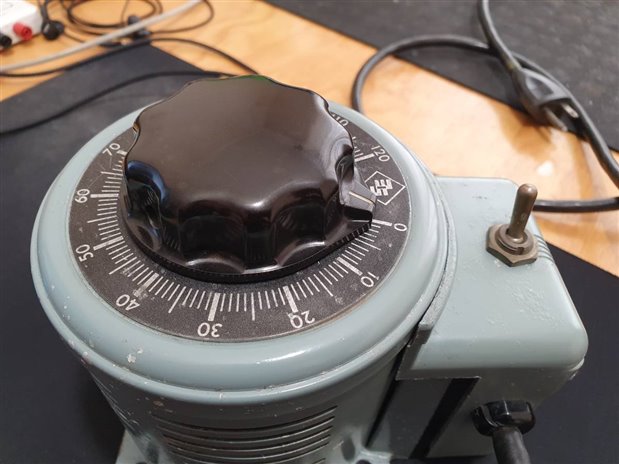
I love junk, specially when it can be fully restored, has interesting parts or uses interesting technology. Most of the junk I get, comes from the university, its dumped because its either too old or it doesn't work anymore. I'll start this thread by showing one of my latest junk acquisitions:
 

imageimageimage


This is an autotransformer made by a company called "The Superior Electric Co" from Bristol, Connecticut. It was apparently build in the 60s (according to what I found in the net) and supports a max of 1.2 kva. The autotransformer works as expected but of course it shows its age, the rubber cable is not in the best condition and so isn't its paint. In the future I may repaint it and replace the cable but for now its good enough as it is.


Have you also found nice junk? Show us!

  • Sign in to reply
  • Cancel

Top Replies

  • michaelkellett
    michaelkellett over 6 years ago in reply to neuromodulator +13
    Here is the first processor controlled instrument I designed. Intel 8748, code hand assembled on paper and entered into Intel desktop dev system by hand in hex. Not really junk, but not very useful now…
  • dougw
    dougw over 6 years ago +12
    While looking for something else deep in the "archives" I came across my favourite scientific calculator. (circa 1975) It still works fine. The LEDs were so power hungry I eventually built a power supply…
  • genebren
    genebren over 6 years ago +11
    In the spirit of your original request (show us your junk!), here is some of my junk. One of my many past jobs was working for a life sciences company that built instrumentation for various forms of testing…
Parents
  • Andrew J
    Andrew J over 5 years ago

    I have this:

    image

    It's still functional but it does occasionally throw a wobbly - I was going to take a look and see if it's anything obvious.  What's not very surprising is that it is slow.  5! takes an absolute age to calculate. 


    I also have something else interesting which I am intending to write a seperate short blog about!


    With respect to the earlier discussion about core memory, it's a really interesting technology.  It is a destructive read: IIRC, you read it by writing a 0 to the bit and if you get a signal on the sense wire you know it was a 1 so you have to remember to write that back; they were all hand-made (by woman of course) and I've never found any information that indicates machines were involved in automating the process; each ring has four wires through it which must go through in a specific way so sewing them together was an art given the size - down to 0.1mm by the end of the technology (again, IIRC but I could be wrong about that); they were also used as 'Core Rope' memory where, because the memory is non-volatile, it could be used to store a program, which is how it was used in the Apollo mission control computers.  I just have this image of a room full of nans (grandmothers for the non-native English speakers!) knitting computer programs together, drinking tea and spending the day nattering with the click-clack of needles.


    Core memory is cool but even cooler are mercury delay lines as used on EDSAC and LEO computers.  Pulses stored as waves in mercury to be interpreted as 1 and 0.  And cooler again - debatable, I like the mercury delay lines?  Dekatrons: decimal memory that is human readable.  Slow as hell but mesmerising to watch in action.

    • Cancel
    • Vote Up +4 Vote Down
    • Sign in to reply
    • Cancel
  • clem57
    clem57 over 5 years ago in reply to Andrew J

    Gough Lui did a good write up on calculator reworking back to lif. Maybe he can point you to some things to try.

    Clem

    • Cancel
    • Vote Up +1 Vote Down
    • Sign in to reply
    • Cancel
Reply
  • clem57
    clem57 over 5 years ago in reply to Andrew J

    Gough Lui did a good write up on calculator reworking back to lif. Maybe he can point you to some things to try.

    Clem

    • Cancel
    • Vote Up +1 Vote Down
    • Sign in to reply
    • Cancel
Children
  • Andrew J
    Andrew J over 5 years ago in reply to clem57

    Thanks Clem - that's a good pointer.

    • Cancel
    • Vote Up +1 Vote Down
    • Sign in to reply
    • Cancel
  • Gough Lui
    Gough Lui over 5 years ago in reply to clem57

    Never took a look at a CBM device myself - but depending on what it does or doesn't, it could be a bunch of issues.


    Things to watch out for include:

    - Dirty battery contacts and weak springs causing poor battery contact, or intermittent power switch contact.

    - Problems with keyboard contacts causing keys that are not consistently responding. Sometimes repeatedly retrying the key clears the oxidation.

    - Loss of a keypad row/column - flexible connection ribbons tend to go bad on these devices and develop cracks - careful soldering or bridging with wire can help.

    - Display issues - sometimes due to problems with non-working boost converters.

    - Computation errors - sometimes chips do go bad or the power isn't as clean as it should be. Changing capacitors may help sometimes.

    - Completely "dead" - check for shorted tantalum capacitors, bad diodes, problematic DC-DC converters.


    Best of luck with troubleshooting - some of these older devices are surprisingly reliable and resilient!


    - Gough

    • Cancel
    • Vote Up +1 Vote Down
    • Sign in to reply
    • Cancel
  • Andrew J
    Andrew J over 5 years ago in reply to Gough Lui

    Thanks Gough.  The best way to describe it would be a need to let it warm up first.  But sometimes it goes flakey after being on a while so that’s not really it.  It stops responding to input: recognises a key press but just displays ‘error’ on the display.  My thoughts were dodgy keyboard connector/contacts; bad caps; failing IC.

    • Cancel
    • Vote Up +1 Vote Down
    • Sign in to reply
    • Cancel
  • Gough Lui
    Gough Lui over 5 years ago in reply to Andrew J

    Hmm. Warming up - I suppose it depends on how long. Some of those VFD displays do take a short while (a few seconds) to come to full brightness as the internal heaters come up to temperature. But this also depends on the design of the heater supply circuit (assuming there is one). Other times, as VFDs grow older, they tend to dim as the phosphor wears out or the vacuum inside starts to leak.


    As for the odd behaviour - perhaps there is a keyboard issue but one that's less obvious. Perhaps there might be a key somewhere that gets stuck as it warms up causes keyboard "ghosting", intermittent keyboard connection, problems with a voltage supply, phantom input perhaps due to electrical noise (e.g. if the calculator thinks a divide-by-zero happened, you would get an error too). Hard to troubleshoot, but start with the physical inspection ... sometimes it's going to be a shot in the dark - other times made easier if you have a working companion to compare signals and readings against (or swap components).


    - Gough

    • Cancel
    • Vote Up +1 Vote Down
    • Sign in to reply
    • Cancel
  • Andrew J
    Andrew J over 5 years ago in reply to Gough Lui

    To be a little clearer.  It typically manifests itself when first turned on: when a key is pressed 'error' appears on the display.  Pressing the 'C' (clear) key, gets rid of it and zero is displayed; pressing a key results in 'error'.  This seems to last a little while and then stops and the calculator works, hence the 'warming up' statement.  However, occasionally it is working and then starts displaying 'error' again on a key press.  That happens much less frequently.  So I don't think it is warming up but something else.  After all this time, and given it happens on a keypress, I think the keyboard has something to do with it.  When I take it apart it may become more obvious but part of me is reluctant to mess with such an old device, I don't know why really!

    • Cancel
    • Vote Up +1 Vote Down
    • Sign in to reply
    • Cancel
element14 Community

element14 is the first online community specifically for engineers. Connect with your peers and get expert answers to your questions.

  • Members
  • Learn
  • Technologies
  • Challenges & Projects
  • Products
  • Store
  • About Us
  • Feedback & Support
  • FAQs
  • Terms of Use
  • Privacy Policy
  • Legal and Copyright Notices
  • Sitemap
  • Cookies

An Avnet Company © 2025 Premier Farnell Limited. All Rights Reserved.

Premier Farnell Ltd, registered in England and Wales (no 00876412), registered office: Farnell House, Forge Lane, Leeds LS12 2NE.

ICP 备案号 10220084.

Follow element14

  • X
  • Facebook
  • linkedin
  • YouTube