

.jpg)

 The automotive industry is rapidly transitioning toward autonomous driving, with Advanced Driver Assistance Systems (ADAS) becoming the standard for vehicle safety. Automotive camera systems are the pillars of modern ADAS camera architectures, enabling features such as lane keeping, traffic sign recognition, pedestrian detection, and surround view monitoring. These optical systems must deliver consistently accurate image data under extreme environmental and electrical conditions.
However, the electronics behind an automotive camera face a significant challenge. Compact modules operate under tight thermal constraints while enduring vibration and high frequency noise from DCDC converters, serializers, and image processing engines. Even small disturbances in power integrity can degrade image signal reliability, leading to artifacts, frame instability, or latency that directly affect ADAS performance and overall vehicle safety.
Panasonic Low-ESR Aluminum Electrolytic capacitors address these challenges by stabilizing the camera’s multistage power architecture, which includes converters, memory devices, and image signal processors. Their low impedance ensures effective ripple suppression and noise filtering at the image sensor supply rails, while superior ripple current capability prevents voltage dips that could disrupt timing circuits or corrupt pixel data. Their robust thermal and vibration endurance further aligns with AEC-Q200 requirements for automotive grade durability.
This article explores the concepts driving the automotive camera system and demonstrates how Panasonic’s Low-ESR Aluminum Electrolytic Capacitors help to achieve the high-fidelity imaging and long-term durability necessary for safe, intelligent, and fully autonomous vehicular transportation platforms.
Understanding automotive camera systems
In the advanced driver assistance systems (ADAS) architecture, the automotive camera system serves as the primary sensory input for environment perception. By providing real-time visual data from both inside and outside the vehicle, cameras enable functions ranging from lane keeping and emergency braking to driver monitoring and automated parking.
There are three primary categories of automotive cameras used in ADAS and autonomous driving architectures: forward-facing sensing cameras, surround-view cameras, and driver-monitoring cameras.
- Forward-Facing Sensing cameras are typically mounted near the upper windscreen and analyze a wide forward area to support functions such as lane keeping, collision avoidance, and road sign detection.
- Surround view cameras are installed on the front, rear, and sides of the vehicle body to capture images within approximately one meter of the vehicle perimeter, enabling parking assistance and 360-degree visualization.
- Driver monitoring cameras, installed near the instrument cluster, track driver awareness level, eye movement, and posture to ensure safe operation
Internal architecture of automotive camera modules
Sensing camera and driver monitoring camera: These modules capture, process, and transmit visual data reliably under automotive operating conditions using an image sensor, a lens assembly, a processing SoC, supporting MCU, memory, a serializer/transceiver, and regulated power stages. Signals are processed by a SoC that performs real-time computations required for ADAS and autonomous driving functions. Supporting SoC is a microcomputer that issues control instructions, such as braking or steering commands, to external ECUs when system logic requires intervention. Communication with the rest of the vehicle network is handled by a transceiver, while DDR memory serves as a buffer for image data during processing, and flash memory stores firmware and sensor related data. Power to each component is supplied by a DC/DC converter that regulates the voltage from the vehicle’s primary supply to the precise levels required by sensitive imaging electronics. This architecture ensures stable performance even under fluctuating electrical and environmental conditions.
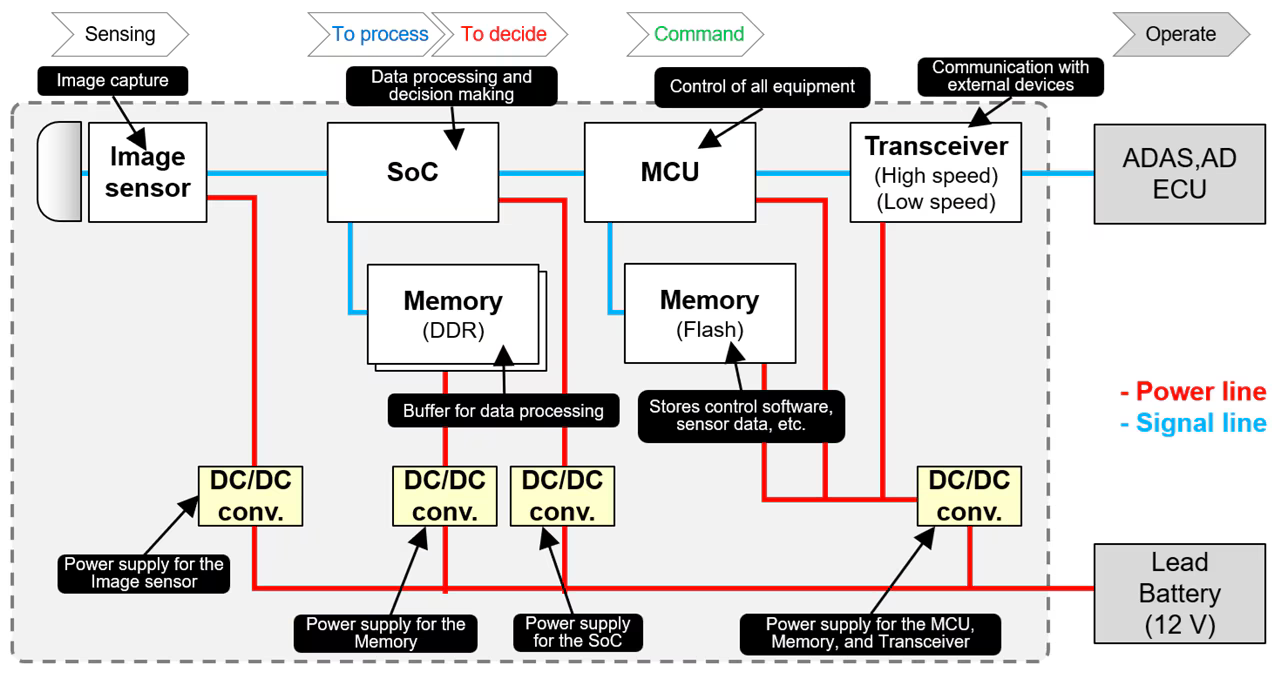
Figure 1 Internal architecture of a sensing camera and a driver monitoring camera (Source: Panasonic)
Surround view camera: The circuit configuration of surround view cameras differs in complexity because these systems rely on multiple camera units installed around the vehicle to generate a unified panoramic image. Each camera contains its own image sensor, but the combined image data must be communicated to a dedicated surround view of ECU, requiring high-capacity transceiver circuits to manage the larger data throughput. Within this ECU, an FPGA performs high speed image integration, synthesizing inputs from all sensors into a single omnidirectional representation. Despite their distributed structure, surround view cameras still share the core elements found in sensing and driver monitoring cameras, such as image sensors, SoCs, MCUs, memory subsystems, and regulated power stages, but their synchronization, bandwidth, and processing demands are significantly higher to ensure seamless real-time stitching and display.
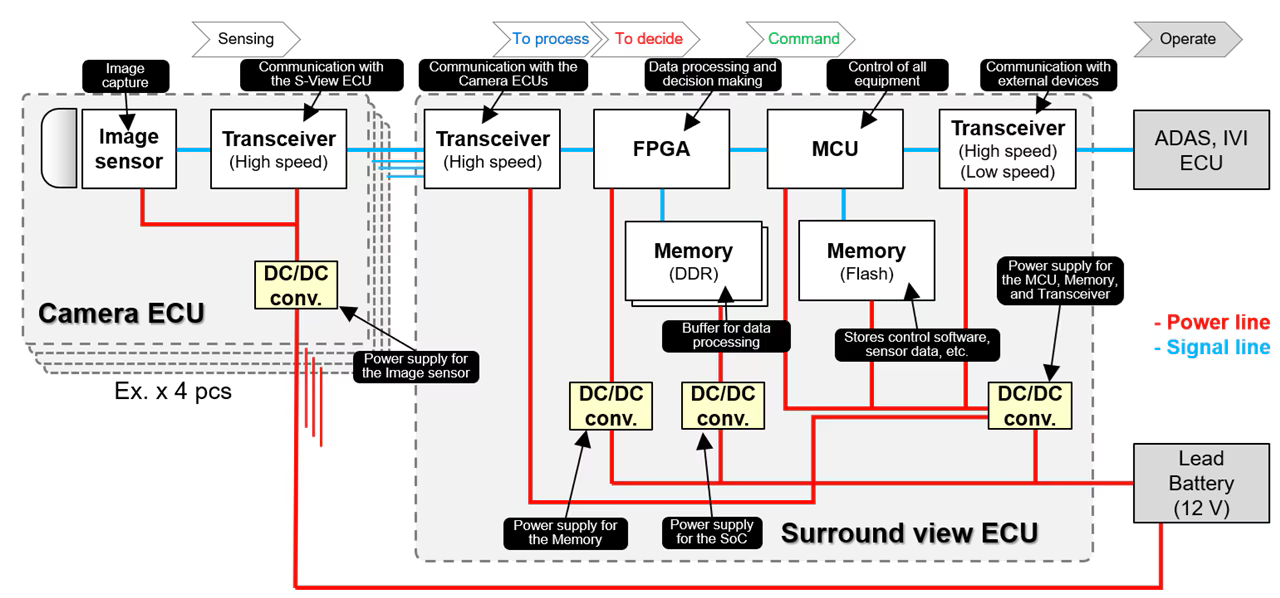
Figure 2 Internal architecture of an automotive surround view camera (Source: Panasonic)
Why are Low-ESR capacitors critical for automotive camera systems?
Automotive camera systems operate in electronically demanding environments like other safety critical vehicle electronics. These modules must deliver stable, high clarity imaging under rapidly changing load conditions, high frequency data transmission, and the harsh temperature and vibration profile of modern vehicles. The electronics inside these cameras rely on clean, low noise power delivery to ensure accurate image capture and errorfree processing, making Low-ESR capacitors a foundational requirement.
The Ripple and Noise Challenge: Camera modules integrate high speed CMOS sensors, SoCs, transceivers, memory, and DCDC converters. These components switch at high frequencies to support HDR imaging, real-time object detection, and multicamera fusion. Highspeed switching inherently generates ripple current and high frequency noise on the supply rails, which can distort image signals, cause timing jitter, or corrupt data being transferred to ADAS ECUs. Low-ESR capacitors are essential at the power input stage because their low impedance at high frequencies allows them to absorb ripple currents and deliver fast transient response, preventing noise from propagating into sensitive imaging circuits.
Filter Vulnerability and High Frequency Behavior: Camera modules often include LC lowpass filters to protect SoCs, sensors, and microcontrollers from supply noise. Ideally, at higher frequencies, the capacitor side of this filter should present near zero impedance to shunt switching noise to ground. However, if ESR is too high, the capacitor’s impedance stops decreasing with frequency, allowing high frequency interference to leak into image processing and communication paths. Low-ESR capacitors overcome this vulnerability by maintaining low impedance across the higher frequency spectrum used in modern camera power stages, ensuring that noise is effectively grounded and that imaging performance remains stable even during rapid load changes.
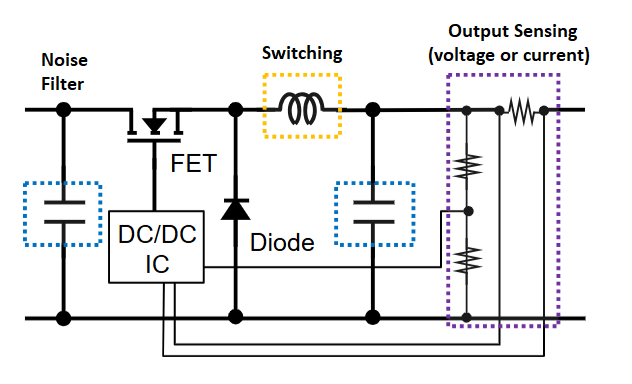
Figure 3: Application of Low-ESR capacitors in DC/DC converter of an automotive camera system (Source: Panasonic)
Solving low-pass filter challenges in automotive camera systems using Panasonic Low-ESR capacitors
A capacitor’s ESR determines two key performance parameters: ripple current handling and filtering effectiveness.
Ripple Current Handling: When a high ripple current (Iripple) flows through the smoothing capacitor with high ESR, it will cause higher capacitor heating (Pdissipation = I2ripple × ESR) and increased radiated noise. Consequently, the image processing logic works harder; CMOS sensors experience higher supply perturbations, and the video signal appears less stable. Placing a Low-ESR capacitor at the DC/DC output keeps ripple low during high-speed processing steps, improving pixel-data integrity and minimizing localized heat generation. This cooler capacitor operation enables it to survive longer, especially at the high ambient temperatures demanded by AEC-Q200 specifications.
Filtering Effectiveness: The automotive camera’s circuit uses a Low-Pass Filter suppresses internal noise and noise from external equipment. In an LC or RC filter, the output voltage is determined by the voltage divider relationship between the resistor or inductor and the capacitor's impedance. Ideally, at high frequencies, the capacitor's impedance should be near zero, effectively grounding the noise. Placing Low-ESR electrolytic capacitors at the input LC or RC filter lowers the total impedance, maintains the filter’s ideal attenuation slope over a wider frequency band, and reduces high-frequency bus noise coupling into the sensitive image-capture and voltage conversion circuitry.
Panasonic's Low-ESR Capacitor Series: FK, FP, FT, FN, FH
Panasonic offers multiple series of Low-ESR, surface-mount aluminum electrolytic capacitors optimized for automotive camera systems. All these series are AEC-Q200 qualified, offering long endurance at high temperatures and robust performance against vibration.
|
Series |
FK |
FN |
FH |
FP |
FT |
|
Voltage(V) |
6.3 to 100 |
6.3 to 100 |
6.3 to 100 |
6.3 to 50 |
6.3 to 50 |
|
Capacitance (µF) |
3.3 to 6800 |
10 to 1800 |
10 to 680 |
10 to 1800 |
10 to 2200 |
|
Ripple Current (mArms) |
up to 2060 |
up to 850 |
up to 850 |
up to 1190 |
up to 1190 |
|
ESR(Ω) |
Down to 0.033 |
Down to 0.08 |
Down to 0.15 |
Down to 0.06 |
Down to 0.06 |
|
Endurance(h) |
2000 to 5000 |
2000 |
7000 to 10000 |
2000 |
2000 to 5000 |
|
Temperature (°C) |
-55 to 105 |
-55 to +105 |
-55 to +105 |
-55 to +105 |
-55 to +105 |
|
Size (mm) |
4x5.8 to 18x16.5 |
4x5.8 to 10x10.2 |
6.3x7.7 to 10x10.2 |
4x5.8 to 10x10.2 |
4x5.8 to 10x10.2 |
|
Key Features |
Miniaturized, Low impedance |
High capacitance, RoHS compliant |
Long Life/ |
Ultra-Low ESR, RoHS compliant |
Miniaturized, Vibration-Proof |
|
Typical Automotive Applications |
Audio / Navigation / HUD/ Body control/ EPS |
Electric stability control/ Body control |
Safety systems, Engine / power train control system/ Lighting system |
ABS/ Electric stability control/ Air bag control/ Body control/ Lighting system |
ABS, Engine / Power train control system/ Electric stability control/ Air bag control/ Body control/ Lighting system |
Table 1: An overview of Panasonic's Low ESR Aluminum Electrolytic Capacitor
Series: FK, FP, FT, FN, FH
Conclusion
As the automotive industry transitions from traditional reflective mirrors to advanced Camera Monitoring Systems and Autonomous Driving architectures, the reliability of automotive camera electronics becomes a safety-critical requirement. The performance of these camera systems depends strongly on Low-ESR capacitors, which are essential for maintaining stable power delivery, preserving image sensor accuracy, and ensuring robust noise immunity across the camera modules.
Panasonic’s Low-ESR Aluminum Electrolytic Capacitor series is engineered to meet these rigorous automotive application demands. With high ripple-current tolerance, AEC-Q200 qualification, and superior vibration resistance, these capacitors enable engineers to design more responsive, efficient, and reliable steering systems.
For more innovative products from Panasonic Shop Now
Select your BEST FIT Low ESR E-CAP Series!
|
FH series, For Long Life |
FN series, For High Capacitance in small case |
FP series, For High Ripple Current |
|
FT series, For High Capacitance and High Ripple Current |
FK series, For Low ESR with a wide range of capacitance & voltage selections |


About the Sponsor
Panasonic Ind ustry strive for continuous innovation and share the company’s mission and vision - shaping the future for the better. To take engineering to the next level, Panasonic Industry researches, produces and supplies technologies for a vast range of industries. For more information, click here.