



Dr. Donna Strickland invented the chirped pulse amplification system with Gerard Mourou. (Image Credit: University of Waterloo)
Dr. Donna Strickland, called the ‘laser jock,’ has made a huge impact in the scientific world. She’s recognized for her deep hands-on experience in the laboratory. In the early 1980s, Strickland used optical equipment and learned about the practicality of high-power laser physics at the University of Rochester’s Laboratory for Laser Energies. In this lab, mirrors, power supplies, and optical components required extremely precise alignment. That motivated Strickland to make the experiments work.
Ultimately, her experimental curiosity led her to realize that high-intensity lasers had a significant limitation. In this case, a pulse was created with high intensity, while still very short, its peak power could trigger nonlinear effects like self-focusing and damage the machine’s components. So, in 1985, she and Gerard Mourou, an expert on laser pulses, came up with chirped-pulse amplification (CPA). They received the Nobel Prize in October 2018 for their CPA invention.

The CPA system uses an oscillator, stretcher, amplifier, and compressor. (Image Credit: nobelprize)
Before developing the CPA system, Strickland and Mourou worked with a mode-locked Nd:YAG laser that pumped a short-pulse dye laser. Since the dye laser required a green pump light, the 1-micrometer Nd:YAG beam underwent frequency doubling. This converted 10% of the power to green, while the rest of the infrared beam was unused. They used the leftover infrared beam as the input to the CPA experiment. In that work, Strickland used a 1.4-km long optical fiber to broaden the spectrum and stretch the pulse to around 300 ps. As a result, a pulse could be temporally elongated by dispersion, which inspired the later CPA machine.
Strickland’s Chirped Pulse Amplification invention works in four stages. The purpose of it is to intensify ultra-short laser pulses without damaging the optics or the gain medium. In the first stage, the mode-locked oscillator produces the seed pulse, an ultra-short burst of light of roughly 100 ps at 1 micrometer, at a high repetition rate.
To prevent the laser from destroying the internal components, it enters the stretcher. This second stage is where the 1.4-km-long single-mode fiber optic cable (9 micrometers) chirped the laser, stretching it out in time. When the machine focused the laser into the fiber, the spectral bandwidth increased to 4 nm Full Width Half Maximum (FWHM). Since light has different wavelengths (blue is shorter, red is longer), the pulse is elongated by a large factor. Making the pulse physically longer this way spreads out the energy, which lowers the peak level that’s sustainable for the machine.
After safely stretching the pulse, it moves on to the regenerative amplifier, the third stage. During amplification, the system reduces the repetition rate from 80 MHz to 10 Hz, allowing each pulse to be boosted to much higher energy. The laser then makes multiple passes through a neodymium-doped glass gain medium that absorbs energy from a pump source. The neodymium ions in the medium then become excited, and the passing seed pulse is amplified while circulating through the medium. The amplifier boosted the pulse energy from a few nJ to about two mJ. A longer pulse in this context ensures the peak intensity remains low so that it won’t damage the gain medium.
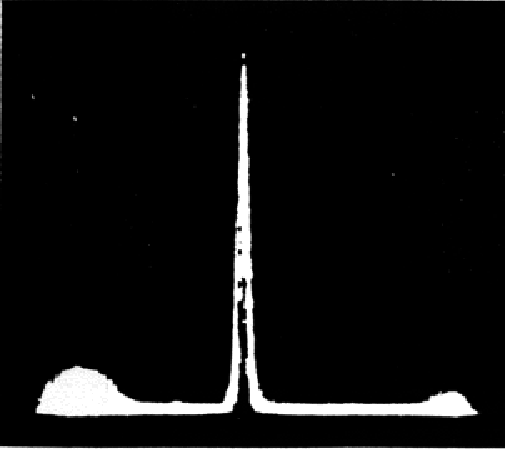
Recompressed short pulse at 1.5 ps. (Image Credit: Optics Communications)
The compressor is the final, most important stage for lasers to reach high intensity. The high-energy, elongated pulse passes through a pair of parallel gratings and a roof prism, which reverse the stretcher’s chirp and recombine the separated colors into a single beam. This forces the pulse back into its ultra-short length. As a result, the stretched pulse is recompressed to approximately 1.5 ps, concentrating that energy into a smaller time window and producing a high peak power. This process generates an extremely powerful laser capable of precision micromachining or cutting through industrial material without sustaining heat damage.
Because CPA developed by Donna Strickland generates ultrashort, high-intensity laser pulses, it became the foundation for various technologies in the medical, science, and industry fields. In scientific research, her work has pushed boundaries in time-resolved spectroscopy and attosecond physics. Scientists have used the technology to track and manipulate ultrafast electron dynamics within atoms. Additionally, her chirped pulse amplification technique is essential in particle acceleration as high-energy lasers power compact accelerators for advanced physics research.
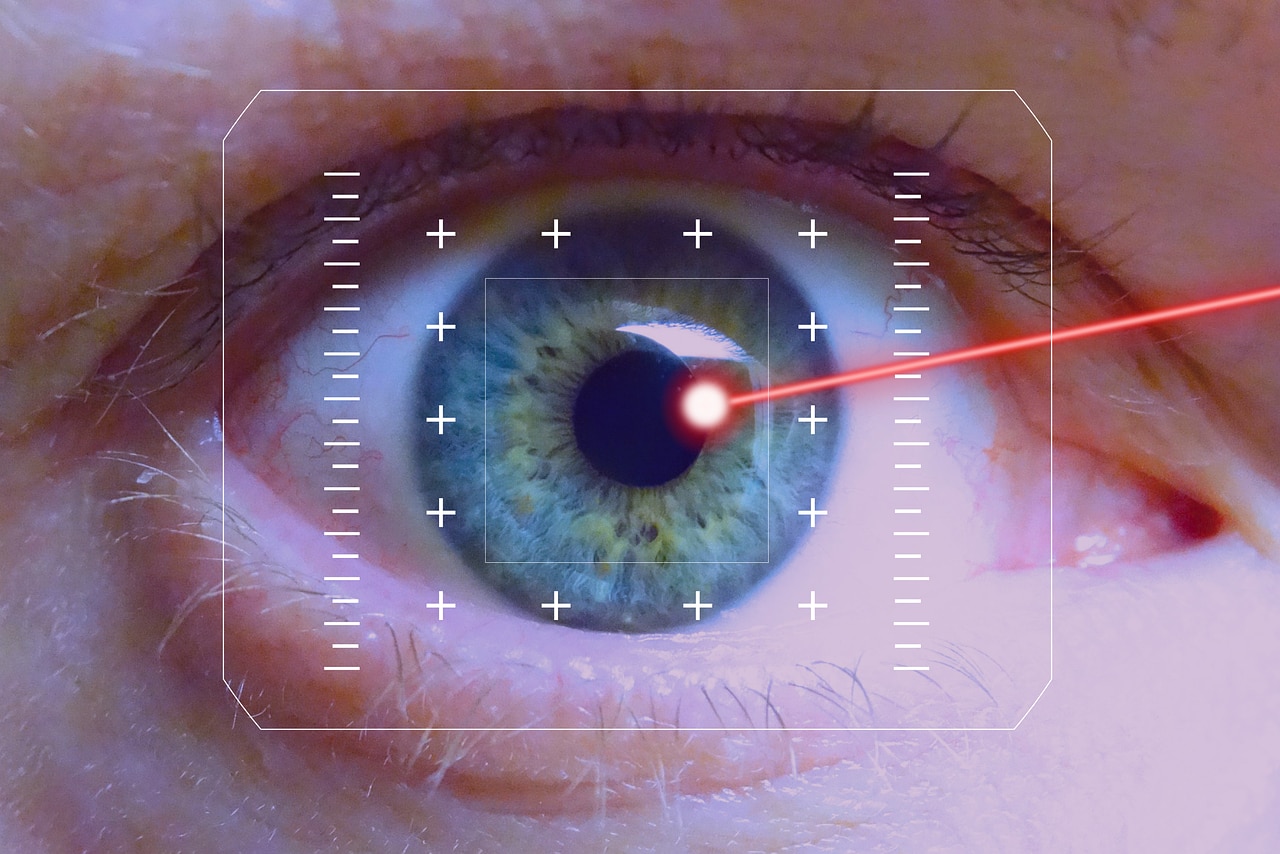
LASIK. (Image Credit: pixabay)
In medicine, Strickland’s work on CPA helped reshape surgery, including LASIK, which requires extreme precision. The ultrashort lasers can make very precise cuts with less thermal damage to surrounding tissue. Modern CPA systems based on her technique are also useful for other medical purposes, including lithotripsy and targeted cancer treatment. These involve removing damaged or diseased tissue while sparing healthy cells.
Other than research and medicine, her innovation is used in industrial settings requiring extreme precision as well, including micromachining and other applications. CPA laser pulses cut materials, which is achieved without spreading heat into nearby areas. This makes it beneficial for components like semiconductor wafers. Since the process removes material at the microscale or nanoscale level, it serves as an important tool for manufacturing parts for the aerospace, electronics, and automotive industries.
Safe At-Home Experiments:
We can perform safe at-home experiments to explore the optics behind CPA. Both the candle and laser pointer demonstrations show how light spreads, separates by wavelength, and forms patterns. These replicate the stretching and recompressing of pulses that occur in chirped pulse amplification.
Dr. Donna Strickland is still active at Waterloo University, serving as a professor of physics at the Department of Physics and Astronomy. She leads and ultrafast laser team that developed a high-intensity, two-color Ti:sapphire laser to study molecular rotational gratings. Her research includes work on a two-color short-pulse fiber laser system for generating mid-infrared wavelengths across the fingerprint region. A 2025 Waterloo news piece says Strickland is working to make pulses shorter by using a rainbow of colors in her lab to produce shorter pulses and explore mid-infrared laser output.
