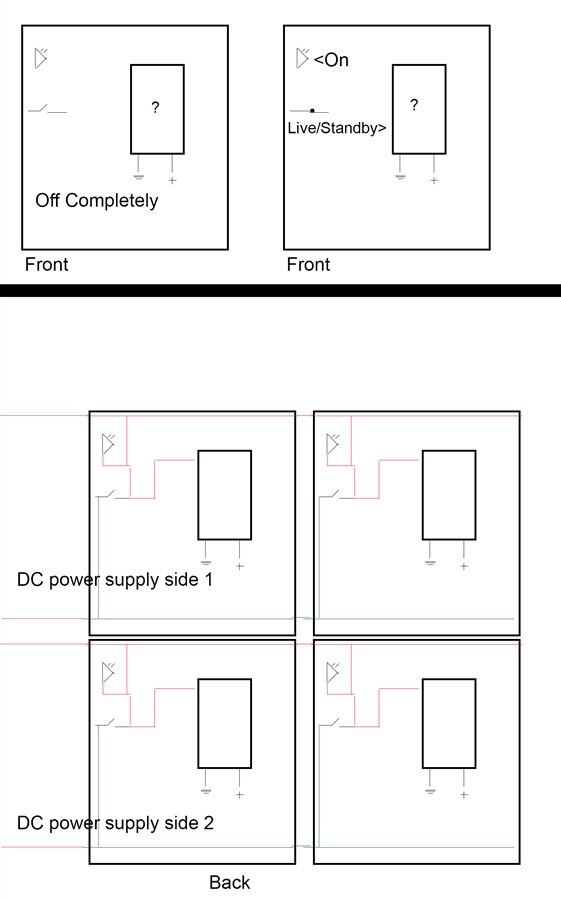
I plan to build this sorta complex I guess box or wall. Not really that complex but can be considered that. I was wondering something. This wall will have LEDs on it probably one for the top row and one for the bottom. I would like to have one for each unit but I suspect what is required for one LED is not something I can do for all parts since I probably do not have enough components.
The question is of course what is the best way to regulate voltage to an LED when the input voltage varies from 0-30 volts. I know resistor is out, so too is POTs, the only thing I can think of is a voltage regulator at 5 volts of course. However, I want to make sure, also if I should build a specific circuit and such. Probably need to make or add a heatsink as well right?
Then again if I do this right I could really only need two for all the LEDs on the top row and on the bottom.
If you need an explanation of what I am making it is hard to explain but basically I am making units. Each one has a different object on it per se, a switch, a dp dt reverse polarity switch, pot, headphone jack and such for when I have different things needing different testing. Each unit I would want will have an LED and a knob with a piece of metal attached to it so I can close the circuit when I want. You could say a dirty switch. Easier and cheaper to make one than to keep using switches. The prototype was cardboard to see how to do it and if I can I will use a 3D printer to make the real deal. I know some people like explanations.
I was planning to cross the LED with each unit so when I turn the unit on it lights up so I know it is live. Which is possible to do with two regulators if not just one. I have to add more wires but yeah. The thing is I want to make sure it is just a regulator with a heat sink or should I add things like caps, and resistors for x purposes I know nothing about. The power supply is DC almost forgot. The LEDs from the datasheet which may be slightly inaccurate says 5 volts is sufficient.