element14 Community
element14 Community
    Register Log In
  • Site
  • Search
  • Log In Register
  • Community Hub
    Community Hub
    • What's New on element14
    • Feedback and Support
    • Benefits of Membership
    • Personal Blogs
    • Members Area
    • Achievement Levels
  • Learn
    Learn
    • Ask an Expert
    • eBooks
    • element14 presents
    • Learning Center
    • Tech Spotlight
    • STEM Academy
    • Webinars, Training and Events
    • Learning Groups
  • Technologies
    Technologies
    • 3D Printing
    • FPGA
    • Industrial Automation
    • Internet of Things
    • Power & Energy
    • Sensors
    • Technology Groups
  • Challenges & Projects
    Challenges & Projects
    • Design Challenges
    • element14 presents Projects
    • Project14
    • Arduino Projects
    • Raspberry Pi Projects
    • Project Groups
  • Products
    Products
    • Arduino
    • Avnet & Tria Boards Community
    • Dev Tools
    • Manufacturers
    • Multicomp Pro
    • Product Groups
    • Raspberry Pi
    • RoadTests & Reviews
  • About Us
  • Store
    Store
    • Visit Your Store
    • Choose another store...
      • Europe
      •  Austria (German)
      •  Belgium (Dutch, French)
      •  Bulgaria (Bulgarian)
      •  Czech Republic (Czech)
      •  Denmark (Danish)
      •  Estonia (Estonian)
      •  Finland (Finnish)
      •  France (French)
      •  Germany (German)
      •  Hungary (Hungarian)
      •  Ireland
      •  Israel
      •  Italy (Italian)
      •  Latvia (Latvian)
      •  
      •  Lithuania (Lithuanian)
      •  Netherlands (Dutch)
      •  Norway (Norwegian)
      •  Poland (Polish)
      •  Portugal (Portuguese)
      •  Romania (Romanian)
      •  Russia (Russian)
      •  Slovakia (Slovak)
      •  Slovenia (Slovenian)
      •  Spain (Spanish)
      •  Sweden (Swedish)
      •  Switzerland(German, French)
      •  Turkey (Turkish)
      •  United Kingdom
      • Asia Pacific
      •  Australia
      •  China
      •  Hong Kong
      •  India
      • Japan
      •  Korea (Korean)
      •  Malaysia
      •  New Zealand
      •  Philippines
      •  Singapore
      •  Taiwan
      •  Thailand (Thai)
      • Vietnam
      • Americas
      •  Brazil (Portuguese)
      •  Canada
      •  Mexico (Spanish)
      •  United States
      Can't find the country/region you're looking for? Visit our export site or find a local distributor.
  • Translate
  • Profile
  • Settings
Community Hub
Community Hub
Member's Forum If you could automate one part of your design workflow, what would it be? We are asking e14 in our Join, Share & Win Competition
  • Blog
  • Forum
  • Documents
  • Quiz
  • Events
  • Leaderboard
  • Polls
  • Files
  • Members
  • Mentions
  • Sub-Groups
  • Tags
  • More
  • Cancel
  • New
Join Community Hub to participate - click to join for free!
Actions
  • Share
  • More
  • Cancel
Forum Thread Details
  • Locked Locked
  • Replies 56 replies
  • Subscribers 566 subscribers
  • Views 9216 views
  • Users 0 members are here
  • funny
  • community
  • maker
  • competition
  • element14
  • pi
  • makers
  • rasberrypi
  • win
  • engineering competition
  • raspberry pi
  • electronics
  • automation
  • designing
  • aske14
Related
This discussion has been locked.
You can no longer post new replies to this discussion. If you have a question you can start a new discussion

If you could automate one part of your design workflow, what would it be? We are asking e14 in our Join, Share & Win Competition

E14Alice
E14Alice 1 month ago

Shout out to all engineers, makers, and design enthusiasts!


Last month, we asked you about your project disaster What was your biggest project Disaster? We are asking e14 in our Join, Share & Win Competition  

This month, we want to know if you could automate one part of your design workflow. What would it be?
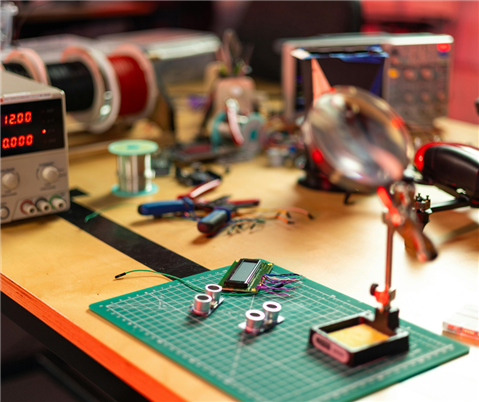
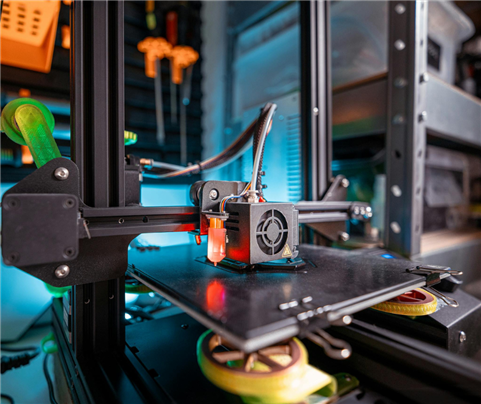
imageimage


Competition
Join the element14 Community today and take part in our latest “Join, Share & Win” challenge.

It’s simple:
1. Register (or Login) for FREE
2. Answer this question by adding a reply / commenting:

If you could automate one part of your design workflow, what would it be?

3. Be in with a chance to WIN!

Share with us your best (hopefully lighthearted) watercooler story of a design workflow that, if automated, would genuinely change your game.

The Community Judge team will select our 3 favourite answers to win one of the prizes below. 

Here’s what you could win:
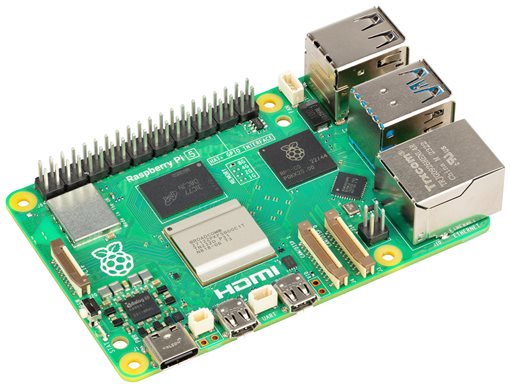
image

RPI5-4GB-SINGLE Raspberry Pi5

Please congratulate:

 misaz 

 michaelkellett 

 taifur 

E14Alice will be reaching out to you all to get your prizes sorted via direct message 

General Terms
What: Win 1 of 3 of the RPI5-4GB-SINGLE Raspberry Pi5
How: Sign up  or Sign in and Comment your answer to If you could automate one part of your design workflow, what would it be?
When: Before November 30th 2025 
Anything else: Full terms are below, but we must be able to ship to the address in your account. 

Entries close November 30th, 2025, so don’t wait!

Terms & Conditions

imagePDF

  • Cancel

Top Replies

  • michaelkellett
    michaelkellett 1 month ago +5
    The thing I would most like to automate out of existence is: Kitting parts to build new pcbs. I make lots of pcbs, average > 20 per year. Each may have between 50 and 200 unique parts. The build process…
  • misaz
    misaz 1 month ago +5
    Everythign can be automated. I once automated opening storage box... Duratool Cabinet Storage Box Upgrade youtu.be/Zlx6gJfdt3o
  • beacon_dave
    beacon_dave 1 month ago +4
    Getting the coffee to the desk.
Parents
  • veluv01
    veluv01 23 days ago

    If I could automate one thing in my design workflow, it would be the whole timing closure issue. You know that feeling when you have a design that works perfectly in simulation, and then you run it through the synthesis tools only to find you’re missing timing by 3 nanoseconds on some random path you didn't even know existed? Yeah, that’s it.

    I remember this one time, must've been quite a while back, I was working on an image processing pipeline for a camera system. The design looked pretty good, or so I thought. It had a nice modular structure and was well pipelined, with simulations showing promising results. When I ran the first build, though, timing violations popped up everywhere. I spent the entire day trying to figure out what was wrong. I added pipeline stages, adjusted synthesis attributes, and reorganized some logic. Each build takes about 30 to 40 minutes, so I make a change, grab a drink, come back, check the report, mutter under your breath, and repeat.Finally, after going through the iterations, I was reviewing the timing report for probably the ninth time. I noticed this path that made no sense. It went from a data register in one processing block, passing through half the design, then into some control logic that shouldn’t even interact with that data. After another hour of digging through the elaborated design, I discovered the issue. There was a simple debug signal I had added weeks earlier during development. It just combined a bunch of status flags from different modules for easier probing. I completely forgot it was even there. The tools routed this signal across the whole block, and since it touched logic in different clock domains, it created all these incorrect timing dependencies.So after fixing it up, ran the build again, and everything passed with 2 nanoseconds of slack. I sat there laughing at myself. Four hours, probably eight synthesis runs, and it was just one forgotten debug signal. What would make a real difference is if the tools could communicate in plain language about these issues. Instead of saying, "path from inst_47/gen_block[3]/data_reg to inst_892/ctrl_logic/state_reg fails by 1.2ns," how about saying, "Hey, your debug signal 'all_status_flags' is connecting unrelated logic and causing timing problems is probably not what you intended?" , since the code's already commented out, it checks the debug reg block signals instead of giving me the raw netlist regs. Or when it detects a critical path, it could suggest specific fixes based on the actual code structure. For example, "This path has too much combinational logic between registers, so consider adding a pipeline stage after the multiplier on line 156." These kinds of automated, source code aware suggestions would save so much time instead of going through multiple reports and browsing the designs, which honestly takes forever. The elaborated designs are massive and take minutes just to load in the GUI, and navigating through them without the GUI using just text reports is like reading the Matrix.

    Another big time drain is managing constraint files. Every project feels like it takes at least half a day to set up the XDC or SDC files. I need to ensure all the clocks are defined correctly, the I/O standards match the schematic, and the pin assignments are accurate. Then, the hardware team always seems to change something on the board, or I switch to a different FPGA variant, and I have to go through it all again. I’ve definitely spent hours debugging strange behavior only to find a pin got swapped in the constraints.It would be great if there was automated integration between the schematic tools and FPGA constraints. For instance, the hardware team exports a latest version of schematic, that automatically generates or updates the constraint file with the correct pin mappings and I/O standards. It should also validate against the FPGA's capabilities like, "Hey, you're trying to put a 3.3V signal on a 1.8V bank; that's not going to work." , these basic automated checks would save a lot of time before wasting a synthesis/implementation run.

    • Cancel
    • Vote Up 0 Vote Down
    • Cancel
Reply
  • veluv01
    veluv01 23 days ago

    If I could automate one thing in my design workflow, it would be the whole timing closure issue. You know that feeling when you have a design that works perfectly in simulation, and then you run it through the synthesis tools only to find you’re missing timing by 3 nanoseconds on some random path you didn't even know existed? Yeah, that’s it.

    I remember this one time, must've been quite a while back, I was working on an image processing pipeline for a camera system. The design looked pretty good, or so I thought. It had a nice modular structure and was well pipelined, with simulations showing promising results. When I ran the first build, though, timing violations popped up everywhere. I spent the entire day trying to figure out what was wrong. I added pipeline stages, adjusted synthesis attributes, and reorganized some logic. Each build takes about 30 to 40 minutes, so I make a change, grab a drink, come back, check the report, mutter under your breath, and repeat.Finally, after going through the iterations, I was reviewing the timing report for probably the ninth time. I noticed this path that made no sense. It went from a data register in one processing block, passing through half the design, then into some control logic that shouldn’t even interact with that data. After another hour of digging through the elaborated design, I discovered the issue. There was a simple debug signal I had added weeks earlier during development. It just combined a bunch of status flags from different modules for easier probing. I completely forgot it was even there. The tools routed this signal across the whole block, and since it touched logic in different clock domains, it created all these incorrect timing dependencies.So after fixing it up, ran the build again, and everything passed with 2 nanoseconds of slack. I sat there laughing at myself. Four hours, probably eight synthesis runs, and it was just one forgotten debug signal. What would make a real difference is if the tools could communicate in plain language about these issues. Instead of saying, "path from inst_47/gen_block[3]/data_reg to inst_892/ctrl_logic/state_reg fails by 1.2ns," how about saying, "Hey, your debug signal 'all_status_flags' is connecting unrelated logic and causing timing problems is probably not what you intended?" , since the code's already commented out, it checks the debug reg block signals instead of giving me the raw netlist regs. Or when it detects a critical path, it could suggest specific fixes based on the actual code structure. For example, "This path has too much combinational logic between registers, so consider adding a pipeline stage after the multiplier on line 156." These kinds of automated, source code aware suggestions would save so much time instead of going through multiple reports and browsing the designs, which honestly takes forever. The elaborated designs are massive and take minutes just to load in the GUI, and navigating through them without the GUI using just text reports is like reading the Matrix.

    Another big time drain is managing constraint files. Every project feels like it takes at least half a day to set up the XDC or SDC files. I need to ensure all the clocks are defined correctly, the I/O standards match the schematic, and the pin assignments are accurate. Then, the hardware team always seems to change something on the board, or I switch to a different FPGA variant, and I have to go through it all again. I’ve definitely spent hours debugging strange behavior only to find a pin got swapped in the constraints.It would be great if there was automated integration between the schematic tools and FPGA constraints. For instance, the hardware team exports a latest version of schematic, that automatically generates or updates the constraint file with the correct pin mappings and I/O standards. It should also validate against the FPGA's capabilities like, "Hey, you're trying to put a 3.3V signal on a 1.8V bank; that's not going to work." , these basic automated checks would save a lot of time before wasting a synthesis/implementation run.

    • Cancel
    • Vote Up 0 Vote Down
    • Cancel
Children
No Data
element14 Community

element14 is the first online community specifically for engineers. Connect with your peers and get expert answers to your questions.

  • Members
  • Learn
  • Technologies
  • Challenges & Projects
  • Products
  • Store
  • About Us
  • Feedback & Support
  • FAQs
  • Terms of Use
  • Privacy Policy
  • Legal and Copyright Notices
  • Sitemap
  • Cookies

An Avnet Company © 2025 Premier Farnell Limited. All Rights Reserved.

Premier Farnell Ltd, registered in England and Wales (no 00876412), registered office: Farnell House, Forge Lane, Leeds LS12 2NE.

ICP 备案号 10220084.

Follow element14

  • X
  • Facebook
  • linkedin
  • YouTube