element14 Community
element14 Community
    Register Log In
  • Site
  • Search
  • Log In Register
  • Community Hub
    Community Hub
    • What's New on element14
    • Feedback and Support
    • Benefits of Membership
    • Personal Blogs
    • Members Area
    • Achievement Levels
  • Learn
    Learn
    • Ask an Expert
    • eBooks
    • element14 presents
    • Learning Center
    • Tech Spotlight
    • STEM Academy
    • Webinars, Training and Events
    • Learning Groups
  • Technologies
    Technologies
    • 3D Printing
    • FPGA
    • Industrial Automation
    • Internet of Things
    • Power & Energy
    • Sensors
    • Technology Groups
  • Challenges & Projects
    Challenges & Projects
    • Design Challenges
    • element14 presents Projects
    • Project14
    • Arduino Projects
    • Raspberry Pi Projects
    • Project Groups
  • Products
    Products
    • Arduino
    • Avnet & Tria Boards Community
    • Dev Tools
    • Manufacturers
    • Multicomp Pro
    • Product Groups
    • Raspberry Pi
    • RoadTests & Reviews
  • About Us
  • Store
    Store
    • Visit Your Store
    • Choose another store...
      • Europe
      •  Austria (German)
      •  Belgium (Dutch, French)
      •  Bulgaria (Bulgarian)
      •  Czech Republic (Czech)
      •  Denmark (Danish)
      •  Estonia (Estonian)
      •  Finland (Finnish)
      •  France (French)
      •  Germany (German)
      •  Hungary (Hungarian)
      •  Ireland
      •  Israel
      •  Italy (Italian)
      •  Latvia (Latvian)
      •  
      •  Lithuania (Lithuanian)
      •  Netherlands (Dutch)
      •  Norway (Norwegian)
      •  Poland (Polish)
      •  Portugal (Portuguese)
      •  Romania (Romanian)
      •  Russia (Russian)
      •  Slovakia (Slovak)
      •  Slovenia (Slovenian)
      •  Spain (Spanish)
      •  Sweden (Swedish)
      •  Switzerland(German, French)
      •  Turkey (Turkish)
      •  United Kingdom
      • Asia Pacific
      •  Australia
      •  China
      •  Hong Kong
      •  India
      • Japan
      •  Korea (Korean)
      •  Malaysia
      •  New Zealand
      •  Philippines
      •  Singapore
      •  Taiwan
      •  Thailand (Thai)
      • Vietnam
      • Americas
      •  Brazil (Portuguese)
      •  Canada
      •  Mexico (Spanish)
      •  United States
      Can't find the country/region you're looking for? Visit our export site or find a local distributor.
  • Translate
  • Profile
  • Settings
Personal Blogs
  • Community Hub
  • More
Personal Blogs
John Wiltrout's Blog Learning Circuit Inspires  "The Watch Stand"
  • Blog
  • Documents
  • Mentions
  • Sub-Groups
  • Tags
  • More
  • Cancel
  • New
  • Share
  • More
  • Cancel
Group Actions
  • Group RSS
  • More
  • Cancel
Engagement
  • Author Author: jw0752
  • Date Created: 6 Feb 2019 3:41 PM Date Created
  • Views 1062 views
  • Likes 15 likes
  • Comments 10 comments
  • joule_thief
  • watch_stand
  • battery juicer
Related
Recommended

Learning Circuit Inspires  "The Watch Stand"

jw0752
jw0752
6 Feb 2019

Karen's Learning Circuit Presentation:


The Learning Circuit 39: Inductor Project: Battery Juicer


got me to playing around with the Battery Juicer Circuit also called the "Joule Thief". You can check out her blog for a schematic and some suggestions. For her build she made a flashlight but I had other ideas for a good use.


When I finally crash at night I put my watch next to the bed. Unfortunately it is quite dark in the room so if I wake up and want to know what time it is I have to turn on the light on the table next to the bed. This usually wakes me up more than I want to and it also disturbs the boss. When I saw the nice low level light produced by the LED in Karen's experiment it dawned on me that this would be a perfect night light and watch reading light for the bedroom.


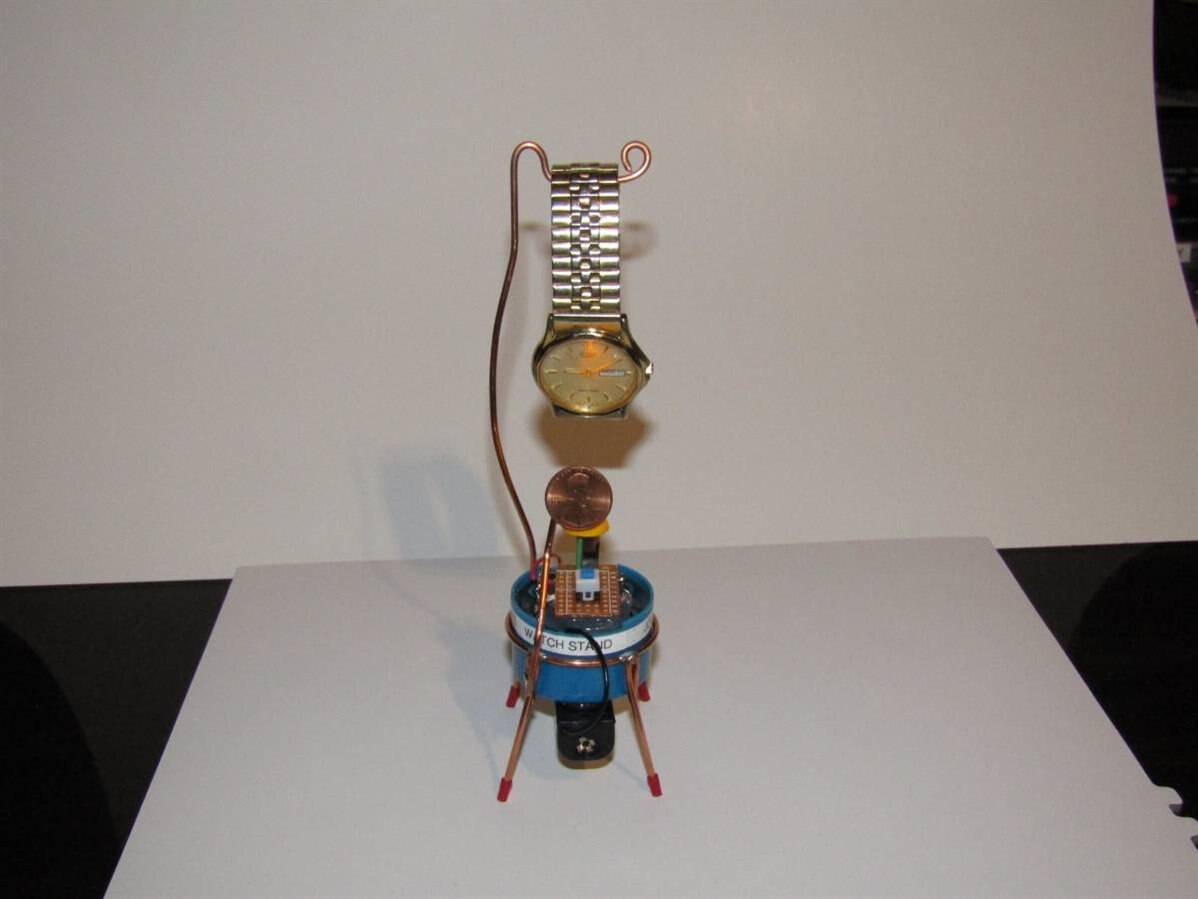
A couple hours and about 3 feet of 12 gauge copper wire later I had "The Watch Stand"


image


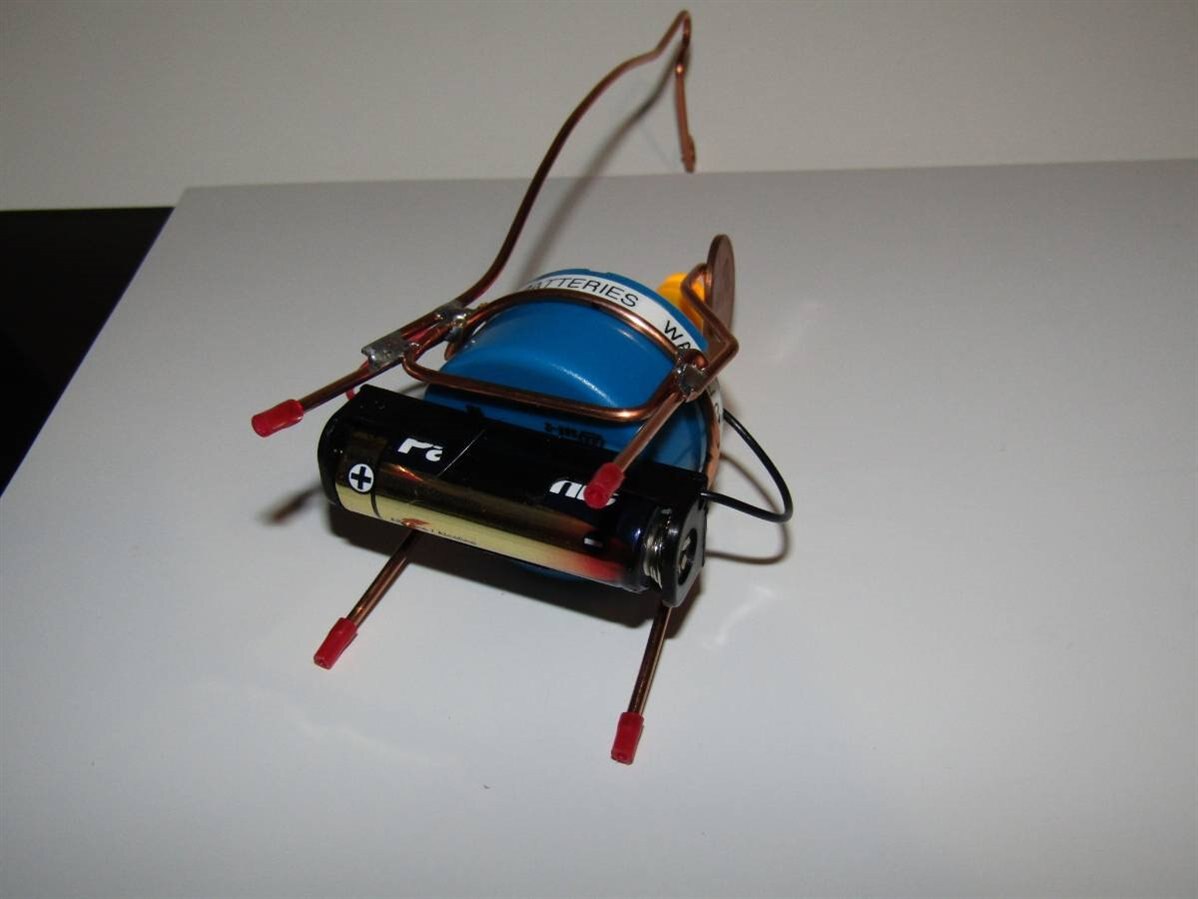
The watch stand runs on dead AA batteries that won't even power a wall clock. The circuit is the same simple circuit demonstrated in the Learning Circuit. I used a common mode inductor from a switching power supply, a salvaged NPN transistor from an old CFL light bulb circuit, a single AA holder, and the other electronic components needed to complete the build. A small push latch switch was also installed so the unit could be turned off when not in use. No sense wasting those stolen joules. It looks a bit strange, perhaps a bit like the Lunar lander, but it fits well with my sense of the aesthetic.


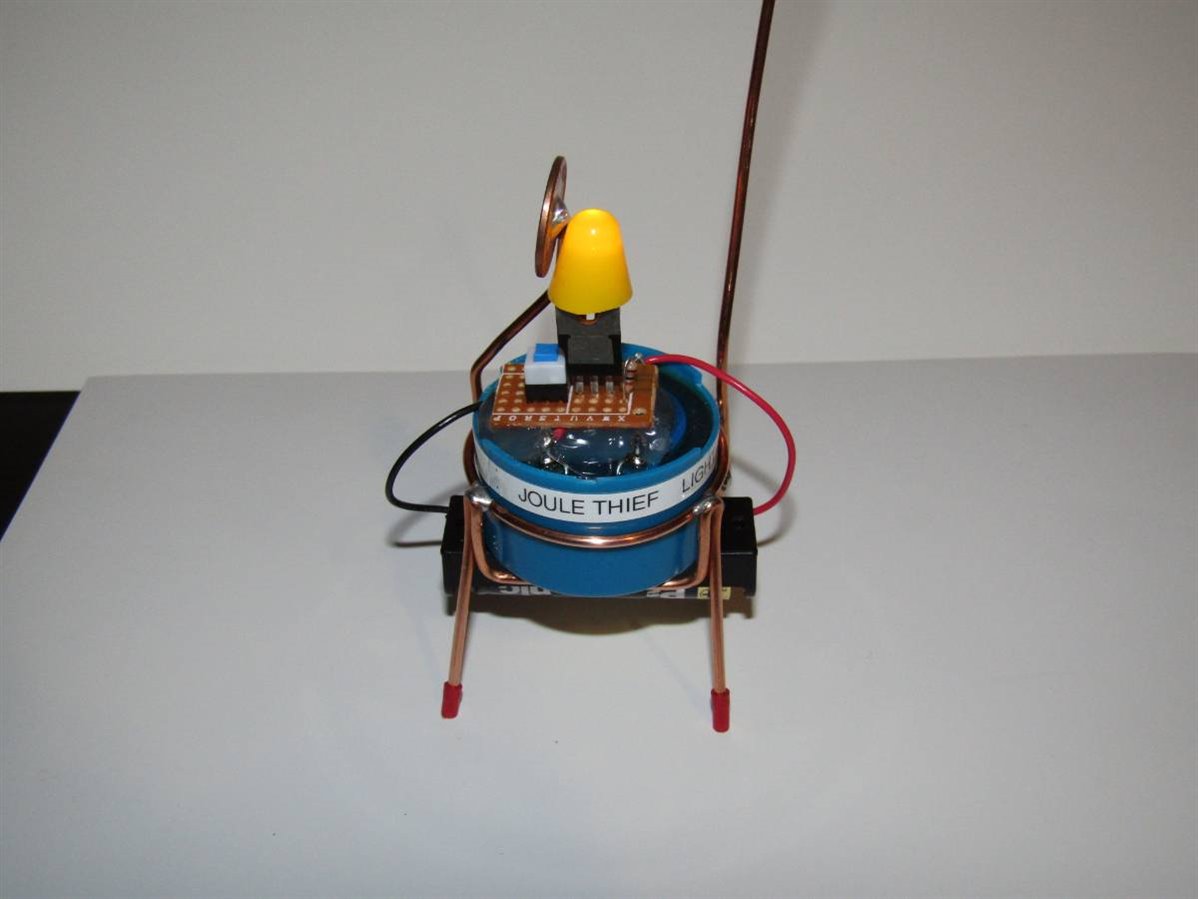
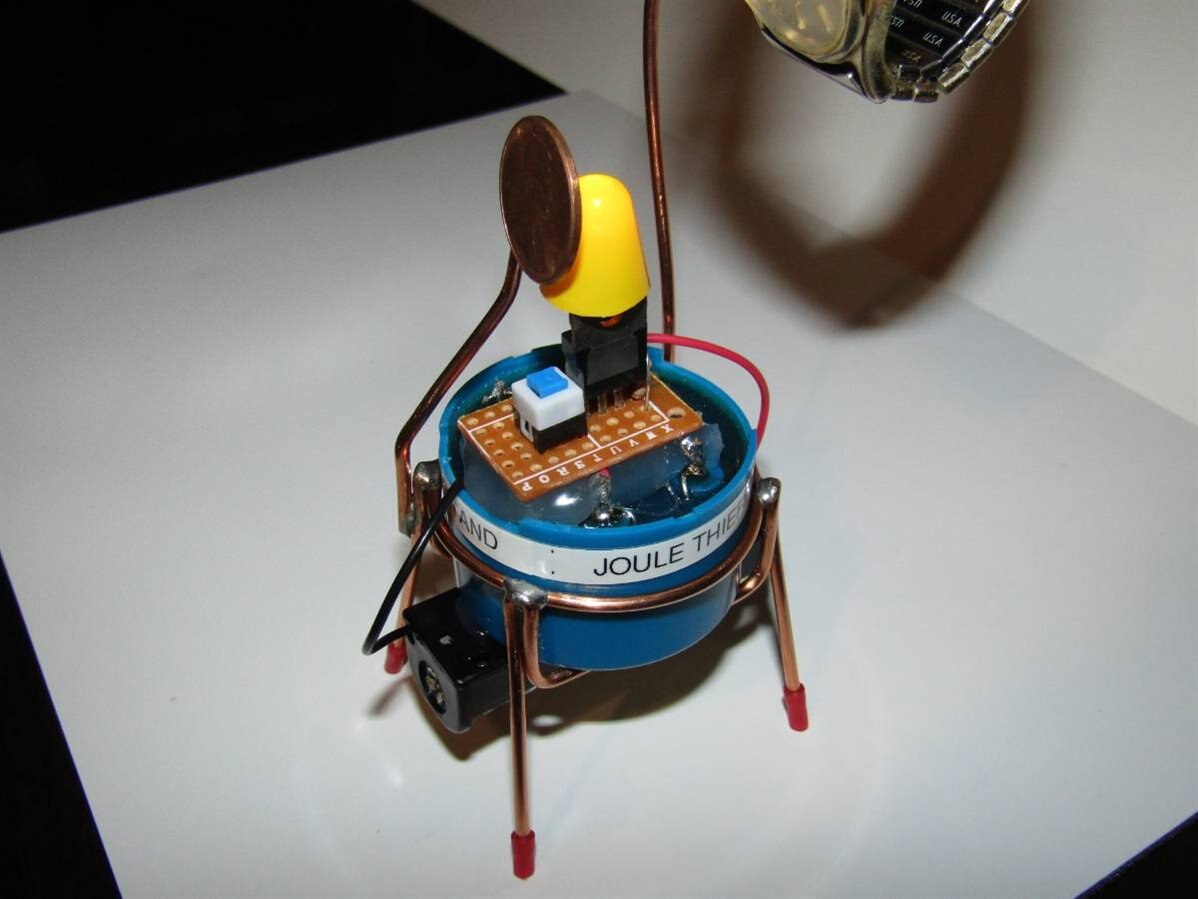
Here are a few more pictures so you can see it from a few different angles:
 

imageimage


imageimage


The yellow light diffuser that I have placed over the LED so that I do not get a sharp reflection off the watch crystal is something that was acquired over 50 years ago and has been patiently waiting in my Bulb Sockets box for a practical use.


Electronics is fun and inspirations are to be found everywhere we look. Thank you to Karen and the element14 Learning Circuit for a fun project.


John

  • Sign in to reply

Top Comments

  • jw0752
    jw0752 over 6 years ago in reply to shabaz +5
    Hi Shabaz, Thanks, I use a combination of vises and clamps. Since it is heavier gauge copper I have a bit of a problem with it self heat sinking so I pre-tin my target area and then come in hot and quick…
  • jw0752
    jw0752 over 6 years ago +5
    Addendum: I have continued to experiment with the Battery Juicer / Joule Thief circuit to learn more about how it is affected by different transistors and different transformers. Obviously the choice of…
  • rachaelp
    rachaelp over 6 years ago +3
    Excellent work John, it looks really cool and very useful to have to see your watch in the night. Definitely a very nice project! Best Regards, Rachael
  • jw0752
    jw0752 over 6 years ago

    Addendum:


    I have continued to experiment with the Battery Juicer / Joule Thief circuit to learn more about how it is affected by different transistors and different transformers. Obviously the choice of transformer and transistor have a significant effect on the output and frequency of the circuit. There was one result that while not unexpected seemed worthwhile reporting. If one really wants to suck the batteries to the lowest level it is important to use a Germanium Transistor.


    I set up an experiment with a 151-0121 Silicon NPN transistor and the lowest voltage that would start and maintain oscillation in the Joule Thief was 0.603 Volts. The same circuit using a 2N1304 NPN Germanium went down to 0.2 Volts. I doubt that the energy content of the battery is a linear function of the voltage but just the same here we have additional usable content in the battery as it drops from 0.6 volts to 0.2 volts that can be harvested by a Ge transistor and which is out of reach to the Si Transistor.


    John

    • Cancel
    • Vote Up +5 Vote Down
    • Sign in to reply
    • More
    • Cancel
  • jw0752
    jw0752 over 6 years ago in reply to shabaz

    Hi Shabaz,

    Thanks, I use a combination of vises and clamps. Since it is heavier gauge copper I have a bit of a problem with it self heat sinking so I pre-tin my target area and then come in hot and quick. Most of the time perfection isn't necessary as the wire can be adjusted after being soldered to compensate for a slight misalignment.


    John

    • Cancel
    • Vote Up +5 Vote Down
    • Sign in to reply
    • More
    • Cancel
  • shabaz
    shabaz over 6 years ago

    Hi John,


    Nice project! How are you holding the shapes together while soldering? You're getting great use out of the round-nose pliers : )

    • Cancel
    • Vote Up +3 Vote Down
    • Sign in to reply
    • More
    • Cancel
  • jw0752
    jw0752 over 6 years ago in reply to dougw

    Hi Doug,

    My watch is on its last leg as is my 8 year old flip phone. If I don't wear the watch I may get locked up for looking at my wrist with no apparent motive. I also have a few old ones but only one has any sentimental value and still works. I like your titling of my projects, Twelve Gauge Projects. I may have to use that next time.

    John

    • Cancel
    • Vote Up +3 Vote Down
    • Sign in to reply
    • More
    • Cancel
  • dougw
    dougw over 6 years ago

    Another great 12 gauge project.

    That could be a Project 14 theme...

    Your project also brings up the question of what to do with all our old watches.

    I no longer wear a watch, but I still have a small collection that has sentimental value.

    • Cancel
    • Vote Up +3 Vote Down
    • Sign in to reply
    • More
    • Cancel
>
element14 Community

element14 is the first online community specifically for engineers. Connect with your peers and get expert answers to your questions.

  • Members
  • Learn
  • Technologies
  • Challenges & Projects
  • Products
  • Store
  • About Us
  • Feedback & Support
  • FAQs
  • Terms of Use
  • Privacy Policy
  • Legal and Copyright Notices
  • Sitemap
  • Cookies

An Avnet Company © 2026 Premier Farnell Limited. All Rights Reserved.

Premier Farnell Ltd, registered in England and Wales (no 00876412), registered office: Farnell House, Forge Lane, Leeds LS12 2NE.

ICP 备案号 10220084.

Follow element14

  • X
  • Facebook
  • linkedin
  • YouTube